Seven-Star Sword is the name of a traditional Chinese medicinal herb. It is the whole plant of Mosla cavaleriei Lévl., a member of the Lamiaceae family.It has the effects of inducing sweating, relieving heatstroke, promoting diuresis, and detoxifying. It is commonly used to treat colds, heatstroke, vomiting, diarrhea, edema, eczema, boils and abscesses, shingles, genital ulcers and scrofula, trauma and pain from falls or blows, and venomous snake bites.

Seven-Star Sword
Seven-Star Sword is the name of a traditional Chinese medicinal herb. It is the whole plant of Mosla cavaleriei Lévl., a member of the Lamiaceae family.It has the effects of inducing sweating, relieving heatstroke, promoting diuresis, and detoxifying. It is commonly used to treat colds, heatstroke, vomiting, diarrhea, edema, eczema, boils and abscesses, shingles, genital ulcers and scrofula, trauma and pain from falls or blows, and venomous snake bites.
Chinese Name : 七星剑
Latin Name : Herba Moslae Cavaleriei
Aliases : Small-Leaf Non-Red, Star-Colored Grass, False Mustard, “Travels a Thousand Li Alone,” Wild Hyssop, Wine Bottle Grass, Prickly Heat Grass
Authentic Producing Area : Yunnan, Zhejiang, Jiangxi, Hubei, Sichuan, Guizhou, Guangxi, Guangdong
Nature, Flavor & Meridian Tropism : Pungent in taste, slightly warm in nature; enters the Liver and Spleen meridians
Benefits & Efficacy
Benefits
Induces sweating and relieves summer heat; drains dampness and detoxifies.
Indications
Common cold, heatstroke, vomiting, diarrhea, edema, eczema, sores, swellings, and toxic abscesses; shingles; genital ulcers and scrofula; trauma and pain from falls or blows; venomous snake bites.
Usage and Dosage
1. Internal use: Decoct 9–15 g; or pound fresh herb to extract juice. 2. External use: Apply an appropriate amount of fresh herb, pounded and applied as a poultice; or decoct the dried herb and use the liquid for washing.
Chemical Constituents
The whole herb contains essential oils.
Pharmacological Actions
This herb has a marked inhibitory effect on Leptospira. It also inhibits Staphylococcus aureus, Escherichia coli, Salmonella typhi, Pseudomonas aeruginosa, and Streptococcus pyogenes.
Relevant Discussions
1. *Essentials of the Properties of Raw Herbs*: “Specifically treats bites from rabid dogs, venomous snakes, and other harmful creatures; treats contusions and bruises; and is applied to severe sores.”
2. *Seeking the Origins of Materia Medica*: “Treats snake bites, genital ulcers, and severe sores.”
3. *Chronicle of Lingnan Herbal Medicine*: “Neutralizes snake venom, dispels blood stasis, and relieves pain.”
4. *Compendium of Chinese Herbal Medicine*: “Induces sweating to relieve heatstroke, strengthens the spleen and drains dampness, relieves itching, and neutralizes snake venom. Primarily used to treat colds, heatstroke, acute gastroenteritis, indigestion, and edema; externally applied to treat eczema, boils, abscesses, traumatic swelling and pain, and venomous snake bites.”
Applications
Clinical Applications
1. For bites from rabid dogs, venomous snakes, or poisonous creatures, where the victim is still alive but barely breathing: Extract the juice from Seven-Star Sword and administer it orally. (*Seeking the Origins of Materia Medica*)
2. For a red, snake-like rash covering the entire body: Boil Seven-Star Sword with chicken and consume the mixture. (*Record of Medicinal Plant Collection in Lingnan*)
3. For severe itching and pain caused by “living snake” (herpes zoster, lymphangitis, or erysipelas): Use an appropriate amount of narrow-leaved Seven-Star Sword. Decoct it in water to soak and wash the affected area; additionally, take an appropriate amount as a decoction orally.
4. For chronic skin eczema with itching: Use an appropriate amount of Seven-Star Sword. Decoct it in water and use the solution to wash the affected area.
5. For wind-phlegm sores (multiple abscesses): An appropriate amount of Seven-Star Sword. Pound it into a paste, mix with wine, bring to a boil, let cool to a warm temperature, then apply to the affected area and take an appropriate amount orally. (Recipes 3–5 are from *Chronicle of Lingnan Herbal Medicine*)
6. For snake bites: Fresh wild elsholtzia, pounded into a paste and applied externally. (*Guangxi Herbal Medicine*)
Notes
Patients requiring treatment with Chinese herbal medicine should first consult a licensed Traditional Chinese Medicine (TCM) hospital, where a TCM practitioner will conduct a professional pattern differentiation and issue a herbal prescription.
Processing & Preparation
Harvesting & Processing
Harvest the whole plant from September to November, wash thoroughly, and use fresh or dry in the sun.
Crude Drug Identification
Properties of Crude Drugs
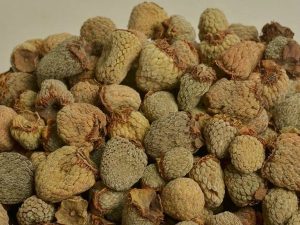
The stem is quadrangular, branched, 25–100 cm long, jointed, and covered with soft hairs; it is brittle. The leaves are curled and shriveled; when flattened, they are ovate or ovate-lanceolate, with sparse, jointed soft hairs on the upper surface and covered with small pits on the lower surface; they are papery. A terminal raceme composed of whorled cymes is visible. The flowers are often shriveled into clusters; they are small, with pale purple corollas.The small nuts are nearly spherical, brown, and 1.5 mm in diameter. It has a distinctive, refreshing aroma and a pungent, cooling taste.
Botanical Information
Botanical Classification
Small-flowered Jute (Lamiaceae).
Morphological Characteristics
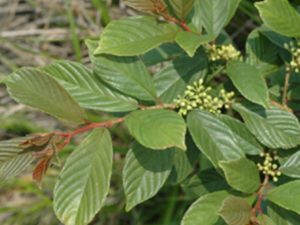
An annual herb, 25–100 cm tall. Emits a strong fragrance when rubbed. The stem is erect, quadrangular, and covered with long, nodular soft hairs and fine pubescence.Leaves are opposite; petioles are 1–2 cm long, covered with nodular soft hairs; leaf blades are ovate or ovate-lanceolate, 2–5 cm long, 1–2.5 cm wide, with an acuminate apex, a cuneate base, and finely serrate margins that are entire near the base; the upper surface is covered with nodular soft hairs, while the lower surface is covered with nodular soft hairs and glandular dots.The verticillate inflorescence bears two flowers, forming a terminal pseudo-raceme on the main stem and lateral branches, 2.5–4.5 cm long; bracts are minute, nearly as long as the pedicels, and covered with short, nodular hairs;The calyx is about 1.2 mm long, pubescent on the outside; the upper lip has 3 minute, triangular teeth, and the lower lip has 2 teeth slightly longer than those of the upper lip, lanceolate; the calyx enlarges at fruiting; the corolla is purple or pink, about 2.5 mm long, pubescent on the outside; the upper lip is 2-lobed, rounded, and the lower lip is slightly longer, 3-lobed, with the middle lobe longer;There are 4 stamens; the posterior pair is fertile, while the anterior pair is reduced; the ovary is 4-lobed, the style is basal, and the stigma is 2-lobed. The nutlets are spherical, grayish-brown, 1.5 mm in diameter, and reticulate. Flowering occurs from September to November, and fruiting from October to December.
Distribution Area
Distributed in Zhejiang, Jiangxi, Hubei, Guangdong, Guangxi, Sichuan, Guizhou, Yunnan, and other areas.