Tsushima ear fern, a name in traditional Chinese medicine. It refers to the rhizomes or tender leaves of Polystichum tsus-simense (Hook.) J. Sm., a plant in the family Polystichaceae. It is distributed in Central and South China, Southwest China, as well as Shaanxi, Anhui, Zhejiang, Jiangxi, Fujian, Taiwan, and Tibet. It has the effects of clearing heat and detoxifying, as well as cooling the blood and dispersing blood stasis.It is commonly used to treat dysentery, redness and swelling of the eyes, mastitis, boils and abscesses, bleeding hemorrhoids, and burns and scalds.
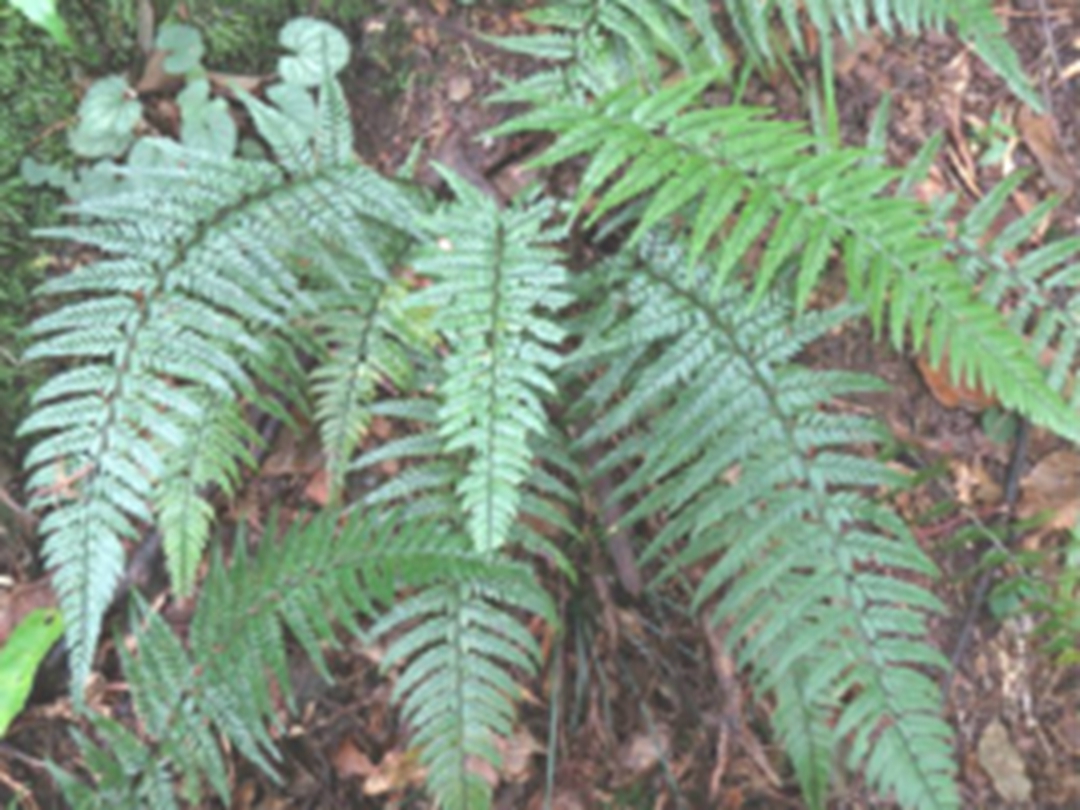
Tsushima Ear Fern
Tsushima ear fern, a name in traditional Chinese medicine. It refers to the rhizomes or tender leaves of Polystichum tsus-simense (Hook.) J. Sm., a plant in the family Polystichaceae. It is distributed in Central and South China, Southwest China, as well as Shaanxi, Anhui, Zhejiang, Jiangxi, Fujian, Taiwan, and Tibet. It has the effects of clearing heat and detoxifying, as well as cooling the blood and dispersing blood stasis.It is commonly used to treat dysentery, redness and swelling of the eyes, mastitis, boils and abscesses, bleeding hemorrhoids, and burns and scalds.
Chinese Name : 对马耳蕨
Latin Name : Polystichum tsus-simense (Hook.) J. Sm.
Aliases : Hairy-footed Chicken, Fern-leaved Fern, Thread-tailed Chicken
Authentic Producing Area : Central and South China, Southwest China, as well as Shaanxi, Anhui, Zhejiang, Jiangxi, Fujian, Taiwan, and Tibet
Nature, Flavor & Meridian Tropism : Bitter in taste, cool in nature; enters the Heart and Spleen meridians
Benefits & Efficacy
Benefits
Clears heat and detoxifies; cools the blood and dispels blood stasis.
Indications
Dysentery, red, swollen, and painful eyes, mastitis, boils and abscesses, bleeding hemorrhoids, scalds and burns.
Usage and Dosage
Internal use: Decoct 10–15 g. External use: Apply an appropriate amount after pounding into a paste.
Precautions
Not yet established.
Relevant Discussions
1. *Compendium of Chinese Herbal Medicines*: “Clears heat and detoxifies. Primarily used to treat dysentery, abdominal pain due to damp-heat, and boils and swellings in the lower limbs.”
2. *Chronicle of Sichuan Chinese Medicinal Herbs* (1982 edition): “Clears heat and detoxifies; cools the blood and dispels blood stasis. Used for abscesses, boils, and swellings caused by toxins, scalds and burns, and bleeding hemorrhoids.”
3. *Medicinal Spore-Bearing Plants of China*: “Clears heat and eliminates toxins. Treats redness, swelling, and pain in the eyes; various types of swelling and toxicity in their early stages; and mastitis, among others.”
Applications
Related Compatibility
For redness, swelling, and pain in the eyes: 30 g of Tsushima ear fern rhizome (scales removed). Decoct in water, add an appropriate amount of white sugar, and drink. (*Medicinal Spore Plants of China*)
Notes
~In Henan, the rhizome of the horse-ear fern is used medicinally as *Guanzhong*.~~
Processing & Preparation
Harvesting & Processing
The rhizome can be harvested year-round, though autumn is the preferred time. After digging it up, remove the leaves, wash thoroughly, and use fresh or sun-dry; tender leaves are collected in spring and used fresh.
Crude Drug Identification
Properties of Crude Drugs
This plant is 35–50 cm long, with a short, erect rhizome at the base. Both the rhizome and petioles are covered with blackish-brown ovate-lanceolate and brown awl-shaped lanceolate scales; the petioles are straw-colored.The leaves are lanceolate, twice-pinnate, 15–30 cm long and 8–15 cm wide, not narrowing at the base, and tapering to a tail-like point at the apex; the pinnae are thick papery or leathery, numbering 15–20 pairs,sickle-lanceolate, 3.5–6 cm long from the middle downward, 1–1.5 cm wide at the base, with spiny small teeth; veins pinnate, lateral veins simple or dichotomous, extending to the leaf margin. Sporangia clustered at the tips of minor veins, with round-shield-shaped indusia. Slight odor. Specimens with rhizomes and numerous leaves are considered superior.
Botanical Information
Botanical Classification
A plant of the family Dryopteridaceae, the Tsushima ear fern.
Morphological Characteristics
Tsushima ear fern, also known as Matsu ear fern. The plant grows to a height of 30–50 cm. The rhizome is nearly erect and, along with the base of the petiole, is covered with blackish-brown ovate-lanceolate and brown awl-shaped scales.Leaves are clustered; petioles are 15–30 cm long, straw-colored, with sparse black linear scales arranged upward; leaf blades are lanceolate, 15–30 cm long and 8–15 cm wide, not narrowing at the base, and twice pinnate;The pinnae are falcate-lanceolate; on the upper side of the base, one small pinna is large and prominent, running parallel to the rachis, usually shallowly lobed; the upper small pinnae have spiny-sharp teeth along the margins; the lobes bear pinnate veins, with lateral veins that are simple or forked. Sporangia are clustered at the tips of the lateral veins; the indusia are round-reniform.
Distribution Area
Distributed in Central and South China, Southwest China, as well as Shaanxi, Anhui, Zhejiang, Jiangxi, Fujian, Taiwan, and Tibet.