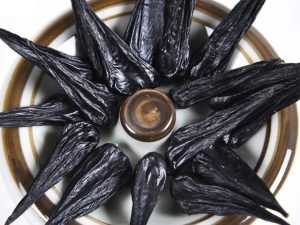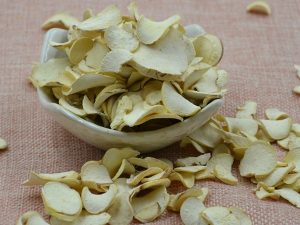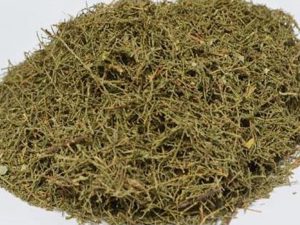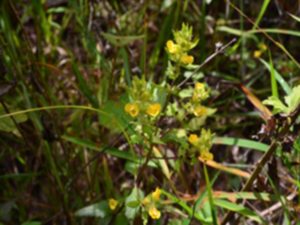
Menyanthes root, a name in traditional Chinese medicine. It is the root of Menyanthes trifoliata L., a plant in the Gentianaceae family. It is distributed in Northeast China, Southwest China, as well as Hebei and Zhejiang. It has the effects of moistening the lungs and relieving cough, promoting urination and reducing swelling, and lowering blood pressure. It is primarily used to treat cough, edema, rheumatic pain, and hypertension.
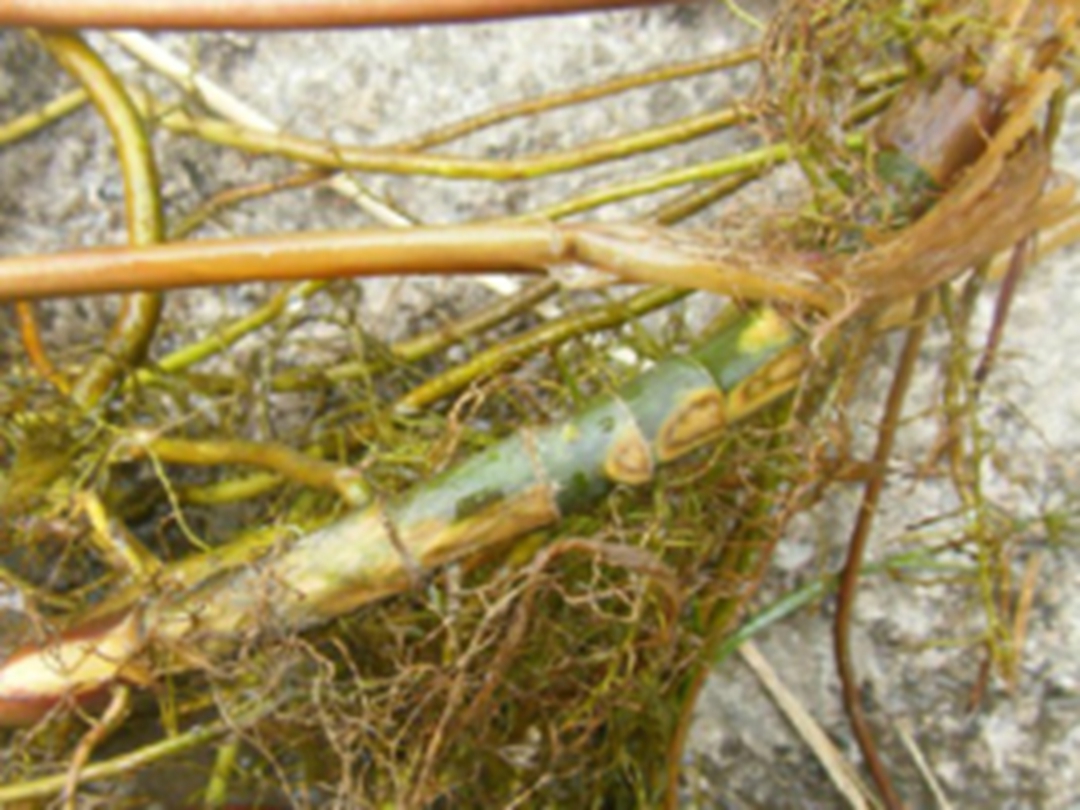
Water Plantain Root
Menyanthes root, a name in traditional Chinese medicine. It is the root of Menyanthes trifoliata L., a plant in the Gentianaceae family. It is distributed in Northeast China, Southwest China, as well as Hebei and Zhejiang. It has the effects of moistening the lungs and relieving cough, promoting urination and reducing swelling, and lowering blood pressure. It is primarily used to treat cough, edema, rheumatic pain, and hypertension.
Chinese Name : 睡菜根
Aliases : Guojianglong
Nature, Flavor & Meridian Tropism : Sweet and slightly bitter in taste; neutral in nature
Benefits & Efficacy
Benefits
Moistens the lungs and relieves coughs, promotes urination and reduces swelling, and lowers blood pressure.
Indications
It is primarily used to treat coughs, edema, rheumatic pain, and high blood pressure.
Usage and Dosage
Internal use: Decoct 10–15 g (or 30 g of fresh herb); or extract the juice by pounding.
Precautions
Patients requiring treatment with Chinese herbal medicine should first consult a licensed Traditional Chinese Medicine (TCM) hospital to receive a prescription following a professional TCM differential diagnosis.
Relevant Discussions
1. *Guiyang Folk Medicinal Herbs*: “Moistens the lungs, relieves cough, and reduces swelling. Treats (cough), dampness-induced swelling, and rheumatic pain.”
2. *Jilin Chinese Herbal Medicine*: “Reduces fever, promotes urination, and lowers blood pressure. Treats red, painful urination and hypertension.”
Applications
Clinical Applications
1. To moisten the lungs and relieve cough: 30g of fresh Guojianglong (or 15g of dried). Stew with meat or decoct in water.
2. To reduce dampness-induced swelling and treat rheumatic pain: 15g each of Guojianglong and Tonghua root. Decoct in water and drink. (Recipes 1–2 are from *Guiyang Folk Medicinal Herbs*)
3. For palpitations, insomnia, and hypertension: 30–60 g of fresh water-creeper root. Decoct in water and drink, or pound to extract juice and drink. (*Flora of Medicinal Plants of Zhejiang*)
4. For hypertension: 15 g of water-creeper root. Pound to extract juice and take twice daily. (*Jilin Chinese Herbal Medicine*)
Processing & Preparation
Harvesting & Processing
Can be harvested year-round; wash thoroughly, sun-dry, or use fresh.
Crude Drug Identification
Botanical Information
Botanical Classification
A plant of the Gentianaceae family, commonly known as water lily.
Morphological Characteristics
A perennial marsh plant. It has long, creeping rhizomes with membranous scales at the nodes. The leaves are basal and emerge above the water surface;ternate compound leaves; petioles 12–30 cm long; leaflets sessile; leaf blades elliptical, 2.5–8 cm long and 1.2–4 cm wide, with a bluntly rounded apex, a wedge-shaped base, entire or slightly wavy margins, and a prominent midrib. The flower stalk emerges from the rhizome, 30–35 cm tall, bearing a raceme;Flower pedicels are 1–1.8 cm long, with an ovate bract at the base; the calyx tube is very short, 4–5 mm long, deeply 5-lobed to the base, with ovate lobes; flowers are white; the corolla is funnel-shaped, 1.4–1.8 cm long, 5-lobed, with elliptic-lanceolate lobes bearing long, white, tassel-like hairs on the upper inner surface;There are 5 stamens, attached to the middle of the corolla tube; the ovary is elliptical and sessile; the style is linear, and the stigma is 2-lobed. The capsule is spherical, 6–7 mm long. The seeds are swollen and spherical. Flowering and fruiting occur from May to July.
Distribution Area
Distributed in Northeast China, Southwest China, and regions such as Hebei and Zhejiang.