Vine Tea is the name of a traditional Chinese medicine. It consists of the branches and leaves of Ampelopsis grossedentata (Hand.-Mazz.) W. T. Wang, a plant belonging to the genus Ampelopsis in the Vitaceae family. It has the effects of clearing heat, detoxifying, promoting diuresis, and reducing swelling. It is primarily used to treat wind-heat colds, sore throat, jaundice-type hepatitis, red and swollen eyes, boils and abscesses, diabetes, hyperlipidemia, and hypertension.

Vine Tea
Vine Tea is the name of a traditional Chinese medicine. It consists of the branches and leaves of Ampelopsis grossedentata (Hand.-Mazz.) W. T. Wang, a plant belonging to the genus Ampelopsis in the Vitaceae family. It has the effects of clearing heat, detoxifying, promoting diuresis, and reducing swelling. It is primarily used to treat wind-heat colds, sore throat, jaundice-type hepatitis, red and swollen eyes, boils and abscesses, diabetes, hyperlipidemia, and hypertension.
Chinese Name : 藤茶
Aliases : Sweet Tea, Sweet Tea Vine, Maoyan Berry Tea, Tianpo Tea, Dragon’s Beard Tea, Lai Li Tea, Bangbang Tea, White Tea
Nature, Flavor & Meridian Tropism : Sweet and mild in taste; cool in nature
Benefits & Efficacy
Benefits
Clears heat and detoxifies; promotes diuresis and reduces swelling.
Indications
Wind-heat common cold, sore throat, jaundice-type hepatitis, red and swollen eyes, boils and abscesses, diabetes, hyperlipidemia, hypertension.
Usage and Dosage
1. Internal use: Decoct 15–30 g; use double the amount for fresh material. 2. External use: Use an appropriate amount; decoct in water and use for washing.
Chemical Constituents
The active components of vine tea are flavonoids, with the main constituents including snake grape glycoside, dihydro-myricetin, myricetin, Fujian tea glycoside, amber alcohol, β-sitosterol, myricetin flavone, and myricetin glycoside. Dihydro-myricetin is the most abundant flavonoid compound.
Pharmacological Actions
It primarily exhibits antibacterial, anti-inflammatory, lipid-lowering, blood pressure-lowering, blood sugar-lowering, antitumor, and antithrombotic effects.
Relevant Discussions
*Compendium of Hubei Chinese Herbal Medicines*: “Clears heat and cools the blood. Used for hypertension, dizziness, and eye strain.”
Applications
Clinical Applications
For treating hypertension: Steep 30 g of vine tea in boiling water and drink as tea. One course of treatment lasts 10 days. (*Compendium of Hubei Chinese Herbal Medicines*)
Notes
Patients requiring treatment with traditional Chinese medicine should first consult a licensed TCM hospital, where a TCM practitioner will conduct a professional diagnosis and prescribe the appropriate herbal formula.
Processing & Preparation
Harvesting & Processing
Harvest the tender branches and leaves in summer and fall. Briefly blanch them in boiling water, then remove, drain thoroughly, and spread them out in a well-ventilated area to air-dry naturally until a spotty white frost appears on the surface. Finally, dry them in an oven and store.
Crude Drug Identification
Properties of Crude Drugs
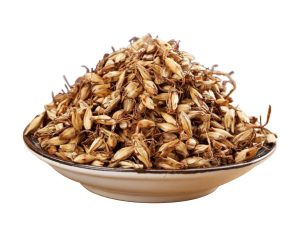
The stems and branches are cylindrical, varying in length, and highly branched, with a diameter of 2–10 mm;The surface is brown with longitudinal ridges; lenticels appear as small, bumpy protrusions; some may have tendrils opposite the leaves. The texture is hard and difficult to break; the fracture surface is uneven and light brown. The leaves are pinnately compound and alternate; the leaflets are curled and brittle, with most having already fallen off; they are gray-green or gray-brown. Odorless, with a slightly astringent taste.
Botanical Information
Botanical Classification
A species of the genus *Cissus* in the Vitaceae family, specifically *Cissus dentata*.
Morphological Characteristics
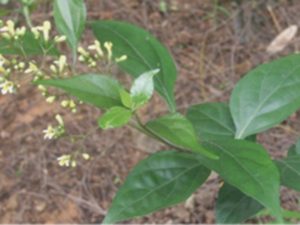
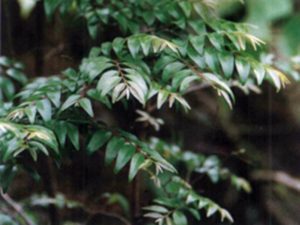
A woody vine. Young branches are cylindrical, with prominent longitudinal ridges, and glabrous. Tendrils are bifurcated and appear intermittently, opposite the leaves at intervals of two internodes.Leaves are 1–2-pinnate; in 2-pinnate leaves, the basal pair consists of three leaflets. Leaflets are ovate, ovate-elliptic, or oblong-elliptic, 2–5 cm long and 1.0–2.5 cm wide, with an acute or acuminate apex and a broadly cuneate or nearly rounded base; the margin has 2–5 teeth on each side. The upper surface is green,the underside is pale green, and both surfaces are glabrous; there are 3–5 pairs of lateral veins, with the reticulate veins slightly prominent and the terminal reticulate veins indistinct; the petiole is 1–2 cm long and glabrous; the stipules are early deciduous. The inflorescence is a corymbose, branched corymb, opposite the leaves; the inflorescence peduncle is 1.5–3.5 cm long and glabrous; the flower pedicel is 1.5–2.0 mm long and glabrous;flower buds are ovoid, 1.5–2.0 mm tall, with a rounded apex, glabrous; the calyx is saucer-shaped, with a wavy, shallowly lobed margin, glabrous; there are 5 petals, ovate-elliptic, 1.2–1.7 mm tall, glabrous; there are 5 stamens, with ovoid anthers slightly longer than wide; the disk is well-developed and wavy, shallowly lobed.The lower part of the ovary is fused with the disk; the style is awl-shaped, and the stigma is not conspicuously enlarged. The fruit is nearly spherical, 0.6–1.0 cm in diameter.It contains 2–4 seeds; the seeds are obovate, rounded at the apex, and have a short beak at the base; the seed scar is elliptical in the middle of the seed’s back, with a prominent ridge at the top; the surface has blunt ribbed protrusions; the midrib on the ventral side is prominent; and the depressions on both sides are obovate, extending from the base upward to near the middle of the seed.Flowering period: May–August; fruiting period: August–December.
Distribution Area
Native to southwestern China, it grows wild in provinces such as Guangdong, Guangxi, Hunan, Sichuan, Yunnan, Guizhou, Jiangxi, and Fujian; it has now been introduced and cultivated in many provinces and regions in central and southern China, with particularly extensive cultivation and high yields in Hubei and Jiangxi.