Pogostemon is a name in traditional Chinese medicine. It refers to the aerial parts of Pogostemon cablin (Blanco) Benth., a plant in the genus Pogostemon of the Lamiaceae family. It has the effects of dispelling dampness, stopping vomiting, and relieving summer heat. It is primarily used to treat dampness obstructing the middle jiao, vomiting, and the early stages of summer-dampness or damp-heat syndromes.

Pogostemon
Pogostemon is a name in traditional Chinese medicine. It refers to the aerial parts of Pogostemon cablin (Blanco) Benth., a plant in the genus Pogostemon of the Lamiaceae family. It has the effects of dispelling dampness, stopping vomiting, and relieving summer heat. It is primarily used to treat dampness obstructing the middle jiao, vomiting, and the early stages of summer-dampness or damp-heat syndromes.
Chinese Name : 藿香
Latin Name : Pogostemonis Herba
Aliases : Tu Huoxiang, Maoba, Green-stemmed Mint, Paixiangcao, Large-leaved Mint, Green Hehe, Sichuan Huoxiang, Su Huoxiang, Wild Huoxiang, Cat’s Tail Fragrance, Maoba Hu, Lala Xiang, Ba Hao, Yu Xiang, Ji Su, Shuima Ye
Nature, Flavor & Meridian Tropism : Pungent in taste, slightly warm in nature; enters the Spleen, Stomach, and Lung meridians
Benefits & Efficacy
Benefits
Dispels dampness, stops vomiting, and relieves summer heat.
Indications
1. Dampness obstructing the middle jiao: This herb has a fragrant aroma and is a key herb for dispelling dampness and turbidity through its aromatic properties. 2. Vomiting: This herb can both dispel dampness and harmonize the middle burner to stop vomiting. 3. Early stages of summer-heat dampness or damp-heat: This herb can both dispel dampness and relieve summer-heat. 4. Conditions diagnosed in Western medicine as chronic gastroenteritis due to dampness obstructing the middle burner; gastrointestinal neurosis; gastrointestinal-type colds; and acute gastroenteritis classified as summer-heat dampness exterior syndrome.
Usage and Dosage
Oral use: Decoct and take 5–10 g. Use double the amount for fresh herbs.
Precautions
Do not decoct for too long; contraindicated for those with yin deficiency and excessive fire.
Chemical Constituents
Contains approximately 1.5% essential oil; the main component of the oil is patchouli alcohol, with other components including benzaldehyde, eugenol, and cinnamaldehyde. It also contains various sesquiterpenes such as bambooene, as well as alkaloids.
Pharmacological Actions
The essential oil promotes gastric juice secretion, enhances digestive function, and has antispasmodic effects on the gastrointestinal tract. It possesses preservative and antibacterial properties; furthermore, it has astringent and antidiarrheal effects, dilates capillaries, and induces mild diaphoresis.
Relevant Discussions
1. *Mingyi Bielu*: “Treats swelling caused by wind-water toxins, dispels foul odors, and treats cholera and heart pain.”
2. *Bencao Tujing*: “It is the most essential medicine for treating vomiting and regurgitation caused by spleen and stomach disorders.”
Applications
Clinical Applications
1. To treat symptoms such as poor appetite, vomiting, mental fatigue, and physical exhaustion, it is often used in combination with Atractylodes lancea and Magnolia officinalis, as in the “Bu Huan Jin Zheng Qi San” formula (*Formulas of the Bureau of Medicinal Preparations*).
2. For treating vomiting caused by damp-turbidity obstructing the middle jiao, this herb is the most effective and essential. It is often used in combination with Pinellia and Clove, as in the Agastache and Pinellia Decoction (*Formulas of the Bureau of Medicinal Preparations*). For cases with a predominance of damp-heat, it is combined with Coptis and Bamboo Shavings; for pregnancy-related vomiting, with Amomum and Perilla Stem; and for spleen-stomach deficiency, with Codonopsis and Atractylodes.
3. For treating summer-heat syndrome characterized by external invasion of wind-cold and internal injury from raw and cold foods—manifesting as chills, fever, headache, epigastric fullness, nausea, vomiting, and diarrhea—it is combined with Perilla, Magnolia Bark, Pinellia, and others, as in the Agastache and Pinellia Decoction (from *Formulas of the Bureau of Harmonious Preparations*);For the early stages of damp-heat diseases where both dampness and heat are prominent, it is often combined with Scutellaria baicalensis, Talc, and Artemisia capillaris, as in the Ganlu Disinfection Pill (from *Wenre Jingwei*).
Related Compatibility
1. Agastache combined with Talc: Agastache dispels dampness with its aromatic properties, strengthens the spleen, and harmonizes the middle jiao; Talc clears heat, relieves summer heat, drains dampness, and promotes diuresis. When used together, these two herbs harmonize the spleen and stomach and are highly effective at dispelling dampness and stopping diarrhea. This combination is suitable for vomiting and diarrhea caused by spleen deficiency with excessive dampness.
2. Agastache combined with Phellodendron: Agastache has a fragrant aroma and functions to invigorate the spleen and transform dampness; it is a key herb for dispelling dampness and turbidity through its aromatic properties, and is particularly effective at transforming dampness and turbidity to stop vomiting. Phellodendron has a fresh, fragrant aroma, a neutral nature without dryness, and is effective at eliminating foul, turbid, and stagnant qi from the middle jiao. When combined, these two herbs synergize, significantly enhancing their efficacy in transforming dampness and relieving summer heat.This combination is suitable for summer heat-induced conditions characterized by chest tightness, abdominal distension, and nausea or vomiting due to dampness obstructing the middle jiao, or for feverish conditions complicated by dampness presenting with epigastric and abdominal distension, nausea, and the urge to vomit.
3. Agastache combined with Amomum: Agastache is primarily used to resolve dampness and stop vomiting; Amomum is primarily used to strengthen the stomach and harmonize the middle jiao. When used together, these two herbs effectively regulate qi, harmonize the middle jiao, and stop vomiting.Indicated for pregnancy-related vomiting and poor appetite due to qi stagnation and epigastric fullness.
4. Agastache combined with Dried Tangerine Peel: Agastache excels at dispelling dampness, relieving summer heat, warding off foul odors, and stopping vomiting; Dried Tangerine Peel is effective at regulating qi, strengthening the spleen, dispelling dampness, and stopping vomiting. When used together, these two herbs exhibit significant effects in regulating qi through their aromatic properties and harmonizing the middle burner to stop vomiting.Indicated for epigastric fullness, loss of appetite, vomiting, diarrhea, and even pain in the chest and abdomen caused by external invasion of summer-heat, internal dampness stagnation, and disharmony of the spleen and stomach.
5. Agastache combined with Curcuma: Agastache dispels dampness with its aromatic properties, regulates qi to relieve pain, and disperses stagnation to resolve depression; Curcuma regulates qi to resolve depression and promotes blood circulation to relieve pain.When used together, these two herbs exhibit remarkable efficacy in regulating qi, relieving depression, and alleviating pain. They are indicated for chest, flank, epigastric, and abdominal pain and distension caused by dampness-obstruction with qi stagnation or liver depression with qi stagnation.
6. Agastache combined with Pinellia: Agastache invigorates the spleen and stomach, transforms dampness and turbidity, and has a warming and dispersing nature; Pinellia harmonizes the stomach, descends rebellious qi, transforms phlegm, and stops vomiting, and has a warming and descending nature.When used together, these two herbs regulate the spleen and stomach, dispel cold, and stop vomiting. They are suitable for conditions such as internal obstruction by cold and dampness, food stagnation and qi stagnation, epigastric and abdominal pain and fullness, and vomiting.
7. Agastache combined with Atractylodes: Agastache stimulates the appetite and transforms dampness; Atractylodes strengthens the spleen and tonifies qi. When used together, these two herbs effectively strengthen the spleen and stomach, transform dampness, and stop diarrhea. They are suitable for conditions such as spleen and stomach deficiency, vomiting, and diarrhea.
Medicinal Identification
1. Raw Agastache and Fresh Agastache: Common varieties of Agastache include fresh Agastache and raw Agastache.Fresh Agastache is the fresh form of the herb; it has a mild drying nature and excels at clearing and transforming pathogenic summer-dampness without damaging yin fluids. It is particularly suitable for use during the summer months when damp-heat is rampant. Raw Agastache is made by air-drying Agastache; it has a pungent and aromatic nature that disperses pathogenic factors without being overly harsh; it is slightly warm and fragrant, transforming dampness without causing dryness or heat. As dampness is transformed, qi circulation is restored, and the spleen and stomach are harmonized, thereby naturally stopping vomiting and nausea.It is an excellent remedy for treating summer heat and dampness, characterized by alternating chills and fever, heaviness of the body, dizziness, headache, fullness and oppression in the chest and diaphragm, cramping pain in the epigastrium and abdomen, and vomiting and diarrhea—particularly suitable for severe cases of summer heat and dampness. However, its pungent-warm and dispersing nature is stronger than that of the fresh variety, and it carries the risk of damaging yin.
2. Agastache Leaves and Agastache Stems: Both possess aromatic properties that transform dampness, disperse exterior pathogens to relieve summer-heat, and harmonize the middle burner to stop vomiting. They are used for chest tightness, epigastric fullness, loss of appetite, and lack of hunger caused by internal obstruction of damp turbidity, impaired spleen transformation, and disrupted stomach descent, as well as for vomiting resulting from summer-heat and dampness exterior syndromes, early stages of damp-heat, and damp obstruction with qi stagnation.However, Agastache leaves have a pungent taste and a stronger dispersing nature, excelling at dispelling exterior pathogens; Agastache stems can relieve epigastric fullness, regulate qi, and resolve stagnation, excelling at harmonizing the middle burner and stopping vomiting.
3. Agastache and Perilla: Both have the effects of dispersing exterior pathogens, regulating qi, and harmonizing the middle jiao, and can be used for conditions such as chest tightness and vomiting caused by exterior syndromes or spleen-stomach qi stagnation. However, Agastache has a stronger aromatic and drying nature; its ability to resolve exterior pathogens and transform dampness makes it particularly suitable for conditions such as damp turbidity obstructing the middle jiao, summer-dampness exterior syndromes, and the early stages of damp-heat fever. It also excels at transforming dampness and stopping vomiting, and is used for vomiting caused by dampness obstruction, among other conditions;Perilla, on the other hand, leans toward pungent dispersion and has a stronger effect in inducing sweating to dispel cold. It is particularly effective for treating wind-cold exterior syndromes and can also regulate qi, stabilize the fetus, and stop vomiting. It is frequently used for vomiting caused by spleen-stomach qi stagnation, restless fetus, and other conditions, and is also capable of neutralizing the toxicity of fish and crabs.
4. Huoxiang and Xiangru: Both possess the ability to transform dampness, harmonize the middle, and release the exterior. They are used to treat conditions such as damp turbidity obstructing the spleen, or summer-related issues arising from seeking coolness and consuming cold beverages—where external invasion by wind-cold and internal injury by summer-dampness lead to epigastric fullness, vomiting, and diarrhea—and are often used in combination.However, Agastache excels at stopping vomiting and is a key herb for treating vomiting caused by dampness stagnation. It has a stronger aromatic ability to transform dampness and is used for conditions such as internal obstruction by damp turbidity, summer-heat-dampness exterior syndrome, and the early stages of damp-heat fever; Elsholtzia transforms dampness and harmonizes the middle jiao while also promoting urination, and its ability to induce sweating and resolve exterior pathogens is stronger than that of Agastache.Xiangru excels at promoting the rise of yang qi, dispersing water, and harmonizing the spleen to promote urination and reduce edema; it is used for spleen-deficiency edema, difficulty urinating, and edema caused by beriberi.
Related Medicines
Huoxiang Zhengqi Water (tablets, granules, drop pills, oral liquid, soft capsules), Summer-Dampness Common Cold Granules, Chailian Oral Liquid, Sizheng Pills.
Related Prescriptions
Huoxiang Zhengqi Powder (from *Formulas of the Bureau of Medicinal Preparations*), Liuhe Decoction (from *Formulas of the Bureau of Medicinal Preparations*), Huopu Xialing Decoction (from *Essentials of Cold-Induced Disorders*), Ganlu Disinfection Pill (from *Continuation of Famous Physicians’ Case Records*), and Buhuanjin Zhengqi Powder (from *Simple and Easy Formulas*).
Medicinal Diet Therapy
Huoxiang Zhengqi Porridge:
1. Effects: Relieves summer heat and dispels dampness; regulates qi and stimulates appetite; harmonizes the stomach and stops vomiting. Suitable for acute gastroenteritis, abdominal pain with vomiting, borborygmi with diarrhea, headache with a sensation of fullness and dizziness, chills and fever, epigastric fullness and distension, and loss of appetite.
2. Ingredients: 10 grams of Agastache; 3 grams each of Perilla Leaf, Angelica dahurica, Poria, and Areca Catechu; 6 grams each of Atractylodes macrocephala, Pinellia curcuma, Tangerine Peel, Ginger-processed Magnolia Bark, Platycodon, and Fried Licorice; 100 grams of japonica rice; and brown sugar to taste.
3. Preparation: First, grind the above herbs into a fine powder. Take 10 g at a time, wrap it in a cloth, and decoct it; strain to separate the liquid from the residue. Next, cook the japonica rice into porridge. When the porridge is nearly done, add the herbal decoction and bring it to a rolling boil 1–2 more times.
4. Dosage: Take 2–3 times daily, while warm.
Processing & Preparation
Harvesting & Processing
Harvest when branches and leaves are lush during summer and autumn. Cut into sections and use raw.
Processing Methods
1. Fresh Agastache: Take fresh herbal material, remove impurities, withered leaves, old stems, and roots, then cut into sections.
2. Agastache: Take the raw herbal material, remove impurities, old stems, and roots; briefly soak the lower half and lightly mist the upper half to moisten and soften it; cut into short sections; sun-dry or dry at a low temperature; then sift out dust and debris.
Storage Methods
Store in a dry, airtight container in a well-ventilated, dry place to prevent moisture absorption.
Crude Drug Identification
Properties of Crude Drugs
The aerial parts are 30–90 cm long and are often folded in half or cut and tied into bundles. The stems are square-columnar, highly branched, 0.2–1 cm in diameter, with ridges on all four corners; the four sides are flat or indented into broad grooves; the surface is dark green with longitudinal wrinkles and sparse pubescence; nodes are distinct, often bearing scars where petioles have fallen off; internodes are 3–10 cm long;Old stems are hard and brittle, breaking easily; the fracture surface is white, and the pith is hollow. Leaves are opposite;Leaf blades are dark green, often shriveled or fragmented; when intact and flattened, they are ovate, 2–8 cm long and 1–6 cm wide, with an acute or shortly acuminate apex, a rounded or cordate base, and bluntly serrate margins; the upper surface is dark green, the lower surface pale green, and both surfaces are slightly pubescent. The stem apex sometimes bears a spike-like whorled corymb, which is earth-brown in color.It has an aromatic scent and a mild, slightly cooling taste. Specimens with green stems and branches, abundant leaves, and a strong aroma are considered superior.
Properties of Processed Slices
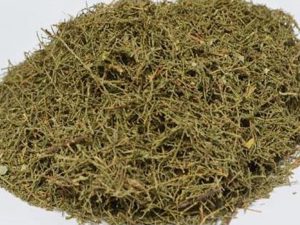
It is processed into irregular segments consisting of a mixture of stems and leaves. The stems are slightly square in cross-section, 0.2–1 cm in diameter; the outer surface is grayish-brown, grayish-yellow, or reddish-brown, covered with soft hairs, and the pith is white.The leaves are shriveled and fragmented; when flattened, intact leaves are ovate or triangular-lanceolate; they are gray-green, gray-brown, or light brownish-gray, covered with grayish-white downy hairs on both surfaces, and have bluntly serrated margins. They possess a distinctive aroma and a slightly bitter taste.
Botanical Information
Botanical Classification
Pogostemon grandis, a plant of the genus Pogostemon in the family Lamiaceae.
Morphological Characteristics
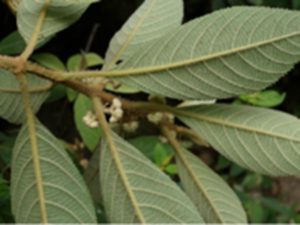
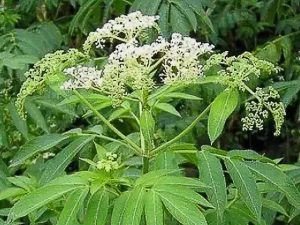
Annual or perennial herb, 40–110 cm tall. Stems erect, quadrangular, slightly reddish, rarely covered with fine pubescence and glands. Leaves opposite;petioles 1–4 cm long; leaf blades elliptic-ovate or ovate, 2–8 cm long, 1–5 cm wide, apex acute or shortly acuminate, base rounded or slightly cordate, margin with irregular blunt teeth, teeth rounded; upper surface glabrous or nearly glabrous, with scattered transparent glandular dots, lower surface pubescent with short soft hairs. Inflorescences are terminal racemes;Bracts are large, linear or lanceolate, covered with fine pubescence; the calyx is 5-lobed, with triangular lobes bearing longitudinal veins and glandular dots; the corolla is labial, purple or white, about 8 mm long, with the upper lip square or ovate and slightly concave at the apex, and the lower lip 3-lobed, the lateral lobes short and the median lobe fan-shaped, with fine, wavy teeth along the margins; the corolla is covered with fine pubescence on the outside;There are 4 stamens, diadelphous, extending beyond the corolla tube; the ovary is deeply 4-lobed, with the style arising from the central base of the ovary and extending beyond the flower; the stigma is 2-lobed. The nutlets are obovate-trigonal. Flowering occurs from June to July, and fruiting from October to November.
Distribution Area
Distributed in Northeast China, East China, Southwest China, as well as Hebei and Shaanxi.
Growth Habits
It prefers a warm and humid climate and is moderately cold-tolerant; in the Beijing area, it can overwinter in the field. It is sensitive to drought. It can be cultivated in most types of soil, but well-drained sandy soil is preferred.
Propagation Methods
Propagation is by seed.
Cultivation Techniques
Seed Propagation: Harvest when most seeds have turned brown; place in a cool, shaded area for several days to complete after-ripening, then sun-dry and thresh. In the south, where temperatures are higher, fall sowing is recommended. From September to October, dig holes 2–4 cm deep with a row and plant spacing of 30 cm each, ensuring the bottom is level. After applying liquid manure, sow 7.5 kg of seeds per hectare. Mixing the seeds with wood ash and broadcasting them evenly into the holes yields higher yields.In the north, sow in March–April. Along the ridges, make shallow furrows 1–1.3 cm deep with a row spacing of 25–33 cm. Sow the seeds evenly in the furrows, cover with 2–4 cm of soil, and tamp down firmly with your feet. Use 7.5–12 kg of seed per hectare; yields are lower.Thin the seedlings when they reach 6–10 cm in height. For row sowing, thin to a plant spacing of 10–15 cm; for hole sowing, leave 3–4 plants per hole.
Pest and Disease Control
Diseases include brown spot disease, which occurs in May and June; promptly remove and burn infected leaves. Practice crop rotation, and spray a 1:1:100 Bordeaux mixture before and during the early stages of infection. To control leaf spot disease, remove and burn dead branches and fallen leaves in winter, and spray a 1,000-fold dilution of 50% Ridomil. For wilt disease, promptly clear ditches and drain water after rain to lower the temperature;in the early stages of infection, remove diseased plants and water the affected areas with a 1,000-fold dilution of 70% Dithane powder or a 500-fold dilution of 40% Carbendazim suspension concentrate. Pests include the vermilion leaf mite.