Ground Euphorbia is a commonly used medicinal herb for clearing heat and detoxifying. It consists of the dried whole plant of Euphorbia humifusa Willd. or Euphorbia maculata L., both belonging to the genus Euphorbia in the Euphorbiaceae family. It has the effects of clearing heat and detoxifying, cooling the blood and stopping bleeding, and promoting diuresis to relieve jaundice.It is primarily used to treat dysentery, diarrhea, hemoptysis, hematuria, hematochezia, metrorrhagia, boils, abscesses, and swellings, as well as damp-heat jaundice.

Ground Ivy
Ground Euphorbia is a commonly used medicinal herb for clearing heat and detoxifying. It consists of the dried whole plant of Euphorbia humifusa Willd. or Euphorbia maculata L., both belonging to the genus Euphorbia in the Euphorbiaceae family. It has the effects of clearing heat and detoxifying, cooling the blood and stopping bleeding, and promoting diuresis to relieve jaundice.It is primarily used to treat dysentery, diarrhea, hemoptysis, hematuria, hematochezia, metrorrhagia, boils, abscesses, and swellings, as well as damp-heat jaundice.
Chinese Name : 地锦草
Latin Name : Euphorbiae Humifusae Herba
Aliases : Grass Blood-Resin, Blood-Fearing Grass, Blood-Fearing, Little Insect Lying Down, Iron-Wire Grass, Soy-Sauce-Petal Grass, Blood-Wind Grass, Horse-Ant Grass,Sparrow’s Bedding, Monkey-Head Grass, Creeping Ivy, Milkflower Grass, Milk Grass, Milk Juice Grass, Ground Ivy, Ground Red, Red Lotus Grass, Spotted Dove’s Nest, March Yellow Flower, Ground Thistle, Ironwire Purslane, Centipede Grass, Milk Scrofula Grass, Red Stem Grass, Red Spotted Dove’s Nest, Ground Ma-sang,Red Sand Grass, Cool Hat Grass, Small Fly Wing Grass, Red Thread Grass, Small Red Vein Grass, Immortal Peach Grass, Lotus Seed Grass, Cartilage Lotus Seed Grass, Nine Dragons Spitting Pearls Grass, Ground Petal Grass, Manure Foot Grass, Manure Touch Foot, Flowered Bedsheet, Ground-Spreading Grass, Bedsheet Grass, Star Grass, Spotted Sparrow Grass, Many-Leaved Fruit, Phoenix Nest, Nine-Headed Lion Grass
Nature, Flavor & Meridian Tropism : Pungent in taste, neutral in nature; enters the Liver and Large Intestine meridians
Benefits & Efficacy
Benefits
Clears heat and detoxifies; cools the blood and stops bleeding; drains dampness and alleviates jaundice.
Indications
Mainly used to treat dysentery, diarrhea, hemoptysis, hematuria, hematochezia, metrorrhagia and menorrhagia, boils, abscesses, and swellings, as well as damp-heat jaundice.
Usage and Dosage
Decoct and take 9–20 g. Use an appropriate amount for external application.
Precautions
1. While using Euphorbia humifusa, pay attention to dietary adjustments; avoid spicy and irritating foods, and maintain a light diet. 2. Pregnant and breastfeeding women must inform their physician of their condition in advance; the decision to use this herbal medicine for treatment can only be made after a professional evaluation.
Chemical Constituents
Main flavonoid components: kaempferol, quercetin, apigenin, luteolin, luteolin glycoside, isodichondrenol, spotted-leaf groundselin A, and astragaloside;Coumarin compounds: scopolin, umbelliferone, ayapanzelone; Terpenoids: β-amyrin acetate, taraxerol acetate, pterol acetate, α-amyrinol;Organic acids: palmitic acid, gallic acid, methyl gallate, and cis-gallic acid; Tannins: Stork’s-bill tannin, etc.
Pharmacological Actions
This product possesses antimicrobial, antioxidant, and hemostatic properties.
Relevant Discussions
1. *Jiaoyu Bencao*: “Primarily promotes blood circulation; may also be used to treat qi disorders.”
2. *Compendium of Materia Medica*: “Treats abscesses, malignant sores, bleeding from external injuries caused by blades, bloody dysentery, hematochezia, and metrorrhagia; disperses blood stasis, stops bleeding, and promotes urination.”
3. *Bencao Huiyan*: “Dijin is a herb that cools the blood, disperses blood stasis, detoxifies, and stops dysentery. It excels at promoting blood circulation and specializes in resolving toxic sores. It is particularly suitable for blood-related disorders caused by heat.”
Applications
Clinical Applications
1. Treats persistent diarrhea and dysentery, bloody dysentery, and hemorrhoids. For example, according to *Experienced Formulas*, grind this herb into a powder and take it with rice water to treat diarrhea and dysentery caused by damp-heat; to treat bloody dysentery or the passage of pus and blood in stools, it can be combined with purslane and Chinese knotweed to enhance therapeutic efficacy.
2. To treat menorrhagia and metrorrhagia in women, it may be used alone as a powder, mixed with ginger and wine (from *Effective Formulas of the World’s Physicians*); to treat swelling, pain, and bleeding from external injuries, fresh material may be pounded into a paste and applied topically to the affected area. For hematuria and bloody dysuria, it is often used in combination with White Reed Root and Small Thistle.
3. To treat damp-heat jaundice and difficulty urinating, it may be decocted and taken alone, or used in combination with Artemisia capillaris, Gardenia, and Phellodendron.
4. To treat conditions such as sores, abscesses, and swellings caused by heat toxins, as well as venomous snake bites, the fresh herb is typically pounded into a paste and applied externally to the affected area.
Related Compatibility
1. Ground Ivy combined with Purslane: Both herbs can clear heat, eliminate toxins, cool the blood, and stop dysentery. Ground Ivy excels at clearing heat and eliminating toxins, while Purslane excels at cooling the blood and stopping dysentery. When combined, these two herbs enhance the effects of clearing heat, eliminating toxins, cooling the blood, and stopping dysentery. This combination is suitable for treating heat-toxin-induced diarrhea and dysentery with pus and blood in the stool.
2. Ground Ivy Combined with Artemisia Capillaris: Ground Ivy has the function of clearing heat and draining dampness, while Artemisia Capillaris is a key herb for clearing heat, draining dampness, promoting bile secretion, and relieving jaundice. When combined, these two herbs enhance the effects of clearing heat, detoxifying, draining dampness, and relieving jaundice. This combination is suitable for damp-heat jaundice and difficulty urinating.
3. Ground Ivy Combined with Notoginseng: Ground Ivy clears heat, cools the blood, and stops bleeding, while Notoginseng is particularly effective at resolving blood stasis and arresting bleeding. When combined, these two herbs enhance the hemostatic effect without the drawback of retaining blood stasis. This combination is suitable for various bleeding disorders caused by blood heat, such as hemoptysis, epistaxis, hematochezia, and metrorrhagia.
Medicinal Identification
Ground Ivy and Whitehead: Both enter the Large Intestine Meridian and are effective at clearing heat and detoxifying, cooling the blood, and stopping dysentery. They are used together to treat heat-toxin-induced bloody dysentery as well as sores, abscesses, and swelling and pain.However, Ground Ivy also has the ability to stop bleeding, drain dampness, and relieve jaundice, making it suitable for bleeding due to blood heat, traumatic bleeding, and damp-heat jaundice. Whitehead, on the other hand, is particularly effective at clearing damp-heat from the stomach and intestines and heat-toxin from the blood, making it an excellent remedy for dysentery; it is also commonly used to treat vaginal itching and leukorrhea.
Related Medicines
Changyanning Syrup (Tablets), Pediatric Diarrhea Relief Granules, Jidesheng Snake Medicine Tablets, Sanqi Hemostatic Tablets, Hemostatic Tablets.
Notes
Patients requiring treatment with traditional Chinese medicine should first consult a licensed TCM hospital, where a TCM practitioner will conduct a professional diagnosis and prescribe the appropriate herbal formula.
Processing & Preparation
Harvesting & Processing
Harvested in summer and autumn; remove impurities and dry.
Processing Methods
Remove impurities, spray with clean water to slightly moisten, cut into sections, and dry.
Storage Methods
Store in a well-ventilated, dry place.
Crude Drug Identification
Properties of Crude Drugs
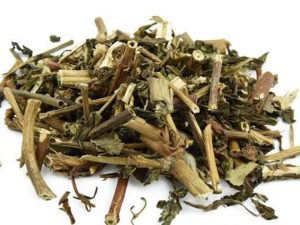
1. Ground Ivy: Often shriveled and curled, with slender roots. The stems are slender, forked, and branched; their surface is purplish-red, smooth and glabrous or sparsely covered with fine white soft hairs; they are brittle, break easily, and have a yellowish-white, hollow cross-section.Simple leaves are opposite, with pale red short petioles or nearly sessile; leaf blades are often shriveled or have fallen off; when flattened, they are oblong, 5–10 mm long and 4–6 mm wide; green or purplish-red, usually glabrous or sparsely covered with fine soft hairs; the apex is bluntly rounded, the base is oblique, and the margin has small serrations or is slightly wavy.The cup-shaped cymose inflorescences are axillary and minute. The capsules are trigonous-spherical with a smooth surface. The seeds are minute, ovate, and brown. Odorless, with a slightly astringent taste.
2. Spotted Ground Ivy: The upper surface of the leaves has red spots, and the capsules are covered with sparse, short, white soft hairs.
Properties of Processed Slices
1. Ground Ivy: This product appears in segments. The roots are minute; the stems are slender, forked, and yellowish-green or purplish-red in color, smooth and glabrous or sparsely covered with fine white pubescence; they are brittle, break easily, and have a yellowish-white, hollow cross-section. Simple leaves are opposite, with pale red, short petioles or nearly sessile; the leaf blades are often shriveled or shed; they are green or tinged with purplish-red, usually glabrous or sparsely covered with fine pubescence;the apex is bluntly rounded, the base is oblique, and the margin is finely serrated or slightly wavy. The visible capsules are trigonous-spherical with a smooth surface. The seeds are minute, ovate, and brown. The odor is faint, and the taste is slightly astringent.
2. Spotted Ground Ivy: The upper surface of the leaves bears red spots. The capsules are covered with sparse, short, white, soft hairs.
Botanical Information
Botanical Classification
Euphorbia and Spotted Euphorbia, plants of the genus Euphorbia in the family Euphorbiaceae.
Morphological Characteristics
1. Ground Ivy: An annual, creeping herb with slender stems approximately 20 cm long, forked, initially reddish, turning purplish-red in autumn, glabrous or sparsely covered with short, fine hairs.The entire plant contains white latex. Leaves are usually opposite, sessile or with short petioles; leaf blades are oblong or elliptical, 5–10 mm long and 3–6 mm wide, with a bluntly rounded apex, an oblique base, and inconspicuous fine serrations along the margins; they are green or reddish-purple, glabrous or sparsely covered with short hairs on both surfaces.A single cup-shaped cymose inflorescence arises from each leaf axil; the involucre is inversely conical, pale red or green, 4-lobed at the apex, with oblong-triangular lobes; there are 4 glands, transversely oblong, bearing white petal-like appendages; the ovary is 3-chambered, with 3 styles, each 2-lobed. The capsule is trigonous-spherical and glabrous.Seeds are ovate, blackish-brown or blackish-gray, covered with a white waxy powder, and approximately 1.2 mm long. Flowering occurs from July to August; fruiting from August to October.
2. Spotted Ground Ivy: This species closely resembles Ground Ivy, but the stems of Spotted Ground Ivy are densely covered with fine white soft hairs, and the upper surface of the leaves has a long, linear purplish-red spot in the center. The leaves and capsules are sparsely covered with short white soft hairs. The seeds are grayish-red.
Distribution Area
1. Ground Ivy: Distributed throughout most of the country. 2. Variegated Ground Ivy: Found in Shandong, Jiangsu, Anhui, Zhejiang, Jiangxi, Fujian, Guangdong, Guangxi, Taiwan, and other regions.
Growth Habits
Prefers a warm and humid climate.
Propagation Methods
Propagated by seed.
Cultivation Techniques
Harvest in autumn (September–October) when the fruits are ripe; sun-dry and store for later use. Sow in spring (March–April): mix the seeds thoroughly with wood ash, then broadcast-sow in rows. Dig furrows 15 cm apart, sow the seeds evenly into the furrows, cover lightly with fine soil, and press down gently. Remove weeds promptly after germination. Fertilize primarily with manure.
Pest and Disease Control
No significant pests or diseases.