Winter Melon, a name in traditional Chinese medicine. It refers to the outer rind, mature seeds, leaves, and pulp of Benincasa hispida (Thunb.), a plant of the genus Benincasa in the Cucurbitaceae family. It is produced in most regions of China.Winter melon rind has diuretic and anti-edematous properties and clears heat and relieves summer heat; it is primarily used to treat edema and abdominal distension, difficulty urinating, thirst caused by summer heat, and scanty, reddish urine. Winter melon seeds clear heat, resolve phlegm, expel pus, and promote the elimination of dampness; they are primarily used to treat coughs caused by phlegm-heat, lung abscesses, intestinal abscesses, leukorrhea, dysuria, and edema.Winter melon leaves have the effects of clearing heat, draining dampness, and detoxifying; they are primarily used to treat diabetes insipidus, summer-heat-induced diarrhea and dysentery, malaria, skin infections, and bee stings; while winter melon flesh has the effects of clearing heat, quenching thirst, promoting urination, and reducing swelling; it is primarily used to treat feverish conditions with restlessness and thirst, diabetes insipidus, dysuria, edema, and abscesses.

Winter Melon
Winter Melon, a name in traditional Chinese medicine. It refers to the outer rind, mature seeds, leaves, and pulp of Benincasa hispida (Thunb.), a plant of the genus Benincasa in the Cucurbitaceae family. It is produced in most regions of China.Winter melon rind has diuretic and anti-edematous properties and clears heat and relieves summer heat; it is primarily used to treat edema and abdominal distension, difficulty urinating, thirst caused by summer heat, and scanty, reddish urine. Winter melon seeds clear heat, resolve phlegm, expel pus, and promote the elimination of dampness; they are primarily used to treat coughs caused by phlegm-heat, lung abscesses, intestinal abscesses, leukorrhea, dysuria, and edema.Winter melon leaves have the effects of clearing heat, draining dampness, and detoxifying; they are primarily used to treat diabetes insipidus, summer-heat-induced diarrhea and dysentery, malaria, skin infections, and bee stings; while winter melon flesh has the effects of clearing heat, quenching thirst, promoting urination, and reducing swelling; it is primarily used to treat feverish conditions with restlessness and thirst, diabetes insipidus, dysuria, edema, and abscesses.
Chinese Name : 冬瓜
Latin Name : Benincasa hispida (Thunb.)
Aliases : White Gourd, Water Zhi, White Winter Melon, Earth Zhi, Pu Gourd, Dong Gourd, Pillow Gourd
Nature, Flavor & Meridian Tropism : Winter melon peel has a sweet taste and a cool nature, and enters the Spleen and Small Intestine meridians; winter melon seeds have a sweet taste and a slightly cold nature, and enter the Lung, Spleen, and Small Intestine meridians; winter melon leaves have a bitter taste and a cool nature, and enter the Lung and Large Intestine meridians; winter melon pulp has a sweet taste and a neutral nature, and enters the Lung and Bladder meridians
Benefits & Efficacy
Benefits
1. Winter melon peel has the effects of promoting urination, reducing swelling, clearing heat, and relieving summer heat. 2. Winter melon seeds have the effects of clearing heat, resolving phlegm, draining pus, and promoting the elimination of dampness. 3. Winter melon leaves have the effects of clearing heat, promoting the elimination of dampness, and detoxifying. 4. Winter melon pulp has the effects of clearing heat, quenching thirst, promoting urination, and reducing swelling.
Indications
1. Winter melon peel is primarily used to treat edema and abdominal distension, difficulty urinating, thirst caused by summer heat, and scanty, reddish urine. 2. Winter melon seeds are primarily used to treat phlegm-heat cough, lung abscess, intestinal abscess, leukorrhea, dysuria, and edema. 3. Winter melon leaves are primarily used to treat diabetes insipidus, summer-dampness-induced diarrhea and dysentery, malaria, skin infections, and bee stings. 4. Winter melon pulp is primarily used to treat feverish conditions with restlessness and thirst, diabetes insipidus, dysuria, edema, and abscesses.
Usage and Dosage
1. Internal Use: Prepare as a decoction. The common dosage for winter melon peel and seeds is 9–30 g; for winter melon leaves, 9–15 g; and for winter melon pulp, 30–60 g. Additionally, winter melon seeds can be ground into a powder and taken with water, and winter melon pulp can be juiced and consumed. 2. External use: Use as needed. Winter melon peel and flesh can be decocted for external washing; winter melon seeds can be ground into a paste for topical application; winter melon leaves can be ground and applied as a poultice.
Precautions
1. Patients requiring treatment with winter melon should first consult a licensed Traditional Chinese Medicine (TCM) hospital to receive a TCM prescription following a professional TCM diagnosis. 2. Winter melon should not be consumed with adzuki beans to prevent a sudden increase in urine output, which can easily lead to dehydration. 3. Vinegar destroys the nutrients in winter melon and reduces its nutritional value; therefore, it should not be consumed with winter melon. 4. Consuming winter melon with red crucian carp reduces its nutritional value; therefore, they should not be eaten together.
Chemical Constituents
1. Winter melon peel: Mainly contains E-2-hexenal, n-hexenal, n-hexanol formate, 2,5-dimethylpyrazine, triterpenoids, vitamins, niacin, carotene, glucose, fructose, sucrose, organic acids, starch, and other components. 2. Winter melon seeds: Contain linoleic acid, oleic acid, brassicasterol, stigmasterol, mucoreneol, simidendreneol, adenine, and trigonelline, among other components.
Pharmacological Actions
1. Winter Melon Peel: Modern pharmacological studies have found that this product possesses diuretic, antioxidant, detoxifying, and hypoglycemic effects. 2. Winter Melon Seeds: Modern pharmacological studies have found that this product possesses antioxidant, antidiabetic, antibacterial, expectorant, anti-pulmonary fibrosis, anti-prostatic hyperplasia, and anthelmintic effects.
Relevant Discussions
1. *Herbal Compendium of Southern Yunnan*: Quenches thirst, eliminates phlegm, and promotes urination.
2. *Practical Applications of Medicinal Properties*: Expels water and dampness from the skin, effectively reducing skin swelling.
3. *Revised Herbal Compendium*: Penetrates the skin, dispels dampness and wind, tonifies the spleen, and clears heat.
Applications
Medicinal Identification
Winter Melon Rind and Winter Melon Seeds: Both winter melon rind and winter melon seeds have a sweet taste and are slightly cold in nature; they enter the Spleen and Small Intestine meridians, clear heat, and drain dampness, and can both be used to treat edema. However, winter melon rind excels at clearing heat, promoting urination, and reducing swelling; it has a mild nature and is therefore often used to treat edema with abdominal distension and difficulty urinating. It can also relieve summer heat and is frequently used to treat thirst caused by summer heat;Winter melon seeds, on the other hand, are moist and slippery in nature; they clear lung heat in the upper part of the body and resolve stagnation in the large intestine in the lower part, while also helping to expel phlegm and drain pus. Therefore, they are more commonly used for lung-heat coughs, turbid urinary discharge and vaginal discharge, as well as conditions such as lung abscess and intestinal abscess caused by internal damp-heat that has developed into pus over a prolonged period.
Medicinal Diet Therapy
Examples include winter melon and lean pork soup, winter melon and carp soup, lotus leaf and winter melon soup, winter melon congee, and astragalus and winter melon congee.
Notes
The references for this entry are as follows: [1] State Pharmacopoeia Commission. Clinical Guidelines for the Pharmacopoeia of the People’s Republic of China: 2020 Edition. Volume on Chinese Herbal Decoction Pieces [M]. Beijing: China Medical Science and Technology Press, 2022. [2] State Pharmacopoeia Commission. Pharmacopoeia of the People’s Republic of China: 2020 Edition. Part I [M]. Beijing: China Medical Science and Technology Press, 2020. [3] Tu Yanjie, Yang Aidong. Dietary Nourishment and Dietary Therapy in Traditional Chinese Medicine [M]. 2nd ed. Shanghai: Shanghai Science and Technology Press, 2025. [4] Yu Yating, Fu Yanrong. Illustrated Guide to Common Fruits and Vegetables [M]. Nanjing: Jiangsu Phoenix Science and Technology Press, 2023. [5] Wu Xingguang, Deng Xianyu. Illustrated Atlas of Key Traditional Chinese Medicine Resources in Mingguang City, Anhui Province [M]. Hefei: Anhui Science and Technology Press, 2023. [6] Chongqing Municipal Health Bureau. Traditional Chinese Medicine of Chongqing [M]. Chongqing: Chongqing People’s Publishing House, 1962. [7] Pei Liuxing, Pei Li. Essentials of Everyday Materia Medica: Preparation Methods and Applications of 606 Types of Traditional Chinese Medicinal Materials [M]. Tianjin: Tianjin Science and Technology Translation and Publishing Co., Ltd., 2023. [8] Zeng Zhaolong, Zhang Meng. Practical Clinical Chinese Materia Medica [M]. Beijing: Xueyuan Press, 2001. [9] Miao Mingsan, Wang Huisen, Zhou Wenting. Supplementary Notes on Medicinal Resources [M]. Taiyuan: Shanxi Science and Technology Press, 2024.
Processing & Preparation
Harvesting & Processing
1. Winter Melon Rind: When preparing winter melon for consumption, wash it thoroughly, peel off the outer layer of rind, and sun-dry it. 2. Winter Melon Seeds: When preparing winter melon for consumption, remove the mature seeds, wash them, and dry them. 3. Winter Melon Leaves: Harvested in summer; they can be shade-dried or used fresh. 4. Winter Melon Pulp: When preparing winter melon for consumption, collect the pulp and use it fresh.
Processing Methods
1. Winter Melon Rind
Take the raw material, remove impurities, wash thoroughly, cut into chunks or wide strips, and dry.
2. Winter Melon Seeds
(1) Raw Winter Melon Seeds: Take the raw material, remove impurities and dust. Crush before use.
(2) Roasted winter melon seeds: Take the cleaned winter melon seeds and roast them over low heat until they turn slightly yellowish-white and emit a faintly toasty aroma; remove and allow to cool. Crush before use.
Storage Methods
Store dried winter melon peel, winter melon seeds, and winter melon leaves in dry containers in a well-ventilated, dry place, taking care to prevent insect infestation.
Crude Drug Identification
Properties of Crude Drugs
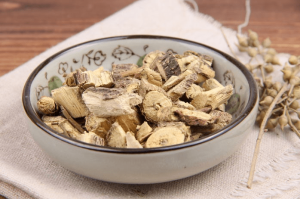
1. Winter Melon Rind: Irregular fragments, often curled inward, varying in size. The outer surface is grayish-green or yellowish-white, covered with a white bloom; some are smoother and lack the white bloom. The inner surface is relatively rough, and vascular bundles resembling veins may be visible in some specimens. Light in weight and brittle in texture. Slight odor; bland taste.
2. Winter Melon Seeds: Flat, oblong-ovate or oblong-elliptical in shape, approximately 1 cm long and 6 mm wide.The outer skin is yellowish-white, sometimes with cracks; one end is blunt and rounded, while the other is pointed. The pointed end has two small protrusions: the smaller one is the seed scar, and the larger one bears a distinct seed pore. The edges are smooth (in single-sided winter melon seeds). After removing the seed coat, two milky-white seed kernels are visible; they are light in weight and oily. They have a faint odor and a slightly sweet taste.
Botanical Information
Botanical Classification
Winter melon (Cucumis melo), a plant of the genus Cucumis in the family Cucurbitaceae.
Morphological Characteristics
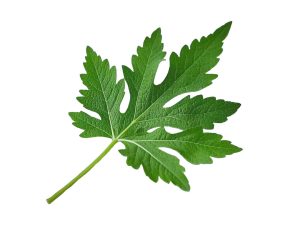
An annual, climbing herb; the stem is densely covered with yellowish-brown hairs. Tendrils are often bifurcated or trifurcated; petioles are stout; leaf blades are reniform to nearly circular, 10–30 cm wide, with a deeply emarginate base, 5–7 shallowly lobed or sometimes medially lobed, margins finely serrate, and both surfaces bearing stiff hairs. The plant is monoecious; flowers are solitary, with pedicels covered in stiff hairs;calyx lobes serrate and reflexed; corolla yellow, radiate, with broad obovate lobes 3–6 cm long; stamens 3, free, anther chambers highly convoluted; ovary ovoid or cylindrical, densely covered with yellowish-brown stiff hairs; stigma 3-lobed.The fruit is long cylindrical or nearly spherical, large, hairy, and covered with a white powdery coating; the seeds are ovate, white or pale yellow, and flattened.
Distribution Area
Widely distributed throughout many regions of the country.
Growth Habits
It prefers a warm and humid climate, is sun-loving, heat-tolerant, and drought-tolerant, but cannot tolerate waterlogging or cold. It is highly adaptable and can grow in most types of soil, though it thrives best in well-drained, fertile, deep, humus-rich sandy loam.
Propagation Methods
Propagation is by seed.
Cultivation Techniques
For commercial production, hole sowing is used in late spring (late April to early May), with a plant spacing of 90–100 cm. After sowing, cover the seeds with 2.5–3.5 cm of fine soil, using 0.4–0.5 kg of seed per mu. Seedlings emerge in about 10 days.