Deer hide, a name for a traditional Chinese medicinal material. It is the hide of the Sika deer (Cervus nippon Temminck) or the Red deer (Cervus elaphus Linnaeus) of the Cervidae family. It has the effects of tonifying qi, astringing essence, and promoting wound healing. It is primarily used to treat leukorrhea in women, metrorrhagia and menorrhagia, kidney deficiency with seminal emission, and all types of ulcers and fistulas.
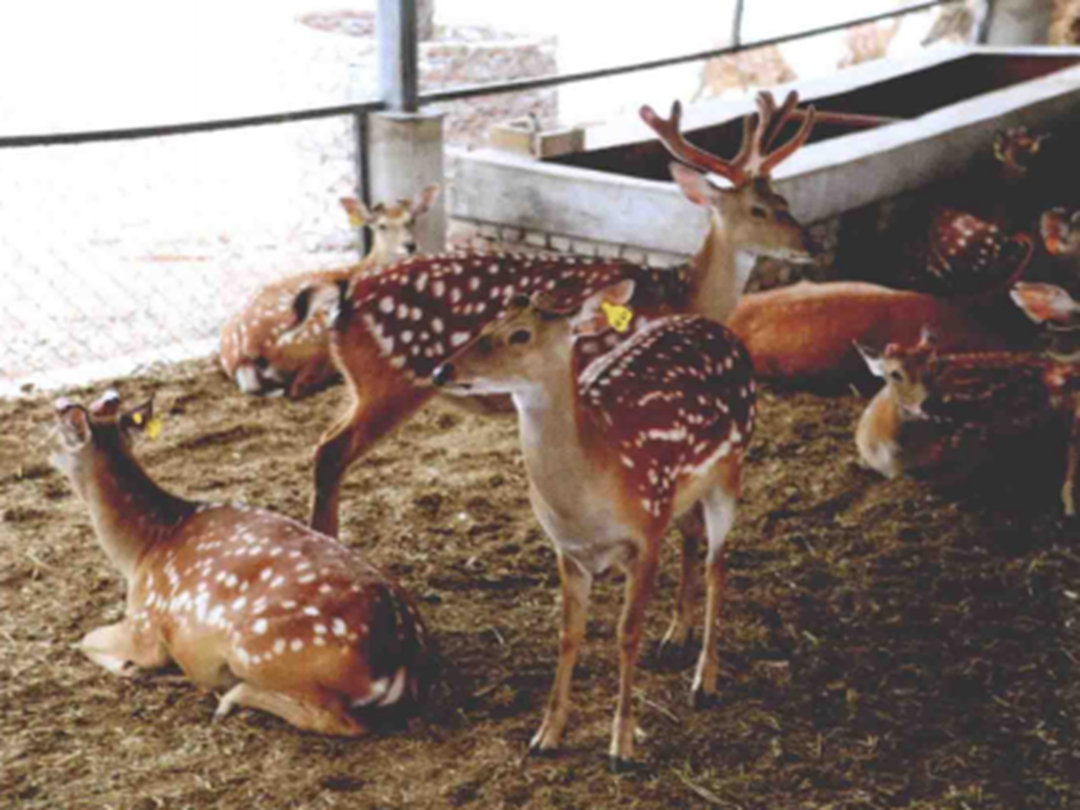
Deer Skin
Deer hide, a name for a traditional Chinese medicinal material. It is the hide of the Sika deer (Cervus nippon Temminck) or the Red deer (Cervus elaphus Linnaeus) of the Cervidae family. It has the effects of tonifying qi, astringing essence, and promoting wound healing. It is primarily used to treat leukorrhea in women, metrorrhagia and menorrhagia, kidney deficiency with seminal emission, and all types of ulcers and fistulas.
Chinese Name : 鹿皮
Nature, Flavor & Meridian Tropism : Salty in taste, warm in nature; enters the Liver and Kidney meridians
Benefits & Efficacy
Benefits
It tonifies qi, astringes seminal fluid, and promotes wound healing.
Indications
Leucorrhea, metrorrhagia, spermatorrhea due to kidney deficiency, and all types of ulcers and fistulas.
Usage and Dosage
1. Internal use: Decoct 9–12 g in water. 2. External use: Apply an appropriate amount of the ash as a poultice.
Precautions
Patients requiring treatment with Chinese herbal medicine should first consult a licensed Traditional Chinese Medicine (TCM) hospital to receive a prescription following a professional TCM differential diagnosis.
Chemical Constituents
Deer skin is rich in collagen, polysaccharides, and amino acids, as well as trace elements such as sodium, manganese, magnesium, potassium, calcium, iron, selenium, copper, and zinc.
Pharmacological Actions
Deer skin helps regulate bone marrow hematopoietic function.
Relevant Discussions
1. *Compendium of Materia Medica*: “For all types of fistulas, burn it to ash, mix with lard, and apply topically; change the dressing five or six times a day until healed.”
2. *Chronicle of Sichuan Chinese Herbal Medicine*: “It can tonify qi and astringe deficient-slip conditions. It treats leukorrhea in women, uncontrollable uterine bleeding, and spermatorrhea due to kidney deficiency; it is also applied topically to all types of sores.”
Applications
Notes
References: 1. *Comprehensive Dictionary of Chinese Materia Medica* 2. *Chinese Materia Medica* 3. *Supplementary Notes on Medicinal Resources* 4. *Latest Pharmacology and Clinical Applications of Chinese Herbal Medicine*
Processing & Preparation
Harvesting & Processing
Can be harvested year-round. Remove the hide when slaughtering a deer, soak it in warm water, thoroughly remove all hair and impurities, and air-dry.
Storage Methods
Store in a dry container, tightly sealed, in a cool, dry place, protected from moisture and insect infestation.
Crude Drug Identification
Botanical Information
Morphological Characteristics
1. Sika Deer: Body length approximately 1.5 m; weight approximately 100 kg. Prominent suborbital glands; large, erect ears; slender, long neck. Slender, long limbs; brown plantar glands on the outer side of the hind ankle joints; main hooves are narrow and small, with small lateral hooves. A distinct white patch on the rump; short tail.Male sika deer have branched antlers; when fully grown, they have 4–5 branches. The brow tine extends diagonally forward; the second branch is set far from the brow tine, and the main shaft splits into two small branches at its tip. The winter coat of the sika deer is chestnut brown, with inconspicuous white spots. The hair on the muzzle and cheeks is short, with sandy-yellow tips. A dark brown dorsal stripe runs from the top of the head along the spine to the tail.The white rump patch has a dark brown border. The undercoat is pale brown, and the groin area is white. The outer sides of the limbs match the body color, while the inner sides are slightly lighter. The summer coat is thin, without underfur, reddish-brown in color, with prominent white spots arranged in vertical rows along both sides of the spine and the lower edges of the flanks; there is a black dorsal stripe. The belly is white, the dorsal surface of the tail is black, and the limbs are lighter in color than the body.
2. Gueland Deer: This species is large, with a body length of 2 m and a weight exceeding 200 kg. Its shoulder height is approximately 1 m; the back is straight, and the heights at the shoulders and hindquarters are equal. The tip of the nose is bare, and the ears are large and conical. The neck is about one-third the length of the body, with relatively long undercoat on the underside of the neck. The limbs are long, and the hooves on both sides are long enough to touch the ground.The tail is short. Males have antlers; the brow tines extend forward, forming nearly a right angle with the main shaft, which curves slightly backward and inward. The surface of the antlers is rough except at the tips, and the base of the antlers has a small ring of tubercle-like protrusions. The winter coat is grayish-brown. The muzzle and lower jaw are dark brown, the cheeks are brown, and the forehead is brownish-black.The outer surface of the ears is yellowish-brown, while the inner surface is white. The neck and dorsal surface of the body are slightly yellowish-brown, with a blackish-brown dorsal stripe. The outer sides of the limbs are brown, while the inner sides are lighter in color. The rump has a yellowish-ochre patch. The summer coat is shorter, without undercoat, and reddish-brown in color.
Distribution Area
1. Sika Deer: Found in Northeast, North, East, and South China. 2. Elk: Found in Northeast, Northwest China, and Inner Mongolia, among other areas.