Artemisia leaves, a traditional Chinese medicine. These are the dried leaves of Artemisia argyi Levl. et Vant., a plant in the genus Artemisia of the Asteraceae family. They have the effects of warming the meridians to stop bleeding, dispelling cold to relieve pain, and removing dampness to relieve itching. They are primarily used to treat hemoptysis, epistaxis, metrorrhagia and menorrhagia, excessive menstrual bleeding, spontaneous abortion with vaginal bleeding, cold pain in the lower abdomen, irregular menstruation due to cold, and infertility caused by a cold uterus; externally, they are used to treat skin itching.

Mugwort
Artemisia leaves, a traditional Chinese medicine. These are the dried leaves of Artemisia argyi Levl. et Vant., a plant in the genus Artemisia of the Asteraceae family. They have the effects of warming the meridians to stop bleeding, dispelling cold to relieve pain, and removing dampness to relieve itching. They are primarily used to treat hemoptysis, epistaxis, metrorrhagia and menorrhagia, excessive menstrual bleeding, spontaneous abortion with vaginal bleeding, cold pain in the lower abdomen, irregular menstruation due to cold, and infertility caused by a cold uterus; externally, they are used to treat skin itching.
Chinese Name : 艾叶
Latin Name : Artemisiae Argyi Folium
Aliases : Medicinal Licorice, Roasted Licorice
Authentic Producing Area : Shandong, Anhui, Hubei, Hebei
Nature, Flavor & Meridian Tropism : Pungent and bitter in taste; warm in nature; enters the Liver, Spleen, and Kidney meridians
Benefits & Efficacy
Benefits
Warms the meridians and stops bleeding; dispels cold and relieves pain; when used externally, removes dampness and relieves itching.
Indications
Hemoptysis, epistaxis, metrorrhagia and menorrhagia, excessive menstrual bleeding, threatened miscarriage with vaginal bleeding, cold pain in the lower abdomen, irregular menstruation due to cold, uterine cold causing infertility; externally used to treat skin itching.
Usage and Dosage
1. Internal use: Decocted as a soup, 3–10 g; or incorporated into pills or powders; or pounded to extract juice. 2. External use: Apply an appropriate amount; pound into a fine powder to form moxa cones or moxa sticks for moxibustion; or pound and apply as a poultice; or decoct in water for steam baths; or heat in a pan and apply as a warm compress.
Precautions
1. Use with caution in cases of yin deficiency with blood heat. 2. Avoid excessive doses when used in combination with sedatives or anesthetics.
Chemical Constituents
Contains essential oils, sesquiterpenes, and flavonoid compounds, among others.
Pharmacological Actions
Artemisia leaves have hemostatic, antitussive, bronchodilatory, analgesic, anti-inflammatory, and antibacterial effects.
Relevant Discussions
1. *Collected Annotations to the Classic of Materia Medica*: “Pound the leaves for moxibustion to treat a hundred ailments; it also stops bleeding from injuries. The juice kills roundworms. Decoct the leaves in vinegar to treat tinea.”
2. *Treatise on the Nature of Medicinal Substances*: “It stops excessive uterine bleeding, stabilizes pregnancy, and relieves abdominal pain. It treats dysentery with red and white stools, as well as hemorrhagic diarrhea caused by hemorrhoids in the five viscera.” “Long-term use stops cold dysentery. For foul-smelling gas in the chest and abdomen, pound the leaves to extract the juice and drink it.”
3. *Newly Revised Materia Medica*: “It is primarily used for treating hemorrhage, epistaxis, and bloody diarrhea with pus; it can be boiled in water or used in pills and powders as needed.”
4. *Dietary Therapy Materia Medica*: “(It treats) traumatic wounds, uterine hemorrhage, cholera, and stops spontaneous vaginal bleeding.”
5. *Rihua Zi*: “It stops muscle cramps caused by cholera, treats chest pain, nosebleeds, and leukorrhea.”
Applications
Clinical Applications
1. To treat women’s menorrhagia and bleeding during pregnancy, combine it with donkey-hide gelatin (Ejiao), Chinese angelica (Danggui), and Chinese foxglove root (Dihuang) to warm the meridians, dispel cold, nourish the blood, and stop bleeding—as in the Gelatin and Artemisia Decoction (Jiao Ai Tang) from the *Essentials of the Golden Cabinet* (*Jingui Yaolue*). If there is deficiency of the Chong and Ren meridians resulting in unstoppable menorrhagia, add fried ginger (Pao Jiang), charred human hair (Xueyu Tan), and charred aged palm kernel (Chen Zong Tan) to enhance the effects of warming the meridians and stopping bleeding;If accompanied by qi deficiency leading to failure to retain blood, Astragalus, Codonopsis, and Atractylodes can be added to tonify qi and retain blood; if kidney deficiency causes fetal restlessness, Cuscuta, Mulberry Parasite, and Dipsacus can be added to nourish blood, tonify the kidneys, and stabilize the pregnancy.
2. For treating hemoptysis and epistaxis caused by deficiency of central yang and loss of control over blood, the *Thousand Gold Essential Prescriptions* recommends decocting cooked mugwort leaves alone, while the *Essentials of the Golden Cabinet*’s Cypress Leaf Decoction combines dried ginger with cypress leaves to warm the middle, assist yang, and stop bleeding;For vomiting, nosebleeds, or hemoptysis caused by blood heat leading to uncontrolled blood flow, fresh mugwort leaves should be combined with fresh raw rehmannia root, fresh lotus leaf, and fresh cypress leaf—all of which cool the blood and stop bleeding. This approach not only achieves the effect of hemostasis but also prevents the adverse effects of cold and cooling herbs causing blood stasis, as seen in the “Four-Ingredient Pill” from *Yang’s Family Prescriptions*.
3. To treat deficiency-cold in the Chong and Ren meridians, cold pain in the lower abdomen, irregular menstruation, and long-standing infertility, combine it with Xiangfu, Wu Zhu Yu, Dang Gui, and Rou Gui to dispel cold, relieve pain, nourish the blood, and regulate menstruation—as in the “Ai Fu Nuan Gong Pill” from *Zhi Zhi Fang*; in cases of severe cold, it may also be used in combination with Fuzi and dried ginger.
4. To treat postpartum abdominal pain caused by exposure to cold or cold pain in the umbilical region and lower abdomen in the elderly, place roasted mugwort leaves in a cloth bag and secure it around the navel.
5. To treat various types of pain caused by yang deficiency with severe cold or by pathogenic factors of wind, cold, and dampness, form moxa wool into moxa sticks or cones and ignite them to apply moxibustion to the affected area or acupoints; this warms and nourishes qi and blood and unblocks the meridians.
6. To treat diarrhea or leukorrhea caused by cold and dampness descending, use it alone or combined with dried ginger in a decoction for immediate relief.For cases accompanied by abdominal distension and pain, add dried tangerine peel (Chenpi) to regulate qi, relieve pain, and dry dampness; for uncontrollable vomiting and diarrhea, add nutmeg (Roudoukou), chebulic myrobalan (Hazi), and dragon bone (Longgu) to astringe and stop diarrhea; for cholera with muscle cramps, combine with papaya (Mugua), patchouli (Huoxiang), and elsholtzia (Xiangru) to dispel cold, dry dampness, relax tendons, and relieve spasms.
7.To treat leukorrhea in women, combine with Atractylodes lancea, Atractylodes macrocephala, and Angelica sinensis for internal use, or with Sophora flavescens, Cnidium monnieri, and Angelica dahurica for external washing to dry dampness and relieve itching.
8. To treat eczema, scabies, skin itching, and weeping sores, it can be used alone externally or decocted with Phellodendron amurense, Sichuan pepper, and Saposhnikovia divaricata for steam baths; it can also be ground into a powder with calcined alum and applied topically.
Related Compatibility
1. Artemisia leaves combined with donkey-hide gelatin: Artemisia leaves are pungent and warm; they can warm the meridians to stop bleeding and warm the uterus to support conception. Donkey-hide gelatin is sweet in nature; it can nourish yin, replenish blood, and stop bleeding. When these two herbs are combined, they complement each other, enhancing their hemostatic and pregnancy-stabilizing effects. This combination is suitable for treating menorrhagia, metrorrhagia, and threatened miscarriage caused by deficiency-cold in the lower jiao.
2. Artemisia leaves combined with Cyperus: Artemisia leaves warm the lower jiao to dispel cold and relieve pain, while Cyperus excels at regulating the liver, relieving depression, and regulating menstruation to alleviate pain. When combined, these two herbs enhance the effects of warming the meridians, promoting qi circulation, and relieving pain. This combination is suitable for treating irregular menstruation, dysmenorrhea, lower abdominal cold pain, uterine cold leading to infertility, and fetal restlessness caused by deficiency-cold and qi stagnation in the lower jiao.
3. Artemisia leaves combined with Atractylodes: Artemisia leaves warm the meridians and dispel cold, while Atractylodes dries dampness and strengthens the spleen. When combined, the efficacy of warming the meridians and removing dampness is enhanced. This combination is suitable for treating thin, watery leukorrhea and persistent spotting caused by cold and dampness descending to the lower jiao.
Medicinal Identification
1. Raw Artemisia leaves, vinegar-processed Artemisia leaves, and charred Artemisia leaves: Raw Artemisia leaves are aromatic and can enter the Blood; their pungent and warm nature dispels cold. They are effective at regulating Qi and Blood and dispelling pathogenic factors such as wind, cold, and dampness, and are commonly used for cold pain in the lower abdomen, irregular menstruation due to cold, and itchy skin eczema.Vinegar-processed mugwort is warm without being drying and enhances the effects of dispelling cold and relieving pain; it is frequently used for conditions of deficiency-cold. Charred mugwort has its pungent and dispersing properties significantly reduced, while its ability to warm the meridians and stop bleeding is enhanced; it is frequently used for deficiency-cold-type bleeding disorders.
2. Artemisia leaves and ramie root: Both herbs can stop bleeding and stabilize the fetus, and are used for bleeding and fetal restlessness. However, ramie root can clear heat and cool the blood; it is used to treat hemoptysis, hematemesis, epistaxis, hematuria, metrorrhagia, and purpura associated with heat-type bleeding. Artemisia leaves excel at warming the meridians and stopping bleeding; therefore, they are frequently used for deficiency-cold-type bleeding, particularly in cases of gynecological metrorrhagia and excessive vaginal bleeding.In addition, ramie root can clear heat, promote urination, detoxify, and promote wound healing; it is suitable for conditions such as damp-heat descending to the lower burner, painful and scanty urination, abscesses, boils, and toxic sores, or venomous snake bites. Mugwort leaves can also dispel cold and relieve pain, and are frequently used for patterns of deficiency-cold in the middle and lower burners.
Related Medicines
Pregnancy Preservation Worry-Free Tablets, Nourish the Kidney and Nurture the Fetus Pills, Pregnancy Preservation Pills, Jie’eryin Effervescent Tablets (Vaginal Wash), and Medicinal Mugwort Sticks.
Related Prescriptions
Jiao Ai Decoction (*Jin Gui Yao Lue*), Ai Fu Nuan Gong Pills (*Ren Zhai Zhi Zhi Fang Lun*), Gu Jing Pills (*Yang Shi Jia Cang Fang*), and Ai Ye Decoction (*Sheng Hui Fang*).
Medicinal Diet Therapy
Mugwort Leaf Pain-Relieving Porridge:
1. Benefits: This porridge warms the meridians, stops bleeding, dispels cold, and relieves pain; it is beneficial for dysmenorrhea caused by a deficiency-cold constitution.
2. Ingredients: 30 grams of mugwort leaves, 100 grams of brown rice, and brown sugar to taste.
3. Preparation: Lightly rinse the mugwort leaves, place them in a pot with an appropriate amount of water, and simmer until a concentrated decoction is formed. Strain out the solids and set the liquid aside. Add the washed brown rice to the mugwort decoction and cook until it becomes a thick porridge, then stir in the brown sugar. Season to taste and serve.
4. Usage: Consume once daily with a meal.
Notes
Patients requiring treatment with Chinese herbal medicine should first consult a licensed Traditional Chinese Medicine (TCM) hospital to receive a prescription following a professional TCM differential diagnosis.
Processing & Preparation
Harvesting & Processing
Harvest in summer before the flowers bloom, remove impurities, and sun-dry. The best quality is characterized by large leaves, a grayish-white underside, abundant fine hairs, and a strong aroma.
Processing Methods
1. Artemisia Leaf: Take the raw herb, remove impurities and stems, and sift out any dust or debris.
2. Charred Artemisia Leaf: Place the cleaned Artemisia leaves in a pan and stir-fry over medium heat until the surface turns charred black. Sprinkle a small amount of water to extinguish any embers, stir-fry briefly, then remove and allow to air-dry thoroughly.
3. Vinegar-Treated Artemisia Leaves: Take the cleaned Artemisia leaves, mix thoroughly with rice vinegar, and let them sit until thoroughly moistened. Place them in a pan and stir-fry over low heat until dry. Remove and let cool. Use 15 kg of rice vinegar for every 100 kg of Artemisia leaves.
4. Vinegar-Treated Charred Artemisia Leaves: Take the vinegar-treated Artemisia leaves, place them in a pan, and stir-fry over high heat until they turn charred black. Spray with a small amount of water to extinguish all embers, then stir-fry until dry. Remove and let cool completely.
Storage Methods
Store in dry containers; keep vinegar-treated mugwort and vinegar-treated mugwort charcoal tightly sealed and place in a cool, dry location. Allow mugwort charcoal and vinegar-treated mugwort charcoal to release heat to prevent re-caking.
Crude Drug Identification
Properties of Crude Drugs
The leaves are mostly shriveled, broken, and have short petioles. When flattened, intact leaves are ovate-elliptical in shape, deeply pinnately lobed, with elliptical-lanceolate lobes bearing irregular, coarse serrations along the margins. The upper surface is gray-green or deep yellow-green, with sparse soft hairs and glandular dots, while the lower surface is densely covered with grayish-white downy hairs. The texture is soft. It has a fresh, fragrant aroma and a bitter taste.
The best quality is characterized by thick leaves, a greenish color, a grayish-white underside, abundant downy hairs, a soft texture, and a rich aroma.
Properties of Processed Slices
1. Artemisia leaves: Same as “Characteristics of the Medicinal Material.”
2. Charred Artemisia Leaves: Irregular fragments. The surface is charred black, often curled and broken. It has a fresh, mild aroma.
3. Vinegar-Treated Artemisia Leaves: Irregular fragments. The surface is slightly black, with occasional charred spots. It has a fresh aroma with a slight vinegar scent.
4. Charred Vinegar-Treated Artemisia Leaves: Irregular fragments. The surface is dark brown. It has a vinegar-like aroma.
Botanical Information
Botanical Classification
Artemisia, a plant of the genus Artemisia in the Asteraceae family.
Morphological Characteristics
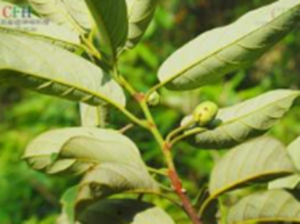
A perennial herb, 50–120 cm tall. The entire plant is densely covered with white tomentum; inflorescence branches that are spreading and obliquely ascending are present from the middle upward or only in the upper part. Leaves are alternate; lower leaves wither during flowering. Middle leaves are ovate-triangular or elliptical, 6–9 cm long and 4–8 cm wide, with a base that is abruptly narrowed or gradually tapering into a short or slightly longer petiole, or slightly expanded to form stipule-like structures;The leaf blades are pinnately or shallowly lobed, with approximately 2 pairs of lateral lobes, often wedge-shaped; the central lobe is often trilobed, with serrated margins. The upper surface is covered with spider-web-like hairs and bears dense or sparse white glandular dots, while the lower surface is densely covered with white or gray tomentum; the upper leaves are gradually smaller, trilobed or entire, and sessile.Numerous capitula arranged in compound racemes, approximately 3 mm long and 2–3 mm in diameter, drooping after flowering; involucre ovate; involucral bracts in 4–5 whorls, margins membranous, abaxially covered with cottony hairs; flowers reddish, numerous, with the outer whorl female and the inner whorl bisexual. Achenes usually nearly 1 mm long, glabrous. Flowering period: July–October.
Distribution Area
Distributed throughout most regions of China.
Growth Habits
Prefers a warm, humid climate; tolerant of drought and shade. Best cultivated in loose, fertile, humus-rich loam.
Propagation Methods
Propagate by division.
Cultivation Techniques
In March–April, dig up the clumps, divide them, and replant. Dig holes with a row and plant spacing of 33 cm × 33 cm; plant 3–4 divisions per hole, fill with soil, firm it down, and water. Cultivate and weed annually, and fertilize 2–3 times—this can be done in conjunction with post-harvest work, typically in May, July, and September. Fertilization should primarily consist of human and animal manure. After 3–4 years of cultivation, old plants should be replanted.