Achyranthes is a herb used to promote blood circulation and regulate menstruation. It consists of the roots of Achyranthes bidentata BI. (Huai Achyranthes) from the genus Achyranthes in the Amaranthaceae family, and Cyathula officinalis Kuan (Sweet Achyranthes) from the genus Cyathula (Cup Amaranth). It has the effects of removing blood stasis and unblocking the meridians, tonifying the liver and kidneys, strengthening tendons and bones, promoting urination and relieving dysuria, and directing blood downward.It is primarily used to treat amenorrhea, dysmenorrhea, soreness in the lower back and knees, weakness of tendons and bones, urinary disorders, edema, headaches, dizziness, toothaches, mouth ulcers, hemoptysis, and epistaxis.

Achyranthes
Achyranthes is a herb used to promote blood circulation and regulate menstruation. It consists of the roots of Achyranthes bidentata BI. (Huai Achyranthes) from the genus Achyranthes in the Amaranthaceae family, and Cyathula officinalis Kuan (Sweet Achyranthes) from the genus Cyathula (Cup Amaranth). It has the effects of removing blood stasis and unblocking the meridians, tonifying the liver and kidneys, strengthening tendons and bones, promoting urination and relieving dysuria, and directing blood downward.It is primarily used to treat amenorrhea, dysmenorrhea, soreness in the lower back and knees, weakness of tendons and bones, urinary disorders, edema, headaches, dizziness, toothaches, mouth ulcers, hemoptysis, and epistaxis.
Chinese Name : 牛膝
Latin Name : Achyranthis Bidentatae Radix
Aliases : Bai Bei, Ox Stem, Jiao Si Deng, Iron Ox Knee, Du Ox Knee, Huai Ox Knee, Huai Xi, Zhen Xi, Huai Xi, Earth Ox Knee, Huai Ox Knee, Red Ox Knee, Ox Knuckle, Ox Crush Knee, Ox Cover Knee, Sticky Grass Seed Root, Ox Elbow Knee, Wild Ox Filling Knee, Bone-Setting Pill, Ox Cover Knee Head
Authentic Producing Area : Mainly produced in Henan, Sichuan, Yunnan, and Guizhou
Nature, Flavor & Meridian Tropism : Taste: bitter, sweet, and sour; nature: neutral; enters the Liver and Kidney meridians
Benefits & Efficacy
Benefits
Removes blood stasis and unblocks the meridians; tonifies the Liver and Kidney; strengthens tendons and bones; promotes urination and relieves dysuria; directs blood downward.
Indications
Mainly used to treat amenorrhea, dysmenorrhea, soreness and pain in the lower back and knees, weakness of tendons and bones, urinary disorders, edema, headache, dizziness, toothache, mouth ulcers, hemoptysis, and epistaxis.
Usage and Dosage
Decoct and take 5–12 g.
Precautions
1. This herb is contraindicated with turtle shell and Luying; it is incompatible with Baiqian. 2. Should not be used in combination with potassium-sparing, sodium-excreting diuretics such as spironolactone or amiloride, as this may lead to hyperkalemia. 3. Achyranthes root has a high potassium content and should not be used concurrently with cardiac glycosides to avoid hyperkalemia and reduced efficacy of the cardiac glycosides. 4. Avoid consuming beef while taking this medication.
Chemical Constituents
Main components include steroidal compounds: β-ecdysterone, etc.; triterpene saponins: ginsenoside R0, Achyranthes saponin I, Achyranthes saponin II, n-butyl-β-D-fructofuranoside;flavonoids: rutin, isoquercetin, kaempferol-3-O-glucoside; it also contains polysaccharides, amino acids, and other components.
Pharmacological Actions
This product possesses pharmacological effects including anticoagulation, protection against myocardial ischemia, anti-aging, immune enhancement, and antitumor activity.
Relevant Discussions
1. *Shennong Bencao Jing*: “Treats cold-damp paralysis and numbness, stiffness of the limbs, and knee pain preventing flexion and extension; expels blood stasis; treats heat-induced skin ulcers; induces abortion. Long-term use lightens the body and delays aging.”
2. *Rihua Zi Bencao*: “Treats weakness and coldness in the lower back and knees; breaks up masses and nodules; expels pus and relieves pain; treats postpartum abdominal pain and blood-induced fainting; expels retained or dead fetuses; and enhances virility.”
3. *Tangye Bencao*: “Strengthens the tendons and tonifies wind-deficiency of the liver.”
4. *Compendium of Materia Medica*: “Treats chronic malaria with alternating chills and fever, the five types of dysuria with blood in the urine, pain in the penis, dysentery, sore throat, mouth ulcers, toothache, abscesses, malignant sores, and fractures.”
Applications
Clinical Applications
1. To treat menstrual obstruction due to blood stasis, dysmenorrhea, irregular menstruation, and postpartum abdominal pain, combine with Angelica sinensis, peach kernels, and safflower, such as in the Blood Residence Stasis-Resolving Decoction (*Corrections to Medical Forest*).
2. To treat aching in the lower back and knees, and weakness in the lower limbs: For lower back pain and weakness in the lower back and knees caused by deficiency of the liver and kidneys, it is combined with Eucommia, Dipsacus, and Psoralea, as in the Dipsacus Pill (from *Fushou Jingfang*).
3. To treat chronic arthralgia and aching in the lower back and knees, it is combined with Angelica pubescens and Mulberry Parasite, as in the Angelica Pubescens and Mulberry Parasite Decoction (from *Qianjin Fang*).
4. To treat fistulas caused by damp-heat and weakness in the feet and knees, it is combined with Atractylodes and Phellodendron, as in the San Miao Pills (from *The Correct Transmission of Medicine*).
5. To treat heat-type dysuria, blood-type dysuria, and sand-type dysuria, it is combined with Winter Mallow Seeds, Lycopodium, Plantain Seeds, and Talc, as in the Achyranthes Decoction (from *Thousand Gold Prescriptions*).
6. To treat edema and difficulty urinating, it is combined with Sheng Dihuang, Zexie, and Cheqianzi, as in the Jiawei Shenqi Pills (from *Jisheng Fang*).
7. To treat headaches and dizziness caused by excessive Liver Yang rising, it is combined with Daizhashi, Sheng Muli, and Sheng Guijia, as in the Zhengan Xifeng Decoction (from *Yixue Zhongzhong Canxi Lu*).
8. To treat swollen and painful gums and mouth and tongue ulcers caused by upward-flaring stomach fire, combine with raw Rehmannia, gypsum, and Anemarrhena, as in the Jade Maiden Decoction (Jingyue Quanshu).
9. To treat hematemesis and epistaxis caused by the upward rebellion of qi and fire forcing blood to flow erratically, combine with white茅根, Gardenia, and Daizhashi to direct blood downward, subdue fire, and stop bleeding.
Related Compatibility
1. Achyranthes root combined with Salvia miltiorrhiza: Achyranthes root has a bitter taste and descending nature, functioning to expel blood stasis and unblock the meridians; Salvia miltiorrhiza primarily enters the Blood system and excels at invigorating blood circulation and regulating menstruation. When combined, their efficacy in invigorating blood circulation and regulating menstruation is significantly enhanced. This combination is suitable for menstrual abdominal pain caused by blood stasis obstruction—including cases accompanied by blood clots—as well as postpartum abdominal pain due to blood stasis obstruction and retained lochia.
2. Achyranthes root combined with Clematis root: Achyranthes root has a naturally descending nature and excels at invigorating blood circulation, regulating menstruation, and unblocking the joints; Clematis root has a naturally penetrating nature and excels at dispelling wind and dampness, and unblocking the Twelve Meridians.When used together, these two herbs not only activate blood circulation and resolve stasis to eliminate blood stasis but also dispel wind and remove dampness to unblock the meridians, in accordance with the principle that “to treat wind, one must first treat the blood; when the blood flows, the wind will naturally subside.” This combination is suitable for bi syndrome caused by wind, cold, and dampness, and is particularly effective for rheumatic bi pain in the lower body.
3. Achyranthes root combined with Cornus fruit: Achyranthes root enters the Liver and Kidney meridians; it not only expels blood stasis and unblocks the meridians but also tonifies the Liver and Kidney and strengthens the tendons and bones. Cornus fruit enters the Liver and Kidney meridians; it not only warms and tonifies the Liver and Kidney but also nourishes yin and replenishes essence. When combined, these two herbs enhance the effect of tonifying the Liver and Kidney. This combination is suitable for treating symptoms such as soreness and weakness in the lower back and knees, as well as weakness of the tendons and bones, caused by deficiency of the Liver and Kidney or chronic rheumatic bi syndrome.
4. Achyranthes root combined with raw Rehmannia root: Achyranthes root has a bitter, descending nature and enters the Liver and Kidney meridians, functioning to tonify the Liver and Kidney; raw Rehmannia root has a bitter, descending nature that clears heat and cools the blood, while its sweet, cold nature nourishes yin and generates body fluids. When combined, these two herbs treat both the upper and lower parts of the body, addressing both the symptoms and the root cause. They possess the functions of clearing heat and nourishing yin, and are suitable for conditions such as swollen and painful gums caused by kidney yin deficiency with ascending deficient fire.
5. Achyranthes root combined with Plantain seed: Achyranthes root directs damp-heat downward and promotes urination to relieve dysuria; Plantain seed has a cold nature and clears heat while promoting urination to relieve dysuria. When used together, these two herbs enhance the effects of clearing heat, promoting urination, and relieving dysuria. This combination is suitable for conditions such as frequent, painful, and scanty urination caused by damp-heat descending into the bladder, or for edema and difficulty urinating.
Medicinal Identification
1. Raw Achyranthes and Wine-Processed Achyranthes: These are two different processed forms of Achyranthes, with distinct therapeutic focuses. Raw Achyranthes excels at dispelling blood stasis, unblocking the meridians, directing blood (and heat) downward, and promoting urination to relieve dysuria. It is commonly used for amenorrhea and dysmenorrhea caused by blood stasis, traumatic injuries, headaches and dizziness, toothache and mouth ulcers due to rising internal heat, hemoptysis and epistaxis, as well as dysuria and edema.Wine-processed Achyranthes root enhances its ability to invigorate blood circulation and also tonifies the liver and kidneys while strengthening tendons and bones. In addition to treating amenorrhea, dysmenorrhea, and traumatic injuries caused by blood stasis, it is particularly effective for treating lower back and knee soreness and weakness of tendons and bones resulting from liver and kidney deficiency.
2. Achyranthes root and Acanthopanax bark: Both have the effects of tonifying the liver and kidneys and strengthening tendons and bones, and both can be used to treat symptoms of weakness and soreness in the lower back and knees, as well as weakness of tendons and bones, resulting from liver and kidney deficiency.However, Achyranthes root is bitter in nature and has a descending action; it can direct blood (and heat) downward, making it effective for treating symptoms such as headaches, dizziness, toothaches, mouth ulcers, hemoptysis, and epistaxis caused by excessive real heat or the upward rising of qi and fire. It also promotes blood circulation and regulates menstruation, making it commonly used for dysmenorrhea and amenorrhea due to blood stasis, as well as trauma-induced injuries. Furthermore, it has diuretic and urinary-tract-clearing properties, treating dysuria and edema.Acanthopanax Bark is pungent, dispersing, and warming; its primary function is to dispel wind and remove dampness, while also warming and tonifying the liver and kidneys. It is commonly used for cold-damp arthralgia complicated by kidney deficiency; it also promotes urination and reduces swelling, treating edema and beriberi.
Related Medicines
Papaya Pills, Lower Back Pain Pills.
Related Prescriptions
Decoction for Calming the Liver and Subduing Wind (*Medical Synthesis of Chinese and Western Medicine*), Achyranthes Powder (*Comprehensive Record of Holy Remedies*), Achyranthes Decoction (*Ye’s Gynecology*), Achyranthes Powder (*Formulas of Holy Beneficence*).
Notes
Patients requiring treatment with traditional Chinese medicine should first consult a licensed TCM hospital, where a TCM practitioner will conduct a professional diagnosis and prescribe the appropriate herbal formula.
Processing & Preparation
Harvesting & Processing
Harvest when the shoots have withered in winter. Wash thoroughly and sun-dry. Use raw or roasted with wine.
Processing Methods
1. Achyranthes Root: Take the raw herb, remove impurities, wash thoroughly, moisten slightly, remove the root crown, cut into sections, and dry.
2. Wine-Processed Achyranthes Root: Take Achyranthes root sections, mix thoroughly with yellow wine, let stand until thoroughly moistened, place in a pot, heat over low heat, stir-fry until dry, then remove and let cool. Use 10 kg of yellow wine for every 100 kg of Achyranthes root.
3. Salted Achyranthes: Take the Achyranthes sections, mix thoroughly with salt water, let stand until thoroughly moistened, place in a pan, heat over low heat, stir-fry until dry, then remove and allow to cool. Use 2 kg of salt per 100 kg of Achyranthes.
Storage Methods
Store in a dry container; keep the wine-processed and salted Achyranthes roots tightly sealed and place in a cool, dry location to prevent moisture absorption.
Crude Drug Identification
Properties of Crude Drugs
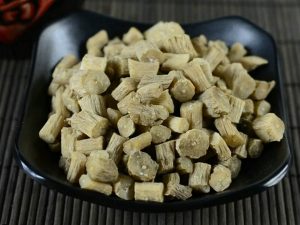
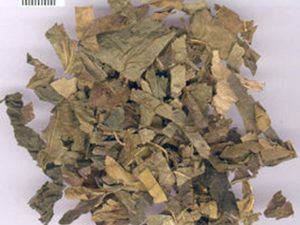
The root is slender and cylindrical, sometimes slightly curved, with the upper end slightly thicker and the lower end thinner, measuring 15–50 cm in length and 0.4–1 cm in diameter. The surface is grayish-yellow or pale brown, with fine longitudinal wrinkles, small, elongated transverse lenticels, and sparse traces of fine roots.The texture is hard and brittle; it breaks easily. The fracture surface is flat, yellowish-brown, and slightly horn-like. The central vascular bundle consists of a relatively large xylem, which is yellowish-white, surrounded by numerous scattered, dot-like vascular bundles arranged in 2–4 whorls. It has a faint odor and a slightly sweet, astringent taste. Specimens with long roots, fine bark, plump flesh, and a yellowish-white color are considered superior.
Properties of Processed Slices
1. Achyranthes: See the “Medicinal Materials” section.
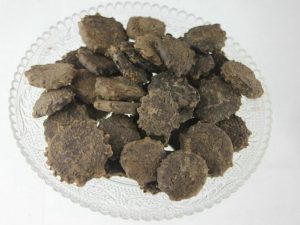
2. Wine-processed Achyranthes: The surface is yellow, occasionally with scorched spots, and has a slight aroma of wine.
3. Salt-processed Achyranthes: Occasionally has scorched spots and tastes salty.
Botanical Information
Botanical Classification
Plants of the genus Achyranthes in the Amaranthaceae family, including Achyranthes huai (Huai Achyranthes) and Achyranthes chuan (Sweet Achyranthes).
Morphological Characteristics
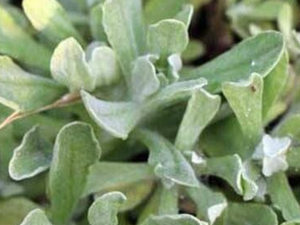
1. Achyranthes: A perennial herb, 70–120 cm tall. The root is cylindrical, 5–10 mm in diameter, and earthy yellow in color. The stem is angular or quadrangular, green or purplish, with white appressed or spreading soft hairs, or nearly glabrous; branches are opposite, and nodes are swollen.Simple leaves are opposite; petioles are 5–30 mm long; leaf blades are membranous, elliptic or elliptic-lanceolate, 5–12 cm long and 2–6 cm wide, with an acuminate apex, a broadly cuneate base, entire margins, and pubescent on both surfaces. Spicate inflorescences are terminal and axillary, 3–5 cm long, and reflexed after flowering;the peduncle is 1–2 cm long and bears white soft hairs; flowers are numerous and densely arranged, 5 mm long; bracts are broadly ovate, 2–3 mm long, with a long acuminate apex; bracteoles are spiny, 2.5–3 mm long, with a curved apex, and each bearing one ovate, membranous lobule on either side of the base, approximately 1 mm long;Tepals lanceolate, 3–5 mm long, glossy, with an acute apex and a single midvein; stamens 2–2.5 mm long; staminodes with a flat, rounded apex and slightly notched, fine serrations. Capsules oblong, 2–2.5 mm long, yellowish-brown, smooth. Seeds oblong, 1 mm long, yellowish-brown.Flowering period: July–September; fruiting period: September–October.
2. Sichuan Achyranthes: A perennial herb, 50–100 cm tall. The taproot is cylindrical, with nearly white bark. The stem is slightly quadrangular, highly branched, and sparsely covered with long, rough hairs.Leaves are opposite; petioles are 5–15 mm long; leaf blades are elliptic or narrowly elliptic, 3–12 cm long and 1.5–5.5 cm wide, with an acuminate or caudate apex, a cuneate or broadly cuneate base, and entire margins; the upper surface bears appressed rough hairs, while the lower surface is more densely hairy.Compound corymbs form dense flower heads; the flower heads are numerous, 1–1.5 cm in diameter, pale green, turning nearly white when dry, arranged in opposite pairs along the terminal inflorescence axis, either densely clustered or spaced 2–3 cm apart;Compound corymbs branch 3–6 times; in each corymb, hermaphroditic flowers are located in the center, with sterile flowers on either side; bracts are ovate, with a spiny or hooked apex; the perianth segments of sterile flowers are modified into hooked, rigid spines; the perianth segments of hermaphroditic flowers are lanceolate, with a spiny-acuminate apex, and the inner three segments are narrower;Filaments densely covered with nodular tufts of hairs at the base; rudimentary stamens rectangular, with the apex shallowly serrate; ovary cylindrical or obovate, style persistent, stigma capitate. Capsule elliptic or obovate, pale yellow, enclosed within the persistent perianth. Seeds elliptic, lenticular, reddish, and glossy. Flowering period: June–July; fruiting period: August–September.
Distribution Area
1. Achyranthes: Distributed throughout most of China, except for the Northeast. 2. Sichuan Achyranthes: Distributed in Sichuan, Guizhou, Yunnan, and other areas.
Growth Habits
It is a deep-rooted plant that prefers a warm, dry climate; it does not tolerate severe cold, and plants are prone to freezing to death at temperatures of -17°C. It is best cultivated in deep, sandy loam; it does not grow well in clay or alkaline soils.
Propagation Methods
Propagated by seed.
Cultivation Techniques
In the fall, collect the seeds when they turn from green to yellowish-brown, sun-dry them, and set them aside for later use. Before sowing, soak the seeds in warm water (30°C) for 8–12 hours, then remove them and place them in a container. Cover with a damp cloth and keep them consistently moist. Once 50% of the seeds have germinated, remove them and proceed with sowing. Generally, the suitable sowing period in the south is from late June to early to mid-July; in the north, it is from late May to early June.Sowing too early results in rapid plant growth, lush stems and leaves, and early and abundant flowering and fruiting; however, the roots are short and highly branched, often becoming woody, leading to poor quality. Sowing too late shortens the growing season, resulting in stunted plants with thin, short roots and low yields. Delaying sowing appropriately can reduce bolting.In the south, broadcast seeding is commonly used: mix treated seeds with an appropriate amount of fine soil, broadcast the mixture, lightly rake the surface, lightly firm the soil, and water to keep the soil moist. In the north, row seeding is commonly used: open shallow furrows 1–2 cm deep with a row spacing of 12–30 cm, sow the seeds evenly into the furrows, and cover with soil just enough to bury the seeds. The seed rate is 7.5–15 kg per 1 h㎡.
Pest and Disease Control
1. White rust and leaf spot can be controlled by spraying a 1:1:120 Bordeaux mixture or a 1,000-fold dilution of 50% wettable methyl thiophanate. For root rot, ensure proper drainage and select high, dry plots for planting; avoid continuous cropping. Drench planting holes with a 1,000-fold dilution of 50% wettable carbendazim powder or a mixture of 2.5 kg of lime and 50 kg of water.Other diseases include leaf spot and nematode infestations.
2. Insect pests include the silver-striped cutworm, which can be controlled by handpicking or spraying a 90% diazinon solution diluted 800 times. Cotton red spider mites can be controlled with a 40% parathion solution diluted 1,500 times. Other pests include inchworms and leaf-rolling caterpillars.