Baiying is the name of a traditional Chinese medicinal herb. It is the whole plant of Solanum lyratum Thunb., a species of the genus Solanum in the Solanaceae family. It has the effects of clearing heat, draining dampness, detoxifying, and reducing swelling.It is primarily used to treat damp-heat jaundice, cholecystitis, cholelithiasis, nephritis with edema, rheumatic joint pain, damp-heat leukorrhea in women, high fever with convulsions in children, boils and scrofula, itchy eczema, and herpes zoster.

Baiying
Baiying is the name of a traditional Chinese medicinal herb. It is the whole plant of Solanum lyratum Thunb., a species of the genus Solanum in the Solanaceae family. It has the effects of clearing heat, draining dampness, detoxifying, and reducing swelling.It is primarily used to treat damp-heat jaundice, cholecystitis, cholelithiasis, nephritis with edema, rheumatic joint pain, damp-heat leukorrhea in women, high fever with convulsions in children, boils and scrofula, itchy eczema, and herpes zoster.
Chinese Name : 白英
Latin Name : Herba Solani Lyrati
Aliases : White-haired Vine, White Grass, Hairy Thousand-Light, Hairy Wind Vine, Wind-Dispelling Vine, Hairy Scholar, Gourd Grass, Golden-Thread Green-Haired Tortoise Grass
Authentic Producing Area : Jiangsu, Zhejiang, Anhui
Nature, Flavor & Meridian Tropism : Sweet and bitter in taste; cold in nature; enters the Liver, Gallbladder, and Kidney meridians
Benefits & Efficacy
Benefits
Clears heat and drains dampness; detoxifies and reduces swelling.
Indications
Damp-heat jaundice, cholecystitis, cholelithiasis, nephritis with edema, rheumatic joint pain, damp-heat leukorrhea in women, high fever with convulsions in children, boils and scrofula, itchy eczema, and shingles.
Usage and Dosage
1. Internal use: Decoct 15–30 g (or 30–60 g if fresh); or macerate in wine. 2. External use: Use an appropriate amount; decoct in water for washing, pound into a paste for application, or extract the juice for topical application.
Precautions
This herb is mildly toxic; excessive intake should be avoided, as it may cause toxic reactions such as a burning sensation in the throat, nausea, vomiting, dizziness, and dilated pupils.
Chemical Constituents
The whole plant of White Honeysuckle contains alkaloids, while the stems and fruits contain solanine (also known as solanine). The stems contain steroidal alkaloids, including tomatenamine, australasine, and shuyangquanine.
Pharmacological Actions
This herb possesses antitumor, antibacterial, anti-allergic, and anti-inflammatory effects.
Relevant Discussions
1. *The Classic of Herbal Medicine*: “Treats baldness, malignant sores, heat-related conditions, scabies, itching, crusted eczema, and parasitic infestations.”
2. *Collected Annotations to the Classic of Herbal Medicine*: “The leaves, prepared as a soup, are highly effective for treating fatigue.”
3. *Supplement to the Materia Medica*: “Mainly treats restlessness and fever, hives, erythema, malaria, alternating chills and fever, and febrile conditions in children.”
Applications
Clinical Applications
1. To treat common cold-induced fever and mastitis, it can be combined with herbs such as dandelion, honeysuckle, and *Euphorbia humifusa*.
2. To treat damp-heat jaundice, abdominal distension and pain, or difficulty urinating, it can be combined with herbs such as *Desmodium styracifolium* and *Artemisia capillaris* to expel pathogenic dampness through urination.
3. To treat rheumatic arthralgia, it can be used in combination with herbs such as Gentiana macrophylla, Notopterygium incisum, and Angelica pubescens.
4. To treat lung cancer and gastrointestinal tumors, it can be combined with herbs such as Rubus chinensis, Solanum nigrum, and Hedyotis diffusa.
Notes
Patients requiring treatment with traditional Chinese medicine should first consult a licensed TCM hospital, where a TCM practitioner will conduct a professional pattern differentiation and issue a prescription.
Processing & Preparation
Harvesting & Processing
Harvest the whole plant in summer or fall; use it fresh or sun-dry it.
Processing Methods
Take the raw herb, remove impurities, wash thoroughly, spray with water to moisten, cut into sections, and dry.
Storage Methods
Store in a dry container in a well-ventilated, dry place.
Crude Drug Identification
Properties of Crude Drugs
The stems are cylindrical, branched, and vary in length, reaching up to 1.2 m, with a diameter of 2–7 mm. The surface is yellowish-green to brownish-green, densely covered with grayish-white soft hairs; thicker stems are usually sparsely hairy or glabrous.Leaves are alternate; the leaf blades are shriveled and curled, dark green, and, when flattened, spear-shaped or lyre-shaped, covered with downy hairs; petioles are 1–3 cm long and sometimes bear yellowish-green or dark red fruits; the leaves are brittle and easily broken. The stems are hard and brittle, with a fibrous cross-section; the pith is white or hollow. It has a faint odor and a bitter taste. Specimens with thick stems, green leaves, and no fruits are considered superior.
Properties of Processed Slices
Irregular segments. A mixture of roots, stems, leaves, flowers, and fruits. Roots are light brownish-yellow; stems are cylindrical, slightly ribbed, 2–7 mm in diameter, with a gray-green or gray-yellow surface, and hollow when cut. Leaf blades are fragmented and shriveled; when fully spread out, intact leaves are lanceolate or lyre-shaped, brownish-green or greenish-gray.Cymose inflorescence. Berries are spherical and greenish-brown. Seeds are nearly round and flattened. Slight odor; bitter taste.
Botanical Information
Botanical Classification
Baiying, a plant of the genus Solanum in the family Solanaceae.
Morphological Characteristics
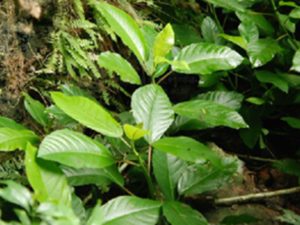
A perennial, climbing herb reaching up to 5 m in height. The base is woody, while the upper part is herbaceous; the stems, leaves, and petioles are densely covered with long, jointed soft hairs.Leaves are alternate; petioles are 1–3 cm long; leaf blades are mostly lanceolate or lyre-shaped, 3–8 cm long and 1.5–4 cm wide, with an acuminate apex, a cordate base, and the upper margin entire or undulate; the lower margin often bears 1–2 pairs of auriculate or lanceolate lobes, though a few are entire; the midrib is prominent. Cymes are terminal or lateral in the axils;the calyx is 5-lobed and persistent; the corolla is bluish-purple or white, deeply 5-lobed, with lobes reflexed downward from the base; there are 5 stamens with extremely short filaments and anthers dehiscent through apical pores; there is a single pistil with a slender style and a small, capitate stigma; the ovary is ovate and 2-chambered. The fruit is a spherical berry, approximately 1 cm in diameter, turning red when ripe. The seeds are nearly disc-shaped and flattened.Flowering period: July–September; fruiting period: October–November.
Distribution Area
Distributed in East China, Central and South China, Southwest China, as well as Shanxi, Shaanxi, Gansu, and Taiwan.
Growth Habits
It prefers a warm, humid climate and tolerates shade and damp conditions. It is suitable for cultivation in sandy loam and clay loam soils.
Propagation Methods
Propagated by seeds and root division.
Cultivation Techniques
1. Propagation by seed: In northern regions, sow in spring (April–May) in rows spaced 40 cm apart. Keep the soil moist; seedlings will emerge in about two weeks. Thin the seedlings once they have fully emerged, spacing them 15–20 cm apart.
2. Propagation by root division: Best performed in spring or fall. When the seedlings reach a height of about 20 cm, set up a trellis and tie the vines to it to support growth.
Pest and Disease Control
Pests include red spider mites.