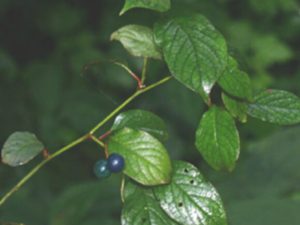
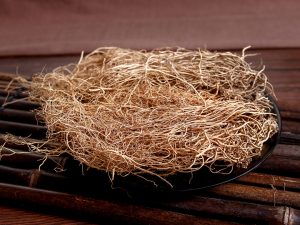
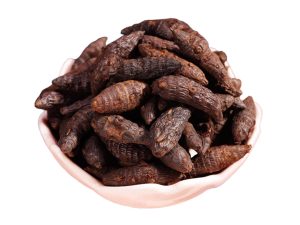
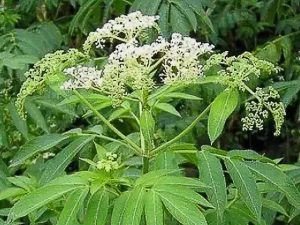
Huangjing is a plant of the genus Vitex in the Verbenaceae family; its roots, stems, leaves, and fruits (huangjingzi) are used medicinally. Among these, the roots and stems of Huangjing have a bitter and slightly pungent taste and a neutral nature. They are effective in clearing heat, relieving coughs, resolving phlegm, and stopping malaria, and are primarily used to treat bronchitis, malaria, and hepatitis; The leaves of Huangjing have a bitter taste and a cool nature; they clear heat, relieve exterior symptoms, resolve dampness, and arrest malaria. When taken internally, they can treat colds, enteritis, dysentery, malaria, and urinary tract infections; when applied topically, they can treat eczema, dermatitis, and athlete’s foot;Huangjing seeds have a bitter and pungent taste and a warm nature. They are effective in relieving coughs and wheezing, as well as regulating qi and alleviating pain. They are primarily used to treat coughs, asthma, stomach pain, indigestion, enteritis, and dysentery.

Yellow Honeysuckle
Huangjing is a plant of the genus Vitex in the Verbenaceae family; its roots, stems, leaves, and fruits (huangjingzi) are used medicinally. Among these, the roots and stems of Huangjing have a bitter and slightly pungent taste and a neutral nature. They are effective in clearing heat, relieving coughs, resolving phlegm, and stopping malaria, and are primarily used to treat bronchitis, malaria, and hepatitis; The leaves of Huangjing have a bitter taste and a cool nature; they clear heat, relieve exterior symptoms, resolve dampness, and arrest malaria. When taken internally, they can treat colds, enteritis, dysentery, malaria, and urinary tract infections; when applied topically, they can treat eczema, dermatitis, and athlete’s foot;Huangjing seeds have a bitter and pungent taste and a warm nature. They are effective in relieving coughs and wheezing, as well as regulating qi and alleviating pain. They are primarily used to treat coughs, asthma, stomach pain, indigestion, enteritis, and dysentery.
Chinese Name : 黄荆
Aliases : Yellow Honeysuckle, Yellow Honeysuckle Fruit, Bu Jing, Honeysuckle, Five-Finger Wind, Five-Finger Citrus
Authentic Producing Area : Mainly produced in Jiangsu, Zhejiang, Hunan, Jiangxi, Sichuan, Chongqing, Guangxi, and other regions
Nature, Flavor & Meridian Tropism : The roots and stems of Huangjing have a bitter and slightly pungent taste and a neutral nature; the leaves have a bitter taste and a cool nature; the fruits (Huangjingzi) have a bitter and pungent taste and a warm nature
Benefits & Efficacy
Benefits
1. The roots and stems of yellow jing have the effects of clearing heat, relieving cough, resolving phlegm, and arresting malaria. 2. The leaves of yellow jing have the effects of clearing heat, relieving exterior syndromes, resolving dampness, and arresting malaria. 3. The fruits of yellow jing have the effects of relieving cough, alleviating wheezing, regulating qi, and relieving pain.
Indications
1. The roots and stems of Huangjing are primarily used to treat bronchitis, malaria, and hepatitis. 2. When taken internally, Huangjing leaves can treat colds, enteritis, dysentery, malaria, and urinary tract infections; when applied topically, they can treat eczema, dermatitis, and athlete’s foot. 3. Huangjingzi is primarily used to treat coughs, asthma, stomach pain, indigestion, enteritis, and dysentery.
Usage and Dosage
1. Yellow-thorn roots and stems: Decoct and take orally. The common dosage is 15–30 g. 2. Yellow-thorn leaves: Can be taken internally or used externally. For internal use, the dosage is typically 9–30 g, prepared as a decoction; for external use, apply an appropriate amount by crushing fresh leaves and applying them to the affected area, or by decocting the leaves and washing the affected area with the solution. 3. Yellow-thorn fruits: Decoct and take orally. The usual dosage is 6–9 g.
Precautions
Not yet established.
Applications
Notes
Patients requiring treatment with traditional Chinese medicine should first consult a licensed TCM hospital, where a TCM practitioner will conduct a professional pattern differentiation and issue a prescription.
Processing & Preparation
Harvesting & Processing
They can be harvested year-round, though summer and fall are the best times. The roots and stems should be washed, cut into sections, and sun-dried; the leaves and fruits should be shade-dried for later use. The leaves may also be used fresh.
Storage Methods
Store in a dry container, tightly sealed, in a cool, dry place. Protect from mold.
Crude Drug Identification
Properties of Crude Drugs
1. Huangjing Leaves: These are palmate compound leaves with 5 leaflets, occasionally 3. Dried leaves are shriveled, grayish-black or greenish-brown, with a duller underside covered in short hairs; leaf blades are oblong-ovate to lanceolate, with a long acute apex and a cuneate base; petioles are square in cross-section and hairy. The leaves are brittle and easily broken. They have a fragrant aroma.
2.Schisandra Berries: These berries are obovate-round or nearly pear-shaped, 2–5.5 mm long and 1.5–3 mm in diameter. The surface is brownish-black, relatively smooth, with faint fine longitudinal striations. They are hard and difficult to break; the cross-section is yellowish-brown, with four chambers, each containing one yellowish-white or yellowish-brown seed or none. They have a fragrant aroma and a slightly bitter, astringent taste.
Properties of Processed Slices
See “Characteristics of the Medicinal Material.”
Botanical Information
Botanical Classification
A plant of the genus Vitex in the Verbenaceae family.
Morphological Characteristics
Shrubs or small trees. Branches are quadrangular; twigs, the undersides of leaves, and inflorescence peduncles are densely covered with grayish-white tomentum. Leaves are palmately compound with 5 leaflets, occasionally 3; leaflets are oblong-lanceolate, entire or with a few coarse teeth on each margin.Cymose inflorescences arranged in a conical shape, terminal, 10–27 cm long; peduncles densely covered with grayish-white tomentum; corolla pale purple, bilabiate. Drupes nearly spherical; persistent calyx nearly as long as the fruit. Flowering period: April–June; fruiting period: July–October.
Distribution Area
Distributed throughout areas south of the Yangtze River.