Transparent Grass, a name in traditional Chinese medicine. It refers to the whole plant of Pilea microphylla (L.) Liebm., a species of the genus Pilea in the Urticaceae family. It is distributed in Zhejiang, Jiangxi, Fujian, Taiwan, Guangdong, Hainan, Guangxi, and other regions. It has the efficacy of clearing heat and detoxifying. It is primarily used to treat abscesses, sores, and swelling; erysipelas; unexplained swellings and infections; burns and scalds; and venomous snake bites.
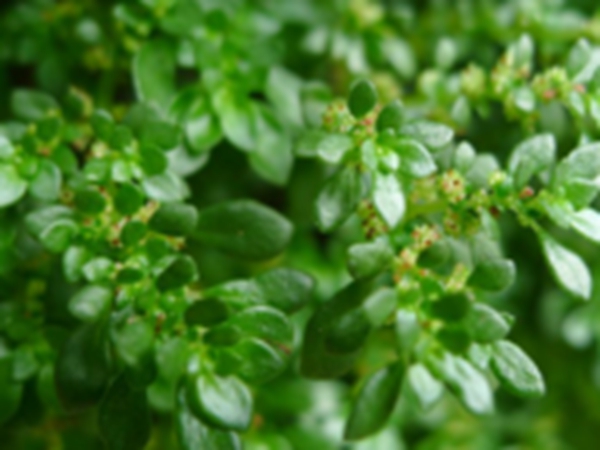
Transparent Grass
Transparent Grass, a name in traditional Chinese medicine. It refers to the whole plant of Pilea microphylla (L.) Liebm., a species of the genus Pilea in the Urticaceae family. It is distributed in Zhejiang, Jiangxi, Fujian, Taiwan, Guangdong, Hainan, Guangxi, and other regions. It has the efficacy of clearing heat and detoxifying. It is primarily used to treat abscesses, sores, and swelling; erysipelas; unexplained swellings and infections; burns and scalds; and venomous snake bites.
Chinese Name : 透明草
Aliases : Glasswort
Nature, Flavor & Meridian Tropism : Taste: bland and astringent; nature: cool; enters the Heart meridian
Benefits & Efficacy
Benefits
Clears heat and detoxifies.
Indications
Boils and abscesses with swelling and pain, erysipelas, unexplained swellings and infections, burns and scalds, venomous snake bites.
Usage and Dosage
1. Internal use: Decoct 5–15 g in water. 2. External use: Pound an appropriate amount of the fresh whole herb into a paste and apply; or extract the juice and apply.
Precautions
Patients requiring treatment with traditional Chinese medicine should first consult a licensed TCM hospital, where a TCM practitioner will conduct a professional pattern differentiation and issue a prescription.
Relevant Discussions
*Selected Compendium of Guangxi Materia Medica*: “Clears heat and detoxifies. Primarily treats abscesses, sores, swelling, and pain; unexplained swellings; and burns and scalds.”
Applications
Clinical Applications
1. For abscesses, swollen and painful sores, and unexplained swellings: Pound the whole fresh plant of Transparent Grass into a paste, add a small amount of brown sugar, and apply topically. (*Compendium of Chinese Herbal Medicines*)
2. For burns and scalds: Pound the whole fresh plant of Transparent Grass into a paste, extract the juice, and apply topically. (*Compendium of Chinese Herbal Medicines*)
Notes
References: [1] Editorial Committee of *Chinese Materia Medica*, State Administration of Traditional Chinese Medicine. *Chinese Materia Medica* [M]. Vol. 2. Shanghai: Shanghai Science and Technology Press, 1999. [2] Xie Zongwan, Yu Youqin. Compendium of Chinese Herbal Medicines [M]. 2nd ed. Beijing: People’s Health Publishing House, 1996. [3] Quanzhou Association of Traditional Chinese Medicine. Illustrated Color Atlas of Quanzhou Materia Medica [M]. Fuzhou: Fujian Science and Technology Press, 2020.
Processing & Preparation
Harvesting & Processing
Harvest in summer or fall; wash thoroughly; use fresh or sun-dry.
Crude Drug Identification
Botanical Information
Botanical Classification
A plant of the genus Lantana in the family Urticaceae, specifically Lantana microphylla.
Morphological Characteristics
An annual herb, growing to less than 10 cm in height. The stem is erect, slender, or prostrate, highly branched, and green or slightly purplish. Leaves are arranged in two rows, opposite, with the opposite leaf being smaller;petioles 1–3 mm long; leaf blades obovate, 4–6 mm long, 2–3 mm wide, with a blunt apex and a wedge-shaped base, sparsely covered with coarse hairs along the midrib or glabrous on the upper surface, with nectaries arranged in neat transverse rows, linear-long, and evenly distributed; the lower surface is pubescent along the midrib or glabrous, with entire margins; the midrib is prominent, and the reticulate veins are conspicuous on the lower surface.Flowers are unisexual; the plant is monoecious. Inflorescences are short and dense, with male inflorescences located at the base. Male perianth segments number 4, each with a small tip at the apex; stamens number 4, with nearly circular anthers. When the anthers open, shaking the plant causes the stamens to release pollen like a mist; female perianth segments number 3, usually equal in length to the ovary; the ovary is ovate-long-elliptic. Achenes are ovate, flattened, and pointed at the apex.Flowering occurs in summer and fall; fruiting occurs in fall.
Distribution Area
Distributed in Zhejiang, Jiangxi, Fujian, Taiwan, Guangdong, Hainan, Guangxi, and other regions. Native to the tropics of South America.