Sweet Akebia is the name of a traditional Chinese medicine. It consists of the leaves and roots of Clematis filamentosa Dunn, a plant in the Ranunculaceae family. It is distributed in Guangdong, Hainan, Guangxi, and eastern Yunnan. It has the effects of clearing liver fire, calming the mind, lowering blood pressure, and unblocking meridians to relieve pain. It is used to treat hypertension, insomnia, headaches, numbness in the limbs, wind-heat in the liver meridian, red, swollen, and painful eyes, wind-fire toothache, and rheumatic arthralgia.
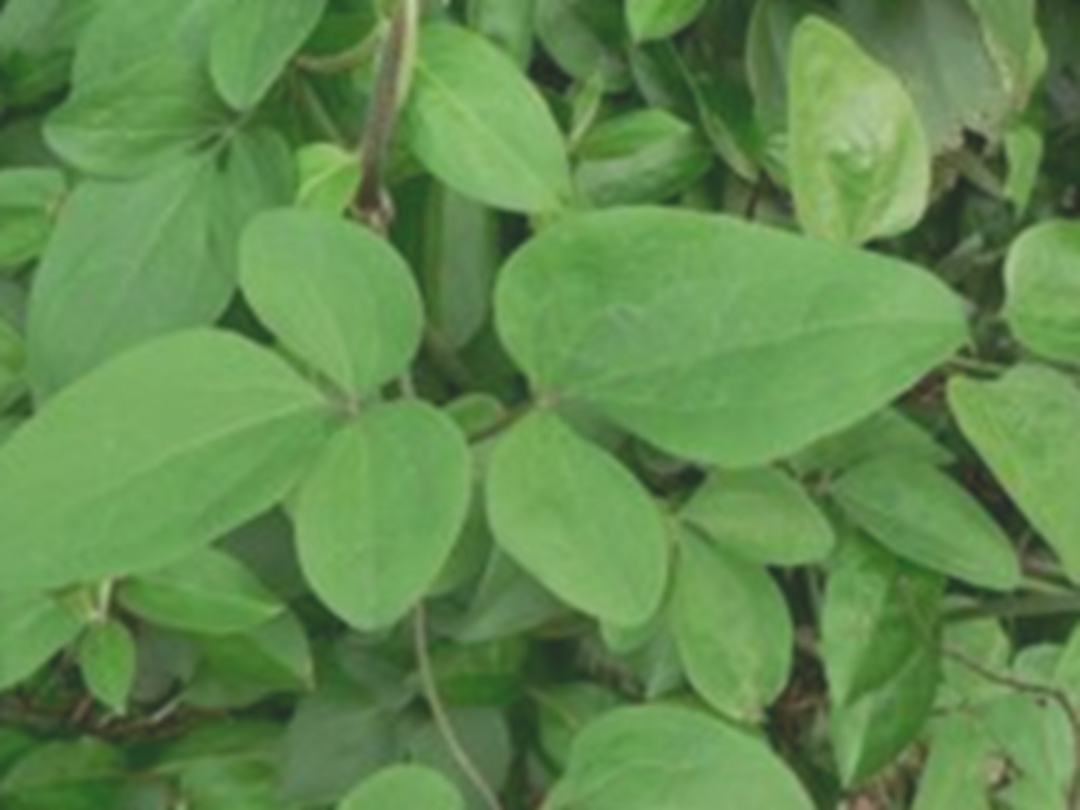
Sweet Akebia
Sweet Akebia is the name of a traditional Chinese medicine. It consists of the leaves and roots of Clematis filamentosa Dunn, a plant in the Ranunculaceae family. It is distributed in Guangdong, Hainan, Guangxi, and eastern Yunnan. It has the effects of clearing liver fire, calming the mind, lowering blood pressure, and unblocking meridians to relieve pain. It is used to treat hypertension, insomnia, headaches, numbness in the limbs, wind-heat in the liver meridian, red, swollen, and painful eyes, wind-fire toothache, and rheumatic arthralgia.
Chinese Name : 甘木通
Latin Name : Clematis filamentosa Dunn
Aliases : Eye Snake Medicine
Authentic Producing Area : Guangdong, Hainan, Guangxi, Yunnan
Nature, Flavor & Meridian Tropism : Sweet in taste, slightly cool in nature; enters the Heart and Liver meridians
Benefits & Efficacy
Benefits
Clears liver fire, calms the mind, lowers blood pressure, and unblocks meridians to relieve pain.
Indications
Used for hypertension, insomnia, headaches, numbness in the limbs, wind-heat in the Liver meridian, red, swollen, and painful eyes, wind-fire toothache, and rheumatic arthralgia.
Usage and Dosage
Internal use: Decoct 9–15 g. External use: Apply an appropriate amount, crushed and packed into the affected tooth.
Precautions
Not yet established.
Pharmacological Actions
1. Hypotensive effect. 2. Increases coronary blood flow. 3. Enhances tolerance to hypoxia.
Relevant Discussions
*Compendium of Chinese Herbal Medicines*: “(Leaves) have sedative, analgesic, and antihypertensive effects. Primarily used to treat red eye, headaches, and hypertension.”
Applications
Related Compatibility
Treatment for unexplained swellings and abscesses: Take an appropriate amount of fresh Ganmutong leaves, crush them, and apply to the affected area for 15 minutes at a time. (*Compendium of Chinese Ethnic Medicines*)
Processing & Preparation
Harvesting & Processing
Harvest leaves in summer and fall; sun-dry or use fresh.
Crude Drug Identification
Properties of Crude Drugs
Leaves are mostly shriveled and fragmented. When flattened, intact leaves are trifoliate; leaflets are broadly ovate to lanceolate, 6–10 cm long and 3–7 cm wide; apex obtuse-rounded, base broadly cuneate or shallowly cordate, margin entire; upper surface grayish-brown, lower surface slightly paler; 5–7 basal veins protruding toward the abaxial surface, lateral veins reticulate; petiole twisted.Slight odor; sweet and mild taste.
Botanical Information
Botanical Classification
Silk Clematis, a plant of the Ranunculaceae family.
Morphological Characteristics
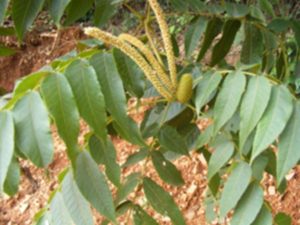
Silk Clematis, a perennial evergreen woody vine. Stems are cylindrical, glabrous, and longitudinally grooved. Leaves are opposite, trifoliate, and glabrous;petioles 7–13 cm long, with a groove on the upper surface at the base; leaflets papery or thinly leathery, ovate, broadly ovate, or lanceolate, 7–11 cm long, 4–8 cm wide, with a bluntly rounded apex, a broadly cuneate, rounded, or nearly cordate base, entire margins, and 5 basal palmate veins that are slightly raised on the upper surface and prominently raised on the lower surface;Petiole stalks are cylindrical, 2–5 cm long. Axillary panicles or racemes, usually bearing 7–12 flowers; flowers are bisexual, with pedicels 3–4 cm long, initially covered with brown tomentum that gradually falls off, and bearing linear-lanceolate bracts at the base;Sepals 4, narrowly ovate or ovate-lanceolate, 1.6–2 cm long, 5–8 mm wide, white, spreading, apex obtuse-rounded, outer surface with rust-brown or pale brown tomentum, inner surface glabrous;No petals; numerous stamens, with the outer whorl longer than the inner whorl; degenerate stamens are linear and longer than the sepals; the anthers of fertile stamens are elliptical, with elongated connectives 1–2 times longer than the anthers; filaments are linear and glabrous;There are numerous carpels, approximately 1 cm long, with white cottony hairs; the styles are short-pubescent. The achenes are narrowly ovate, often asymmetrical, brown, and approximately 1 cm long; the persistent styles are feathery, 3–5 cm long. Flowering occurs from November to December; fruiting occurs from January to February.
Distribution Area
Distributed in Guangdong, Hainan, Guangxi, and eastern Yunnan.