Bai Bi Qi, a name in traditional Chinese medicine. It is the rhizome of Smilax lunglingensis Wang et Tang [S. siderophylla Hand.-Mazz.], a plant in the Liliaceae family. It has the effects of dispelling wind-dampness and promoting urination. It is primarily used to treat rheumatic pain, numbness, painful and turbid urination, and damp-heat leukorrhea.

White Smilax
Bai Bi Qi, a name in traditional Chinese medicine. It is the rhizome of Smilax lunglingensis Wang et Tang [S. siderophylla Hand.-Mazz.], a plant in the Liliaceae family. It has the effects of dispelling wind-dampness and promoting urination. It is primarily used to treat rheumatic pain, numbness, painful and turbid urination, and damp-heat leukorrhea.
Chinese Name : 白萆薢
Aliases : Smilax, Prickly Smilax, Diamond Vine, Flowering Smilax, Slippery-stemmed White Smilax (Yunnan)
Nature, Flavor & Meridian Tropism : Pungent and slightly bitter in taste; neutral in nature
Benefits & Efficacy
Benefits
Dispels wind-dampness and promotes urination.
Indications
Rheumatic pain and numbness; painful and turbid urination; damp-heat leukorrhea.
Usage and Dosage
Internal use: Decocted as a soup, 9–15 g.
Relevant Discussions
1. *Herbal Medicine of Southern Yunnan*: “Treats wind, cold, and dampness; pain in the meridians, lower back, and knees; persistent numbness throughout the body; promotes bladder function; and clears red and white turbid discharge.”
2. *Compendium of Chinese Herbal Medicines*: “Dispels wind and dampness; clears heat and promotes urination. Primarily used to treat rheumatic pain in the tendons and bones, enteritis, dysentery, cystitis, and difficulty urinating.”
Applications
Processing & Preparation
Harvesting & Processing
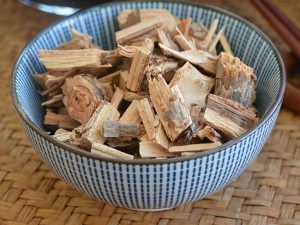
It can be harvested year-round; wash, slice, and sun-dry.
Crude Drug Identification
Botanical Information
Botanical Classification
A plant of the Liliaceae family, *Maqian Ye Bao Wu*.
Morphological Characteristics
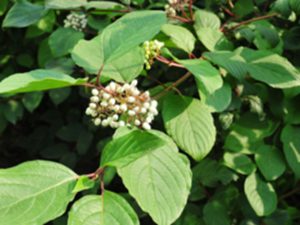
A climbing shrub. Stems and branches bear longitudinal striations or ridges and are usually sparsely spiny. Leaves are alternate; petioles are 2–3 cm long, without sheaths or with very narrow sheaths, usually bearing tendrils in the middle, with the point of detachment located toward the upper part;Leaf blades are thick and leathery, elliptic, ovate-elliptic to rounded, 5–11 cm long and 3–9 cm wide, with an apex usually slightly convex, sometimes nearly acuminate, and a base nearly rounded; the three main veins are sunken on the upper surface. Umbels number 2–4 and are arranged in a short panicle; the peduncle is 3–10 mm long, and the receptacle is slightly swollen and nearly spherical;Flowers are unisexual, with separate male and female plants; perianth segments number 6 and are yellow; in male flowers, the outer perianth segments are about 6 mm long and 2 mm wide, while the inner perianth segments are about 1 mm wide; stamens number 6 and are 3–6 mm long; female flowers are smaller than male flowers, bearing 3 staminodes; the ovary is 3-chambered, and the stigma is 3-lobed. The berry is spherical, 5–6 mm in diameter, and black when ripe.Flowering period: March–April; fruiting period: August–October.
Distribution Area
Distributed in central and western Yunnan.