White-flowered Snake Eye

White-flowered Snake Eye is the name of a traditional Chinese medicinal material. It consists of the eyes of Agkistrodon acutus (Güenther), a species of viper in the Viperidae family. It is primarily used to treat night crying in children.

Chinese Name : 白花蛇目睛

Nature, Flavor & Meridian Tropism : Taste: sweet and salty; nature: neutral

Benefits & Efficacy

Benefits

Dispels wind and calms convulsions.

Indications

Night crying in children.

Usage and Dosage

Oral use: Grind into a powder; take a small amount mixed with liquid each time.

Applications

Related Compatibility

To treat night crying in children: Grind one eye of a white flower snake into a powder, mix with a small amount of bamboo sap, and administer orally. (From *Pu Ji Fang*)

Processing & Preparation

Harvesting & Processing

After slaughtering a Qi snake, remove the eyes and dry them in the sun.

Crude Drug Identification

Botanical Information

Morphological Characteristics

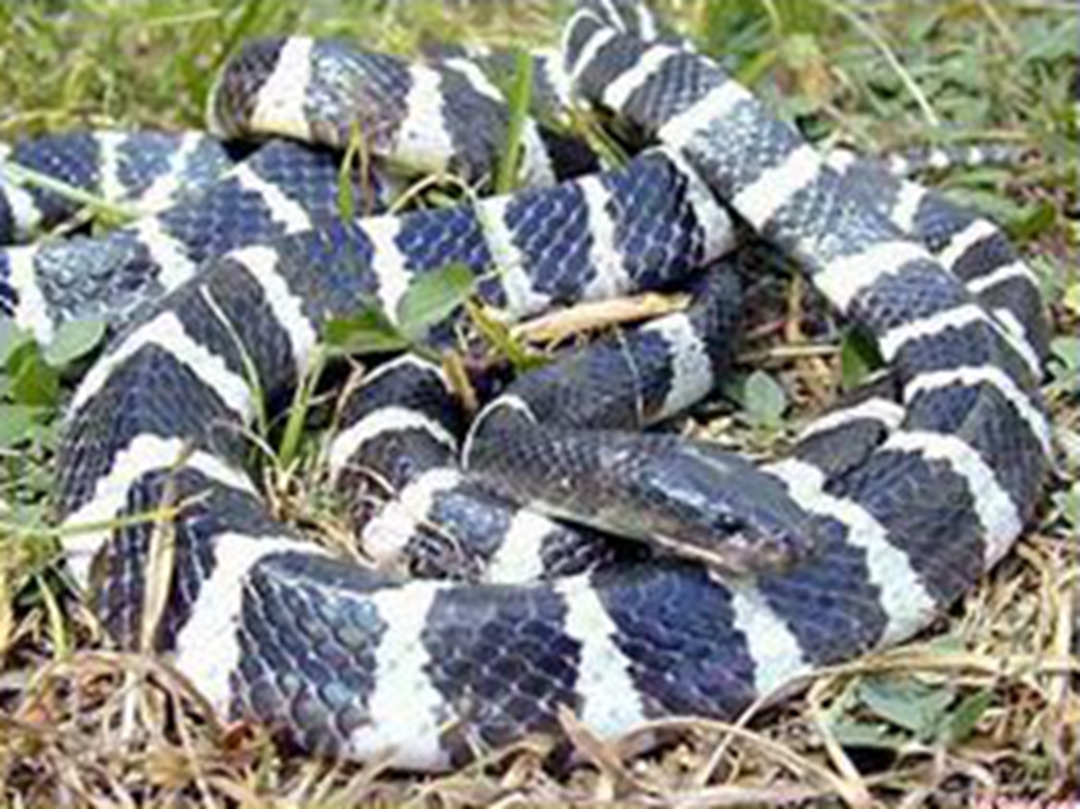
The tip of the snout is pointed and curves upward and forward; the head is triangular and clearly distinct from the neck. The dorsal surface of the head is black; the sides of the head, from the snout ridge through the eyes and slanting downward to below the corners of the mouth, are yellowish-white. The head, belly, and throat are also white. The body is stout, the tail is relatively short, and the total length can reach 1.5 m. The dorsal surface is dark brown or brownish-gray.The dorsal line features (15–20) + (2–5) large square spots with light brown margins and slightly darker centers; some spots are incomplete. The ventral surface is white with blackish-brown patches arranged in a crisscross pattern, roughly forming three vertical rows; in some individuals, several patches merge, resulting in indistinct boundaries. The ventral surface of the tail is white, scattered with blackish-brown spots of varying density.The snout scales are very high; the upper part is narrow and elongated, forming the ventral surface of the pointed snout; there is one pair of inter-nasal scales, which are also narrow and elongated, forming the ventral surface of the pointed snout. The dorsal surface of the head bears large, symmetrical scales rich in tubercles; there is a zygomatic fossa; there are 2 preorbital scales, 1 postorbital scale, and 1 relatively large suborbital scale; there are 7 upper lip scales.Dorsal scales: 21 (23)–21 (23)–17 (19) rows; except for the outermost 1–3 rows, the remainder all bear nodular, strong ridges; ventral scales: 157–170;Anal scales intact; subcaudal scales 52–59, mostly in two rows, a few in a single row; posterior portion of the tail laterally compressed; the terminal scale laterally compressed and long-pointed.

Distribution Area

Found in Anhui, Zhejiang, Jiangxi, Fujian, Taiwan, Hubei, Hunan, Guangdong, Guangxi, and Guizhou.

White-flowered Snake Eye is the name of a traditional Chinese medicinal material. It consists of the eyes of Agkistrodon acutus (Güenther), a species of viper in the Viperidae family. It is primarily used to treat night crying in children.