
Search for Herbal Teas Recipes by Symptom:

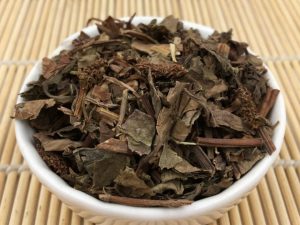
Niuwang Feijincao

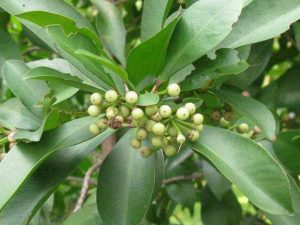
Niuwang Feijincao, a name in traditional Chinese medicine. It refers to the whole plant, including the roots, of Phlomis umbrosa Turcz. var. australis Hemsl. (family Lamiaceae). It is distributed in southwestern China, as well as in Shaanxi, Gansu, Anhui, Hubei, Hunan, and Tibet. It has the effects of dispelling wind and relieving cough, promoting blood circulation and unblocking meridians, and detoxifying and reducing swelling.It is primarily used to treat colds, coughs, rheumatic pain, weakness in the lower back and knees, bruises and hematomas from falls or blows, fractures, and abscesses and toxic swellings.

Oyster

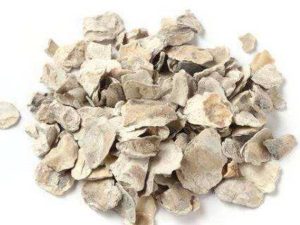
Oyster is the name of a traditional Chinese medicine. It refers to the shells of the giant oyster (Ostrea gigas Thunberg), the Dalian Bay oyster (Ostrea talienwhanensis Crosse), or the Jiangmi oyster (Ostrea rivularis Gould), all belonging to the genus Ostrea in the family Ostreidae. It has the therapeutic effects of calming the mind, subduing Yang and tonifying Yin, and softening hard masses and dispersing nodules.It is primarily used to treat palpitations and insomnia, dizziness and tinnitus, scrofula and phlegm nodules, as well as masses and lumps.

Toad

Toad, a name for a Chinese medicinal material. It consists of the entire body of the Chinese common toad (Bufo bufo gargarizans Cantor) or the black-eyed toad (Bufo melanostictus Schneider) from the family Bufonidae. It has the therapeutic effects of detoxifying and dispersing nodules, eliminating food stagnation and promoting diuresis, as well as killing parasites and eliminating malnutrition-related sores.It is primarily used to treat boils, carbuncles, back abscesses, scrofula, malignant sores, masses and accumulations, abdominal distension, edema, malnutrition in children, tetanus, and chronic cough and wheezing.

Sea Dragon

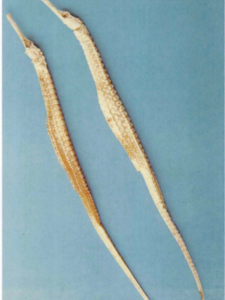
Sea Dragon is the name of a traditional Chinese medicine. It refers to the whole body—or the whole body with the skin and internal organs removed—of various sea dragon species, including Solenognathus hardwickii (Gray) of the genus Solenognathus, Syngnathoides biaculeatus (Bloch) of the genus Syngnathoides, and Syngnathus acus Linnaeus of the genus Syngnathus.It has the effects of tonifying the kidneys and enhancing yang, as well as dispersing nodules and reducing swelling. It is primarily used to treat impotence, nocturnal emissions, infertility, shortness of breath due to kidney deficiency, masses and accumulations, scrofula and goiters, trauma, and abscesses, boils, and carbuncles.

Acupuncture for Transient Ischemic Attack (TIA)

Transient Ischemic Attack (TIA) is a common acute cerebrovascular disorder. It presents as focal neurological dysfunction caused by temporary hypoperfusion in the carotid system, vertebrobasilar system, or both arterial territories. TIA is widely recognized as a critical warning sign for subsequent stroke. Etiological Factors Six major causes are acknowledged in modern clinical practice: 1. Microembolism … Read more
Acupuncture for Traumatic Lower Paraplegia

Paraplegia is a neurological dysfunction caused by traumatic spinal cord injury (SCI). It is clinically categorized into high-level paraplegia (tetraplegia) and low-level paraplegia (inferior limb paraplegia). This chapter focuses specifically on traumatic lower paraplegia, which predominantly affects bilateral lower limbs after lumbosacral spinal cord damage. The primary etiology involves external violent trauma, such as direct … Read more

Acupuncture for Phantom Limb Pain

Phantom limb pain (PLP) is a chronic central neuropathic pain condition that occurs after amputation. Patients persistently perceive the presence of the amputated limb and suffer from severe episodic hallucinatory pain originating from the missing extremity. This condition is classified as a central sensitization disorder rather than peripheral tissue pain. After traumatic or surgical limb … Read more

Acupuncture for Intestinal Neurosis

Intestinal neurosis, clinically known as Irritable Bowel Syndrome (IBS) per international diagnostic criteria, is a systemic functional gastrointestinal disorder characterized by smooth muscle dysfunction of the intestinal tract. The core clinical manifestations include recurrent abdominal discomfort, abdominal pain, bloating, increased bowel sounds, constipation, and alternating diarrhea and constipation. As a functional disease, IBS presents obvious … Read more

Acupuncture for Gastric Neurosis

Gastric neurosis, also known as functional gastric disorder, is a common psychosomatic gastrointestinal condition triggered primarily by excessive mental stress and psychological trauma. Characteristically, patients present persistent gastric discomfort and pain with no organic pathological lesions detected in the stomach, confirming its functional and stress-mediated nature. Gastrointestinal motility and secretory functions are regulated by the … Read more

Acupuncture for Cluster Headache

Cluster headache, also referred to as episodic cluster headache or histamine headache, is a rare and severe primary headache disorder categorized as a trigeminal autonomic cephalalgia. It presents as a special migraine variant dominated by intense unilateral orbital and cranial pain, characterized by abrupt onset, extreme severity, and clustered symptomatic episodes. The exact etiology of … Read more

Acupuncture for Post-Lumbar Puncture Headache

Post-lumbar puncture headache (PLPHA) is a distinct intracranial hypotension headache secondary to cerebrospinal fluid (CSF) hypovolemia following spinal tap procedures. This iatrogenic headache occurs primarily due to excessive CSF loss or persistent CSF leakage, which lowers intracranial pressure and triggers mechanical traction pain within the cranial cavity. Two major pathological mechanisms contribute to post-lumbar puncture … Read more

Acupuncture for Tension Headache

Tension-type headache (ICD-10: R51) is one of the most prevalent primary headache disorders globally, primarily induced by persistent psychological stress and emotional dysregulation. This condition arises from prolonged involuntary contraction of the skeletal muscles and vascular smooth muscles in the craniofacial, cervical, and shoulder regions, resulting in chronic, persistent cranial pressure pain and soft tissue … Read more

Acupuncture Treatment for Migraine

Migraine is a prevalent neurological condition characterized by intense, throbbing, unilateral cranial pain. Clinically, it is defined by three hallmark features: abrupt onset of severe one-sided headache, spontaneous or pharmacologically assisted pain resolution with no residual neurological sequelae, and recurrent symptomatic episodes separated by pain-free intervals. As a periodic vascular headache disorder, migraine significantly impairs … Read more

Electroacupuncture for Irregular Menstruation | TCM Menstrual Disorder Treatment

Irregular menstruation, also known as menstrual disorder, refers to common gynecological conditions marked by abnormal menstrual cycles, menstrual volume, menstrual color, and menstrual texture. Clinically, TCM acupuncture treatment effectively improves three major types of menstrual disorders: advanced menstruation, delayed menstruation, and irregular menstrual cycles. Advanced menstruation is defined as a menstrual cycle that arrives more … Read more