Traditional Chinese medicine often refers to the concept of “liver and gallbladder working in harmony.” The core cause of gallstones lies in the obstruction of the Gallbladder Meridian and the accumulation of damp-heat. Many people focus solely on damp-heat but overlook the key factor of stagnation in the Gallbladder Meridian—when the Gallbladder Meridian is blocked, bile secretion is impeded; when combined with damp-heat, gallstones are naturally more likely to form.
Self-Check: 4 Signs of Gallbladder Meridian Obstruction
Dull pain in the flanks: A dull ache in the upper right abdomen that worsens after eating greasy foods, possibly accompanied by soreness and tightness in the right shoulder and back;
Poor digestion: Abdominal bloating, belching, aversion to greasy foods, and nausea or a queasy feeling after eating even a small amount;
Yellowish complexion: Yellowish whites of the eyes, a dull, sallow complexion lacking luster;
Abnormal Urination and Bowel Movements: Urine is dark yellow, like strong tea; stools are dry and hard or sticky and greasy.
Ms. Qu, a 32-year-old new media editor, leads a sedentary lifestyle, often stays up late, and has irregular eating habits. A physical examination revealed a 0.8 cm gallstone.
She frequently experiences dull pain in her upper right abdomen; eating greasy foods causes nausea and bloating; her sclera are yellowish, her urine is dark, and she has a thick, yellow tongue coating—all classic signs of stagnation in the Gallbladder Meridian and internal accumulation of damp-heat. Concerned that surgery might damage her gallbladder and lacking the time for hospitalization, she specifically came to me for treatment.
Targeted Treatment: Unblocking + Clearing, Combining Internal and External Approaches
1. External Unblocking: Simple and Easy to Perform
Exercise: Take a brisk 20-minute walk after every meal; practice the Eight Brocades on weekends. “To regulate the spleen and stomach, focus on one thing at a time”—stretch the flanks and clear the Gallbladder Meridian;
Acupoint Massage: Before bed, massage the Yanglingquan and Taichong acupoints for 3–5 minutes each to soothe the liver, support gallbladder function, and promote the smooth flow of qi.
2. Core Internal Regulation: Niche Chinese Herbal Formula + Medicinal Herbal Teas
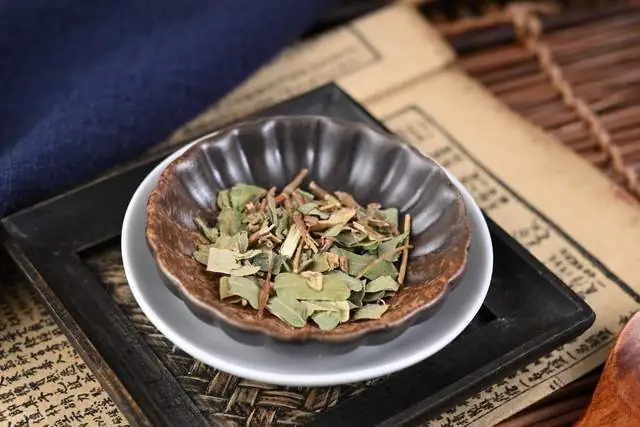
Chinese Herbal Formula (tailored to individual constitution): Vinegar-processed Corydalis, stir-fried Melia toosendan, Guangjinqiancao, Chicken Bone Grass, Haisufushi (crushed), stir-fried Radish Seed, stir-fried Atractylodes, Poria, stir-fried Barley Malt, and roasted Licorice.
One dose daily; decoct in water and take in two divided doses, morning and evening.
Medicinal Diet: For breakfast, consume red adzuki bean and Chinese yam porridge; for dinner, prepare winter melon and kelp soup to strengthen the spleen and eliminate dampness;
Bile-Promoting Tea: Corn silk, Houttuynia cordata, and stir-fried chicken gizzard lining (crushed). Steep in boiling water and drink as tea; steep repeatedly up to 3 times, then chew and swallow the chicken gizzard lining to aid in dissolving the stones.
Treatment Outcomes: Significant reduction in stone size after 3 months
After 1 month, Ms. Qu’s dull pain in the right upper abdomen and nausea disappeared, and her urine color lightened; after 2 months, her abdominal distension and aversion to greasy foods improved, and the yellowish tint in the whites of her eyes faded;
After 3 months, a follow-up ultrasound showed that the gallstones had shrunk to 0.3 cm, her tongue coating had returned to normal, and her bowel and bladder movements were regular.
Key Principles of TCM Treatment: Equal Emphasis on Unblocking, Clearing, and Nourishing
The core of gallstone treatment is “unblocking the Gallbladder Meridian and clearing damp-heat,” but care must be taken to protect the spleen and stomach—since heat-clearing and dampness-draining herbs tend to be cold in nature, they must be combined with spleen-nourishing herbs such as Poria cocos and stir-fried Atractylodes to avoid damaging the body’s vital energy.
Daily self-care is also essential: limit intake of greasy, spicy, and raw or cold foods; increase consumption of heat-clearing and dampness-draining foods such as winter melon and adzuki beans; go to bed before 11:00 p.m. to avoid staying up late, which can damage the liver and gallbladder; and avoid bottling up emotions, maintaining a cheerful disposition to reduce stagnation in the Gallbladder Meridian.
For gallstones smaller than 1 cm in diameter with mild symptoms, there is no need to rush into surgery. Through TCM pattern differentiation, using specialized herbal formulas combined with healthy habits can not only shrink the stones but also improve the metabolic environment of the liver and gallbladder, thereby reducing the risk of recurrence at its root.