Cabbage, a name in traditional Chinese medicine. It refers to the leaves of Brassica oleracea L. var. capitata L., a plant of the Brassicaceae family. It has the effects of clearing damp-heat, dispersing nodules and relieving pain, and tonifying the kidneys to treat deficiency. It is primarily used to treat damp-heat jaundice, pain from gastrointestinal ulcers, joint stiffness, and deficiency syndromes.

Cabbage
Cabbage, a name in traditional Chinese medicine. It refers to the leaves of Brassica oleracea L. var. capitata L., a plant of the Brassicaceae family. It has the effects of clearing damp-heat, dispersing nodules and relieving pain, and tonifying the kidneys to treat deficiency. It is primarily used to treat damp-heat jaundice, pain from gastrointestinal ulcers, joint stiffness, and deficiency syndromes.
Chinese Name : 甘蓝
Aliases : Blue Cabbage, Western Blue Cabbage
Nature, Flavor & Meridian Tropism : Sweet in taste, neutral in nature; enters the Liver and Stomach meridians
Benefits & Efficacy
Benefits
Clears and drains damp-heat, disperses nodules and relieves pain, and tonifies the kidneys to treat deficiency.
Indications
Mainly used to treat damp-heat jaundice, pain from gastrointestinal ulcers, joint stiffness, and deficiency syndromes.
Usage and Dosage
Internal use: Drink 200–300 ml of freshly squeezed juice; or mix with food or cook as desired.
Precautions
Cabbage has a neutral nature and nourishes the stomach; there are no contraindications.
Chemical Constituents
Cabbage contains glucoraphanin and indole-3-acetaldehyde, as well as phenolic compounds such as flavonols, kaempferol, and chlorogenic acid.
Pharmacological Actions
Seed extracts exhibit certain antibacterial effects, while the whole plant has virtually no antibacterial activity. Its leaves (when heat-treated) have a stimulating effect when applied topically and can relieve biliary colic. Additionally, it contains a high amount of vitamin U-like substances, which are effective in treating gastric ulcers.
Relevant Discussions
*Supplement to the Materia Medica* states: “This is the Western blue plant; its broad leaves are edible. To treat jaundice, boil them to make a pickle. After soaking overnight, the mixture turns yellow; when eaten with salt, it dispels stagnant qi beneath the heart.”
Applications
Clinical Applications
For treating gastric and duodenal ulcers and pain: Pound fresh leaves into a paste to extract 1 cup (200–300 milliliters) of juice; warm it slightly and drink before meals twice daily. A 10-day course constitutes one treatment cycle. (*Medicinal Plants of South China*)
Notes
Patients requiring treatment with Chinese herbal medicine should first consult a licensed Traditional Chinese Medicine (TCM) hospital, where a TCM practitioner will conduct a professional pattern differentiation and issue a herbal prescription.
Processing & Preparation
Harvesting & Processing
Harvest in summer and fall when the basal leaves form a flattened spherical cluster; use fresh.
Storage Methods
Store in the refrigerator.
Crude Drug Identification
Properties of Crude Drugs
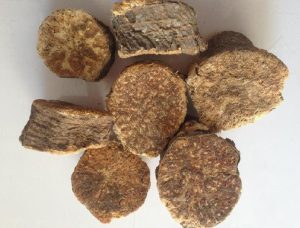
The stem is fleshy and short, flat-round or conical, 10–40 cm in diameter, and enveloped by layers of leaves.The leaves gradually decrease in size from the outer layer inward; when fresh, they are round, obovate, or broadly reniform, with a relatively broad midrib; the outer leaves are green or bluish-green, while the inner leaves are milky white, entire or with shallow, blunt teeth along the margins, and thick in texture; when dried, the leaves are pale yellowish-brown and thin. Slight odor, bland taste.
Botanical Information
Botanical Classification
A plant of the Brassicaceae family, cabbage.
Morphological Characteristics
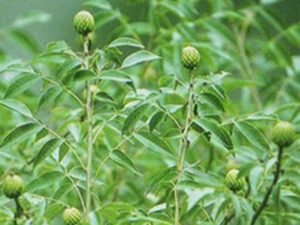
Cabbage is also known as: sunflower cabbage, head cabbage, Western cabbage, Chinese cabbage, lotus white, and wrapped cabbage.A biennial herb. The annual stem is fleshy and unbranched; basal leaves are numerous, papery and tender, with leaf blades oblong-obovate or nearly round, arranged in overlapping layers to form a spherical, heart-shaped, or flattened-round head weighing up to 2–2.5 kg. Outer leaves are pale blue-green and covered with a white powdery coating, while the fleshy inner leaves are milky white, up to 30 cm in length and width, and abruptly narrowed at the base.The biennial stem is branched and bears cauline leaves; the basal leaves are blue-green, covered with a white powder, and thick; the leaf blades are broadly elliptic or oblong, entire or with shallow serrations along the margins, and have shallow auricles at the base; the upper stem leaves have distinct serrations and clasp the stem at the base; the uppermost leaves are linear.The raceme is terminal or axillary, with large flowers; the calyx has 4 sepals, which are yellowish-green, smooth and glabrous, and saccate at the base;petals 4, creamy yellow, petal lobes broadly elliptic-ovate or oblong, 18–19 mm long, apex obtuse, base with a slender claw; stamens 6, 4 long and 2 short, long stamens 10–11 mm long, short stamens 9–10 mm long;1 pistil; the ovary is cylindrical, the style is slightly slender, and the stigma is swollen and beaked. The long silique is cylindrical, 6–9 cm long, with a short beak. The seeds are spherical. Flowering occurs from April to May, and fruiting from May to June.
Distribution Area
It is cultivated throughout the country as a major vegetable and feed crop.