Amomum tsaoko is a commonly used herb for dispelling dampness; it is the dried, mature fruit of Amomum tsaoko Crevost et Lemaire, a plant in the Zingiberaceae family. It is primarily produced in Yunnan, Guangxi, and Guizhou. It has the effects of dispelling dampness and warming the middle burner, as well as arresting malaria and eliminating phlegm. It is used to treat internal obstruction by cold and dampness, epigastric and abdominal distension and pain, fullness and vomiting, malaria with alternating chills and fever, and epidemic fever.
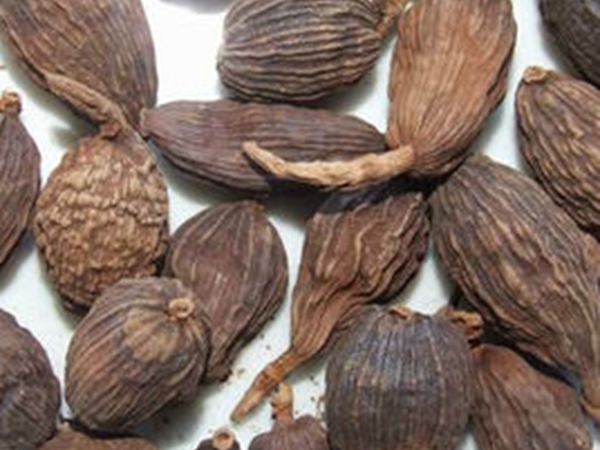
Cardamom
Amomum tsaoko is a commonly used herb for dispelling dampness; it is the dried, mature fruit of Amomum tsaoko Crevost et Lemaire, a plant in the Zingiberaceae family. It is primarily produced in Yunnan, Guangxi, and Guizhou. It has the effects of dispelling dampness and warming the middle burner, as well as arresting malaria and eliminating phlegm. It is used to treat internal obstruction by cold and dampness, epigastric and abdominal distension and pain, fullness and vomiting, malaria with alternating chills and fever, and epidemic fever.
Chinese Name : 草果
Latin Name : Tsaoko Fructus
Aliases : Cardamom Seeds, Cardamom Fruit, Old Cardamom
Authentic Producing Area : Mainly produced in Yunnan, Guangxi, and Guizhou
Nature, Flavor & Meridian Tropism : Pungent in taste, warm in nature; enters the Spleen and Stomach meridians
Benefits & Efficacy
Benefits
Dries dampness and warms the middle jiao; stops malaria and eliminates phlegm.
Indications
Indicated for internal obstruction by cold and dampness, epigastric and abdominal distension and pain, fullness and vomiting, malaria with alternating chills and fever, and epidemic fever.
Usage and Dosage
Decoct and take 3–6 g.
Precautions
Tsaoko should not come into contact with iron utensils to avoid affecting its medicinal efficacy.
Chemical Constituents
This product mainly contains essential oils: eucalyptol, 2-decenal, geraniol, 2-isopropylbenzaldehyde, citral, etc.
Pharmacological Actions
This product has effects such as regulating gastrointestinal function, analgesia, antimicrobial activity, antitumor activity, and lowering blood lipids and blood sugar.
Relevant Discussions
1. *Essentials of Diet and Nutrition*: “Treats pain in the chest and abdomen, stops vomiting, tonifies the stomach, and descends qi.”
2. *Original Source of the Classic of Herbs*: “Dispels cold, dries dampness, relieves stagnation, aids digestion, expels phlegm from the diaphragm, and neutralizes toxins from grains, fish, and meat.”
Applications
Clinical Applications
1. It is frequently used for cold and abdominal pain caused by a predominance of cold and dampness, accompanied by vomiting and diarrhea, and a thick, greasy tongue coating. It is often combined with herbs such as Evodia fruit, dried ginger, cardamom, and pinellia.
2. For treating malaria, it is commonly combined with Changshan, Anemarrhena, and areca nut, as in the Cardamom Decoction (*New Book on Child Care*).
Related Compatibility
1. Cardamom combined with areca nut: Cardamom invigorates the spleen, transforms turbidity, dispels latent pathogens, and wards off epidemics; areca nut promotes diuresis, transforms dampness, and relieves qi stagnation. When used together, these two herbs work synergistically to transform dampness and use their aromatic properties to ward off epidemics. This combination can be used to treat epidemic pathogens latent in the membrane layer, manifested as aversion to cold, high fever, chest tightness, nausea and vomiting, headache, and restlessness.
2. Cardamom combined with Changshan: Cardamom is pungent and warm, dispelling cold, drying dampness, eliminating phlegm, and arresting malaria; Changshan is bitter and cold, clearing heat, eliminating phlegm, and arresting malaria.When combined, these two herbs—one bitter and the other warm—work together to eliminate both cold and heat while transforming dampness and turbidity. This combination is used for recurrent malaria caused by internal obstruction of cold and dampness, where the pathogenic factor lies latent and damages the yin, manifesting as fullness and distension in the chest and flanks, loss of appetite, mental fatigue and lethargy, and a thick, greasy tongue coating.
3. Amomum combined with Anemarrhena: Amomum is pungent, dispersing, and warming; it warms the middle burner, dries dampness, transforms turbidity, and stops malaria. Anemarrhena is sweet, bitter, and cold; it clears heat, purges fire, nourishes yin, and moistens dryness. When used together—one cold, one hot—these two herbs work in concert to harmonize the exterior and interior and eliminate cold and heat. They are used for conditions such as disharmony between the exterior and interior, alternating chills and fever, fluctuating cold and heat, and malaria.
4. Amomum combined with Hawthorn: Amomum warms the spleen and dries dampness; Hawthorn aids digestion, resolves food stagnation, strengthens the spleen, and harmonizes the stomach. When used together, these two herbs promote digestion and relieve food stagnation, treating symptoms such as epigastric and abdominal distension and pain, belching of putrid odors, and acid regurgitation caused by food stagnation.
Medicinal Identification
1. Cardamom, Cardamom Seeds, and Ginger-Processed Cardamom Seeds: Raw cardamom is pungent, warm, and intensely drying, with a potent effect; cardamom seeds have a relatively milder action. However, both possess the ability to dry dampness and warm the middle jiao, excelling at eliminating phlegm, arresting malaria, warding off miasma, and relieving epidemic diseases. They are used for malaria and the early stages of epidemics, as well as for conditions such as cold-dampness obstructing the spleen.Ginger-processed cardamom seeds have their harsh and drying nature moderated after processing; they excel at warming the middle burner and stopping vomiting. They are used for cold-dampness obstructing the spleen and stomach, epigastric and abdominal distension and fullness, and regurgitation and vomiting; they are also used for malaria and similar conditions.Raw cardamom and cardamom seeds have a strong, pungent, and drying nature, with potent effects in drying dampness and warming the middle jiao; however, due to their turbid aroma, they are often processed with ginger in clinical practice to correct the unpleasant odor and enhance their ability to warm the middle jiao and stop vomiting.
2. Cardamom and Cardamom Seed: Both herbs have a pungent taste and warm nature, primarily entering the Spleen and Stomach meridians. They are both capable of drying dampness, warming the middle burner, and dispelling cold, and can be used to treat epigastric and abdominal distension and pain, vomiting, and diarrhea caused by cold-damp obstruction in the middle burner, as well as a turbid and greasy tongue coating.However, Amomum villosum possesses a distinctive pungent odor and spicy taste, and its drying and potent nature far exceeds that of Amomum trichocarpum; it can also descend qi and eliminate phlegm, dispel miasma, and relieve epidemic fever, making it suitable for treating fever caused by mountain miasma or foul, turbid damp pathogens.Cardamom, on the other hand, has a fragrant aroma, but its drying and pungent nature is less intense than that of Amomum villosum; it can warm the stomach and stop vomiting, and may also be used in place of cardamom for conditions involving vomiting due to cold in the stomach.
Related Prescriptions
Dayuan Decoction (*Treatise on Epidemic Fevers*), Chaihu Dayuan Decoction (*Revised Popular Treatise on Cold Damage*), and Qingpi Decoction (*Formulas for Saving Lives*).
Medicinal Diet Therapy
A medicinal dish related to cardamom is Cardamom Lamb Soup.
1. Effects: Warms the middle burner to dispel cold; harmonizes the middle burner and strengthens the spleen. Suitable for symptoms such as abdominal distension and pain caused by deficiency-cold of the spleen and stomach.
2. Ingredients: 4 cardamom pods, 200g lamb, 200g coix seeds, 5g salt.
3. Preparation: Select high-quality coix seeds. Rinse them thoroughly with boiling water, place them in a pot, add an appropriate amount of water, bring to a boil over high heat, then simmer over low heat until tender.Wash the lamb and cardamom pods, then add them to the pot along with an appropriate amount of water. Simmer over high heat for about 20 minutes, then remove the lamb and cardamom pods. Combine the broth with the Job’s tears, and continue simmering over low heat until the lamb is thoroughly cooked. Cut the lamb into small pieces, return them to the Job’s tears broth along with the cardamom pods, add a pinch of salt, stir to combine, and serve.
4. Usage: Serve as a side dish.
Notes
Patients requiring treatment with traditional Chinese medicine should first consult a licensed TCM hospital, where a TCM practitioner will conduct a professional pattern differentiation and issue a prescription.
Processing & Preparation
Harvesting & Processing
Harvest in the fall when the fruits are ripe, remove impurities, and sun-dry or dry at a low temperature.
Processing Methods
1. Cardamom Seeds: Take the raw material and remove impurities.
2. Ginger-Infused Cardamom Seeds: Take the cleaned cardamom seeds, add ginger juice, mix thoroughly, let sit until fully infused, place in a pan, and stir-fry over low heat until dry; remove and let cool. For every 100 kg of cardamom seeds, use 10 kg of fresh ginger or 3 kg of dried ginger.
3. Braised Cardamom Seeds: Take the cleaned cardamom seeds, wrap them in a dough wrapper, and place them in hot ash. Braise until the wrapper is charred, or until it is slightly charred and cracked, then peel off the outer wrapper.
4. Roasting Cardamom Seeds: Place cleaned cardamom seeds in a pan and roast over high heat until the surface turns dark brown and the seeds puff up. Remove when a fragrant aroma is released, sift out any ash or debris, and let cool. Crush before use. Alternatively, place cleaned cardamom seeds in a pan and roast over low heat until they puff up slightly; remove and let cool. Crush before use.
Storage Methods
Store in a dry container, seal tightly, and keep in a cool, dry place.
Crude Drug Identification
Properties of Crude Drugs
This product is oblong in shape with three blunt ridges, measuring 2–4 cm in length and 1–2.5 cm in diameter.The surface is grayish-brown to reddish-brown, with longitudinal grooves and ridges; the apex has a rounded, protruding columnar base, and the base has a fruit stalk or stalk scar. The pericarp is tough and resilient, tearing easily lengthwise. After removing the outer skin, a yellowish-brown membrane is revealed in the center; the seed cluster is divided into three segments, each containing 8–11 seeds.The seeds are conical polyhedrons, approximately 5 mm in diameter; their surface is reddish-brown, covered externally by a grayish-white, membranous aril; the seed ridge forms a longitudinal groove, and the apex has a concave seed scar; they are hard in texture, with grayish-white endosperm. They possess a distinctive aroma and have a pungent, slightly bitter taste.
Properties of Processed Slices
1. Cardamom seeds: Irregular, polygonal granules; see the “Characteristics of the Medicinal Material” section.
2. Ginger-processed Amomum seeds: Resemble Amomum seeds but are darker in color, swollen, and have a pungent flavor.
3. Braised Amomum seeds: Resemble Amomum seeds but are slightly swollen.
4. Roasted Amomum seeds: Resemble Amomum seeds but have a surface ranging from scorched yellow to dark brown and are swollen.
Botanical Information
Botanical Classification
Amomum, a plant of the genus Amomum in the Zingiberaceae family.
Morphological Characteristics
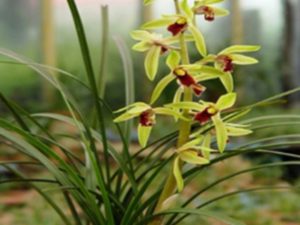
A perennial herb, 2–2.5 m tall. The entire plant emits a pungent odor. The stem base is swollen, reaching a diameter of up to 6 cm. Leaves are arranged in two rows, numbering 11–14; they are sessile, or the upper leaves may have short petioles; the ligule is purplish, 1–2 cm long, membranous, and sparsely pubescent;leaf sheaths are striated, with the margins of the ligule and leaf sheath nearly leathery; leaf blades are oblong-lanceolate to ovate, 20–83 cm long and 5–19 cm wide, with a long acuminate apex, a cuneate base, entire margins, and glabrous on both surfaces. The flower stalk arises from the base of the stem and is 13–28 cm long; the inflorescence peduncle is 4–13 cm long;scales are broadly ovate, 1–8 cm long; the spike is 9–15 cm long; bracts are pale red, oblong, 3.3–4 cm long, 7–9 mm wide, sparsely covered with short soft hairs on the outer surface; bracteoles are tubular, 1.7–2 cm long, shallowly bifid; sparsely covered with short soft hairs on the outside; flowers are pale orange, 5.5–7 cm long;flower pedicels no longer than 5 mm; calyx 2.3–3 cm long, 3-lobed, shallowly lobed on one side, nearly glabrous or sparsely pubescent; corolla tube 2.5–2.8 cm long, pubescent, lobes oblong, ca. 2.3 cm long, ca. 6 mm wide, the posterior lobe sac-like, ca. 2.5 cm long, ca. 1.5 cm wide;The labellum is oblong-obovate, 3–3.5 cm long and about 1.6 cm wide, with a deeply wrinkled margin and a red stripe on either side of the midvein; the stamens are 2–2.5 cm long, with filaments about 1 cm long and anthers 1.3–1.5 cm long; the connective appendages are about 5 mm long and bear eroded teeth;The style is sparsely covered with short hairs, and the stigma is funnel-shaped; the ovary is glabrous. The capsule is dark purple when mature, nearly spherical, 2.5–4.5 cm long, and 2–2.5 cm in diameter; when dry, it becomes olive-shaped, dark brown, with a remnant of the perianth tube at the apex and a short stalk at the base. The seeds are numerous. Flowering occurs from April to May, and fruiting from August to September.
Distribution Area
It is distributed in Guangxi and southern Yunnan.
Growth Habits
It prefers a warm and humid climate and is sensitive to heat, drought, and frost. It is best cultivated at elevations of 1,000–2,000 m, with an average annual temperature of 18–20°C, in shaded (approximately 50–60% shade) forest understories or along streamside slopes in moist mountain valleys, in loose, fertile, humus-rich sandy loam soil.
Propagation Methods
Propagation is by seed or division.
Cultivation Techniques
1. Propagation by seed: Harvest the fruit in August–September when it is ripe and the pericarp turns purplish-red. Remove the pericarp, wash the pulp, soak the seeds in clean water for about 10 hours, then mix with moist sand for storage. Sow from August to November, or alternatively in February–March of the following year.Sow in rows with a row spacing of 15 cm and a seeding depth of 1.5–2 cm. Cover the seeds with soil, mulch with straw, and water thoroughly. Seedlings will emerge about one month after sowing. Set up a shade structure to provide shade and apply wood ash and well-rotted pig or cow manure as top dressing. After 1–2 years of cultivation, when the seedlings reach a height of 60–120 cm, they are ready for transplanting.In early April, dig planting holes with a row spacing of 1.7 m × 2 m, a hole width of 30 cm, and a depth of 15 cm. Plant 1–2 seedlings per hole, and perform transplanting on a cloudy or rainy day.
2. Division Propagation: Divide the rhizomes of healthy mother plants that have buds, ensuring each clump contains 2–3 seedlings. After planting, fill the holes with fine soil, tamp it down firmly, cover with straw, and water thoroughly.
Pest and Disease Control
Diseases include damping-off, which affects seedlings; in severe cases, entire patches may die. Remove diseased plants, sprinkle lime powder around the affected area, or water with a 1,000-fold dilution of 50% carbendazim.