Chou Ling Dan is the name of a traditional Chinese medicinal herb. It consists of the roots and whole plant of Laggera pterodonta (DC.) Benth. [Blumeu pterodonta DC.; Laggera purpurscens Sch.-Bip. ex Hochst.], a plant in the Asteraceae family. It has the effects of clearing heat, detoxifying, and promoting blood circulation.It is primarily used to treat upper respiratory tract infections, tonsillitis, pharyngitis, mumps, stomatitis, tracheitis, abscesses, boils, and carbuncles, burns and scalds, venomous snake bites, and traumatic injuries.
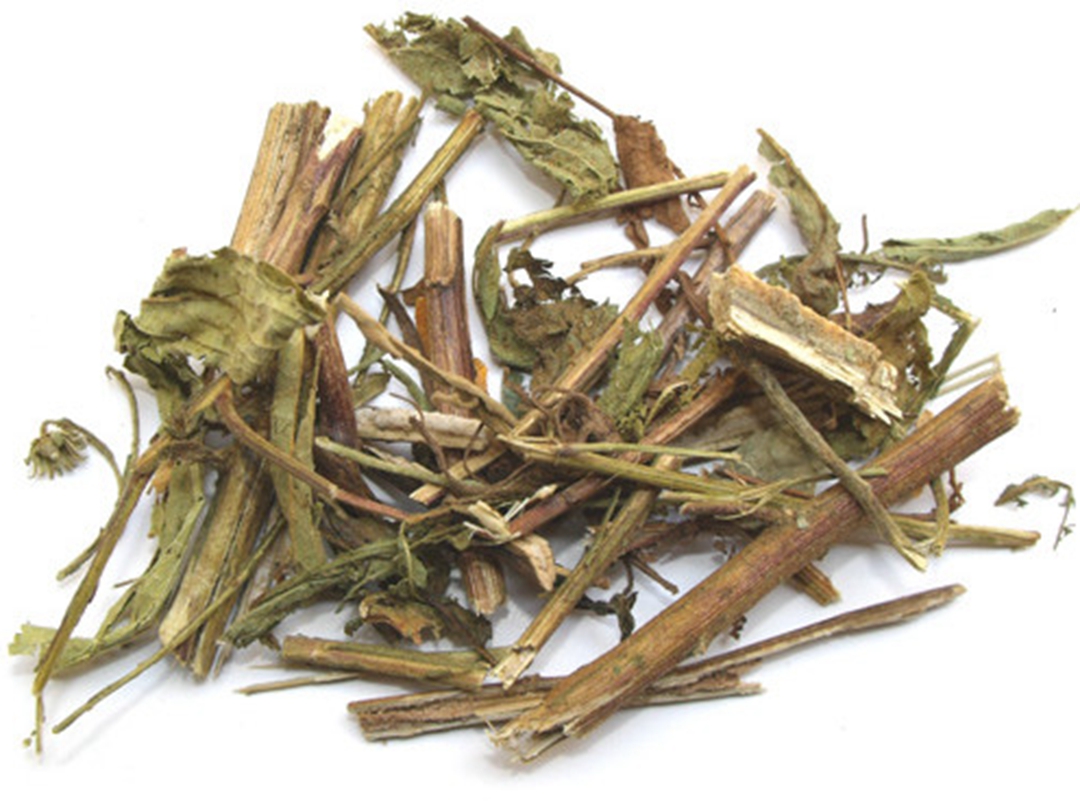
Chou Lingdan
Chou Ling Dan is the name of a traditional Chinese medicinal herb. It consists of the roots and whole plant of Laggera pterodonta (DC.) Benth. [Blumeu pterodonta DC.; Laggera purpurscens Sch.-Bip. ex Hochst.], a plant in the Asteraceae family. It has the effects of clearing heat, detoxifying, and promoting blood circulation.It is primarily used to treat upper respiratory tract infections, tonsillitis, pharyngitis, mumps, stomatitis, tracheitis, abscesses, boils, and carbuncles, burns and scalds, venomous snake bites, and traumatic injuries.
Chinese Name : 臭灵丹
Aliases : Lion Grass, Stinky Leaves, Big Black Medicine, Stinky Tree, Meridian-Regulating Herb, Mountain Lin Dan, Yu Fu You, Wild La Yin, Deer Ear Forest
Nature, Flavor & Meridian Tropism : Taste: bitter, pungent; Nature: cold
Benefits & Efficacy
Benefits
Clears heat and detoxifies; promotes blood circulation.
Indications
Upper respiratory tract infections, tonsillitis, pharyngitis, mumps, stomatitis, tracheitis, abscesses, boils, and carbuncles; burns and scalds; venomous snake bites; and trauma from falls or blows.
Usage and Dosage
Internal use: Decoct 9–15 g; or extract the juice; or grind into a powder. External use: Apply an appropriate amount as a poultice.
Pharmacological Actions
1. Expectorant effect: Domestic rabbits were exposed to 0.9% ammonia water for 2 hours to induce acute upper respiratory tract inflammation. Oral administration of Chulingdan solution (first extracting the essential oil, then preparing a decoction from the residue, and adding the essential oil to the decoction; each milliliter contains 5g of crude drug) at a dose of 3ml/kg significantly reduced mucus secretion in the upper respiratory tract.This effect may be due to the volatile oil component being partially excreted through the respiratory tract mucosa, where it exerts a mild irritant effect, improves local blood circulation, promotes resolution of inflammation, and reduces excessive sputum production. 2. Therapeutic effect on experimental acute bronchitis: When 2–3 drops of castor oil were instilled into the trachea of anesthetized rabbits, symptoms of acute bronchitis—including salivation, increased bronchial secretions, wheezing, and dyspnea—developed, leading to death within 2 hours; however, when Choulingdan Liquid was administered orally at a dose of 10 ml/kg twice (once every 1.5 hours), the animals’ survival was prolonged to within 12 hours. 3. Antitumor effects: Using the methylene blue decolorization method to measure blood cell dehydrogenase activity in test tubes from leukemia patients, the ethanol extract of Choulingdan (obtained by decoction and concentration) exhibited strong inhibitory effects on blood cell dehydrogenase activity in patients with acute lymphocytic leukemia, acute myeloid leukemia, and acute monocyte leukemia. It also significantly inhibited the respiration of white blood cells in patients with acute lymphocytic leukemia(Wabbe respiration assay). 4. Other Effects: Choulingdan has no antipyretic effect on artificially febrile rabbits and exhibits no inhibitory effect on Streptococcus pneumoniae, Staphylococcus, or Streptococcus pyogenes. However, when combined with Eucalyptus robusta leaves to prepare a decoction and administered continuously for 5 days, it restored all chicks suffering from poisoning complicated by respiratory tract infections to normal health.
Relevant Discussions
1. *Herbal Compendium of Southern Yunnan*: “Treats wind-heat accumulated toxins and disharmony of the viscera. It circulates through the twelve meridians and disperses sores and abscesses. Disharmony of the five viscera leads to accumulated heat turning into toxins, resulting in boils and carbuncles. When heat toxins invade the blood, the muscles develop scabies and ringworm.Excessive consumption of beef or horse meat leads to accumulated heat turning into toxin; in severe cases, this causes abscesses and boils; in milder cases, it results in blood-wind-induced tinea and sores. It causes chest and diaphragm discomfort, heart palpitations accompanied by vomiting, itchy skin, and restlessness due to internal heat. It is highly effective for all wind-heat toxic sores.”
2. *Yunnan Chinese Herbal Medicine*: “Clears heat and detoxifies; reduces inflammation. Primarily used to treat upper respiratory tract infections, tonsillitis, and stomatitis; prevents and treats influenza.”
3. *Compendium of Chinese Herbal Medicine*: “For external use to treat boils, abscesses, and toxic swellings; burns and scalds; venomous snake bites; contusions and bruises; and fractures.”
Applications
Related Compatibility
1. Prevention of Influenza: 2,500 g of Chou Ling Dan, 1,000 g of ginger, and an appropriate amount of brown sugar—enough for a single dose for 100 people. Decoct in water and take twice daily.
2.Treatment of acute periodontitis, tonsillitis, pharyngitis, otitis media, and mumps: Grind Chou Ling Dan into a fine powder (or place it in capsules); take 1.5–3 g per dose, with 0.25 g per dose for children. For mumps and boils, crush fresh Chou Ling Dan and apply it to the affected area; alternatively, mix the powder with an appropriate amount of petroleum jelly to form a 10% ointment for topical application.(Recipes 1–2 are from *Compendium of Chinese Herbal Medicines*)
3. For children whose sores have not healed after smallpox due to lingering toxins: Apply Chou Ling Dan leaves to the affected area.
4. For malaria: Take seven tips of Ling Dan Cao. Pound them to extract the juice, mix with a small amount of wine, and drink. (Recipes 3–4 are from *Herbal Medicine of Southern Yunnan*)
5. For the treatment of the common cold, cough, bronchitis, stomatitis, tonsillitis, cholecystitis, and mumps: Grind the dried Chou Ling Dan into a powder; take 1.5–3 g per dose with boiling water; or decoct 15–30 g and drink the decoction.
6. For asthma: 30 g of fresh Stinking Lingdan. Simmer briefly, strain out the residue, then combine the filtrate with half a bowl of raw soy milk and simmer together. Take orally with honey as a vehicle.
7. For boils, sores, and unexplained swellings: Pound fresh Stinking Lingdan leaves and apply as a poultice. (Recipes 5–7 are from *Honghe Medicinal Herbs*)
Processing & Preparation
Harvesting & Processing
Harvest in summer, wash thoroughly, and use fresh or cut into sections and sun-dry.
Crude Drug Identification
Botanical Information
Botanical Classification
A plant of the Asteraceae family, *Eupatorium hexangulare*.
Morphological Characteristics
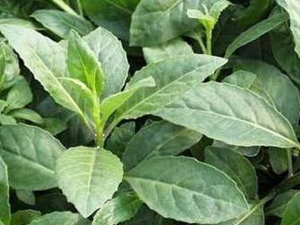
A perennial herb, 50–100 cm tall, with a strong odor throughout the plant. The taproot is long and cylindrical with a few branches; lateral roots are numerous and slender. The stem is cylindrical, slightly branched toward the upper part; both the stem and branches have pinnately toothed wings. The entire plant is densely covered with pale yellow-green glandular hairs and soft pubescence.Leaves are alternate and sessile; leaf blades are elliptic-oblanceolate or elliptic, 7–10 (–15) cm long and 2–3.5 (–7) cm wide, with a short acute or obtuse apex, a cuneate base extending downward into a wing, and margins bearing fine serrations or irregularly wavy serrations;the upper leaves are narrower and smaller, linear-lanceolate, obovate, or oblong, 2–3 cm long, 5–10 mm wide. The flower heads are numerous, approximately 10 mm in diameter, arranged at the tips of stems and branches into large, racemose or nearly corymbose panicles; the peduncles are about 2 cm long, wingless, and densely covered with glandular short soft hairs;The involucre is nearly bell-shaped; the bracts are linear or oblong-lanceolate, with a short acute apex; the upper part of the inner layer is sometimes purplish-red, dry and membranous, linear, while the innermost layer is extremely narrow, usually filiform; there are numerous female flowers with filiform corollas, approximately 7 mm long;The bisexual flowers are approximately as long as the female flowers, with tubular corollas that gradually widen upward; the corolla lobes are usually 5-lobed, with papillate projections on the back. The achenes are nearly spindle-shaped, 10-angled, approximately 10 mm long, covered with white, long soft hairs; the pappus is white, easily shed, and approximately 6 mm long. Flowering period: April–October.
Distribution Area
Distributed in southwestern China, western Hubei, southwestern Guangxi, and other areas.