Cornus officinalis is the dried, ripe fruit pulp of Cornus officinalis, a plant of the Cornaceae family. The plant is native to Shanxi, Shaanxi, Gansu, Shandong, Jiangsu, and other regions.This herb has a sour and astringent taste, is slightly warm in nature, and enters the Liver and Kidney meridians. It has the effects of tonifying the Liver and Kidney and astringing to consolidate and prevent collapse. It is commonly used to treat weakness and soreness in the lower back and knees, dizziness and tinnitus, impotence, nocturnal emission and premature ejaculation, menorrhagia, metrorrhagia, and leukorrhea, as well as profuse sweating leading to collapse, internal heat, and excessive thirst.
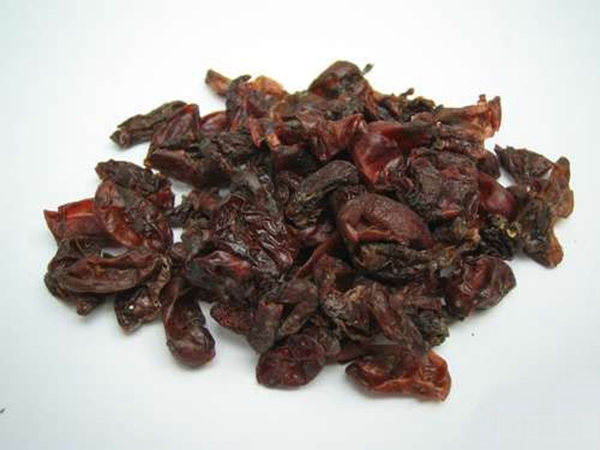
Cornelian Cherry
Cornus officinalis is the dried, ripe fruit pulp of Cornus officinalis, a plant of the Cornaceae family. The plant is native to Shanxi, Shaanxi, Gansu, Shandong, Jiangsu, and other regions.This herb has a sour and astringent taste, is slightly warm in nature, and enters the Liver and Kidney meridians. It has the effects of tonifying the Liver and Kidney and astringing to consolidate and prevent collapse. It is commonly used to treat weakness and soreness in the lower back and knees, dizziness and tinnitus, impotence, nocturnal emission and premature ejaculation, menorrhagia, metrorrhagia, and leukorrhea, as well as profuse sweating leading to collapse, internal heat, and excessive thirst.
Chinese Name : 山茱萸
Latin Name : Corni Fructus
Aliases : Shu Jujube, Mei Shi, Mouse Droppings, Chicken’s Foot, Cornus Fruit, Jujube Fruit, Jujube Flesh, Jujube Peel, Medicinal Jujube, Red Jujube Peel
Authentic Producing Area : Mainly produced in Henan and Zhejiang
Nature, Flavor & Meridian Tropism : Taste: sour and astringent; nature: slightly warm; enters the Liver and Kidney meridians
Benefits & Efficacy
Benefits
Cornus fruit has the effects of tonifying the liver and kidneys, and astringing to prevent collapse.
Indications
Cornus officinalis is primarily used to treat two major categories of conditions: Liver-Kidney Deficiency Syndrome and Physical Deficiency with Slipping and Prolapse Syndrome. 1. Liver-Kidney Deficiency Syndrome: Cornus officinalis excels at tonifying the Liver and Kidney and is suitable for various symptoms caused by Liver-Kidney deficiency, such as soreness and weakness in the lower back and knees, dizziness, tinnitus, impotence, and internal heat with excessive thirst resulting from Liver-Kidney Yin deficiency. 2. Conditions of physical weakness with slippage and loss of control: Cornus officinalis has astringent and consolidating properties and is commonly used for conditions involving uncontrolled discharge, including nocturnal emission, premature ejaculation, enuresis, and frequent urination, as well as profuse sweating that will not stop and physical weakness with impending collapse. In gynecology, it is also used for metrorrhagia, menorrhagia, and persistent leukorrhea.
Usage and Dosage
The standard method of administration for Cornus officinalis is decoction, with a recommended dosage of 6–12 g; it may also be incorporated into pills or powders. It is important to note that due to differences in each patient’s condition, constitution, age, and other factors, the specific dosage of Cornus officinalis may vary from person to person. Patients should strictly adhere to the dosage prescribed by their physician.
Precautions
1. Before using Cornus officinalis, a TCM practitioner must conduct a pattern differentiation to avoid blind use without proper diagnosis. 2. If you need to take other medications while using Cornus officinalis, consult your doctor or pharmacist first. Do not take other medications on your own to avoid drug interactions that could affect efficacy or increase the risk of adverse reactions. 3. While taking this medication, patients should maintain a light diet and avoid cold, raw, spicy, and greasy foods; they should also abstain from smoking and drinking alcohol. 4. Pregnant women, women planning to become pregnant, and breastfeeding women should proactively inform their doctor of their condition before using Cornus officinalis so that the doctor can assess whether this herbal medicine is appropriate for them. 5. Do not use Cornus officinalis if it shows signs of mold or has an unusual odor.
Chemical Constituents
Cornus officinalis primarily contains cycloether terpenoid glycosides: strychnoside, cornoside, morronoside, 7-O-methylmorronoside, dangyaoside, and cornoside; triterpenoids: ursolic acid, etc.;plant lectins: 7-dehydro-strychnine; tannins: Cornus tannins 1, 2, and 3,Corylus tannins A–G, Clove tannin, Roadside green tannin D, 2,3-di-O-galloyl-β-D-glucose, Camptotheca tannins A and B, 7-O-galloyl-D-semen-heptanone, and gallic acid; it also contains essential oils.
Pharmacological Actions
Modern pharmacological studies have found that Cornus officinalis possesses hypoglycemic, antiarrhythmic, and immunomodulatory effects.
Relevant Discussions
1. *Shennong Bencao Jing*: “Taste: sour; nature: neutral. Main indications: pathogenic factors beneath the heart, fever and chills; warms the middle burner; expels cold and dampness-induced arthralgia; eliminates the three types of parasites.”
2. *Tangye Bencao*: “Slipperiness leads to loss of vital energy; astringent agents are used to consolidate it. Cornus officinalis reduces frequent urination and preserves vital essence, utilizing its sour and astringent properties to counteract slipperiness.”
3. *Rihua Zi Bencao*: “Warms the lower back and knees; supports the water organs; dispels all forms of wind; expels all pathogenic qi; breaks up masses and nodules; treats alcohol-induced nosebleeds.”
4. *Explanation of Medicinal Properties*: “It primarily expels pathogenic factors, dispels wind-induced arthralgia, breaks up masses and nodules, unblocks the nine orifices, relieves nasal congestion, treats deafness, kills the three types of parasites, stabilizes the five viscera, strengthens primordial yang, consolidates essence and marrow, and promotes urination.”
Applications
Clinical Applications
1. For treating weakness and soreness in the lower back and knees, dizziness, tinnitus, and erectile dysfunction: For those with liver and kidney yin deficiency presenting with dizziness, vertigo, lower back soreness, and tinnitus, combine with prepared Rehmannia root (Shu Di Huang) and Chinese yam (Shan Yao), as in the Six-Ingredient Rehmannia Pill (Liu Wei Di Huang Wan) from *Direct Decisions on Pediatric Medicinal Syndromes* (*Xiao’er Yao Zheng Zhi Jue*);For those with deficient Mingmen fire, cold pain in the lower back and knees, and difficulty urinating, combine it with Cinnamomum cassia and Aconite, as in the Kidney Qi Pill (from *Essentials of the Golden Cabinet*); for erectile dysfunction due to kidney yang deficiency, combine it with Psoralea corylifolia, Morinda officinalis, and Epimedium, to tonify the kidneys and assist yang.
2. Treatment of nocturnal emission, seminal leakage, enuresis, and frequent urination: For nocturnal emission and seminal leakage caused by kidney deficiency leading to instability of the essence gate, combine with prepared rehmannia root, Chinese yam, and other herbs, such as Liuwei Dihuang Pills (*Direct Decisions on Pediatric Medicinal Syndromes*) and Shenqi Pills (*Essential Prescriptions from the Golden Cabinet*); for enuresis and frequent urination caused by kidney deficiency resulting in loss of bladder control, combine with rubus fruit, sand garden seeds, and silkworm cocoons.
3. Treatment of Metrorrhagia, Menorrhagia, and Leucorrhea: For women with liver and kidney deficiency and instability of the Chong and Ren meridians, resulting in metrorrhagia or menorrhagia, combine with prepared Rehmannia root (Shu Di Huang), white peony root (Bai Shao), and Chinese angelica root (Dang Gui), as in the Enhanced Four Substances Decoction (Jiawei Siwu Tang) from *Fu Qingzhu’s Gynecology*; for cases of spleen qi deficiency with instability of the Chong and Ren meridians resulting in persistent leukorrhea, combine with Dragon Bone, Astragalus, and Atractylodes, as in the Gu Chong Decoction (*Records of Integrating Chinese and Western Medicine*); if leukorrhea persists, combine with Lotus Seed, Euryale Seed, and Calcined Dragon Bone.
4. Treatment of Profuse Sweating and Collapse: For uncontrollable profuse sweating, physical weakness approaching collapse, or collapse due to chronic illness, combine with Ginseng, Aconite, Dragon Bone, etc., such as Lai Fu Decoction (*Medical Synthesis of Chinese and Western Medicine*).
5. Treatment of Internal Heat and Thirst: For liver and kidney yin deficiency with internal heat and thirst, combine with herbs such as Polygonatum, Goji Berries, and Trichosanthes Root—which nourish the liver and kidneys, clear heat, and generate body fluids.
Related Compatibility
Cornus fruit can be combined with Chinese medicinal herbs such as oyster shell and white peony root to treat related conditions.
1. Cornus fruit combined with oyster shell: Cornus fruit is sour, astringent, and slightly warm in nature; it excels at tonifying the liver and kidneys, arresting sweating, consolidating collapse, and consolidating essence while reducing urination;Oyster shell is salty, cold, and heavy in nature, and excels at nourishing yin and subduing yang, as well as astringing and consolidating. When combined, these two herbs provide tonification through astringency, addressing both the root and the symptoms, thereby enhancing their ability to astringe and consolidate, anchor yin to stop sweating, and rescue the vital energy to prevent collapse. They are primarily used to treat spontaneous sweating, night sweats, seminal emission, spermatorrhea, and leukorrhea resulting from liver and kidney deficiency, failure to retain essence and qi, or impending loss of original qi.
2. Cornus officinalis combined with Paeonia lactiflora: Cornus officinalis enters the Lower Jiao; its sour and astringent properties are astringent and consolidating, capable of tonifying deficiency and preventing collapse, astringing to stop sweating, and arresting metrorrhagia and leukorrhea. Paeonia lactiflora is sweet and tonifying, sour and astringent, and has the effects of tonifying blood, astringing yin, and stopping sweating.When combined, these two herbs not only tonify the liver and kidneys, replenish blood, and arrest metrorrhagia and menorrhagia—thereby treating metrorrhagia, epistaxis, and excessive blood loss—but also tonify deficiency, consolidate collapse, and stop sweating, making them suitable for conditions such as spontaneous sweating and night sweats.
Medicinal Identification
Cornus officinalis must be distinguished from wine-processed Cornus fruit, Evodia fruit, Schisandra berry, Chinese yam, and prepared Rehmannia root.
1. Cornus officinalis vs. Wine-Processed Cornus Fruit: Cornus officinalis has a sour and astringent taste, a slightly warm nature, and enters the Liver and Kidney meridians. It functions to tonify the Liver and Kidneys, astringe, and consolidate collapse, and is suitable for treating dizziness, tinnitus, soreness and pain in the lower back and knees, impotence, nocturnal emission, enuresis, frequent urination, metrorrhagia, leukorrhea, profuse sweating due to collapse, and internal heat with excessive thirst.When processed with wine, it becomes wine-processed Cornus fruit (Jiu Yu Rou). The wine’s warming and unblocking properties enhance the herb’s efficacy, reduce its acidity, and strengthen its tonifying effects. It is commonly used for dizziness and lightheadedness, cold pain in the lower back, impotence and premature ejaculation, as well as frequent urination and enuresis.
2. Cornus officinalis and Cornus officinalis var. wuyuan: Both herbs enter the Liver and Kidney meridians and possess certain yang-nourishing effects. However, Cornus officinalis is slightly sour, mildly warm, and moist in nature; it is warm without being drying and tonifying without being overly potent. It can both nourish kidney essence and warm the kidneys to support yang, making it a key herb for tonifying the Liver and Kidneys. It is used for Liver and Kidney deficiency, dizziness and vertigo,soreness and weakness in the lower back and knees, and erectile dysfunction; it can both tonify the kidneys and nourish essence, as well as consolidate essence and stop enuresis, making it suitable for treating nocturnal emissions and enuresis; it can also consolidate the Chong and Ren meridians, curb sweating, and prevent collapse, and is frequently used for metrorrhagia, menorrhagia, uncontrollable profuse sweating, and physical debility with impending collapse.Eucommia (Wu Zhu Yu) has pungent and dispersing properties, bitter and draining properties, and a warm nature that dispels cold. It both dispels cold pathogens from the Liver Meridian and resolves stagnation of Liver Qi, making it a key herb for treating various pains caused by Liver cold and Qi stagnation. It can be used for dysmenorrhea caused by cold stagnation in the Liver Meridian, cold pain associated with hernias, and headaches at the crown of the head;Given its ability to warm the middle burner, dispel cold, reverse counterflow, stop vomiting, and dry dampness, it can be used for cold pain in the epigastrium and abdomen due to deficiency-cold in the middle burner, vomiting and acid regurgitation, spleen and kidney yang deficiency, early morning diarrhea, and swelling and pain associated with beriberi.
3. Cornus officinalis and Schisandra chinensis: Both herbs nourish the liver and kidneys and share astringent and consolidating properties. They can be used for conditions such as kidney deficiency with loss of control, seminal emission and premature ejaculation, and profuse sweating due to physical weakness. However, Cornus officinalis is more focused on nourishing essence and blood, warming and assisting primordial yang, preserving and storing essence and qi, and consolidating the lower jiao; it also nourishes the deficient yin of the liver and kidneys,and to stem sweating caused by the near-exhaustion of yin and yang—its effects in these areas are stronger than those of Schisandra; moreover, while possessing astringent properties, it also has a tonifying nature, greatly replenishing primordial qi, invigorating the spirit, and consolidating and arresting slippage. It is used for liver and kidney deficiency, dizziness and vertigo, soreness and weakness in the lower back and knees, erectile dysfunction, nocturnal emission, enuresis, metrorrhagia and menorrhagia, as well as profuse and unstoppable sweating and conditions of physical debility nearing collapse.Schisandra, on the other hand, focuses primarily on astringency: it enters the Lung meridian to consolidate the dispersion of Lung Qi and treat chronic cough due to Lung deficiency; it enters the Heart meridian to consolidate Heart Qi and calm the mind, thereby treating restlessness and insomnia; it can also generate body fluids, astringe the intestines to stop diarrhea, and consolidate collapse. It is used to treat conditions involving both Qi and body fluid deficiency, such as restlessness, fatigue, thirst, and persistent diarrhea.
4. Cornus officinalis and Chinese yam: Both herbs can tonify the kidneys and secure essence, and are used for conditions such as nocturnal emission, frequent urination, and enuresis resulting from kidney deficiency with instability. However, Cornus officinalis is sour, slightly warm, and moist in nature; it is warm without being drying and tonifying without being overly potent. It can both nourish kidney essence and warm the kidneys to assist yang, making it a key herb for tonifying the liver and kidneys. It is used for liver and kidney deficiency, dizziness and vertigo,soreness and weakness in the lower back and knees, and erectile dysfunction. It can also tonify the liver and kidneys, consolidate the Chong and Ren meridians, and stop sweating to prevent collapse, making it suitable for conditions such as metrorrhagia and menorrhagia, excessive menstrual bleeding, uncontrollable profuse sweating, and syndromes of physical debility with impending collapse. Chinese yam (Shanyao) can harmoniously tonify both qi and yin and possesses astringent properties; it not only tonifies the qi of the spleen and lungs but also nourishes the yin of the lungs and kidneys, while also consolidating and retaining kidney essence. It is used for syndromes of deficiency in the spleen, stomach, lungs, and kidneys;Chinese yam also has the effects of tonifying qi and nourishing yin, as well as generating body fluids and quenching thirst, and is used for yin deficiency with internal heat, accompanied by thirst and excessive fluid intake. In summary, Chinese cornelian cherry (Shan Zhu Yu) tonifies yang and nourishes yin, and possesses astringent properties that far exceed those of Chinese yam. Chinese yam provides a balanced tonification of qi and yin, with relatively weaker astringent properties.
5. Cornus officinalis and Prepared Rehmannia: Both herbs can tonify the essence and blood of the liver and kidneys, treating liver and kidney deficiency, insufficiency of essence and blood, dizziness and vertigo, soreness and weakness in the lower back and knees, impotence, and seminal emission. The two herbs complement each other.However, Cornus officinalis not only tonifies yin but also assists yang; while nourishing, it also helps to preserve and store essence and qi. Therefore, it can be selected for conditions such as seminal emission and lochia caused by deficiency of kidney yin and yang leading to impaired preservation and storage, as well as metrorrhagia, menorrhagia, and profuse sweating indicating impending loss of yang qi.Rehmannia glutinosa (Shu Di Huang) specifically nourishes essence and blood; its ability to nourish blood, replenish essence, and replenish the marrow is stronger than that of Cornus officinalis. However, it does not support yang nor does it possess astringent properties.
Related Medicines
Gui-Shao-Di-Huang Pills, Gui-Fu-Di-Huang Pills (capsules).
Related Prescriptions
Shenqi Pills (from *Essentials of the Golden Cabinet*), Liuwei Dihuang Pills (from *Direct Decisions on Pediatric Medicines and Syndromes*), and Yougui Pills (from *The Complete Works of Jingyue*).
Medicinal Diet Therapy
1. Cornus Fruit, Walnut, and Pork Kidney Dish from *Chinese Medicinal Dietary Therapy*
(1) Ingredients: 10 grams of cornelian cherry flesh, 15 grams of walnut kernels, and 2 pork kidneys.
(2) Preparation: Split the pork kidneys open, remove the scent glands, and wash thoroughly. Place the herbs inside the kidneys, tie them tightly, and boil until cooked. Serve warm.
(3) Efficacy: Tonifies the kidneys and retains essence. Suitable for kidney deficiency-induced low back pain, nocturnal emissions, and similar conditions.
2. Chinese Yam and Cornus Fruit Porridge from *Self-Treatment of Hundred Diseases Through Diet*
(1) Ingredients: 60 g Chinese yam, 20 g Cornus fruit pulp, 100 g japonica rice.
(2) Preparation: Decoct the first two ingredients to extract a concentrated broth, then cook with the japonica rice to form a thin porridge.
(3) Efficacy: Nourishes yin and strengthens the kidneys. Suitable for symptoms of lower-body wasting (xia xiao), such as frequent urination in large volumes, cloudy urine resembling grease, dry mouth and tongue, and sweet-tasting urine.
3. Rehmannia-Boiled Quail Eggs from *Chinese Medicine Dietary Therapy*
(1) Ingredients: 20 g prepared Rehmannia root, 30 g goji berries, 30 g Cornus fruit, 30 g Huai yam, 20 quail eggs, and seasoning to taste.
(2) Preparation: First, boil the quail eggs until they are 80% cooked, then peel them. Place the eggs in a clay pot along with the prepared Rehmannia root, Huai yam, goji berries, Cornus fruit, and seasonings. Add an appropriate amount of water and simmer for about 15 minutes. Consume 2 eggs each morning and evening.
(3) Benefits: Nourishes the liver and tonifies the kidneys. Suitable for conditions involving liver and kidney deficiency.
Notes
Patients requiring treatment with traditional Chinese medicine should first consult a licensed TCM hospital, where a TCM practitioner will conduct a professional diagnosis and prescribe the appropriate herbal formula.
Processing & Preparation
Harvesting & Processing
Harvest the fruit in late autumn or early winter when the peel turns red; dry it over low heat or briefly blanch it in boiling water, then promptly remove the seeds and dry.
Processing Methods
1. Cornus Fruit Pulp: Take the raw material, remove impurities and residual pits, wash thoroughly, and sun-dry.
2. Wine-Infused Cornus Fruit Pulp: Take the cleaned Cornus fruit pulp, mix thoroughly with yellow wine, and wait until the wine is fully absorbed. Place the mixture in a jar or suitable steamer, seal tightly, and place in a pot of water. Heat over high heat, then simmer over indirect heat or steam in a steamer basket until the color turns black and lustrous. Remove and dry.Use 20 kg of yellow wine for every 100 kg of Cornus fruit flesh.
3. Steamed Cornus Fruit Flesh: Place the Cornus fruit flesh in a steamer basket or suitable steaming vessel. Start with high heat; once steam begins to rise vigorously, reduce to low heat. Steam over water until the surface turns purplish-black. Turn off the heat and let it sit overnight, then remove and dry.
Storage Methods
Store in a dry, airtight container in a well-ventilated, dry place to prevent insect infestation.
Crude Drug Identification
Properties of Crude Drugs
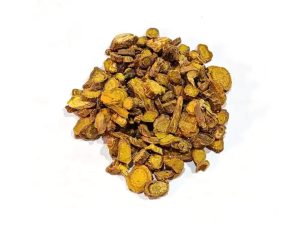
This product appears as irregular slices or sacs, 1–1.5 cm long and 0.5–1 cm wide. The surface is purplish-red to purplish-black, shriveled, and glossy. Some specimens have a circular scar from the persistent calyx at the apex, and a scar from the fruit stalk at the base. The texture is soft. It has a faint odor and tastes sour, astringent, and slightly bitter.
Properties of Processed Slices
1. Cornus Fruit Pulp: Irregularly shaped slices or sac-like pieces with a purplish-red to purplish-black surface that is wrinkled and glossy. Soft in texture. Faint odor; sour, astringent, and slightly bitter taste.
2. Wine-processed Cornus Fruit: Resembles Cornus Fruit in shape, with a purplish-black or black surface and a moist, soft texture. It has a faint aroma of wine.
3. Steamed Cornus Fruit: Resembles Cornus Fruit in shape, with a purplish-black surface and a moist, soft texture.
Botanical Information
Botanical Classification
Cornus officinalis, a plant of the genus Cornus in the family Cornaceae.
Morphological Characteristics
A deciduous shrub or tree, 4–10 m tall, with grayish-brown bark.
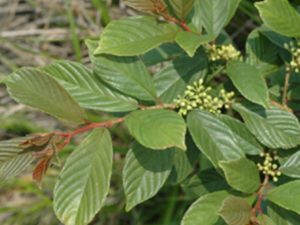
1. Characteristics of branches and leaves: Twigs are slender and cylindrical, glabrous or covered with appressed short soft hairs.Leaves are simple and opposite; papery, ovate-lanceolate or ovate-elliptic, 5.5–10 cm long, 2.5–4.5 cm wide, with an acuminate apex, a broadly cuneate or nearly rounded base, entire margins, green above, pale green below, and short yellowish-brown soft hairs in the axils of the veins; petioles are 6–12 mm long and bear yellowish-brown hairs when young.
2. Flower and Fruit Characteristics: Umbellate inflorescences; flowers bloom before the leaves appear and are clustered at the tips of twigs; 4 bracts, ovate, thick papery to leathery, purplish, slightly pubescent on both sides; flowers are hermaphroditic and yellow; 4 calyx lobes, broadly triangular; 4 petals, ligulate or lanceolate, yellow, reflexed outward;There are 4 stamens, arranged alternately with the petals; the ovary is inferior, and the receptacle is obovate, densely covered with appressed, sparse soft hairs; the disk is annular and fleshy. The drupe is oblong, turning red to purplish-red when ripe, glossy, with a leathery exocarp, a fleshy mesocarp, and a hard, woody endocarp. Flowering occurs from March to April, and fruiting from September to October.
Distribution Area
Cornelian cherry is primarily distributed in Shanxi, Shaanxi, Gansu, Shandong, Jiangsu, Zhejiang, Anhui, Jiangxi, Henan, Hunan, and Sichuan.
Growth Habits
It prefers a warm, humid climate and full sun. It is best cultivated in fertile, deep, well-drained sandy loam or loam soils.
Propagation Methods
Propagation is carried out by seed, layering, or cuttings.
Cultivation Techniques
1. Propagation by Seed
In the fall when the fruit ripens, harvest large, red fruits for seed. Remove the pulp, wash the seeds, and store them in layers with fine sand over the winter to promote germination.
(1) Seedling Rearing and Transplanting Method: Sow in the spring (March–April) of the following year. Sow in rows with a row spacing of 30 cm. After sowing, cover the seeds with soil and straw, water thoroughly, and keep the soil moist. Once seedlings emerge, remove the straw, intensify weeding, loosen the soil, and apply fertilizer. When the seedlings reach a height of 30–60 cm that same year, they can be transplanted. When planting, dig holes with a row and plant spacing of 2 m × 2 m.
(2) Direct Seeding Method: In the cultivation area, dig holes with a row and plant spacing of 2 m × 2 m, apply fertilizer, and sow 3–4 seeds per hole, covering them with 1–2 cm of soil.
2. Layering Propagation
After harvesting the fruit in the fall, bend 2- to 3-year-old branches near the ground to the ground level. Cut the branch near the ground to one-third of the way into the woody tissue and bury it in the soil, covering it with a 15 cm layer of sandy loam. In the winter of the second year or the spring of the third year, separate the rooted layers from the mother plant and transplant them.
3. Propagation by Cuttings
In mid- to late May, cut branches from high-quality mother plants. Trim the lignified branches into cuttings 15–20 cm long. Plant the cuttings in a sand bed with a spacing of 20 cm × 8 cm between rows and plants. Cover with plastic film to retain heat, set up a shade structure to block direct sunlight, water to maintain moisture, and weed and fertilize as needed. Transplant in early spring of the following year.
Pest and Disease Control
1. Diseases: Diseases include gray mold, which commonly affects mature plants and is transmitted by scale insects; spray a 1:1:100 Bordeaux mixture as a preventative measure at the first sign of infection. Anthracnose affects the fruit in early June; refer to the control methods for gray mold. Powdery mildew affects the entire plant; spray a 1,000-fold dilution of 50% Topsin-M at the first sign of infection.
2. Pests: Pests include the fruit borer moth, which damages the fruit; control by spraying a 2.5% cypermethrin solution diluted 5,000 times during the peak adult emergence period. Other pests include the wood geometer moth and the large bagworm moth.