White Mustard Seed, a name in traditional Chinese medicine. It is the seed of the plant Sinapis alba L. (family Brassicaceae). It has the effects of warming the lungs and resolving phlegm, promoting the flow of qi, and dispersing nodules and reducing swelling. It is primarily used for cold-phlegm-induced wheezing and cough, fluid retention, wandering abscesses, numbness of the limbs, and swollen, painful joints.

White Mustard Seed
White Mustard Seed, a name in traditional Chinese medicine. It is the seed of the plant Sinapis alba L. (family Brassicaceae). It has the effects of warming the lungs and resolving phlegm, promoting the flow of qi, and dispersing nodules and reducing swelling. It is primarily used for cold-phlegm-induced wheezing and cough, fluid retention, wandering abscesses, numbness of the limbs, and swollen, painful joints.
Chinese Name : 白芥子
Latin Name : Sinapis Albae Semen
Aliases : Spicy Rapeseed
Authentic Producing Area : Anhui, Henan, Sichuan
Nature, Flavor & Meridian Tropism : Pungent in taste, warm in nature; enters the Lung and Stomach meridians
Benefits & Efficacy
Benefits
Warms the lungs and resolves phlegm; promotes the flow of qi; disperses nodules and reduces swelling.
Indications
Used for cold-phlegm-induced wheezing and cough, retained fluid, wandering abscesses, numbness of the limbs, and swollen, painful joints.
Usage and Dosage
1. Internal use: Decocted as a soup, 3–10 g; or incorporated into pills or powders. 2. External use: Apply an appropriate amount as a paste made from ground powder; or apply as an acupoint patch.
Precautions
1. White mustard seed is pungent and warm in nature, with dispersing properties; it depletes qi and injures yin. It should be avoided by those with chronic cough due to lung deficiency or yin deficiency with excessive fire. 2. Avoid use in patients with gastrointestinal ulcers, bleeding, or skin allergies. 3. Do not exceed the recommended dosage.
Chemical Constituents
White Mustard Seed contains mustard oil glycosides, white mustard seed glycosides, fatty oils, mustard alkaloids, and various amino acids.
Pharmacological Actions
This herb possesses pharmacological effects including antitussive, expectorant, bronchodilatory, anti-inflammatory, analgesic, and anti-benign prostatic hyperplasia properties.
Relevant Discussions
1. *Compendium of Materia Medica*: White mustard seed primarily treats phlegm, descends qi, and relieves epigastric fullness; perilla seed regulates qi, alleviates wheezing, and suppresses cough; radish seed aids digestion, dispels stagnation, and descends qi.
2. *Ben Cao Zheng*: White mustard seed eliminates phlegm, malaria, and abdominal distension; it rapidly relieves bloating. Because its flavor is rich and its nature light, although it acts swiftly, it does not excessively deplete qi. Since it can remove phlegm from the flanks and skin, it goes without saying that it is equally effective for phlegm in other nearby areas.
3. *The Interpretation of Medicinal Substances*: White mustard seed… moves laterally with great speed… and penetrates with great sharpness; it specializes in resolving stagnant phlegm. It can resolve phlegm of a hot nature and disperse phlegm of a cold nature. Phlegm located beneath the skin and outside the membranes cannot be reached without it; phlegm in the limbs and flanks cannot be unblocked without it.In cases of chest constriction syndrome, where phlegm, saliva, and pathogenic heat are firmly congealed in the chest, accompanied by coughing and loss of voice, combining this herb with Perilla Seed, Bitter Orange Fruit, Trichosanthes Fruit, Apricot Kernel, Scutellaria, and Coptis to form the Decoction for Clearing Heat and Resolving Phlegm is truly a miraculous formula for regulating qi and relieving chest constriction.
4. *New Compilation of Materia Medica*: Some may doubt that white mustard seed can only eliminate phlegm from the diaphragm and membranes, but not phlegm from the stomach and lungs—as if eliminating phlegm from the lungs necessarily required fritillary bulb, and eliminating phlegm from the stomach necessarily required pinellia. Yet, this is not the case.The phlegm in the diaphragmatic membrane—as it pertains to the stomach and lungs—is particularly prone to accumulating phlegm. White Mustard Seed eliminates phlegm in the diaphragmatic membrane; wherever phlegm exists, it is thoroughly eliminated. How could it possibly fail to eliminate phlegm in the shallow regions of the lungs and stomach?
5. *Compendium of Medical Essentials*:(White Mustard Seed) Its pungent nature promotes circulation; growing in damp soil during the spring, it is particularly effective at dispelling damp phlegm. Its blue color corresponds to the Liver Wood element, and it acts on the flanks. When Liver Qi fails to metabolize fluids, it leads to retained fluid in the flanks. The seed specifically enters the Liver Meridian, thus dispelling retained fluid beneath the flanks. It should be stir-fried and ground before use; it need not be used for conditions other than phlegm in the flanks.
6. *Ben Cao Qiu Zhen*: (White Mustard Seed) Its pungent nature enters the Lung, and its warm nature disperses the exterior.Phlegm resides beneath the skin and outside the serous membrane in the flanks; when treated with this pungent and warm herb to search out and remove it, the interior and exterior are unblocked, eliminating the risk of stagnation in pockets or cavities. Therefore, for coughs, regurgitation, stomach disorders, bi syndrome, wood-type foot swelling, and toxic swellings and pain in the tendons and bones—all caused by phlegm-qi obstruction—where treatments requiring warming and dispersing are indicated, this herb is invariably employed to restore proper flow.
7. *Clear Distinction of Medicinal Properties*: (White Mustard Seed) Its nature is descending and astringent; its action is warming and dispersing. Therefore, it is effective in resolving stagnation and subduing upward-rebelling qi, and its efficacy extends beyond merely regulating qi and resolving phlegm.
8. *Explanation of Chinese Medicinal Herbs*: White mustard seed has a pungent and warm nature. According to the *Supplement to the Materia Medica*, it is primarily used to induce sweating, as its pungent and warm properties can disperse dampness and regulate qi. In cases where dampness obstructs qi and causes stagnation, leading to an absence of sweat, dispersing dampness and regulating qi can thus induce sweating.When phlegm accumulates in the chest and diaphragm and is obstructed by cold and dampness, the inability to transform and transport leads to qi rebellion—hence the term “ascending qi.” Using its pungent and warm nature to disperse the cold and dampness allows the phlegm to be transformed and the qi to flow, thus treating cold phlegm in the chest and diaphragm that causes ascending qi.When dampness is obstructed and transforms into heat, it causes a yellowish-red complexion; therefore, dispelling dampness and regulating qi can treat a yellowish-red complexion. White Mustard Seed has the effect of dispelling dampness and regulating qi; it treats qi disorders caused by cold and damp obstruction, and has the effects of resolving phlegm and stimulating appetite, warming the middle burner to relieve pain, and dispelling dampness to reduce swelling. If the condition does not involve qi, it should not be used as the primary treatment.
Applications
Clinical Applications
1. To treat cold phlegm obstructing the lungs, manifested as coughing, wheezing, chest tightness, and copious, difficult-to-expectorate phlegm, combine it with Perilla seeds and Radish seeds, as in the Three-Seed Nourishing Parents Decoction (*Han’s Comprehensive Treatise on Medicine*); for cases of suspended fluid with coughing, wheezing, chest fullness, and flank pain, combine it with Euphorbia and Euphorbia esculenta to resolve phlegm and expel fluid, as in the Saliva-Controlling Pill (*Three Causes Formulas*).For chronic cold-induced asthma, it can be ground into a powder with Asarum, Euphorbia, and Musk, then applied topically during summer to acupoints such as Lung Shu and Gaohuang, or administered via acupoint injection with a 10% white mustard seed solution.
2. To treat yin-type abscesses and toxic swellings caused by the accumulation of phlegm-dampness, it is often combined with deer antler gelatin, cinnamon bark, and prepared rehmannia root to warm yang, resolve stagnation, eliminate phlegm, and disperse nodules, as in the Yanghe Decoction (*Complete Collection of Surgical Prescriptions for Preserving Life*).; for numbness in the limbs or swollen, painful joints caused by phlegm-dampness obstructing the meridians, it can be combined with Strychnos seed and Myrrh, as in the White Mustard Seed Powder (from *Annotated Collection of Effective Formulas for Women’s Diseases*); it may also be used alone, ground into a powder and mixed with vinegar to apply to the affected area.
Related Compatibility
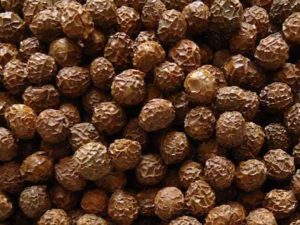
1. White Mustard Seed combined with Strychnos Seed: White Mustard Seed is pungent, dispersing, and warming; it both warms the lungs to transform phlegm and unblocks the meridians to disperse nodules. Strychnos Seed is particularly effective at expelling wind-dampness from the tendons and bones, opening the meridians, and penetrating the joints. When used together, these two herbs enhance the ability to invigorate blood circulation, unblock the meridians, and relieve pain. This combination is suitable for numbness in the limbs and swollen, painful joints caused by cold-dampness obstruction.
2. White Mustard Seed combined with Asarum: White Mustard Seed is pungent, dispersing, and warming, excelling at warming and transforming cold phlegm; Asarum is pungent, warm, and dispersing, capable of dispelling wind-cold externally and warming the lungs to transform fluid retention internally. When used together, these two herbs synergistically achieve the effect of warming and transforming cold phlegm. This combination is suitable for conditions characterized by cough and wheezing due to cold fluid retention.
3. White Mustard Seed combined with Gan Sui: White Mustard Seed is pungent and warm, excelling at transforming cold phlegm and expelling water and fluid retention; Gan Sui is bitter and cold with a descending nature, excelling at moving water and dampness through the meridians and channels, and possesses a potent purgative effect to expel fluid retention. When combined, these two herbs apply both cold and warm properties to work together in resolving phlegm and expelling fluid retention. This combination is indicated for conditions characterized by suspended fluid retention, coughing and wheezing, chest tightness, and pain in the flanks.
4. White Mustard Seed Combined with Cinnamon Bark: White Mustard Seed is pungent, dispersing, and warming; it excels at eliminating phlegm obstructing the meridians to unblock the channels and disperse nodules. Cinnamon Bark is pungent, sweet, and extremely hot; it can both warm and unblock the meridians while promoting the circulation of qi and blood. When combined, these two herbs work together to warm the meridians, invigorate yang, dispel cold, and resolve stagnation. This combination is suitable for yin-type abscesses with swelling and pain caused by yang deficiency and cold stagnation.
5. White Mustard Seed Combined with Deer Antler Gelatin: White Mustard Seed, with its pungent, dispersing, and warming properties, excels at eliminating phlegm obstructing the meridians to unblock the channels and disperse nodules; Deer Antler Gelatin warms and tonifies kidney yang, nourishes essence, and enriches blood. When used together, these two herbs enhance the effect of warming the meridians and invigorating yang. This combination is suitable for treating swelling and pain associated with yin-type abscesses caused by yang deficiency and cold stagnation.
Medicinal Identification
1. White Mustard Seed and Perilla Seed: Both are pungent and warm in nature and possess the ability to descend qi and transform phlegm; together, they treat phlegm-obstruction with qi reversal, cough, and shortness of breath.However, White Mustard Seed, with its pungent and warm nature that disperses, is particularly effective at warming the lungs, resolving phlegm, expelling fluid retention, and unblocking the meridians. It excels at eliminating “phlegm between the skin and subcutaneous tissue,” and is primarily used to treat coughing, wheezing, and excessive phlegm caused by cold phlegm obstructing the lungs, as well as chest tightness and shortness of breath. It can also reduce swelling, disperse nodules, unblock the meridians, and relieve pain, making it suitable for treating wandering yin ulcers and numbness in the limbs and swollen, painful joints caused by phlegm obstructing the meridians.Perilla seeds are pungent and warm, with moisturizing and descending properties. They excel at descending qi and resolving phlegm, moistening dryness, and lubricating the intestines; they are particularly suitable for cases of wheezing and cough with copious phlegm accompanied by constipation.
2. White Mustard Seed and Radish Seed: Both can resolve phlegm and are suitable for combined use. However, White Mustard Seed is warm in nature; it is effective at warming the lungs and resolving phlegm, as well as dispersing nodules, unblocking meridians, and relieving pain. It is suitable for coughing and wheezing with shortness of breath caused by cold phlegm, as well as meridian-obstructing pain and numbness due to phlegm stagnation, and wandering yin ulcers.Radish seeds have a neutral nature and function to descend qi, resolve phlegm, aid digestion, and relieve distension. They are suitable for coughing and wheezing due to phlegm congestion, as well as chest tightness and abdominal distension caused by food stagnation and qi stagnation, belching, acid regurgitation, and persistent diarrhea or dysentery.
3. White Mustard Seed and Trichosanthes Fruit: Both can regulate qi, relieve chest constriction, and resolve phlegm; they are both used to treat symptoms of impaired qi circulation, chest pain, and fullness caused by phlegm-dampness obstructing the lungs.However, Trichosanthes is cold in nature and moisturizing; it excels at clearing heat, resolving phlegm, regulating qi, relieving chest constriction, moistening the intestines, and promoting bowel movements. It is particularly effective for treating cough with yellow phlegm, chest and diaphragm fullness, and chest bi syndrome caused by the intermingling of phlegm and heat;White Mustard Seed (Bai Jie Zi) is pungent, warm, and intensely drying; it excels at warming the lungs, resolving phlegm, regulating qi, and dispersing nodules, making it suitable for chest and flank fullness and distension, as well as coughing and shortness of breath caused by cold phlegm stagnation. In addition, both can treat sores and abscesses; however, Trichosanthes fruit is cold in nature and is primarily used to treat yang-type sores, boils, and internal abscesses;White Mustard Seed is warm in nature and excels at eliminating phlegm from the skin and subcutaneous tissues; it is particularly effective for treating yin-type abscesses and gangrene pain.
4.Huashan Ginseng and White Mustard Seed: Both can warm the lungs and resolve phlegm, and both can treat symptoms of cough with excessive phlegm caused by external pathogens or internal injuries. However, White Mustard Seed is pungent and warm in nature, with dispersing properties; it excels at dispelling lung cold, regulating qi, unblocking meridians, and resolving phlegm and turbidity, while also dispersing nodules and reducing swelling. It is frequently used for cold-phlegm-induced wheezing and cough, suspended fluid, wandering yin abscesses, numbness in the limbs, and swollen, painful joints.Huashan Ginseng is sweet with a slight bitterness and has a warm nature. Although its ability to warm the lungs and eliminate phlegm is inferior to that of White Mustard Seed, it is more effective at suppressing coughs and relieving wheezing. It can produce short-term relief for chronic coughs and is particularly effective for asthma.
Related Medicines
Qi-Descending and Asthma-Relieving Pills, Bronchitis Rubber Plaster, Asthma-Relieving Ointment, Phlegm-and-Fluid Retention Pills.
Related Prescriptions
Sanzi Yangqin Decoction (*Han’s Comprehensive Treatise on Medicine*), Kongxian Pill (*Treatise on the Causes, Symptoms, and Formulas of Three Fundamental Pathologies*), Yanghe Decoction (*Complete Collection of Surgical Life-Preserving Formulas*), and White Mustard Seed Powder (*Comprehensive Collection of Effective Formulas for Women*).
Notes
Patients requiring treatment with Chinese herbal medicine should first consult a licensed Traditional Chinese Medicine (TCM) hospital, where a TCM practitioner will conduct a professional pattern differentiation and prescribe an herbal formula.
Processing & Preparation
Harvesting & Processing
Harvest the entire plant when the fruits ripen in late summer or early fall, sun-dry it, and then thresh out the seeds. Use raw.
Processing Methods
1. White Mustard Seed: Take the raw herb, remove impurities, and sift out ash and debris. Crush before use.
2. Roasted White Mustard Seeds: Place the cleaned white mustard seeds in a pan and heat over low heat. Roast until they turn deep yellow or brownish-yellow, crackle, and release a pungent, spicy aroma. Remove and allow to cool. Roasting moderates the medicinal properties, making it particularly effective for warming the lungs, resolving phlegm, and promoting the flow of qi.
Storage Methods
Store in a dry, airtight container in a cool, dry place, protected from moisture and insect infestation.
Crude Drug Identification
Properties of Crude Drugs
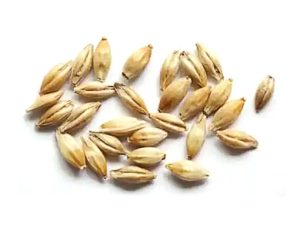
The seeds are nearly spherical, with a diameter of 2–2.5 mm. The surface is pale yellowish-white and smooth; when viewed under a magnifying glass, a fine reticulated pattern is visible. One end features a circular, pale brown seed scar. When soaked in water, the seeds swell; after removing the seed coat, two thick cotyledons are visible. They are oily in texture, folded longitudinally toward each other, with the radicle enclosed between them.It has a faint odor and a pungent, spicy taste; when crushed and moistened, it emits a distinctive, pungent, acrid odor. The best quality seeds are large, plump, yellowish-white, and free of impurities.
Properties of Processed Slices
1. White Mustard Seed: See “Characteristics of the Medicinal Material.”
2. Roasted White Mustard Seed: Resembles white mustard seed in shape; the surface is deep yellow or brownish-yellow, cracked, and has a faint roasted aroma.
Botanical Information
Botanical Classification
White Mustard (Brassica alba), a plant of the genus Brassica in the Brassicaceae family.
Morphological Characteristics
An annual or biennial robust herb, 40–120 cm tall. The stem is erect, longitudinally ribbed, branched in the upper part, and covered with scattered white, stiff hairs. Leaves are alternate. They are thin and petiolate; the basal stem leaves are broadly pinnately lobed or nearly fully lobed, broadly elliptic or ovate, 6–15 cm long and 2–3 cm wide, with large terminal lobes.There are 1–3 pairs of lateral lobes, with sparsely toothed margins; stem leaves are smaller, with short petioles, and the number of upward-pointing lobes gradually decreases.Inflorescences are racemes, terminal or axillary; sepals 4, green, erect, lanceolate or oblong, with a claw at the base; stamens 6, 4 long and 2 short, the long stamens 8.5–9.5 mm long, the short stamens 6–6.5 mm long; pistil 1, ovary long-cylindrical, 9–10 mm long, densely covered with long, white, spiny hairs.The long silique is cylindrical, 2–2.5 cm long, densely covered with white, stiff bristles; the fruit segments are constricted between the seeds into a rosary-like arrangement, and the apex of the silique bears a flat, sword-shaped beak. The seeds are nearly spherical and pale yellow. Flowering occurs from April to June; fruiting occurs from May to July.
Distribution Area
Native to Europe. Widely cultivated in Liaoning, Shanxi, Xinjiang, Shandong, Anhui, Sichuan, and Yunnan in China.
Growth Habits
It prefers a warm and humid climate, is relatively drought-tolerant, and thrives in full sun. It is best grown in fertile, moist sandy loam soil and should not be planted in poor, low-lying, or waterlogged areas.
Propagation Methods
Propagated by seed, sown in spring or fall.
Cultivation Techniques
Before sowing, soak the seeds in a 15% saline solution for 20 minutes, or in warm water at 30°C for 2–4 hours. Remove them, let them air-dry slightly, mix with twice the volume of fine soil, and sow in rows. Cover with 10 cm of soil, lightly firm the soil, and water. Seedlings emerge approximately 10–15 days after sowing; when they reach about 15 cm in height, thin them to a spacing of 10–15 cm between plants.After final thinning, apply one round of top dressing and water; the frequency of watering depends on soil moisture levels. Avoid excessive nitrogen fertilizer during the growing season to prevent excessive vegetative growth, which can reduce yield.
Pest and Disease Control
Diseases include rapeseed anthracnose; at the onset of infection, spray with mancozeb or carbendazim. For rapeseed sclerotinia rot, spray with a 1,000–2,000-fold dilution of 40% Tunkuli wettable powder or 3% Tunkuli powder during the active infection period.