Fuanbaicao is the name of a traditional Chinese medicine. It is the dried whole herb of Potentilla discolor Bge., a plant in the Rosaceae family. It has the effects of clearing heat and detoxifying, stopping dysentery, and arresting bleeding. It is primarily used to treat damp-heat diarrhea and dysentery, abscesses, swellings, and toxic sores, as well as blood-heat-induced vomiting of blood, epistaxis, bloody stools, and metrorrhagia and menorrhagia.

Fanbaicao
Fuanbaicao is the name of a traditional Chinese medicine. It is the dried whole herb of Potentilla discolor Bge., a plant in the Rosaceae family. It has the effects of clearing heat and detoxifying, stopping dysentery, and arresting bleeding. It is primarily used to treat damp-heat diarrhea and dysentery, abscesses, swellings, and toxic sores, as well as blood-heat-induced vomiting of blood, epistaxis, bloody stools, and metrorrhagia and menorrhagia.
Chinese Name : 翻白草
Latin Name : Potentillae Discoloris Herba
Aliases : Chicken-Foot Grass, Chicken-Claw Grass, Single-Foot Grass, Chicken Thigh, Black-Skinned Floating Fruit, Sky-Blue Earth-White, Coin-Hanging Gourd, Old Crow’s Pillow, Old Crow’s Claw, Mountain Radish, Earth Vegetable, Knot Pear, White-Headed Old Man, Chicken-Claw Lotus, Yu Su Ginseng, Earth Ginseng, Lanxi White-Headed Old Man, Yellow-Flowered Ground-Chamomile, Thousand-Hammered, Leaf-Under-White, Poria Grass
Authentic Producing Area : Hebei, Anhui
Nature, Flavor & Meridian Tropism : Sweet and slightly bitter in taste; neutral in nature; enters the Liver, Stomach, and Large Intestine meridians
Benefits & Efficacy
Benefits
Clears heat and detoxifies; stops dysentery; stops bleeding.
Indications
Dysentery caused by damp-heat, abscesses, swellings, and toxic sores; blood heat-induced vomiting of blood and epistaxis; bloody stools; and metrorrhagia and menorrhagia.
Usage and Dosage
1. Internal use: Decoct 10–15 g in water; or soak in wine and consume. 2. External use: Use an appropriate amount; decoct in water for fumigation and washing, or pound the fresh herb into a paste and apply as a poultice.
Precautions
Not yet established.
Chemical Constituents
This herb primarily contains flavonoids (apigenin, apigenin-7-O-β-D-glucuronide, luteolin-7-O-β-D-glucuronide, quercetin, etc.);flavanol derivatives (such as catechins); it also contains gallocatechin and ellagic acid, among others.
Pharmacological Actions
This product exhibits antimicrobial and hypoglycemic effects, among others.
Relevant Discussions
1. *Compendium of Materia Medica*: “Treats hemoptysis, hematochezia, metrorrhagia, malaria, and abscesses and sores.”
2. *A Concise Guide to Materia Medica*: “Clears and regulates the stomach and intestines; dispels wind-dampness. Treats chronic dysentery with red and white discharges that has led to malnutrition; applied topically to treat bites from vicious dogs.”
Applications
Related Compatibility
1. Combining Fanbaicao with Madder (Qiancao): Fanbaicao has a sweet taste and a neutral-to-cool nature; it cools the blood and stops bleeding. Madder is bitter and cold, excelling at stopping bleeding and resolving blood stasis.Both are excellent, slightly cold herbs for treating metrorrhagia and menorrhagia; when used together, their effects complement each other, enhancing their ability to stop bleeding and control metrorrhagia. Furthermore, they cool the blood and stop bleeding without the drawback of retaining stasis, making them particularly suitable for women with metrorrhagia or menorrhagia caused by blood heat with stasis.
2. Combining Fanbaicao with Xianhecao: Both herbs can stop bleeding and treat dysentery. Fanbaicao is sweet, slightly bitter, and cool in nature, and can clear heat and eliminate toxins.Xianhecao has an astringent taste and neutral nature, and is highly effective in stopping bleeding and treating dysentery. When combined, these two herbs work together to clear heat, eliminate toxins, cool the blood, and stop dysentery. This combination is suitable for treating damp-heat diarrhea, heat-toxin bloody dysentery, or conditions such as hemoptysis, hematochezia, and metrorrhagia caused by uncontrolled blood flow due to blood heat.
Medicinal Identification
Fanbai Cao and Dijin Cao: Both herbs can clear heat, eliminate toxins, cool the blood, and stop dysentery. They can be used together to treat damp-heat diarrhea and dysentery, heat-toxin bloody dysentery, abscesses, swellings, and skin infections, as well as conditions such as hemoptysis, hematochezia, and metrorrhagia caused by uncontrolled blood flow due to blood heat.However, Fanbaicao excels at clearing heat and eliminating toxins, cooling the blood to stop bleeding, and relieving dysentery. Dijincao is also capable of dispersing blood stasis, cooling the blood to stop bleeding without the drawback of retaining blood stasis; furthermore, it can drain dampness and alleviate jaundice, making it suitable for treating damp-heat jaundice.
Related Medicines
Lì Tè Mín Tablets.
Notes
Patients requiring treatment with Chinese herbal medicine should first consult a licensed Traditional Chinese Medicine (TCM) hospital, where a TCM practitioner will conduct a professional pattern differentiation and issue a herbal prescription.
Processing & Preparation
Harvesting & Processing
Harvest before flowering in summer and fall, remove impurities, and dry.
Processing Methods
Take the raw herbal material, remove impurities, wash thoroughly, moisten slightly, cut into sections, and dry.
Storage Methods
Store in a cool, dry place, protected from moisture and insect infestation.
Crude Drug Identification
Identification
1. Transverse section of the root: Residual periderm is present. The cork layer consists of 5–10 rows of flattened cells with slightly thickened cell walls. The phloem is narrow, and the cambium forms a ring. The xylem is broad, occupying approximately 4/5 of the root’s diameter, containing several rows of radially arranged vessels. The rays are broad. Parenchyma cells contain clusters of calcium oxalate crystals.
The powder of this specimen is yellowish-brown. On the upper surface of the leaf, epidermal cells appear polygonal in plan view, with nearly straight vertical walls; a few single-celled non-glandular trichomes are visible. On the lower surface of the leaf, epidermal cells have curved vertical walls; the stomata are indeterminate and densely covered with non-glandular trichomes. There are two types of non-glandular trichomes: one type is extremely slender and long, curled, or twisted into tufts; the other type is straight or slightly curved.Calcium oxalate cluster crystals are abundant, with diameters of 8–25 μm and relatively blunt edges.
2. Take 1 g of the powdered sample, add 20 mL of methanol, subject to ultrasonic treatment for 30 minutes, filter, and concentrate the filtrate to approximately 1 mL to serve as the test solution.Take 1 g of reference material of Fanbaicao and prepare a reference solution using the same method. Perform thin-layer chromatography (General Chapter 0502): pipette 4 μl of each of the two solutions and apply them separately onto the same silica gel G plate. Develop with a mobile phase of toluene–ethyl formate–formic acid (5:4:1), remove the plate, allow it to air-dry,spray with a 2% aluminum trichloride ethanol solution, and examine under a UV lamp (365 nm). In the test sample chromatogram, fluorescent spots of the same color appear at positions corresponding to those in the reference herbal material chromatogram.
Properties of Crude Drugs
The tuberous roots of this product are spindle-shaped or cylindrical, 4–8 cm long and 0.4–1 cm in diameter; the surface is yellowish-brown or dark brown, with irregular, twisted grooves; the texture is hard and brittle, with a flat fracture surface that is grayish-white or yellowish-white. Basal leaves are clustered, odd-pinnate compound leaves, often shriveled and curved, measuring 4–13 cm in length when flattened;with 5–9 leaflets; the petioles are short or absent, and the leaflets are oblong or oblong-elliptic, with the terminal leaflet being larger; the upper surface is dark green or gray-green, the lower surface is densely covered with white tomentum, and the margins have coarse serrations. It has a faint odor and a sweet, slightly astringent taste.
Properties of Processed Slices
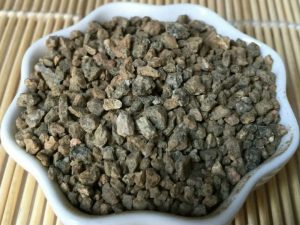
This product consists of irregular segments; the root is cylindrical, with a yellowish-brown or dark brown surface; the cross-section is grayish-white or yellowish-white, hard and brittle. The leaves are mostly shriveled and curled, with dark green or grayish-green upper surfaces, lower surfaces densely covered with white downy hairs, and coarsely serrated margins. It has a faint odor and a sweet, slightly astringent taste.
Botanical Information
Botanical Classification
A plant of the Rosaceae family, known as “Fanbaicao.”
Morphological Characteristics
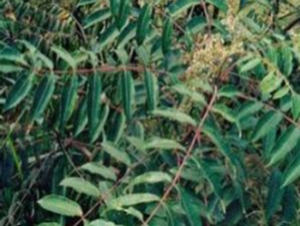
A perennial herb. The root is stout, often thickened and spindle-shaped at the base. The flower stalk is erect, ascending, or slightly prostrate, 10–45 cm tall, densely covered with white downy hairs. Basal leaves have 2–4 pairs of leaflets, arranged oppositely or alternately;petioles are densely covered with white cottony hairs, sometimes accompanied by long soft hairs; leaflets are sessile; stipules are membranous, brown, and densely covered with long white soft hairs on the outer surface; leaflets are oblong or oblong-lanceolate, 1–5 cm long and 5–8 mm wide, with a rounded-obtuse apex (rarely acute), dark green on the upper surface and sparsely covered with white cottony hairs or nearly glabrous after shedding, and densely covered with white or grayish-white cottony hairs on the lower surface;Stem leaves 1–2, with 3–5 palmate leaflets; stipules herbaceous, ovate or broadly ovate, margins often with notched teeth, lower surface densely covered with white tomentum. Flowers bisexual; cymose inflorescence, pedicels 1–2.5 cm long, externally covered with tomentum;Flowers 1–2 cm in diameter; sepals triangular-ovate, epicalyx lanceolate, shorter than the sepals, externally covered with white tomentum; petals yellow, obovate, apex slightly concave or rounded-obtuse, longer than the sepals; style nearly terminal. Achenes nearly reniform, about 1 mm wide, smooth. Flowering and fruiting period: May–September.
Distribution Area
Distributed in Northeast China, North China, East China, Central and South China, as well as Shaanxi and Sichuan.
Growth Habits
Prefers a mild and humid climate. Best cultivated in loose, fertile sandy loam.
Propagation Methods
Propagated by seed, either by direct seeding or by raising seedlings and transplanting them.
Cultivation Techniques
1. Direct Seeding Method: In March or April, till the soil to a depth of 25–30 cm, rake it finely and level it, then form ridges 1–2 m wide. Make shallow furrows on the ridges, spaced 12 cm apart. Sow the seeds evenly into the furrows and cover with 3–5 cm of soil.
2. Seedling Transplanting Method: Sow seeds in spring or fall using row seeding or broadcast seeding methods. Transplant in late April with a spacing of 15 cm × 25 cm between plants and rows, planting one seedling per hole at a depth of 15 cm.
Pest and Disease Control
To control aphid infestations, apply chemical pesticides via spraying.