Goose-headed Pedicularis, a name in traditional Chinese medicine. It refers to the flower of Pedicularis cephala Diels, a plant in the Scrophulariaceae family. It is distributed in Sichuan and Tibet. It has diuretic and antitussive properties, and is effective in nourishing yin and relieving pain. It is commonly used to treat edema, oliguria, shortness of breath, malnutrition, and stabbing pain caused by osteomyelitis.
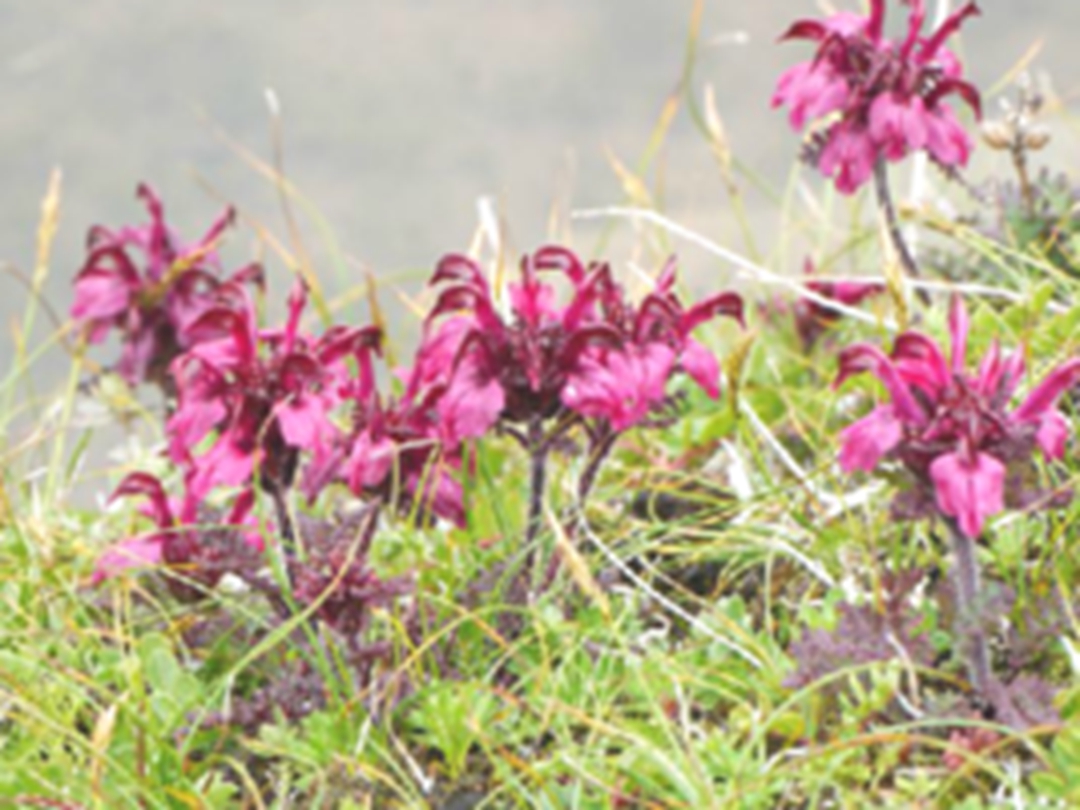
Goosehead Veronika
Goose-headed Pedicularis, a name in traditional Chinese medicine. It refers to the flower of Pedicularis cephala Diels, a plant in the Scrophulariaceae family. It is distributed in Sichuan and Tibet. It has diuretic and antitussive properties, and is effective in nourishing yin and relieving pain. It is commonly used to treat edema, oliguria, shortness of breath, malnutrition, and stabbing pain caused by osteomyelitis.
Chinese Name : 鹅首马先蒿
Nature, Flavor & Meridian Tropism : Taste: sweet, sour, and astringent; nature: warm. Enters the Lung and Kidney meridians
Benefits & Efficacy
Benefits
Promotes diuresis, relieves wheezing, nourishes yin, and alleviates pain.
Indications
Edema, oliguria, dyspnea, malnutrition, and stabbing pain caused by osteomyelitis.
Usage and Dosage
15–30 g.
Relevant Discussions
*Commonly Used Tibetan Herbal Medicines*: “Promotes urination and relieves wheezing; nourishes yin and alleviates pain. Treats edema, oliguria, wheezing, malnutrition, and stabbing pain caused by osteomyelitis.”
Applications
Processing & Preparation
Harvesting & Processing
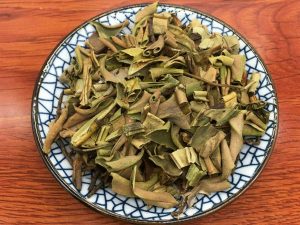
Harvest the flowers in July–August and sun-dry them.
Crude Drug Identification
Botanical Information
Botanical Classification
A plant of the Scrophulariaceae family, *Anemone-headed Scrophularia*.
Morphological Characteristics
A perennial herb that does not turn black when dried, 7–13 cm tall. The roots form sparse clusters of about 3–4, more or less thick and fleshy, up to about 3 mm in diameter, up to 7 cm long, tapering toward the tip, with fibrous roots. The rhizome is short, with several pairs of linear-lanceolate scales at the nodes.The stem can reach a diameter of 2.5 mm, is hairy or nearly glabrous, herbaceous, and either solitary or in groups of 2–3. Basal leaves are absent; lower stem leaves have long petioles up to 5 cm long and are glabrous. The leaf blades are linear-oblong, up to 3 cm long and 8 mm wide, pinnately deeply lobed; the two lobes closest to the base are often very small, while the others are larger, totaling 5–10 pairs.ovate-oblong, shallowly pinnately lobed, with 2–3 pairs of small lobes; in smaller plants, the lower and middle stem leaves often have membranous petioles, while the leaf blades are highly reduced, bearing only 2–3 pairs of lobes; the upper stem leaves are opposite or whorled, ovate-oblong, with only 4–5 pairs of lobes, and their petioles are often broadened and somewhat membranous.The inflorescence is capitate, 3–4 cm long, densely covered on the outside with involucral bracts; the bracts are leaf-like, but their petioles are greatly widened, up to 6 mm wide, with long marginal hairs and sparse pubescence, green in the upper half, and pinnately lobed;the calyx is up to 9 mm long, membranous, with 10 veins, all fine and weak; the 5 main veins are slightly prominent, with no reticulate veins; the calyx has 5 teeth, triangular at the base, narrowing to a stalk-like structure in the middle, and slightly swollen at the top with a few serrations; the corolla is rose-colored.The androecium is darker purple; the tube is about 1 cm long, nearly straight or slightly bent forward near the apex; the erect portion of the helmet is very long, with its anterior margin reaching 8–9 mm in height, slightly arched forward, and the tip turning forward and upward at an angle of about 45° to form a somewhat swollen androecium section, about 7 mm long, with a short beak at the tip pointing forward;The beak is conical, obliquely truncated, and only slightly over 1 mm long; the base of the lower lip is wedge-shaped, with the lateral lobes obliquely obovate and pointing obliquely outward; the median lobe is smaller, broadly ovate, about 5 mm long, and extends forward by about half; the tips of each lobe have small protruding points, and the margins bear notched teeth and cilia; the anterior pair of staminal filaments bears sparse hairs.
Distribution Area
Grows in grassy areas on mountain slopes. Distributed in Sichuan and Tibet.