Stork’s Bill is a name for a traditional Chinese medicine. It refers to the dried aerial parts of plants from the Erodium family: Erodium stephanianum Willd., Geranium wilfordii Maxim., or Geranium carolinianum L. The first is commonly known as “Long-beaked Stork’s Bill,” while the latter two are commonly known as “Short-beaked Stork’s Bill.”It has the effects of dispelling wind-dampness, unblocking meridians, and stopping diarrhea and dysentery. It is primarily used to treat rheumatic pain, numbness and stiffness, aching muscles and bones, and diarrhea and dysentery.

Old Stork Grass
Stork’s Bill is a name for a traditional Chinese medicine. It refers to the dried aerial parts of plants from the Erodium family: Erodium stephanianum Willd., Geranium wilfordii Maxim., or Geranium carolinianum L. The first is commonly known as “Long-beaked Stork’s Bill,” while the latter two are commonly known as “Short-beaked Stork’s Bill.”It has the effects of dispelling wind-dampness, unblocking meridians, and stopping diarrhea and dysentery. It is primarily used to treat rheumatic pain, numbness and stiffness, aching muscles and bones, and diarrhea and dysentery.
Chinese Name : 老鹳草
Latin Name : Erodii Herba, Geranii Herba
Aliases : Five-Leaf Grass, Old Official Grass, Five-Petaled Flower, Old Guancao, Tiangang Grass, Five-Leaf Union, Broken Copper Coin, Old Crow’s Tendon, Guanjin, Five-Toothed Rake, Old Crow’s Beak, Quail’s Beak
Authentic Producing Area : Found in most regions of China
Nature, Flavor & Meridian Tropism : Pungent and bitter in taste; neutral in nature; enters the Liver, Kidney, and Spleen meridians
Benefits & Efficacy
Benefits
Dispels wind-dampness, unblocks the meridians, and stops diarrhea and dysentery.
Indications
Rheumatic pain, numbness and stiffness, aching tendons and bones, diarrhea, and dysentery.
Usage and Dosage
1. Internal use: Decoct 9–15 g in water; or steep in wine; or boil into a paste. 2. External use: Take an appropriate amount, pound into a paste, mix with wine, heat in a pan, and apply externally, or prepare as an ointment for topical application.
Precautions
Contraindicated for those with spleen and stomach deficiency-cold.
Chemical Constituents
It primarily contains flavonoids, such as hyperoside; it also contains tannins.
Pharmacological Actions
This herb possesses anti-inflammatory, analgesic, anti-ulcer, antidiarrheal, antioxidant, and antimicrobial properties.
Relevant Discussions
1. *Herbal Materia Medica of Southern Yunnan*: “Relieves various wind-induced skin itching. Treats pain in tendons and bones, weakness and flaccidity due to phlegm-fire, spasms in the tendons of the hands and feet, numbness; promotes urination; clears accumulated heat from the bladder; dispels various swellings and toxic sores; reduces fever associated with consumption; and treats wind-fire toothaches, smallpox, scabies, and leprosy.”
2. *An Examination of Medicinal Properties*: “Dispels wind, unblocks meridians and promotes blood circulation, strengthens tendons and unblocks collaterals. For injuries, bi syndrome, numbness, and skin wind conditions, soak in wine and drink regularly.”
Applications
Clinical Applications
1. To treat rheumatic arthralgia, numbness, stiffness, and aching of tendons and bones, it may be used alone by soaking in wine and drinking regularly, or combined with mistletoe, Clematis, and Angelica pubescens, as in the Wind-Dispelling and Pain-Relieving Tablets (Chinese Pharmacopoeia).
2. For treating damp-heat diarrhea and heat-toxin dysentery, it may be used alone as a decoction or combined with Coptis, Anemarrhena, and Qinpi.
Related Compatibility
1. Old Stork Grass combined with Wilfordia: Old Stork Grass is pungent and dispersing, bitter and drying; it has a nature that readily penetrates and moves, capable of unblocking tendons and bones, unblocking meridians, and relieving pain. Wilfordia readily penetrates and does not linger; as an excellent conductor among wind-dispelling herbs, it can eliminate wind from the exterior and transform dampness from the interior, making it a key herb for treating rheumatic arthralgia.When combined, they dispel wind-dampness, unblock the meridians, and relieve pain, making them suitable for treating wind-damp arthralgia characterized by numbness and pain in the limbs and joints.
2. Old Stork Grass combined with Phellodendron: Old Stork Grass can stop diarrhea and dysentery, while Phellodendron clears heat, dries dampness, and stops dysentery. When combined, they clear heat, dry dampness, and stop diarrhea and dysentery, making them suitable for treating damp-heat diarrhea and dysentery, as well as tenesmus and a sensation of incomplete evacuation.
Medicinal Identification
1. Old Stork Grass and Du Huo: Both belong to the category of wind-dampness-dispelling herbs and are classified as pungent and bitter in nature. They function to dispel wind and dampness and relieve pain, and are primarily used to treat rheumatic arthralgia, stiffness and spasms of the tendons and meridians, and joint stiffness.Stork’s-bill has a nature that readily penetrates and moves through the body; it can unblock and invigorate the tendons, bones, skin, and subcutaneous tissues, and is often used for joint swelling and pain, numbness and stiffness, and aching in the tendons and bones. It can also stop diarrhea and dysentery, making it effective for treating conditions such as loose stools and dysentery.Duhuo has a warm and drying nature and is adept at descending; it is particularly suitable for treating rheumatic arthralgia from the waist down, especially when the condition is dominated by cold and dampness. It can also release the exterior and dispel cold, enter the Kidney meridian to seek out latent wind and relieve pain, and is used to treat exterior syndromes of wind-cold combined with dampness, headaches caused by latent wind, and toothaches caused by wind-fire.
2. Old Stork Grass and Wild Ginger: Both herbs can dispel wind-dampness and unblock the meridians; therefore, they can be used for rheumatic pain, stiffness of the tendons and bones, and numbness of the skin.Stork’s-bill also stops diarrhea and dysentery and excels in treating these conditions. When used raw, Wild Ginger clears toxins and removes damp-heat, making it suitable for treating wind-rash and damp sores; when processed with wine, it nourishes the liver and kidneys and strengthens tendons and bones, so it is often used to treat lower back and knee soreness, dizziness, and tinnitus caused by deficiency of the liver and kidneys.
Related Medicines
Medicinal Wine for Rheumatic Pain, Wind-Dispelling and Pain-Relieving Tablets, and Wind-Dispelling and Dampness-Removing Medicinal Wine.
Notes
Patients requiring treatment with traditional Chinese medicine should first consult a licensed TCM hospital, where a TCM practitioner will conduct a professional diagnosis and prescribe the appropriate herbal formula.
Processing & Preparation
Harvesting & Processing
Harvest the fruits in summer or fall when they are nearly ripe, bundle them, and sun-dry them.
Processing Methods
Take the raw herb, remove impurities and residual roots, rinse briefly with water, moisten slightly, cut into sections, and dry.
Storage Methods
Store in a dry container in a cool, dry place.
Crude Drug Identification
Identification
Microscopic Examination of Leaf Surfaces
1. Cnidium monnieri: The vertical walls of the upper epidermal cells are nearly straight or slightly curved; a few are wavy. Single-celled non-glandular trichomes are common, standing erect or curved, with walls bearing minute wart-like projections. Glandular trichomes are rare; the head is single-celled and subcircular, while the stalk consists of 1–4 cells. The leaf mesophyll contains clusters of calcium oxalate crystals.The vertical walls of the lower epidermal cells are wavy; stomata are mostly indeterminate, with a few being unequal.
2. Old Stork Grass: The vertical walls of both upper and lower epidermal cells are wavy; bead-like thickening is sometimes visible in the lower epidermal cells. Non-glandular trichomes are unicellular, rigidly conical, and swollen at the base. The heads of glandular trichomes are ovoid, and the stalks are mostly unicellular.
3. Wild Stork’s-bill: Clusters of calcium oxalate crystals are occasionally found in the leaf mesophyll. The heads of glandular trichomes are oblong, and the stalks are mostly unicellular.
Properties of Crude Drugs
1. Long-beaked Stork’s-bill: Stems are 30–50 cm long and 0.3–0.7 cm in diameter, profusely branched, with swollen nodes. The surface is gray-green or purplish, with longitudinal grooves and sparse tomentum. The stems are brittle; the cross-section is yellowish-white, and some are hollow.Leaves are opposite, with slender petioles; leaf blades are curled and shriveled, brittle and easily broken; intact leaves are twice-pinnately deeply lobed, with lanceolate-linear lobes. Fruits are oblong, 0.5–1 cm long. Persistent styles are 2.5–4 cm long, resembling a stork’s beak; some are split into 5 lobes and spirally coiled. Slight odor; bland taste.
2. Short-beaked Storkweed: The stem is relatively slender and slightly shorter. The leaf blades are round, deeply lobed into 3 or 5 segments; the lobes are relatively broad with notched margins. The fruit is spherical, 0.3–0.5 cm long.The style is 1–1.5 cm long; some are 5-lobed and curl upward in an umbrella-like shape. The leaves of Wild Stork’s-bill are palmately 5–7-lobed, with linear lobes that are themselves 3–5-lobed.
Properties of Processed Slices
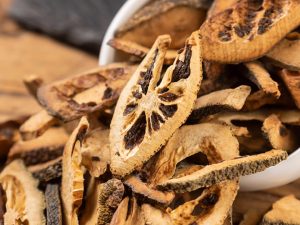
This product consists of irregular segments. The stem surface is gray-green or purplish, with swollen nodes. The cross-section is yellowish-white and sometimes hollow. The leaves are opposite, curled and shriveled, gray-brown, with slender petioles. The fruit is oblong or spherical, and the persistent style resembles a stork’s beak. It has a faint odor and a bland taste.
Botanical Information
Botanical Classification
Plants of the genus *Cynoglossum*: *Cynoglossum*, *Old Stork Grass*, and *Wild Old Stork Grass*.
Morphological Characteristics
1. *Cynoglossum*: An annual or biennial herb, 10–50 cm tall. The root is cylindrical. The stem lies prostrate on the ground or rises obliquely, is highly branched, and is pubescent.Leaves are opposite; petioles are 4–6 cm long; stipules are lanceolate, 5–10 mm long, with membranous margins; leaf blades are oblong-ovate or oblong-triangular, 4–6 cm long and 3–4 cm wide, twice deeply pinnately lobed, with 5–9 pairs of pinnae extending downward at the base; the lobules are linear, entire or with 1–3 coarse teeth, and pubescent on both surfaces.Inflorescences are umbels, axillary; peduncles 5–15 cm long, usually bearing 2–5 flowers; pedicels 1–3 cm long; sepals oblong, with an awn-like tip, the awn 2–3 cm long; petals 5, obovate, pale purple or bluish-purple, nearly as long as the sepals, with a bluntly rounded apex, and white-hairy at the base;10 stamens in two whorls; the outer whorl of 5 stamens is antherless, while the inner whorl of 5 stamens bears anthers; 5 nectaries; the ovary is densely covered with long, soft white hairs. Capsule 3–4 cm long, with a long beak at the apex; upon maturity, the five mericarps separate from the central axis, and the beak twists spirally, with brown hairs on its inner surface.Flowering period: April–August; fruiting period: June–September.
2. Stork’s-bill: A perennial herb, 30–80 cm tall. The rhizome is short and erect, with slightly thickened, long roots. The stem is erect or slightly trailing at the base, with appressed soft hairs. Leaves are opposite; basal and lower leaves have long petioles that gradually shorten upward; stipules are narrowly lanceolate, gradually tapering to a point, and hairy;leaf blades are reniform-triangular, with a cordate base, 3–5 cm long and 4–6 cm wide, deeply 3-lobed; the central lobe is slightly larger, ovate-rhombic, with an acute apex, the upper margin notched or coarsely toothed, and the tooth tips bearing short, concave points; lower leaves are sometimes nearly 5-lobed; both surfaces are more or less covered with appressed hairs. Flowers are solitary in leaf axils or arranged in cymes of 2–3 flowers;the pedicels elongate at flowering and become curved and drooping at fruiting; sepals 5, ovate or lanceolate, awned at the apex, 5–6 mm long, pubescent; petals 5, pale red or pink, nearly as long as the sepals, with 5 purplish-red longitudinal veins; stamens 10, fused at the base, filaments abruptly expanded at the base, the expanded portion ciliate;ovary superior, 5-chambered; 5 styles, inconspicuous or extremely short. Capsule, finely pubescent, with a relatively short beak; when ripe, the 5 fruit valves separate from the central axis, and the beak curls inward from the base upward, approximately 2 cm long. Flowering period: July–August; fruiting period: August–October.
3. Wild Crane Grass: An annual herb, 15–50 cm tall, with a slender root up to 7 cm long; the stem is erect or oblique, and the branches are densely covered with soft hairs.Lower leaves are alternate; upper leaves are opposite. Leaf blades are reniform, 2–3 cm long and 3–6 cm wide, deeply lobed into 5–7 segments, each segment further divided into 3–5 lobes; both surfaces are pubescent; basal leaf petioles are up to 10 cm long. Florets are borne in pairs at the tips of stems or in the axils; sepals are 5, broadly ovate, with long white hairs;petals 5, obovate-spatulate, pale red; stamens 10, carpels 5, free. The fruit is hairy, with a long beak at the apex; including the beak, it is about 2 cm long. When ripe, the beak curls upward from the base. Seeds are elliptical, 2–3 mm long, dark brown. Flowering period: April–May. Fruiting period: June–August.
Distribution Area
1. Bull’s-horn Grass: Distributed in Northeast China, North China, Northwest China, Central China, as well as western Yunnan and Tibet. 2. Stork’s-bill: Distributed in Northeast China, North China, East China, as well as Hubei, Hunan, Sichuan, Yunnan, and Guizhou. 3. Wild Stork’s-bill: Distributed in Jiangsu, Zhejiang, Jiangxi, Hubei, Henan, Yunnan, and Sichuan provinces.
Growth Habits
Prefers a warm and humid climate; tolerant of cold and moisture. Prefers ample sunlight. Best grown in loose, fertile, and moist loam soil.
Propagation Methods
Propagate by dividing the roots.
Cultivation Techniques
After the plants wither in winter and before new shoots emerge in early spring, dig up the old roots and divide them into several pieces, ensuring each piece has a bud. Dig holes with a row and plant spacing of 25 cm × 25 cm, plant one piece in each hole, cover with soil, firm it down, and water. After seedlings emerge, cultivate the soil to remove weeds and apply human urine as fertilizer. After the plants wither in winter, remove dead stems and leaves, hill up the soil, and apply manure or compost.