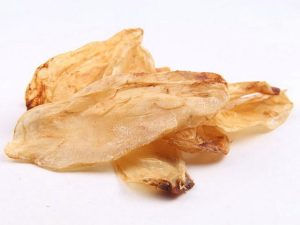
Red-leaf Tree Seeds, a name in traditional Chinese medicine. These are the seeds of Helicia cochinchinensis Lour., a plant in the family Sapindaceae. They are distributed in South China as well as Zhejiang, Jiangxi, Fujian, Taiwan, Hubei, Hunan, Sichuan, and Yunnan. They possess detoxifying and wound-healing properties and are commonly used to treat burns and scalds.

Red-leaf Tree Seeds
Red-leaf Tree Seeds, a name in traditional Chinese medicine. These are the seeds of Helicia cochinchinensis Lour., a plant in the family Sapindaceae. They are distributed in South China as well as Zhejiang, Jiangxi, Fujian, Taiwan, Hubei, Hunan, Sichuan, and Yunnan. They possess detoxifying and wound-healing properties and are commonly used to treat burns and scalds.
Chinese Name : 红叶树子
Aliases : Small-fruited Mountain Longan
Nature, Flavor & Meridian Tropism : Belongs to the Stomach Meridian
Benefits & Efficacy
Benefits
Detoxifies and promotes wound healing.
Indications
Burns and scalds.
Usage and Dosage
External use: Apply an appropriate amount, ground into a powder and mixed with a carrier.
Precautions
Not suitable for internal use.
Relevant Discussions
Raw or processed: Longan seeds from Xiaoguo Mountain are bitter in taste, cold in nature, and toxic. Generally used externally, they have detoxifying properties and help remove necrotic tissue to promote tissue regeneration. Clinically, the juice extracted from fresh seeds is mixed with Jiu Li Guang, tung flowers, and tung oil for topical application specifically to treat burns.
Applications
Processing & Preparation
Harvesting & Processing
Harvest ripe fruits from winter through the following spring; remove the peel and pulp, extract the seeds, and sun-dry them.
Crude Drug Identification
Botanical Information
Botanical Classification
A plant of the Longan family, Small-fruited Mountain Longan.
Morphological Characteristics
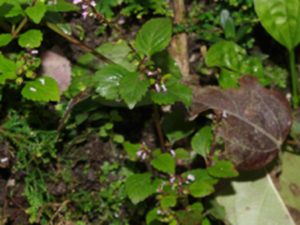
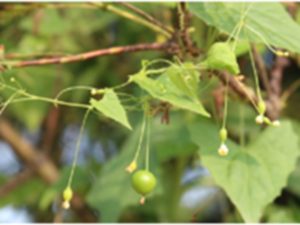
Small-fruited Mountain Longan, also known as Vietnamese Mountain Longan, Black Ash Tree, or Goat Dung Fruit. A tree reaching 4–20 m in height. The bark is grayish-brown or dark brown. Leaves are alternate, thin leathery or papery; petioles are 0.5–1.5 cm long;leaf blades are oblong, obovate-elliptic, long-elliptic, or lanceolate, 5–15 cm long and 2.5–5 cm wide, with a short acuminate or obtuse apex, a cuneate base that extends slightly downward, and entire margins or sparsely and shallowly serrate along the upper half; there are 6–7 pairs of lateral veins, prominent on both surfaces.Flowers are hermaphroditic and radially symmetrical; racemes are axillary, 8–20 cm long; sometimes the rachis and pedicels are initially covered with short white hairs but later become glabrous; pedicels are often paired; bracts are triangular, about 1 mm long;the perianth tube is 1–1.2 cm long, white or pale yellow; anthers are elliptical; there are 4 glands, sometimes fused to form a 4-lobed disk; the ovary is glabrous. The nut is elliptical, 1–1.5 cm long, up to 1 cm in diameter, and bluish-black or black. Flowering occurs from June to October, and fruiting from November to March of the following year.
Distribution Area
Southern China, as well as Zhejiang, Jiangxi, Fujian, Taiwan, Hubei, Hunan, Sichuan, and Yunnan.