Verbena is a herb used to promote blood circulation and regulate menstruation. It consists of the dried aerial parts of Verbena officinalis L., a plant of the Verbenaceae family, and is primarily produced in Hubei, Jiangsu, Guizhou, and Guangxi.This herb has the effects of promoting blood circulation, dispersing blood stasis, detoxifying, promoting diuresis, alleviating jaundice, and treating malaria. It is primarily used to treat masses and accumulations, dysmenorrhea and amenorrhea, sore throat, boils and swellings, edema, jaundice, and malaria.
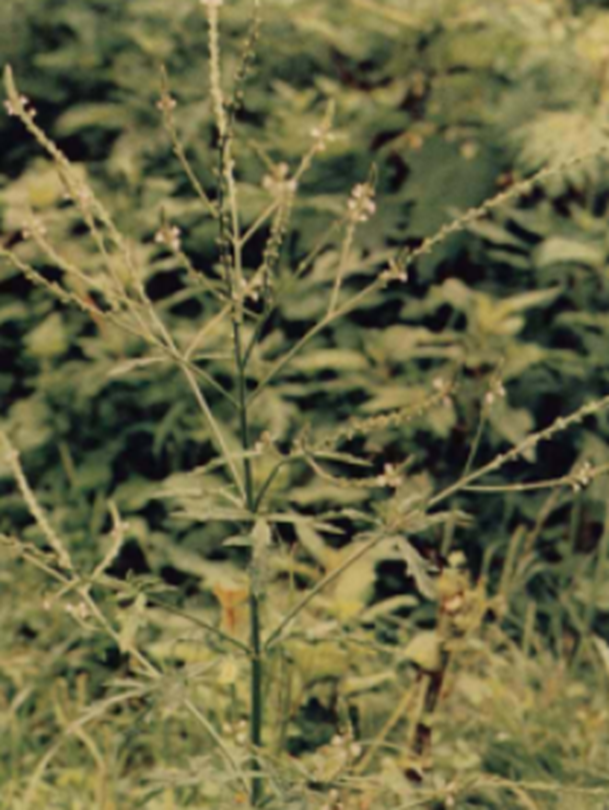
Verbena
Verbena is a herb used to promote blood circulation and regulate menstruation. It consists of the dried aerial parts of Verbena officinalis L., a plant of the Verbenaceae family, and is primarily produced in Hubei, Jiangsu, Guizhou, and Guangxi.This herb has the effects of promoting blood circulation, dispersing blood stasis, detoxifying, promoting diuresis, alleviating jaundice, and treating malaria. It is primarily used to treat masses and accumulations, dysmenorrhea and amenorrhea, sore throat, boils and swellings, edema, jaundice, and malaria.
Chinese Name : 马鞭草
Latin Name : Verbenae Herba
Aliases : Wild Schizonepeta, Dragonfly Grass, Dragon Bud Grass, Blood-Clearing Grass, Swallowtail Grass, Purple-Topped Dragon Bud Grass, Iron Horsewhip, Horsewhip Tip, Bone-Penetrating Grass, Dog Bud Grass, Rabbit Grass
Authentic Producing Area : Mainly produced in Hubei, Jiangsu, Guizhou, and Guangxi
Nature, Flavor & Meridian Tropism : Bitter in taste, cool in nature; enters the Liver and Spleen meridians
Benefits & Efficacy
Benefits
It has the effects of promoting blood circulation and dispelling blood stasis, detoxifying, promoting diuresis, relieving jaundice, and arresting malaria.
Indications
Verbena is primarily used to treat masses and accumulations, dysmenorrhea and amenorrhea, sore throat, boils and swellings, edema, jaundice, and malaria.
Usage and Dosage
Decoct and take 5–10 g.
Precautions
During treatment, avoid cold and raw foods, as well as spicy and greasy foods.
Chemical Constituents
Verbena primarily contains cycloether terpenoid glycosides (such as verbenoside, spathiphylloside, and coralloside), triterpenoids(such as 3α,24-dihydroxy-12-usuren-28-carboxylic acid, lupeol, ursolic acid, and oleanolic acid), phenylpropanoid glycosides (such as eugenol glycoside), and flavonoids (such as luteolin-7-glucoside,sesamin-6-glucoside, apigenin, and 4'-hydroxybaicalin). It also contains adenosine, β-carotene, and essential oils.
Pharmacological Actions
Verbena has pharmacological effects including anti-early pregnancy, antitumor, anti-inflammatory, and analgesic properties.
Applications
Related Compatibility
1. Verbena combined with feverfew: Verbena has a bitter taste and a cool nature; it promotes blood circulation, dispels blood stasis, and regulates menstruation. Feverfew has a neutral nature; it promotes blood circulation, regulates menstruation, and relieves pain. When used together, these two herbs promote blood circulation and regulate menstruation, treating symptoms such as irregular menstruation, menstrual cramps, and amenorrhea caused by blood stasis.
2. Verbena with Artemisia annua: Verbena is effective in arresting malaria and is particularly suitable for treating the disease, regardless of whether it is acute or chronic; Artemisia annua has a pungent and aromatic scent, clears cold and heat in the Shaoyang channel, and is effective in treating malaria. When used together, these two herbs enhance the efficacy of arresting malaria and are suitable for treating malaria characterized by alternating chills and fever.
3. Verbena combined with Belamcanda: Verbena is bitter, draining, and cool in nature, clearing heat and detoxifying; Belamcanda is a herb specific to the Lung Meridian, bitter and cold in nature, clearing heat, soothing the throat, and reducing swelling. When used together, these two herbs enhance the effects of clearing heat, detoxifying, soothing the throat, and reducing swelling, making them suitable for conditions such as sore throat and laryngeal obstruction caused by excessive heat-toxin.
4. Verbena combined with Alisma: Verbena is bitter and draining, with a cool nature that clears heat; Alisma is sweet and bland, with a diuretic effect and a cold nature that dispels heat. When used together, these two herbs can dispel heat from the bladder and promote urination, making them suitable for treating edema, difficulty urinating, or painful urinary disorders caused by heat and dampness.
Medicinal Identification
Both Verbena and Motherwort possess the effects of promoting blood circulation, regulating menstruation, promoting diuresis, reducing edema, and detoxifying; they can both be used to treat dysmenorrhea, amenorrhea, edema, and skin ulcers. However, Verbena can also promote blood circulation to resolve abscesses, treat masses and accumulations, and is effective against malaria regardless of whether the condition is acute or chronic, making it a commonly used herb for malaria.Additionally, it excels at detoxification and is frequently used for sore throat and abscesses; whereas motherwort excels at promoting blood circulation and regulating menstruation, serving as a key herb for gynecological conditions. It can promote urination and reduce edema, and is often used for edema caused by the intermingling of fluid retention and blood stasis. Furthermore, it has the effects of cooling the blood and detoxifying, and is also effective in treating eczema and itching caused by damp-heat stagnation in the skin.
Related Prescriptions
Formulas such as Verbena Powder, etc.
Medicinal Diet Therapy
Lemon verbena tea helps relieve nausea and promote digestion; it is suitable for those suffering from bronchitis, nasal congestion, sore throat, and indigestion.
Notes
Patients requiring treatment with Chinese herbal medicine should first consult a licensed Traditional Chinese Medicine (TCM) hospital, where a TCM practitioner will conduct a professional pattern differentiation and prescribe an herbal formula.
Processing & Preparation
Harvesting & Processing
Harvest during the flowering period from June to August, remove impurities, and sun-dry.
Processing Methods
Remove any remaining roots and impurities, wash thoroughly, moisten slightly, cut into sections, and dry.
Storage Methods
Store in a dry place.
Crude Drug Identification
Properties of Crude Drugs
When steamed, this product takes on a square-columnar shape with many branches and longitudinal grooves on all four sides, measuring 0.5–1 m in length; the surface is greenish-brown and rough; it is hard and brittle, with a pithy or hollow cross-section. The leaves are opposite, shriveled, and often fragmented; they are greenish-brown. When intact, the leaves are deeply three-lobed when flattened, with serrated edges. The spike-like inflorescences are slender and contain numerous small flowers.It has a faint odor and a bitter taste.
Properties of Processed Slices
This product consists of irregular segments. The stem is quadrangular, with longitudinal grooves on all four sides; the surface is greenish-brown and rough. The cross-section contains pith or is hollow. The leaves are mostly fragmented and greenish-brown; when intact, they are deeply 3-lobed when flattened, with serrated margins. The inflorescence is a spike bearing numerous florets. It has a faint odor and a bitter taste.
Botanical Information
Botanical Classification
A plant of the genus Verbena in the family Verbenaceae.
Morphological Characteristics
A perennial herb. Spikelike inflorescences grow at the tips or branch forks; the flowers are small, densely clustered at the beginning and becoming sparse as the fruit develops; bracts are shorter than the calyx and bear stiff hairs; calyx lobes are stiff-haired, thin, and pale in color; the corolla ranges from pale purple to blue and is covered with fine hairs on the outside. The fruit is oblong with a thin outer pericarp.Flowering period: June–August; fruiting period: July–October.
Distribution Area
Verbena is distributed in the northwest, southwest, central, and southern regions of China, and is found worldwide in temperate to tropical regions.
Growth Habits
Verbena prefers a humid climate and fertile soil; it is susceptible to waterlogging and does not tolerate drought. It is highly adaptable and can grow in most types of soil, but thrives best in deep, fertile sandy loam; it should not be planted in low-lying, waterlogged areas.