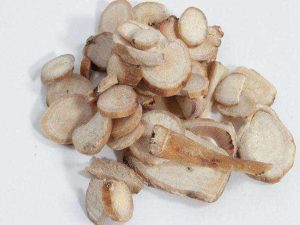
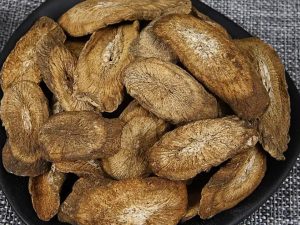
The dried nearly mature fruit of Prunus mume (Sieb.) Sieb. et Zucc., a plant of the Rosaceae family.
[Properties, Flavors and Meridian Tropism] Sour, astringent, neutral. Meridian tropism: Liver, Spleen, Lung, and Large Intestine Meridians.
【Actions and Indications】 Astringing the lung, astringing the intestines, promoting fluid production, and calming roundworms. Indicated for chronic cough due to lung deficiency, chronic dysentery and chronic diarrhea, consumptive thirst due to deficient heat, vomiting and abdominal pain due to roundworm-induced syncope; biliary ascariasis.
[Pharmacological Research] Anti-ascariasis, antibacterial activity, calcium ion antagonism.
Fructus Mume: Key Benefits and Traditional Uses in TCM
As a staple herb in Traditional Chinese Medicine (TCM), Fructus Mume—dried nearly mature fruit of the Prunus mume plant—offers a range of targeted benefits. Classified as sour, astringent, and neutral, it targets the Liver, Spleen, Lung, and Large Intestine meridians. TCM practitioners use it to address chronic lung-deficiency coughs, persistent dysentery or diarrhea, consumptive thirst from deficient heat, and even vomiting and abdominal pain caused by roundworm-induced syncope. Its multifaceted actions make it a versatile herb for managing both respiratory and digestive ailments.
Fructus Mume for Roundworm Infection: Relief for Digestive Distress
One of Fructus Mume’s most well-documented uses in TCM is calming roundworms and alleviating associated symptoms. For those suffering from roundworm-induced syncope—marked by sudden vomiting and severe abdominal pain—or biliary ascariasis, this herb is a go-to remedy. Modern pharmacological research supports this traditional use, confirming Fructus Mume’s anti-ascariasis properties, which help combat the parasitic infection at its source. Its astringent nature also helps soothe irritated digestive tracts, providing dual relief from both the parasite and its uncomfortable effects.
Fructus Mume Pharmacological Properties: Scientific Insights Behind the TCM Herb
Beyond its traditional applications, Fructus Mume has been the subject of pharmacological research that validates its therapeutic potential. Studies have identified key properties: anti-ascariasis activity, which supports its use against roundworm infections; antibacterial effects that may help address persistent digestive issues like chronic dysentery; and calcium ion antagonism, which could contribute to its ability to calm muscle spasms associated with abdominal pain. These scientific findings bridge the gap between traditional TCM wisdom and modern medical understanding of this versatile herb.
Fructus Mume (Wumei) is the dried, unripe fruit of the rose family plant *Prunus mume*. It has a long history of use in traditional medicine. Its nature and flavor are sour, astringent, and neutral, and it enters the Liver, Spleen, Lung, and Large Intestine meridians. This unique medicinal property profile underpins its potential in regulating multiple physiological functions in the human body. From a modern scientific perspective, Fructus Mume is rich in organic acids (such as citric acid and malic acid), flavonoids, and triterpenoids. These active constituents provide a material basis for its traditional effects of astringing and promoting fluid production. Notably, the benefits of Fructus Mume are not only reflected in traditional Chinese medicine theory; modern research is also progressively validating its roles in antioxidation, antibacterial activity, and immune regulation.
As a dual-purpose substance used both as a daily food ingredient and a medicinal herb, the dried fruit of *Prunus mume* (Wumei) has a wide range of applications. In TCM clinical practice, it is often used to treat chronic cough due to Lung Deficiency, as its sour and astringent nature can astringe Lung Qi. At the same time, for chronic diarrhea and dysentery and other intestinal dysfunctions, Wumei’s ability to astringe the intestines and stop diarrhea is highly valued. In addition, in the practice of using *Fructus Mume* (Wumei) in traditional Chinese medicine, Wumei is also known for “calming roundworms,” i.e., alleviating abdominal pain caused by roundworms, which is related to the organic acid components altering the intestinal environment. In daily life, Wumei can be made into Sour Plum Drink to promote fluid production and quench thirst, especially suitable for conditions when summer heat damages body fluids. Its applications, ranging from medicinal use to food therapy, reflect the depth and breadth of traditional wisdom.
An in-depth exploration of the mechanism of action of Fructus Mume centers on the balance between its sour astringency (suan shou) and fluid generation (sheng jin). The sour components stimulate the secretion of salivary and digestive glands, thereby alleviating dry mouth and tongue; meanwhile, its astringent property reduces abnormal loss of body fluids, such as stopping sweating and diarrhea. Modern pharmacology has found that Fructus Mume extract exhibits inhibitory effects against a variety of pathogenic bacteria, which explains its mechanism in treating dysentery and diarrhea. Furthermore, the benefits of Fructus Mume also show potential in regulating gut microbiota—possibly by suppressing harmful bacteria and promoting the growth of beneficial bacteria to improve intestinal health. Notably, the antioxidant activity of Fructus Mume is mainly attributed to its polyphenolic compounds, which help scavenge free radicals and delay cellular aging, further expanding its application prospects in health care.
Overall, the diversity of *Prunus mume* dried fruit uses reflects the traditional medicine concept of “homology of medicine and food.” From classic formulas such as Wu Mei Wan (Mume Pill) for treating Roundworm Syncope (Huijue), to the development of modern functional foods, *Fructus Mume* has always played an important role. In application, caution is needed: due to its sour, astringent, and contractile nature, it should be used carefully in cases of externally contracted pathogens or internal excess heat. In the future, with deeper research into *Fructus Mume* traditional Chinese medicine, we can expect to uncover more specific pathways of interaction between its active components and the human body. Whether as an adjunctive aid for relieving chronic cough or a natural choice for regulating the digestive system, *Fructus Mume* continues to offer natural solutions for human health through its unique pharmacological properties.