Chinese yam is a common Chinese medicinal herb used to tonify qi. It is the rhizome of Dioscorea opposita Thunb., a plant belonging to the genus Dioscorea in the family Dioscoreaceae. It has the effects of tonifying the spleen and nourishing the stomach, promoting fluid production and benefiting the lungs, and tonifying the kidneys and astringing essence. It is primarily used for spleen deficiency with poor appetite, persistent diarrhea, lung deficiency with wheezing and cough, kidney deficiency with seminal emission, leukorrhea, frequent urination, and deficiency-heat with excessive thirst.

Chinese Yam
Chinese yam is a common Chinese medicinal herb used to tonify qi. It is the rhizome of Dioscorea opposita Thunb., a plant belonging to the genus Dioscorea in the family Dioscoreaceae. It has the effects of tonifying the spleen and nourishing the stomach, promoting fluid production and benefiting the lungs, and tonifying the kidneys and astringing essence. It is primarily used for spleen deficiency with poor appetite, persistent diarrhea, lung deficiency with wheezing and cough, kidney deficiency with seminal emission, leukorrhea, frequent urination, and deficiency-heat with excessive thirst.
Chinese Name : 山药
Latin Name : Dioscorea Rhizoma
Aliases : Shuyu, Shuyu, Mountain Yam, Various Yam Varieties, Yuyan, Xiucui, Shuyao, Huai Shan Yao, Snake Yam, Bai Tiao, Jiuhuangjiang, Wild White Yam, Mountain Flat Yam, Fan-shaped Yam, Buddha’s Palm Yam
Authentic Producing Area : Mainly produced in Huaiqing, Henan
Nature, Flavor & Meridian Tropism : Sweet in taste, neutral in nature; enters the Spleen, Lung, and Kidney meridians
Benefits & Efficacy
Benefits
This herb has the effects of tonifying the spleen and nourishing the stomach, generating body fluids and benefiting the lungs, and tonifying the kidneys and astringing seminal emission.
Indications
It is primarily used to treat spleen deficiency with poor appetite, persistent diarrhea, lung deficiency with wheezing and cough, kidney deficiency with seminal emission, leukorrhea, frequent urination, and deficiency-heat with excessive thirst.
Usage and Dosage
Decoct and take 15–30 g.
Precautions
1. Concomitant use with alkaline herbs such as cuttlefish bone, dragon bone, oyster shell, and calcarea carbonica may reduce therapeutic efficacy. 2. Use with caution when combined with strongly acidic medications such as vitamin C, niacin, glutamic acid, and gastric enzyme preparations, as this may cause the breakdown of these drugs and reduce their efficacy. 3. Use with caution when combined with antidiabetic medications.
Chemical Constituents
This product primarily contains saponins, mucilage, glycoproteins, mannan, allantoin, dioscin, choline, dopamine, crude fiber, pectin, amylase, and trace elements, among other components.
Pharmacological Actions
This product helps regulate gastrointestinal function, lower blood sugar, boost immune function, slow aging, and protect against kidney and liver damage.
Relevant Discussions
1. *Shennong’s Classic of Materia Medica*: Tonifies the middle, boosts vitality, and promotes muscle growth.
2. *Dietary Therapy Materia Medica*: Treats headaches, benefits men, and enhances sexual vitality.
3. *Rihua Zi*: Supports the five viscera, strengthens tendons and bones, promotes mental clarity and calms the mind; primarily treats seminal emission and forgetfulness.
4. *Compendium of Materia Medica*: Nourishes kidney qi, strengthens the spleen and stomach, stops diarrhea, resolves phlegm, and moisturizes the skin and hair.
Applications
Clinical Applications
1. For spleen and stomach deficiency with loss of appetite: One liang each of Chinese yam and white atractylodes, and three fen of ginseng. Pound the three ingredients into a fine powder, mix with boiled wheat flour paste to form pills the size of small beans. Take thirty pills each time with warm rice water on an empty stomach before meals. (*Shengji Zonglu*: Chinese Yam Pills)
2. For diarrhea caused by damp-heat and deficiency: Equal parts of Chinese yam and Atractylodes lancea. Form into rice-flour pills and take with rice drink. (*Binhu Experienced Formulas*)
3. For lockjaw dysentery: Roast half of the dried Chinese yam until golden yellow; use the other half raw. Grind into a fine powder and take with rice drink. (*Selected Formulas from the Hundred and One*)
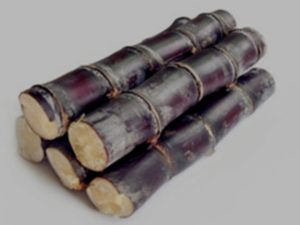
4. For phlegm-induced shortness of breath: Pound half a bowl of raw Chinese yam into a paste, mix with half a bowl of sugarcane juice, stir well, and drink it hot all at once. (*Simple and Convenient Single-Ingredient Formulas*)
5. For lower jiao deficiency-cold, frequent urination, emaciation, and weakness: Take half a jin of raw Chinese yam, scrape off the skin, chop it finely with a knife, and grind it into a fine paste in a pot. Add wine; when the wine comes to a boil, add the yam paste without stirring. Once cooked, add a little salt and scallion whites, then top up with more wine. Drink three or two cups on an empty stomach for best results. (*Mirror of Dietary Medicine*)
Related Compatibility
1. Chinese Yam Combined with Suoyang: Chinese yam excels at nourishing the kidneys, retaining essence, and harmonizing yin and yang; Suoyang excels at tonifying the kidneys, assisting yang, and strengthening tendons and bones. When combined, these two herbs enhance the effects of tonifying the kidneys, assisting yang, retaining essence, and stopping seminal emission. This combination is suitable for conditions such as kidney yang deficiency and seminal emission or premature ejaculation due to an unstable essence gate.
2. Chinese Yam Combined with Codonopsis: Chinese yam tends to tonify the spleen and nourish yin; Codonopsis tends to tonify the spleen and invigorate qi. When combined, these two herbs enhance the effects of tonifying the spleen, invigorating qi, nourishing yin, and generating body fluids. This combination is suitable for conditions such as spleen-stomach deficiency and stomach yin deficiency, manifested as poor appetite, lethargy, fatigue, or diarrhea.
3. Chinese Yam Combined with Euryale Seed: Chinese yam is sweet and neutral in nature, excelling at tonifying the spleen and kidneys, as well as astringing to stop diarrhea; Euryale seed is sweet, astringent, and neutral, excelling at tonifying the kidneys, consolidating essence, and astringing to stop leukorrhea. When combined, these two herbs enhance the effects of tonifying the spleen and kidneys, astringing to stop diarrhea, and consolidating essence to stop leukorrhea.This combination is suitable for conditions such as diarrhea, nocturnal emissions, leukorrhea, and urinary incontinence resulting from deficiency of both the spleen and kidneys.
4. Chinese Yam Combined with Tianhuafen: Chinese yam excels at tonifying qi and nourishing yin; Tianhuafen excels at moistening dryness and generating body fluids. When combined, these two herbs enhance the effects of tonifying qi, nourishing yin, and generating body fluids. This combination is suitable for conditions such as fluid depletion due to febrile diseases, restlessness and thirst, and diabetes.
5. Chinese Yam Combined with Perilla Seed: Chinese yam excels at tonifying the lungs and kidneys, anchoring qi, and relieving wheezing; Perilla seed excels at descending qi, resolving phlegm, and relieving cough and wheezing. When combined, these two herbs enhance the effects of nourishing the kidneys, tonifying the lungs, and relieving cough and wheezing. This combination is suitable for conditions such as deficiency-type wheezing caused by deficiency of both the lungs and kidneys, resulting in an inability to anchor and regulate qi.
6. Chinese Yam Combined with Anemarrhena Rhizome: Chinese yam excels at nourishing the kidneys, consolidating essence, and harmonizing yin and yang; Anemarrhena rhizome excels at nourishing the kidneys and moistening dryness. When combined, these two herbs enhance the effects of nourishing yin and reducing internal heat. This combination is suitable for symptoms such as bone-steaming fever, night sweats, and restlessness caused by yin deficiency with excessive internal heat.
7. Chinese Yam Combined with Sichuan Fritillary Bulb: Chinese yam is sweet, neutral, and moist in nature; it excels at tonifying lung qi, nourishing lung yin, and relieving cough and wheezing. Sichuan fritillary bulb is bitter, sweet, and slightly cold; it excels at clearing heat, resolving phlegm, moistening dryness, and relieving cough. When combined, these two herbs enhance the effects of moistening the lungs, resolving phlegm, and relieving cough and wheezing. This combination is suitable for chronic cough due to lung deficiency and consumptive cough.
8. Chinese Yam Combined with Cornus Officinalis: Chinese yam excels at nourishing the kidneys, consolidating essence, and harmonizing yin and yang; Cornus officinalis excels at tonifying the liver and kidneys, consolidating essence, and reducing urination. When combined, these two herbs enhance the effect of tonifying the liver and kidneys. This combination is suitable for conditions such as weakness and soreness in the lower back and knees, dizziness, and tinnitus caused by deficiency of the liver and kidneys and deficiency of essence and blood.
Medicinal Identification
1. Raw Chinese yam, earth-roasted Chinese yam,wheat bran-fried Chinese yam: Ancient methods of processing Chinese yam included frying, steaming, ginger-processing, honey-processing, wine-processing, milk-processing, vinegar-processing, and decoction-processing. Modern processed forms primarily consist of three types: raw Chinese yam, earth-fried Chinese yam, and wheat bran-fried Chinese yam. Raw Chinese yam primarily tonifies the kidneys and nourishes essence, as well as benefits the spleen and lung yin; it is often used for kidney deficiency with seminal emission, frequent nocturnal urination, lung deficiency with wheezing and cough, and yin deficiency with excessive thirst.Locally Stir-Fried Chinese Yam primarily tonifies the spleen and stops diarrhea; it is often used for chronic diarrhea due to spleen deficiency and loose stools. Bran-Stir-Fried Chinese Yam primarily tonifies the spleen, strengthens the stomach, nourishes the kidneys, and consolidates essence; it is often used for diarrhea due to spleen deficiency, persistent chronic diarrhea, frequent urination and enuresis, nocturnal emissions and seminal leakage, and persistent leukorrhea.
2. Atractylodes and Chinese Yam: Both have a sweet taste and are used to tonify the spleen; they are similarly employed to treat conditions of spleen and stomach deficiency. However, Atractylodes is bitter, warm, and slightly drying; it specifically enters the Spleen and Stomach meridians. Therefore, it can also dry dampness and promote diuresis, while also having the functions of consolidating the exterior to stop sweating and stabilizing the fetus. It is used for spleen deficiency with fluid retention, an unstable exterior defense, and fetal restlessness.Chinese yam (Shanyao) is neutral in nature—neither drying nor cold—and enters both the Lung and Kidney meridians. It can both tonify qi and nourish yin, making it a balanced tonic for both yin and yang. Additionally, due to its astringent properties, it can also tonify the lungs, benefit the kidneys, and secure essence. It is used for deficiency of the lungs and kidneys, yin deficiency with internal heat, and diabetes.
Related Medicines
Children’s Stomach-Nourishing Pills, Dioscorea Pills, and Diabetic Relief Capsules.
Related Prescriptions
Wan Dai Decoction (*Fu Qingzhu’s Gynecology*), Yi Huang Decoction (*Fu Qingzhu’s Gynecology*), and Yu Ye Decoction (*A Synthesis of Chinese and Western Medicine*).
Medicinal Diet Therapy
1. Chinese Yam and Pearl Meatballs
(1) Effects: Tonifies qi, nourishes blood, strengthens the spleen, and consolidates essence. Effective for conditions such as anemia, chronic enteritis, diarrhea, nocturnal emissions, and premature ejaculation.
(2) Ingredients: 150g glutinous rice, 50g lean pork, 50g Chinese yam, starch, salt, and MSG to taste.
(3) Preparation: Soak the glutinous rice in cold water for one day. Remove and drain thoroughly. Mince the pork into a paste. Wash and peel the Chinese yam, steam until tender, then mash it. Mix in the starch, salt, and MSG until well combined. Shape the mixture into meatballs weighing 15g each, roll them in glutinous rice, arrange on a plate, and steam until cooked through.
(4) Usage: Serve as a side dish.
2. Chinese Yam and Barley Malt Porridge
(1) Benefits: Strengthens the spleen and nourishes the stomach; replenishes blood and fortifies the body’s vital energy; regulates the flow of qi. Effective for poor appetite, loose stools, undigested food in stools, and anemia.
(2) Ingredients: 30g Chinese yam, 10g barley malt, 2–3 red dates, and an appropriate amount of rice.
(3) Preparation: Wash, peel, and cut the Chinese yam into chunks. Add the barley malt, red dates, and rice, then cook into porridge. Serve once cooked.
(4) Usage: Consume when the spleen and stomach are weak; serve warm in the morning.
Notes
Patients requiring treatment with Chinese herbal medicine should first consult a licensed Traditional Chinese Medicine (TCM) hospital to receive a prescription following a professional TCM differential diagnosis.
Processing & Preparation
Harvesting & Processing
The rhizomes grown from lily bulbs are harvested in the same year they are planted, while those propagated from pearl buds are harvested in the second year. They are dug up after the Frost Descent solar term, when the leaves turn yellow. Wash off the soil, scrape off the outer skin with a bamboo knife or a piece of a bowl, and sun-dry or oven-dry them to produce hairy Chinese yam.Select thick, straight hairy Chinese yams, soak them thoroughly in clean water, then apply gentle heat while covering them with a cotton quilt to maintain moisture until fully softened. Next, roll them on a wooden board into cylindrical shapes, trim both ends evenly, sun-dry, and polish to produce polished Chinese yam.
Processing Methods
1. Raw Chinese Yam: Take the raw herb, remove impurities, sort by size, soak until 30–40% penetrated with water, remove, steam until thoroughly moistened, cut into thick slices, and dry promptly.
2. Roasted Chinese Yam: Place the cleaned Chinese yam slices in a wok and roast over low heat until they turn a light yellow; remove and let cool.
3. Wheat Bran-Fried Chinese Yam: Take wheat bran, sprinkle it into a hot wok, and heat over medium heat. When smoke begins to rise, add the Chinese yam slices and stir-fry until yellow. Remove, sift out the burnt bran, and let cool. Use 10 kg of wheat bran for every 100 kg of Chinese yam slices.
4. Earth-Fried Chinese Yam:Place Fuluogan powder in a wok and stir-fry over low heat until warm. Add the sliced Chinese yam and stir-fry until the surface takes on an earthy color. Remove, sift out the Fuluogan powder, and let cool. Use 30 kg of Fuluogan powder for every 100 kg of sliced Chinese yam.
5. Rice-Stir-Fried Chinese Yam: Take clean sliced Chinese yam and rice, add them to a hot wok, and stir-fry over low heat until the rice turns yellow. Remove, sift out the rice, and let cool.For every 100 kg of Chinese yam slices, use 30 kg of rice.
6. Stir-Fried Chinese Yam with Honeyed Wheat Bran: Sprinkle honey-roasted wheat bran into a hot wok (approx. 180°C) and stir-fry until smoke rises; add the cleaned Chinese yam slices and continue stir-frying until they turn light yellow or golden yellow. Remove from heat, sift out the charred bran, and let cool; or mix wheat bran with honey water,sprinkle them into the pan and stir-fry over low heat until dry, then add the cleaned Chinese yam slices and stir-fry until they turn a light yellow; remove, sift out the burnt bran, and let cool. For every 100 kg of Chinese yam slices, use 6 kg or 12 kg of honey-coated bran.
Storage Methods
Store in dry containers. Stir-fried Chinese yam, bran-stir-fried Chinese yam, earth-stir-fried Chinese yam, rice-stir-fried Chinese yam, and bran-stir-fried Chinese yam should be kept in airtight containers and placed in a well-ventilated, dry location to prevent mold and insect infestation.
Crude Drug Identification
Properties of Crude Drugs
1. Hairy Chinese Yam: Slightly cylindrical, somewhat flattened and curved, 15–30 cm long, 1.5–6 cm in diameter. The surface is yellowish-white or light brownish-yellow, with distinct longitudinal wrinkles and traces of unremoved cork; a few root scar marks are visible, and both ends are irregular. The texture is firm and difficult to break; the fracture surface is white, granular, and starchy, with scattered light brownish-yellow specks.It is odorless, sweet in taste with a slight sourness, and becomes sticky when chewed.
2. Smooth Chinese Yam: Cylindrical in shape with even ends, 7–16 cm long and 1.5–3 cm in diameter; uniform in thickness and straight. The surface is smooth, pure white, and highly starchy. Those with thick roots, firm texture, high starch content, and a pure white color are considered the best.
Properties of Processed Slices
1. Chinese Yam: Thick slices that are round, oval, or irregular in shape. The surface is off-white or pale yellowish-white; the texture is brittle and breaks easily; the cross-section is off-white and highly starchy. It has a faint odor, a mild and slightly sour taste, and becomes sticky when chewed.
2. Roasted Chinese Yam: Shaped like Chinese yam slices, with a slightly yellowish surface.
3. Wheat Bran-Roasted Chinese Yam: Resembles Chinese yam slices; the surface is pale yellow, occasionally with scorched spots, and has a slight roasted aroma.
4. Earth-Roasted Chinese Yam: Resembles Chinese yam slices; the surface is earth-red, coated with earthy powder, and has a slight roasted aroma.
5. Rice-Roasted Chinese Yam: Resembles Chinese yam slices; the surface is slightly yellow or golden yellow, and has a sweet taste.
Botanical Information
Botanical Classification
Dioscorea opposita, a plant of the genus Dioscorea in the family Dioscoreaceae.
Morphological Characteristics
A twining, herbaceous vine. The tuber is oblong-cylindrical, growing vertically, and can reach up to 1 m in length; when fresh, the cross-section is white and sticky, becoming white and mealy when dried. The stem is usually purplish-red, right-twining, and glabrous.Leaves are simple, arranged alternately on the lower part of the stem, opposite from the middle upward, and very rarely in whorls of three; leaf blades vary greatly in shape, ranging from ovate-triangular to broadly ovate-lanceolate, 3–9 cm long and 2–7 cm wide, with an acuminate apex and a base that is deeply cordate, broadly cordate, or lanceolate to nearly truncate; margins are often shallowly to deeply 3-lobed,with the central lobe ovate-elliptic to lanceolate, and the lateral lobes auriculate, rounded, nearly square, or oblong; the junctions where the lateral lobes meet the central lobe may form various curved lines, and variations in leaf shape often occur even on the same plant. In seedlings, the leaves are generally broadly ovate or ovate-orbicular, with a deeply cordate base.Bulbils are often present in the leaf axils. The species is dioecious. Male inflorescences are spikes, 2–8 cm long, nearly erect; 2–8 are borne in the leaf axils, occasionally arranged in a conical pattern; the inflorescence axis is distinctly zigzagged; bracts and perianth segments have purplish-brown spots;the outer whorl of petals on male flowers is broadly ovate, while the inner whorl is ovate; there are 6 stamens. Female inflorescences are spikes, with 1–3 arising from leaf axils. The capsule is not reflexed, trigonous-oblate or trigonous-round, 1.2–2.0 cm long and 1.5–3.0 cm wide, with a white powdery coating on the exterior.Seeds are attached to the middle of the central axis of each locule and are surrounded by membranous wings. Flowering occurs from June to September, and fruiting from July to November.
Distribution Area
It is distributed in North China, East China, Central and South China, and Northwest China.
Growth Habits
It grows wild in sunny mountainous areas; it prefers warm conditions and is cold-tolerant, and can overwinter in northern regions with light mulching. Since Chinese yam is a deep-rooted plant, cultivation sites should be selected with deep, well-drained, loose, and fertile sandy loam.Neutral soil pH is optimal; if the soil is acidic, lateral roots and root nodules are likely to form, affecting root yield and quality; if the soil is too alkaline, the roots cannot grow downward sufficiently. Therefore, when cultivating in southern China on relatively acidic soils, an appropriate amount of lime should be applied to neutralize the soil’s acidity.
Propagation Methods
Propagation is primarily carried out using crown shoots and bulbils (yam beans).
Cultivation Techniques
1. Propagation by rhizome tips: In October of each year, dig up the underground roots, break off the upper 15–25 cm of the yam rhizome, and dry them slightly in the sun to allow moisture to evaporate. After 2–3 days of sun-drying, when the cut surfaces have healed, store them indoors or in a pit dug outdoors.The depth of the pit and the thickness of the covering soil should be sufficient to prevent the rhizomes from freezing; in Henan, the pit is 40 cm deep with 6 cm of soil covering, increased to 10 cm during cold weather.Keep the soil moist. In April of the following year (between the Qingming and Guyu solar terms), remove the tubers from storage and plant them in furrows with row spacing of 30–45 cm and plant spacing of 18–20 cm. Lay the tuber crowns flat in the furrows in an orderly manner and cover with soil.
2. Propagation by Bulblets: In mid-April, remove the bulblets (yam beans) harvested the previous fall from the pits, sun-dry them briefly, and then plant them. Plant in rows spaced 30 cm apart with plants spaced 10–15 cm apart in furrows 6 cm deep. Place the bulblets in the furrows and cover with 6 cm of soil; sprouts will emerge in about one month.
Pest and Disease Control
1. Major diseases include white rust and brown spot. White rust occurs in the spring; brown spot occurs in the summer. Control measures: ① Erect trellises to ensure good ventilation; do not plant in shaded, damp, or waterlogged areas; ② Apply a 1:1:140 dilution of Bordeaux mixture for control.
2. Major insect pests include wireworms and cutworms, which feed on the roots. Control: Use poisoned bait to attract and kill them when infestations occur.