Curcuma phaeocaulis is a commonly used medicinal herb for promoting blood circulation and dissipating masses. It is the dried rhizome of the Zingiberaceae plant Curcuma phaeocaulis Val., Curcuma kwangsiensis S.G. Lee et C.F. Liang, or Curcuma wenyujin Y.H. Chen et C. Ling. The latter is commonly known as “Wen Curcuma.”It is primarily produced in Sichuan, Guangxi, and Zhejiang. It has the effects of regulating qi, promoting blood circulation, resolving masses, and relieving pain. It is commonly used to treat masses and lumps, amenorrhea due to blood stasis, chest pain caused by heart obstruction, and abdominal distension and pain caused by food stagnation.

Curcuma
Curcuma phaeocaulis is a commonly used medicinal herb for promoting blood circulation and dissipating masses. It is the dried rhizome of the Zingiberaceae plant Curcuma phaeocaulis Val., Curcuma kwangsiensis S.G. Lee et C.F. Liang, or Curcuma wenyujin Y.H. Chen et C. Ling. The latter is commonly known as “Wen Curcuma.”It is primarily produced in Sichuan, Guangxi, and Zhejiang. It has the effects of regulating qi, promoting blood circulation, resolving masses, and relieving pain. It is commonly used to treat masses and lumps, amenorrhea due to blood stasis, chest pain caused by heart obstruction, and abdominal distension and pain caused by food stagnation.
Chinese Name : 莪术
Latin Name : Curcumae Rhizoma
Aliases : Peng’e Mao, Pengyao, Peng’e Shu, Guangmao, Pengshu, Qingjiang, Qiangqi, Guangshu, Heixinjiang, Wenshu
Authentic Producing Area : Mainly produced in Sichuan, Guangxi, and Zhejiang
Nature, Flavor & Meridian Tropism : Pungent and bitter in taste; warm in nature; enters the Liver and Spleen meridians
Benefits & Efficacy
Benefits
Promotes the flow of qi, breaks up blood stasis, eliminates food stagnation, and relieves pain.
Indications
Indicated for masses and lumps, blood stasis-induced amenorrhea, chest pain due to bi syndrome, and distension and pain caused by food stagnation.
Usage and Dosage
Oral use: Decoct 6–9 g.
Precautions
This herb can easily deplete qi and blood; treatment should be discontinued once the condition is resolved, and prolonged use is not recommended.
Chemical Constituents
Main constituents include essential oils: zingiberone, curcumene, curcumol, curcumolide, zingiberol, zingiberene, borneol, curcumone, pinene, isoborneol, pinitol, eugenol, etc.; phenolic compounds: curcumin, etc.
Pharmacological Actions
This product possesses anticoagulant, hemorheological-improving, antiplatelet aggregation, antitumor, antifibrotic, and analgesic effects.
Relevant Discussions
1. *Treatise on the Nature of Medicinal Substances*: “Treats blood- and qi-related chest pain in women; dispels masses, stagnation, and cold qi.”
2. *Rihua Zi Bencao*: “Most effective when combined with wine or vinegar. Treats all types of qi disorders, stimulates appetite and aids digestion, regulates menstruation, dissipates blood stasis, alleviates pain from contusions and injuries, and eliminates hemorrhage and pathological blood from internal injuries.”
3. *Ming Yi Zhi Zhang*: “Alleviates pain and dissipates blood stasis; most suitable for treating masses, masses with hard lumps, and regulating menstruation.”
Applications
Clinical Applications
1. For unbearable, untimely pain caused by qi stagnation in the small intestine: Grind Ponghuo and Maohuo into a fine powder; take one qian on an empty stomach with scallion wine. (From *Compendium of Materia Medica*, citing *Yang Zijian’s Formulas for Protecting Life*)
2. For blood stasis and clots in women, and amenorrhea: One liang each of Curcuma zedoaria and Curcuma triquetris, and one liang of processed rhubarb. Form into pills the size of mung beans; take 10–20 pills at a time with plain hot water.(*Shen Zhai’s Posthumous Writings*)
3. For chronic cold-induced pain in the chest and abdomen following childbirth: 1 liang of Pong’e Shu, 3 liang of Wulingzhi, and 3 sheng of vinegar. Pound the ingredients into a fine powder, sift, and simmer with vinegar until it forms a paste. When the mixture is ready for pill-making, shape into pills the size of a paulownia seed. Take 10 pills at any time, washed down with Huaixiang decoction or hot wine. (*Formulas for Universal Relief*)
4. For pain caused by falls or blows: 1 liang each of Curcuma, white silkworm pupae, and sappan wood; half a liang of myrrh. Grind into a powder. Take 2 qian per dose, decocted in water; take three to five doses daily. (From *Bo Ji Fang*: Peng-E Powder)
5. For lacquer poisoning: Decoct Curcuma and Isatis root in water and use the decoction to wash the affected area. (From *Pu Ji Fang*)
Related Compatibility
1. Curcuma with Rhubarb: Curcuma breaks up blood stasis and regulates qi; rhubarb promotes blood circulation and removes blood stasis. When combined, these two herbs enhance the ability to promote blood circulation and unblock the menstrual channels, effectively treating conditions characterized by blood stasis and amenorrhea.
2. Curcuma with Wood Fragrance: Curcuma dispels qi stagnation and eliminates food stagnation; Wood Fragrance regulates qi stagnation and relieves pain. When used together, these two herbs can disperse qi stagnation in the spleen and stomach and eliminate accumulated food stagnation, making them suitable for epigastric and abdominal distension and pain caused by food stagnation and qi stagnation.
Medicinal Identification
1. Raw Curcuma and Vinegar-Processed Curcuma: These are two different processed forms of Curcuma, sharing similar effects but with distinct emphases.Raw Curcuma is primarily effective for breaking up blood stasis and regulating qi, and its action is relatively potent. It can be used for all conditions involving blood stasis and qi stagnation, such as masses and lumps, amenorrhea due to blood stasis, and chest pain caused by chest bi syndrome; however, it tends to deplete the body’s vital energy.Eupatorium prepared with vinegar primarily enters the Liver Meridian; its effects focus on breaking up blood stasis, dispersing stasis, and relieving pain, and it is often used for pain syndromes caused by blood stasis.
2. Eupatorium and Curcuma: Both have the effects of invigorating blood, removing blood stasis, regulating qi, and relieving pain; both treat conditions caused by qi stagnation and blood stasis.However, Curcuma zedoaria is pungent and bitter in taste and warm in nature; it possesses strong effects in invigorating blood and regulating qi, and is classified as a herb that breaks up blood and qi stagnation. Therefore, it is frequently used for severe conditions such as masses and accumulations, as well as amenorrhea, caused by qi stagnation and blood stasis; it can also aid digestion and relieve bloating, and is used to treat conditions involving food stagnation.Curcuma, which is pungent and bitter in taste and cold in nature, excels at soothing the liver and relieving depression, as well as cooling the blood and clearing the heart. Therefore, it is frequently used for chest and flank pain caused by qi stagnation and blood stasis or liver depression transforming into fire, as well as for conditions such as blood heat-induced vomiting of blood or nosebleeds, and mental confusion during febrile illnesses.
Related Medicines
Baofukang Suppositories (foam formulation).
Related Prescriptions
Peng’e Zhu San (from *Pu Ji Fang*, citing *Wei Sheng Jia Bao*), E Zhu Wan (from *Zheng’s Family-Transmitted Gynecological Formulas Worth Ten Thousand Gold*), and Peng Zhu San (from *Gynecological Jade Ruler*).
Medicinal Diet Therapy
Curcuma and Pork Heart Soup
1. Benefits: Suitable for pain caused by qi stagnation in the heart and stomach. This formula is also effective for treating food stagnation.
2. Ingredients: 25 grams of fresh Curcuma rhizome, 1 pork heart, and various seasonings.
3. Preparation: Wash the fresh Curcuma rhizome and slice it.Rinse the pork heart thoroughly under running water, then cut it in half and blanch it in boiling water; set aside. Place all ingredients in a pot, add an appropriate amount of water and seasonings to taste. Bring to a boil over high heat, then reduce to low heat and simmer until the pork heart is tender. Season with salt before serving.
4. Usage: Consume both the meat and the soup. Take one dose daily for several consecutive days.
Notes
Patients requiring treatment with Chinese herbal medicine should first consult a licensed Traditional Chinese Medicine (TCM) hospital, where a TCM practitioner will conduct a professional pattern differentiation and prescribe an herbal formula.
Processing & Preparation
Harvesting & Processing
Harvest after the stems and leaves wither in winter; wash thoroughly; steam or boil until thoroughly cooked; sun-dry or dry at a low temperature; then remove fibrous roots and impurities.
Processing Methods
1. Curcuma: Take the raw material, remove impurities, sort by size, wash thoroughly, moisten thoroughly or steam in a steamer until soft, then slice thinly and dry.
2. Vinegar-processed Curcuma: Place the cleaned Curcuma in a pot, add rice vinegar and an appropriate amount of water to cover, and simmer until the vinegar solution is completely absorbed. When cut open and no white core is visible, remove, let cool slightly, cut into thick slices, and dry.For every 100 kg of Curcuma zedoaria, use 20 kg of rice vinegar.
3. Wine-processed Curcuma zedoaria: Place the cleaned Curcuma zedoaria slices in a pot and heat over low heat. Once heated through, spray wine evenly over them and continue stir-frying until dry. Remove and allow to cool. For every 0.5 kg of Curcuma zedoaria slices, use 0.06 kg of wine.
Storage Methods
Store in a dry container in a well-ventilated, dry place to prevent insect infestation. Store vinegar-processed Curcuma and wine-processed Curcuma in airtight containers in a cool, dry place.
Crude Drug Identification
Properties of Crude Drugs
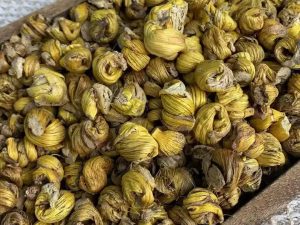
1. Curcuma Rhizome: Oval, oblong, conical, or elongated spindle-shaped; the apex is usually bluntly pointed, and the base is bluntly rounded; 2–8 cm long and 1.5–4 cm in diameter.The surface is grayish-yellow to grayish-brown; the upper nodes are prominent, with circular, slightly depressed fibrous root scars or residual fibrous roots. Some specimens have one row of sunken bud scars and subcircular lateral rhizome scars on each side, while others show visible knife-cut marks.Heavy in weight and firm in texture; the cross-section is grayish-brown to bluish-brown, waxy, and often coated with grayish-brown powder; the periderm and central cylinder separate easily; the annular rings of the endodermis are brownish-gray. It has a faintly fragrant odor and a slightly bitter and pungent taste.
2. Guangxi Curcuma: The nodes are slightly protruding; the cross-section is yellowish-brown to brown, often covered with pale yellow powder; the annular pattern of the endodermis is yellowish-white.
3. Wen Curcuma: The cross-section is yellowish-brown to brownish-black, often covered with pale yellow to yellowish-brown powder. It has a fragrant or faintly fragrant odor.
Properties of Processed Slices
1. Curcuma: Thick, round or oval slices. The outer surface is grayish-yellow or grayish-brown; ring marks or traces of fibrous roots are sometimes visible. The cross-section is yellowish-green, yellowish-brown, or brownish-black, with a distinct annular pattern in the inner pericycle and scattered small “vein-like” spots. It has a faintly fragrant aroma and a slightly bitter and pungent taste.
2. Vinegar-processed Curcuma: Resembles Curcuma slices, but with a darker color, a horn-like texture, and a faint aroma of vinegar.
3. Wine-processed Curcuma: Resembles Curcuma slices, but with a slightly darker color and a faint aroma of wine.
Botanical Information
Botanical Classification
Plants of the genus Curcuma in the family Zingiberaceae, including Curcuma, Guangxi Curcuma, and Wen Curcuma.
Morphological Characteristics
1. Curcuma: A perennial herb, 80–150 cm tall. The main rhizome is globose to conical-globose; lateral rhizomes are digitate, with an inner surface ranging from yellow-green to dark green, or occasionally bluish; the tips of the fibrous roots are swollen into fleshy spindle-shaped structures, with an inner surface that is yellow-green or nearly white. The lower part of the leaf sheath is often brownish-purple.Leaves are basal, numbering 4–7; petioles are short, measuring 1/3–1/2 the length of the leaf blade or even shorter; leaf blades are oblong-elliptic, 20–50 cm long and 8–20 cm wide, with an apex that is acuminate to shortly caudate, the base extending downward into a petiole; both surfaces are glabrous, with a 1–2 cm wide purple halo on either side of the midrib on the upper surface.The spike-like inflorescence is cylindrical, emerging from the rhizome, 12–20 cm long, with more than 20 bracts; the upper bracts are oblong, 4–6 cm long, 1.5–2 cm wide, pink to purplish-red; the middle and lower bracts are nearly circular, 2–3.5 cm long, 1.5–3.2 cm wide, pale green to white.Flowering period: April–June.
2. Guangxi Curcuma, also known as Gui Curcuma or Hairy Curcuma. A perennial herb, 50–110 cm tall. The main rhizome is ovoid, while the lateral rhizomes are digitate; the cross-section is white or slightly yellow. The tips of the fibrous roots often swell into clusters of club-shaped tubers; the cross-section is white. Leaves are basal; the petioles are 1/4 the length of the leaf blade and covered with short soft hairs;leaf sheaths are 10–33 cm long and covered with short soft hairs; there are 2–5 leaves, erect, with oblong-lanceolate blades 14–39 cm long and 4.5–7 (–9.5) cm wide, the apex short-acuminate to acuminate, the base gradually narrowing and extending downward, both surfaces densely covered with coarse soft hairs, and in some forms, a purple halo along both sides of the midrib.The raceme emerges from the rhizome; it is cylindrical, appearing before or simultaneously with the leaves, approximately 15 cm long and 7 cm in diameter. The bracts below the inflorescence are broadly ovate and pale green, while the upper bracts are oblong and pale red; the calyx is white, approximately 1 cm long, split on one side to the middle, and bearing 3 blunt teeth at the apex;the corolla is nearly funnel-shaped, 2–2.5 cm long, with three petals that are pink, oblong, and with the rear petal being wider and slightly pouch-shaped at the apex; the lateral reduced stamens are petal-like and pale yellow; the labellum is nearly circular, pale yellow, with the apex shallowly and circularly 3-lobed, and a spur at the base of the anther; the ovary is covered with long soft hairs, the style is filiform, and the stigma is capitate and hairy.Flowering period: May–July.
3. Wen Yujin, also known as Wen E Zhu. A perennial herb, 80–160 cm tall. The main rhizome is tuberous, while the lateral rhizomes are finger-like, with a lemon-colored interior. The fibrous roots are slender and long, often swelling at the tips into hammer-shaped tuberous roots with a white interior.Leaves number 4–7, arranged in two rows; petioles are short, less than half the length of the leaf blade; leaf blades are broadly elliptic, 35–75 cm long and 14–22 cm wide, with an acuminate or shortly caudate-acuminate apex, a cuneate base extending down the petiole, and an abaxial surface glabrous.The spike-like inflorescence is cylindrical, emerging from the rhizome before the leaves, 20–30 cm long and 4–6 cm in diameter. The upper, flowerless bracts are oblong, 5–7 cm long and 1.5–2.5 cm wide, rose-red in color; the middle and lower, flowered bracts are oblong, 3–5 cm long and 2–4 cm wide, greenish-white;The calyx tube is white, with three unequal teeth at the apex; the corolla tube is funnel-shaped and white, with three membranous lobes that are oblong; the posterior lobe is larger, with a slightly pouch-like apex and rough hairs near the tip;The lateral rudimentary stamens are petal-like, yellow; the labellum is obovate, reflexed, yellow, and slightly concave at the apex; there is one fertile stamen with a spur at the base of the anther; the ovary is covered with long soft hairs, and the style is slender and long. Flowering period: April–June.
Distribution Area
1. Curcuma: Distributed in Guangdong, Guangxi, Sichuan, Yunnan, and other areas. Cultivated in small quantities in Zhejiang, Fujian, Hunan, and other regions. 2. Guangxi Curcuma: Distributed in Guangxi. 3. Wen Curcuma: Mainly produced in Rui’an, Zhejiang.
Propagation Methods
Propagation is by rhizome or seed.
Cultivation Techniques
1. Seedling Propagation Techniques
For rhizome propagation, select double-headed rhizomes that are plump, robust, with full buds, and free of pests and diseases as planting stock; plant them from late March to early April each year. For seed propagation, collect mature seeds, air-dry them for 1–2 days, remove the aril, and ensure a thousand-seed weight of 10.5 g;Seeds can be sown immediately after harvest or stored in a cool, shaded place until the following spring; first soak them in a 0.2% carbendazim solution for 10 minutes, remove and air-dry, then sow. At temperatures above 24°C, germination occurs in 8–10 days.
2. Planting and Transplanting Techniques
Plant using the hole-planting method, with one row per ridge. Dig holes with a row spacing of 33–40 cm and a plant spacing of 40 cm; the hole depth should be 5–10 cm. Plant one ginger seed per hole, cover with 5–10 cm of soil after planting, and plant 1,400 plants per mu.
3. Seedling and Mature Plant Management
(1) Seedling Management: After seedlings have emerged uniformly, broadcast urea directly onto the soil—typically after rain—at a rate of 10 kg per mu, in conjunction with the first weeding and cultivation.
(2) Management of Mature Plants: Mature plants should be cultivated and weeded once each around the beginning of autumn (Liqiu), the end of summer heat (Chushu), and the white dew (Bailu). In conjunction with these cultivation and weeding sessions, apply top dressing twice—in early July and early September—applying 30–50 kg of nitrogen-phosphorus-potassium compound fertilizer per mu each time. During periods of drought and low rainfall, water promptly in the morning or at night to keep the soil moist.
Pest and Disease Control
1. Diseases: The main diseases affecting Curcuma are root rot and leaf spot. To control root rot, practice crop rotation with grasses and rapeseed; promptly remove diseased plants upon detection; disinfect affected planting holes with quicklime; and apply a 1,000-fold dilution of 50% Tebuconazole wettable powder at the onset of the disease. Leaf spot can be controlled by spraying a 500-fold dilution of Topsin.
2. Pests: The main pests affecting Curcuma are wireworms and the ginger white butterfly. Control methods include preparing poison baits to attract and kill wireworms using 100 g per mu of 90% crystal diazinon mixed with 5 kg of roasted rapeseed cake; spray a 800–1,000-fold dilution of 90% crystal diazinon to control the ginger white butterfly.