Oyster is the name of a traditional Chinese medicine. It refers to the shells of the giant oyster (Ostrea gigas Thunberg), the Dalian Bay oyster (Ostrea talienwhanensis Crosse), or the Jiangmi oyster (Ostrea rivularis Gould), all belonging to the genus Ostrea in the family Ostreidae. It has the therapeutic effects of calming the mind, subduing Yang and tonifying Yin, and softening hard masses and dispersing nodules.It is primarily used to treat palpitations and insomnia, dizziness and tinnitus, scrofula and phlegm nodules, as well as masses and lumps.
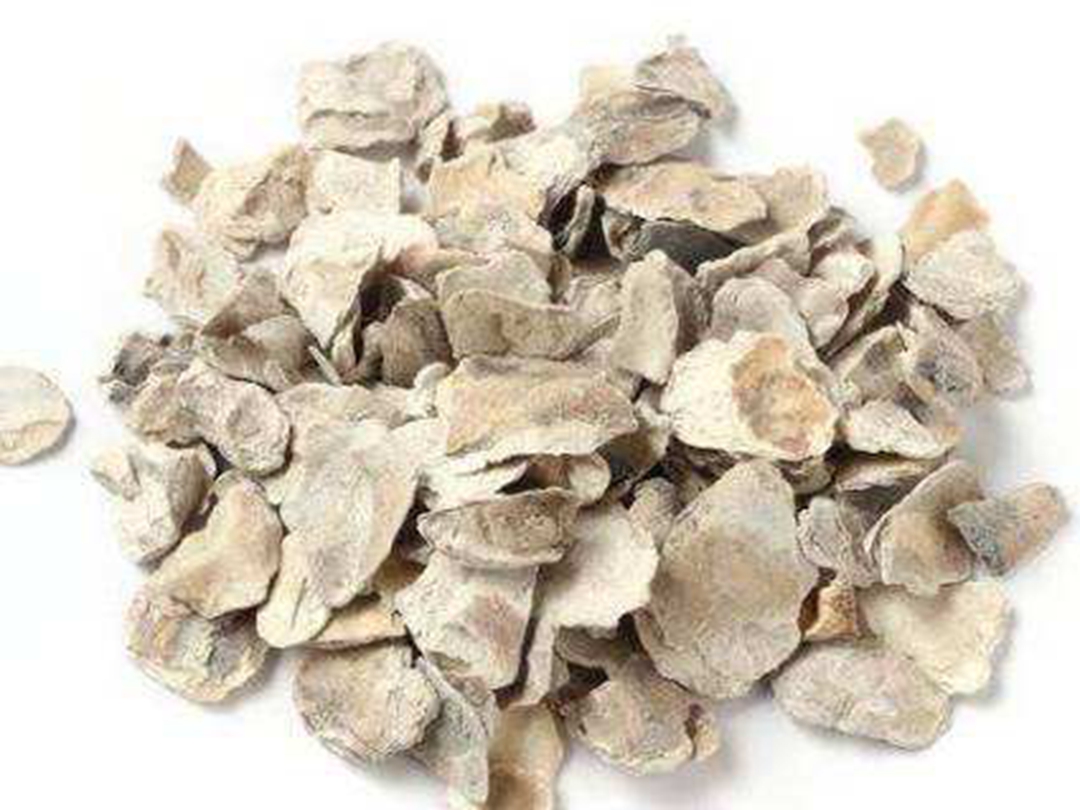
Oyster
Oyster is the name of a traditional Chinese medicine. It refers to the shells of the giant oyster (Ostrea gigas Thunberg), the Dalian Bay oyster (Ostrea talienwhanensis Crosse), or the Jiangmi oyster (Ostrea rivularis Gould), all belonging to the genus Ostrea in the family Ostreidae. It has the therapeutic effects of calming the mind, subduing Yang and tonifying Yin, and softening hard masses and dispersing nodules.It is primarily used to treat palpitations and insomnia, dizziness and tinnitus, scrofula and phlegm nodules, as well as masses and lumps.
Chinese Name : 牡蛎
Latin Name : Ostreae Concha
Aliases : Oyster Shell, Gu Ben, Zuogu Oyster, Oyster Clam, Oyster Chamber, Oyster Mountain, Oyster Pu, Left Shell, Oyster Shell, Sea Oyster Shell, Sea Oyster Skin
Authentic Producing Area : Guangdong, Fujian, Zhejiang, Jiangsu, Shandong
Nature, Flavor & Meridian Tropism : Salty in taste, slightly cold in nature; enters the Liver, Gallbladder, and Kidney meridians
Benefits & Efficacy
Benefits
Weighs down and calms the spirit; subdues Yang and tonifies Yin; softens hardness and disperses masses.
Indications
Palpitations and insomnia; dizziness and tinnitus; scrofula and phlegm nodules; masses and lumps.
Usage and Dosage
1. Internal use: Decoct 15–30 g; add to the decoction first; or incorporate into pills or powders. 2. External use: Apply an appropriate amount as a dry powder or as a paste.
Precautions
1. Use with caution in patients with spleen and stomach deficiency-cold. 2. Fritillaria is its “assistant herb”; it synergizes well with licorice, Achyranthes root, Polygala root, and Cnidium fruit; it is contraindicated with ephedra, Asarum, Evodia fruit, and Magnolia flower. 3. Should not be used concurrently with tetracycline derivatives or isoniazid, as they may form complexes, reducing solubility and impairing absorption. 4. Should not be used with digitalis, as it may enhance both the therapeutic effect and toxicity. 5. Should not be used with phosphates (e.g., quinoline phosphate, codeine phosphate) or sulfates (e.g., ferrous sulfate, tolbutamide sulfate), as precipitation may occur, reducing therapeutic efficacy. 6. Should not be combined with prednisolone tablets, as this may readily form insoluble compounds that significantly reduce bioavailability. 7. Should not be combined with vitamin C, as oxidation will render it ineffective.
Chemical Constituents
It primarily contains calcium carbonate; it also contains protein and trace elements such as magnesium, sodium, and strontium.
Pharmacological Actions
This product has sedative, anticonvulsant, analgesic, neuroprotective, immune-boosting, hepatoprotective, antioxidant, antibacterial, and antitumor effects.
Relevant Discussions
1. *Shennong Bencao Jing*: “Treats shock, anger, and irritability; relieves stiffness and spasticity; treats fistulas; and addresses red and white vaginal discharge in women.”
2. *Haiyao Bencao*: “Treats male seminal emission and debility due to exhaustion; tonifies kidney qi; stops night sweats; relieves restlessness and fever; and treats febrile illnesses. It nourishes and calms the mind, and treats childhood convulsions and epilepsy.”
3. *Essentials of Materia Medica*: “Its salty nature softens hardness and transforms phlegm, dissipating scrofula, tubercles, stagnant blood, and abdominal masses. Its astringent nature consolidates prolapse, treats seminal emission, metrorrhagia, and leukorrhea; it stops coughing, curbs sweating, and fortifies the small and large intestines.”
Applications
Clinical Applications
1. For treating dizziness, vertigo, tinnitus, ear fullness, restlessness, and irritability caused by liver and kidney yin deficiency with excessive liver yang, it is often used in combination with Daizhashi, Longgu, and Bai Shao, such as in the Jianling Decoction (*Medical Synthesis of Chinese and Western Medicine*).
2. To treat restlessness of the mind, palpitations, anxiety, insomnia, and excessive dreaming, it is often used in synergy with Dragon Bone, as in the Shuxin Granules (Ministry-Issued Standards).
3. For scrofula and goiters caused by stagnation of phlegm-fire, it can be used alone as a powder mixed with chicken bile for external application, or combined with Zhebei Mu, Xuan Shen, and Xia Kucao, as in the Neixiao Scrofula Pills (from *Introduction to Medicine*). For masses under the ribs caused by the mutual entanglement of phlegm and blood stasis, it is often combined with softshell turtle shell, Chai Hu, and peach kernels.
4. To treat spontaneous sweating and night sweats, it is often combined with Astragalus and Ephedra root, as in the Oyster Shell Powder (from *Taiping Huimin Heji Jufang*).
5. To treat seminal emission and seminal leakage due to kidney deficiency, it is often combined with Semen Cuscutae, Euryale Seed, and Dragon Bone, as in the Golden Lock Semen-Consolidating Pills (from *Yifang Jijie*).
6. To treat frequent urination and enuresis, it can be combined with Mulberry Cuttlefish Bone, Golden Rosehip, and Amomum Seed.
7. To treat metrorrhagia, menorrhagia, and leukorrhea, it can be combined with Dragon Bone, Sea Cuttlefish Bone, and Chinese Yam.
Related Compatibility
1. Oysters paired with softshell turtle shell: Oysters have a heavy, calming effect on the mind and help soften hard masses and promote astringency; softshell turtle shell nourishes yin, subdues yang, and softens hard masses to disperse nodules.When used together, these two herbs not only calm the mind and anchor the spirit but also nourish yin and subdue yang; they can also soften phlegm nodules and disperse blood-related hard masses. They are a commonly used herbal combination for nourishing yin, subduing wind, harmonizing the liver, subduing yang, and softening hard masses and dispersing nodules. They are suitable for dizziness and vertigo caused by yin deficiency with hyperactive yang, restlessness, palpitations, and insomnia, as well as spasms and convulsions resulting from heat-related yin depletion and internal liver wind;It is also suitable for masses and accumulations, as well as conditions such as menorrhagia and metrorrhagia in women.
2. Oyster Shell combined with Turtle Shell: Oyster Shell subdues yang and calms the spirit; it has strong sedative properties but weak effects in nourishing yin and strengthening bones; Turtle Shell nourishes yin and subdues yang, strengthens tendons and bones, and has strong effects in nourishing yin and strengthening bones but weak sedative properties.When these two herbs are combined, their effects—nourishing yin, subduing wind, strengthening tendons and bones, and heavily sedating the spirit—complement each other perfectly. This combination is suitable for conditions of yin deficiency with hyperactive yang, characterized by dizziness, vertigo, and restlessness.
3. Oyster Shell Combined with White Peony Root: Oyster Shell calms the liver and subdues liver yang, while also possessing astringent and consolidating properties; White Peony Root nourishes blood, consolidates yin, and subdues liver yang.When used together, one subdues Liver Yang while the other nourishes Yin and Blood; one consolidates and astringes while the other gathers Yin. Their complementary actions address both the root and the symptoms, jointly achieving the effect of nourishing Yin and subduing Yang. This combination is suitable for conditions of Yin deficiency with excessive Yang, characterized by dizziness, vertigo, restlessness, tinnitus, and eye distension.
Medicinal Identification
1. Raw Oyster Shell and Calcined Oyster Shell: Both are different processed forms of oyster shell. Due to differences in processing methods, their therapeutic effects have distinct emphases. Raw Oyster Shell excels at heavily anchoring and calming the spirit, subduing Yang and nourishing Yin, and softening hardness and dispersing nodules. It is commonly used for palpitations and insomnia, dizziness and tinnitus, scrofula and phlegm nodules, as well as masses and abdominal distension.Calcined oyster shell excels at astringing and consolidating; it is commonly used for conditions involving leakage and instability, such as spontaneous sweating, night sweats, seminal emission, premature ejaculation, frequent urination, enuresis, metrorrhagia, and leukorrhea; it can also neutralize acidity and relieve pain, and is used to treat stomach pain and acid reflux.
2. Oyster Shell and Dragon Bone: Both possess the functions of calming the mind and alleviating anxiety, pacifying the Liver and subduing Yang, and astringing and consolidating. They are both suitable for treating restlessness of the mind, palpitations and insomnia, Yin deficiency with excessive Yang, dizziness and vertigo, irritability and short temper, as well as various conditions involving slippage and loss of stability.However, oyster shell primarily enters the Liver Meridian and is particularly effective at calming the Liver and subduing Yang. Although its effects in calming the spirit and astringing and consolidating are less pronounced than those of dragon bone, it can also soften hardness and disperse nodules, making it useful for scrofula, phlegm nodules, and masses and accumulations; it also neutralizes acidity and relieves pain, and is used for stomach pain and acid reflux.Dragon Bone primarily enters the Heart Meridian and is highly effective in calming the mind and alleviating anxiety; it also dries dampness and promotes the healing of sores, making it suitable for chronic, non-healing ulcers.
3. Oyster Shell and Stone Oyster: Both can calm the liver and subdue Yang, nourish Yin, and clear heat, making them suitable for conditions such as dizziness and vertigo caused by Yin deficiency with excessive Yang.However, oyster shell also has the effects of calming the mind and alleviating anxiety, as well as astringing and consolidating, making it suitable for restlessness, palpitations, insomnia, and various conditions involving prolapse or slippage. Shi Jue Ming clears liver fire; together, they nourish liver yin to improve vision and dispel corneal opacities, making them suitable for conditions such as red, swollen, and painful eyes, corneal opacities, and blurred vision.
Related Medicines
Liver-Draining and Spirit-Calming Pills, Golden Lock Essence-Consolidating Pills, Dragon Bone and Oyster Shell Bone-Strengthening Granules.
Related Prescriptions
Cinnamon Twig, Dragon Bone, and Oyster Shell Decoction (*Jin Gui Yao Lue*), Rescue from Reversal Decoction (*Shang Han Lun*), and Golden Lock Essence-Consolidating Pills (*Yi Fang Ji Jie*).
Medicinal Diet Therapy
Luffa and Oyster Soup
1. Benefits: Clears heat and detoxifies; cools and harmonizes the blood; quenches thirst and lowers blood sugar. Effective for diabetes, prostatitis, and urethritis.
2. Ingredients: 450g luffa, 150g oyster meat, and appropriate amounts of MSG, five-spice powder, cornstarch slurry, vegetable oil, cooking wine, clear broth, chopped scallions, minced ginger, and salt.
3. Preparation: Peel, wash, and slice the loofah. Boil the oyster meat in a pot of boiling water for 5 minutes, then slice it thinly.Heat a wok over medium heat until the oil reaches 60% heat. Add the oyster slices and stir-fry briefly, then deglaze with cooking wine and clear broth. Bring to a boil over medium heat, add the loofah slices, chopped scallions, and minced ginger. Once boiling again, season with salt, MSG, and five-spice powder. Thicken the sauce with cornstarch slurry, drizzle with sesame oil, and toss to combine.
4. Usage: Serve with meals.
Notes
Patients requiring treatment with Chinese herbal medicine should first consult a licensed Traditional Chinese Medicine (TCM) hospital, where a TCM practitioner will conduct a professional pattern differentiation and prescribe an herbal formula.
Processing & Preparation
Harvesting & Processing
Can be harvested year-round; remove the flesh, wash thoroughly, sun-dry, and grind into powder.
Processing Methods
1. Oyster: Take the raw material, remove impurities and adherents, wash thoroughly, dry, and grind into powder.
2. Calcined Oyster: Take clean oysters, place them over a smokeless fire or in a suitable container, heat over high heat, and remove when they become crisp. Allow to cool, then grind into powder.
3. Vinegar-Cured Oysters: Place the cleaned oysters over a smokeless fire or in a suitable container; heat over high heat until they turn a deep red, then remove, sprinkle with vinegar, and grind after cooling. Use 12.5 kg of vinegar for every 100 kg of cleaned oysters.
4. Salted Oysters: Place cleaned oysters in a suitable container and heat over high heat. Once they turn deep red, remove them, mix thoroughly with salt water, and grind into a powder after cooling.
Storage Methods
Store in a dry container in a dry place. Keep away from dust.
Crude Drug Identification
Properties of Crude Drugs
1. Long Oyster: Long, plate-like in shape, with the dorsal and ventral margins nearly parallel; 10–50 cm long and 4–15 cm high.The right valve is smaller, with hard, thick scales arranged in layers or with a layered pattern. The outer surface is flat or has several depressions and is pale purple, grayish-white, or yellowish-brown; the inner surface is porcelain white, and the two sides of the apex lack small teeth. The left valve is deeply concave, with scales coarser and larger than those on the right valve, and a small attachment surface at the apex. The shell is hard, with a layered cross-section that is pure white. It has a faint odor and a slightly salty taste.
2. Dalian Bay Oyster: Triangular in shape, with the dorsal and ventral margins forming a figure-eight pattern. The outer surface of the right valve is pale yellow, with sparse concentric scales that undulate in a wavy pattern; the inner surface is white. The left valve has thick, sturdy concentric scales; several distinct radial ribs radiate from the apex; the inner surface is concave and box-shaped; the hinge surface is small.
3. Jinjiang Oysters: Round, oval, or triangular in shape. The outer surface of the right valve is slightly uneven, with colors ranging from gray, purple, brown, to yellow, and concentric scales arranged in concentric rings; in juvenile specimens, the scales are thin and brittle. After several years of growth, the scales overlap in layers; the inner surface is white, and some edges may be pale purple.
Properties of Processed Slices
1. Oyster: Irregular fragments with a surface color ranging from pale purple-brown, grayish-white, yellow, or yellowish-brown; the inner surface is porcelain white. The texture is hard, and the fracture surface exhibits a layered or striated arrangement and is pure white. It has a faint fishy odor and a slightly salty taste.
2. Calcined Oyster: Resembles raw oyster in shape, but is bluish-gray in color and has a loose, brittle texture.
3. Vinegar-treated oyster: Resembles calcined oyster in shape, with a slight vinegar odor.
4. Salted oyster: Resembles calcined oyster in shape, with a salty taste.
Botanical Information
Morphological Characteristics
1. Long Oyster: The shell is elongated and thick; typically, the left valve measures 140–330 mm in length and 57–115 mm in height, with the length being approximately three times the height. The largest known specimen reached 722 mm in length. The left valve is slightly concave with a small attachment surface at the apex, while the right valve is relatively flat like a lid; the dorsal and ventral margins are nearly parallel. The shell surface is pale purple, grayish-white, or yellowish-brown.Sparse scales are arranged in a ring from the apex to the posterior margin; they are slightly wavy, with very few layers, and lack distinct radial ribs. The inner surface of the shell is porcelain white; the ligament groove is long and wide, and the adductor muscle scar is large, located on the dorsal side of the posterior part of the shell and shaped like a brownish-yellow horseshoe.
2. Dalian Bay Oyster: The shell is slightly triangular in shape, with a hard and thick structure. It generally measures 55–63 mm in length and 95–130 mm in height, with a pointed apex that gradually widens toward the posterior margin.The right valve is relatively flat and lid-like; the scales at the apex tend to fuse and are relatively thick, while those toward the ventral margin become progressively sparser and undulate in a wavy pattern, with no distinct radial ribs. The shell surface is pale yellow, mottled with purplish-brown markings; the left valve is protruding, with several robust radial ribs extending from the apex, and the scales along the margin are thick, rigid, and upturned.The inner surface of the shell is concave, box-like, and white; the hinge is small, and the ligament groove is long, deep, and elongated triangular in shape. The adductor muscle scar is white or purplish and located toward the posterior part of the back.
3. Omi Oyster: The shell is round, oval, triangular, or slightly elongated. It is hard and thick; larger specimens measure 100–242 mm in length and 70–150 mm in height. The left valve is larger and thicker, with the dorsal surface serving as the attachment surface and exhibiting an irregular shape.The right valve is slightly flattened, with thin, straight scales arranged in concentric rings on its surface; these are yellowish-brown or dark purple. In 1- to 2-year-old individuals, the scales are thin, flat, and brittle, sometimes with free-standing edges; in 2- to several-year-old individuals, the scales are flat, sometimes with a slightly undulating, rippled posterior margin; in older individuals, the scales overlap in layers, forming a very thick and sturdy structure.The inner surface of the shell is white or grayish-white, often with grayish-purple margins; it is uneven and irregular. The hinge lacks teeth; the ligament groove is long and wide, resembling a bull’s horn, and the ligament is purplish-black. The adductor muscle scar is very large, located in the mid-dorsal region; it is pale yellow and irregular in shape, often varying with the shell’s form, and is mostly oval or kidney-shaped.
Distribution Area
1. Pacific Oyster: Found along the entire Chinese coast; an excellent species for cultivation in estuaries and inner bays. 2. Dalian Bay Oyster: Found along the northern coast of China. 3. Jinjiang Oyster: Found along the entire Chinese coast; already being farmed in Shandong, Fujian, and Guangdong.