
Sou Shan Hu is the name of a traditional Chinese medicinal herb. It is the root of Zanthoxylum austrosinense Huang, a plant in the Rutaceae family. It has the effects of dispelling wind and relieving exterior symptoms, regulating qi and promoting blood circulation, and reducing swelling and relieving pain. It is primarily used to treat wind-cold colds, rheumatic arthralgia, stomach pain due to qi stagnation, toothache, swelling and pain from falls or blows, fractures, and venomous snake bites.
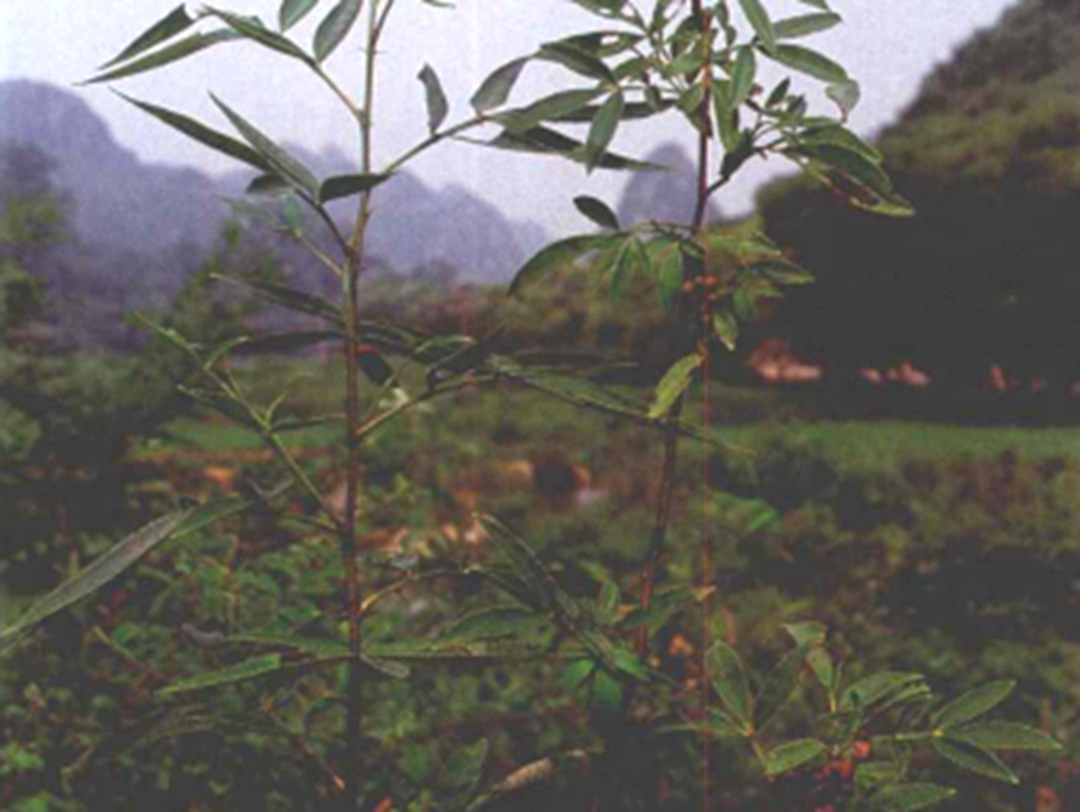
Sou Shanhu
Sou Shan Hu is the name of a traditional Chinese medicinal herb. It is the root of Zanthoxylum austrosinense Huang, a plant in the Rutaceae family. It has the effects of dispelling wind and relieving exterior symptoms, regulating qi and promoting blood circulation, and reducing swelling and relieving pain. It is primarily used to treat wind-cold colds, rheumatic arthralgia, stomach pain due to qi stagnation, toothache, swelling and pain from falls or blows, fractures, and venomous snake bites.
Chinese Name : 搜山虎
Nature, Flavor & Meridian Tropism : Pungent in taste, warm in nature; enters the Lung, Stomach, and Liver meridians
Benefits & Efficacy
Benefits
Dispels wind and relieves exterior syndromes; promotes the flow of qi and activates blood circulation; reduces swelling and relieves pain.
Indications
Wind-cold common cold, rheumatic arthralgia, stomach pain due to qi stagnation, toothache, swelling and pain from trauma, fractures, and venomous snake bites.
Usage and Dosage
Internal use: Decocted as a soup, 2–6 g, or steeped in wine. External use: Apply an appropriate amount by rubbing with wine-soaked herb, or apply a paste made by mixing the powdered herb with wine.
Relevant Discussions
*Selected Compendium of Guangxi Materia Medica*: “Dispels wind and relieves exterior symptoms; disperses blood stasis and reduces swelling; regulates qi and alleviates pain. Primarily used to treat wind-cold colds, stomach pain, rheumatic arthralgia, trauma-induced swelling and pain, fractures, toothache from dental caries, and venomous snake bites.”
Applications
Related Compatibility
1. For wind-cold common cold and stomach pain: 3–6 g of Sou Shanhu root. Decoct in water and take orally. (*Compendium of Chinese Herbal Medicines*)
2. For wind-cold common cold: 6 g of Sou Shanhu, 15 g of Artemisia annua, and 10 g of Perilla frutescens. Decoct in water and take orally.
3. For rheumatic arthralgia: 15 g of Sou Shanhu, 10 g each of Liufangteng, Hei Laohu root, and Jixueteng. Steep in 500 g of alcohol for 7 days before consumption. Take 15–30 g twice daily, and apply the medicinal wine externally. (Recipes 2–3 are from *Color Atlas of Chinese Folk Medicinal Herbs*)
4. For toothache caused by dental caries: 1.5–3 g of Sou Shan Hu root. Decoct in water and drink. Alternatively, steep in 500 g of wine; after 7 days, apply the medicinal wine by soaking a cotton ball in it and placing it on the affected tooth.
5. For venomous snake bites: Steep Sou Shan Hu root in 500 g of wine; apply the medicinal wine to the area around the wound. (Recipes 4–5 are from *Selected Compendium of Guangxi Materia Medica* by Bai)
Processing & Preparation
Harvesting & Processing
It can be harvested year-round. Dig up the roots, wash them thoroughly, slice them, and sun-dry them.
Crude Drug Identification
Properties of Crude Drugs
The root is cylindrical, slightly curved, with a few branches, and has a diameter of 0.5–2.3 cm. The surface is deep yellow-brown to dark brown, with fine longitudinal striations; the lenticels are nearly circular or elliptical and protrude transversely. The texture is hard; the fracture surface is fibrous; the cross-section shows a thin, dark brown cork layer and a pale brown phloem. It has a slightly bitter taste.
Botanical Information
Botanical Classification
Rhododendron lingnanense, genus Rhododendron, family Rutaceae.
Morphological Characteristics
A shrub, 2–6 m tall. The entire plant is glabrous. Young branches are dark brown or purplish-brown, bearing spines 3–8 mm long with flattened bases. The leaves are odd-pinnate, alternate, and 15–30 cm long including the petiole; the rachis and petioles are rounded and sparsely covered with downward-curving spines; petioles are 2–6 cm long;the petiole of the terminal leaflet is about 1.5 cm long; the other leaflets are sessile; there are 7–11 leaflets, ovate or lanceolate, 6–8 cm long and 2–2.5 cm wide, gradually becoming smaller from top to bottom, with an acuminate and emarginate apex, a rounded base that is sometimes slightly cordate and slightly oblique, and distinctly serrated margins; coarse glandular dots are present in the inter-tooth spaces and throughout the leaf blade; the upper surface is dark green,the underside pale green with a grayish-white tinge; the midrib bears very short spines on the underside; papery. Cymose panicles, terminal and axillary, approximately 4 cm long and 8 cm wide when fruiting, glabrous. Capsules purplish-brown, approximately 6 mm long; fruit stalks more than 1 cm long, bearing minute glandular dots.Mature carpels number 1–3; the mericarps are sessile, bearing coarse glandular dots, and have a nearly rounded apex. Seeds are ovoid, 4–5 mm in diameter, and glossy black. Flowering occurs in March, and fruiting in May.
Distribution Area
It is distributed in Zhejiang, Jiangxi, Hunan, Guangdong, Guangxi, and other regions.