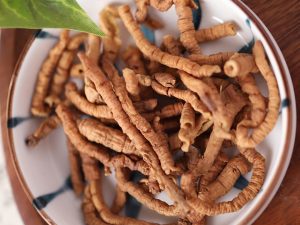
Pottsia is a traditional Chinese medicinal herb derived from the roots of Pottsia laxiflora (Blume) O.K. Tünze, a plant in the Apocynaceae family. It is named “Pottsia” because its fruits are long and slender, numerous, and hang down like a door curtain.Traditional medicine considers it to have a bitter and pungent taste and a slightly warm nature; it enters the Liver and Kidney meridians and is effective in dispelling wind and dampness, as well as promoting blood circulation and unblocking the meridians. It is commonly used to treat rheumatic pain, trauma, and amenorrhea in women.

Pottsia
Pottsia is a traditional Chinese medicinal herb derived from the roots of Pottsia laxiflora (Blume) O.K. Tünze, a plant in the Apocynaceae family. It is named “Pottsia” because its fruits are long and slender, numerous, and hang down like a door curtain.Traditional medicine considers it to have a bitter and pungent taste and a slightly warm nature; it enters the Liver and Kidney meridians and is effective in dispelling wind and dampness, as well as promoting blood circulation and unblocking the meridians. It is commonly used to treat rheumatic pain, trauma, and amenorrhea in women.
Chinese Name : 帘子藤
Aliases : Hua Guai Teng, Yaogu Teng, Changjiao Jiao Teng
Nature, Flavor & Meridian Tropism : Taste: bitter and pungent; nature: slightly warm. Entering the Liver and Kidney meridians
Benefits & Efficacy
Benefits
Dispels wind and dampness; promotes blood circulation and unblocks the meridians.
Indications
Rheumatic arthralgia, trauma, and amenorrhea in women.
Usage and Dosage
Internal use: Decoct 9–15 g (or 90–120 g of fresh material); or steep in wine.
Precautions
1. Patients requiring treatment with traditional Chinese medicine should first consult a licensed TCM hospital, where a TCM practitioner will conduct a professional pattern differentiation and issue a prescription. 2. If you need to take other medications concurrently during treatment, consult your doctor or pharmacist first. Do not take any medications on your own to avoid drug interactions that may reduce efficacy or increase the risk of adverse reactions. 3. Pregnant women, women planning to become pregnant, and breastfeeding women must proactively inform their doctor of their physiological status (such as stage of pregnancy or breastfeeding status) before taking this medication, so that the doctor can assess the safety and suitability of the medication based on individual circumstances.
Applications
Notes
References for this entry: 1. National Compendium of Chinese Herbal Medicines. 2. Zhou Lida. Color Atlas of Quanzhou Materia Medica. 2018. 3. Hui Yongzheng. Encyclopedia of Natural Products in Traditional Chinese Medicine, Vol. 11, Part II: Chinese Medicinal Herbs. 2011. 4. Cai Guangxian. *Hunan Materia Medica* · 4. 2005. 5. Wang Shaojun, Wu Chuang, Zhao Gan. *Study on the Chemical Constituents of the Stems of Lianziteng*. *Chinese Materia Medica*.
Processing & Preparation
Harvesting & Processing
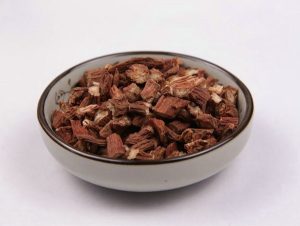
Can be harvested year-round; wash, slice, and sun-dry, or use fresh.
Crude Drug Identification
Botanical Information
Botanical Classification
Lianziteng, a plant of the genus Lianziteng in the Apocynaceae family.
Morphological Characteristics
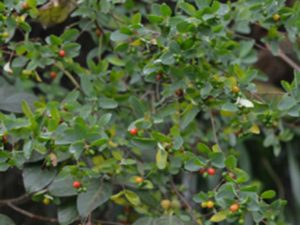
An evergreen climbing shrub, growing up to 9 meters in length. The entire plant contains latex.
1. Stems: Stems are slender and smooth; young branches are covered with fine hairs.
2. Leaves: Leaves are opposite; petioles are 1.5–4 cm long; leaf blades are thin and papery, ovate or ovate-oblong, 6–12 cm long, and 3–7 cm wide.
3. Flowers: Axillary and terminal racemose corymbs, 8–25 cm long, with numerous flowers; calyx short, lobes broadly ovate, short pubescent on the outside, with glands on the inside;corolla purplish-red or pink, with 5 lobes; stamens attached at the throat of the corolla tube, filaments covered with long soft hairs, anthers arrow-shaped with auricles at the base; ovary covered with long soft hairs, composed of 2 free carpels, style thickened in the middle, stigma conical; disk annular, 5-lobed. Flowering period: April–August.
4. Capsules: The capsules are paired, linear-oblong, slender and long, pendulous, up to 40 cm long, with a thin exocarp. Fruiting period: August–October.
5. Seeds: The seeds are linear-oblong, 1.5–2 cm long, 1.5 mm in diameter, with white, silky seed hairs at the apex; the seed hairs are 2–2.5 cm long.
Distribution Area
It is primarily distributed in Guizhou, Yunnan, Guangxi, Guangdong, Hunan, Jiangxi, and Fujian.