Search for Herbal Teas Recipes by Symptom:

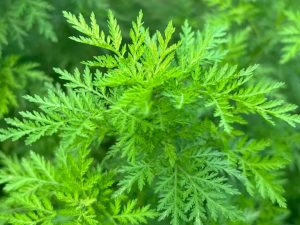
Artemisia

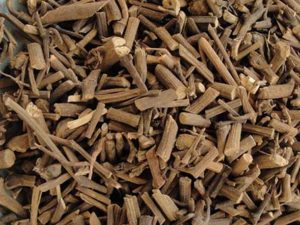
Artemisia, a name in traditional Chinese medicine, refers to the dried aerial parts of Artemisia annua L., a plant of the genus Artemisia in the Asteraceae family. This herb has the effects of clearing deficient heat, eliminating bone-consuming fever, relieving summer heat, arresting malaria, and reducing jaundice. It is primarily used to treat yin deficiency caused by warm pathogens (manifesting as fever at night and coolness in the morning), yin deficiency fever, bone-consuming fever, summer-heat-induced fever, malaria with alternating chills and fever, and damp-heat jaundice.

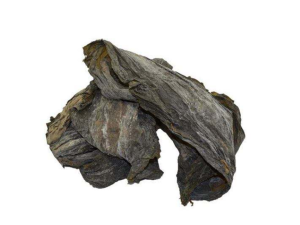
Kelp

Kelp, a name in traditional Chinese medicine. It refers to the dried thallus of Laminaria japonica Aresch., a plant in the Laminariaceae family. It has the effects of resolving phlegm, softening hardened masses, promoting diuresis, and reducing swelling. It is primarily used to treat goiters, scrofula, testicular swelling and pain, and edema caused by phlegm and fluid retention.

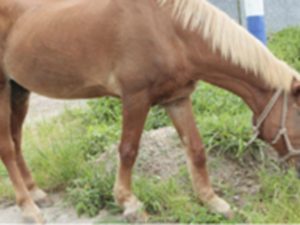
Horse Mane

Horse Mane, a name in traditional Chinese medicine. It refers to the mane or tail hair of the horse (Equus caballus orientalis Noack) of the Equidae family. Horses are raised throughout the country. It has the effects of stopping bleeding and leukorrhea, as well as detoxifying and promoting wound healing. It is commonly used for menorrhagia, leukorrhea, and boils.

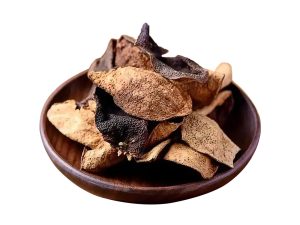
Sea Wind Vine

Sea Wind Vine is a commonly used herb for dispelling wind, cold, and dampness. It consists of the dried vine stems of Piper kadsura (Choisy) Ohwi, a plant in the Piperaceae family. It is effective in dispelling wind and dampness, unblocking meridians, and relieving arthralgia. It is frequently used to treat arthralgia caused by wind, cold, and dampness; pain in the limbs and joints; stiffness of tendons and meridians; difficulty in flexing and extending joints; trauma; and localized swelling and pain.

Femoral Nerve Palsy: Causes, Symptoms, and Acupuncture Treatment

Femoral nerve palsy is a clinical syndrome caused by various factors, resulting in muscle paralysis and functional decline within the distribution of the femoral nerve. The femoral nerve originates from L2–L4, runs obliquely downward and laterally between the psoas major and iliacus muscles, then crosses anteriorly over the psoas major near the inguinal ligament, lying … Read more
Obturator Nerve Injury: Acupuncture Points and Treatment Options

Obturator nerve injury is a clinical condition characterized by weakness of thigh adduction and limited foot abduction, among other symptoms, caused by damage, compression, or irritation of the obturator nerve from various etiologies. The obturator nerve is formed by spinal nerves L2 and L3. It innervates the obturator externus muscle, which functions in lateral rotation … Read more

Meralgia Paresthetica: Symptoms, Exercises, and Acupuncture Treatment

Lateral Femoral Cutaneous Neuritis, also known as Meralgia Paresthetica Syndrome. The lateral femoral cutaneous nerve originates from the posterior root of the L2–L3 spinal nerves. It courses along the iliac crest, the lateral border of the psoas major muscle, beneath the iliac fascia, passing anterior to the anterior superior iliac spine and the inguinal ligament. … Read more

Acupuncture for Superior Cluneal Nerve Injury: Diagnosis & Treatment

Superior cluneal nerve injury is a clinically common pain syndrome of the upper buttock. The superior gluteal nerve is the lateral cutaneous branch of the posterior rami of the 1st to 3rd lumbar nerves. It exits from the lateral border of the erector spinae muscle, pierces the thoracolumbar fascia together with the superior gluteal artery, … Read more

Acupuncture Treatment for Radial Nerve Palsy and Wrist Drop Recovery

Radial nerve palsy is a relatively common neurological condition in clinical practice. Its main symptom is paralysis of the forearm extensor muscles, resulting in an inability to extend the wrist joint and presenting a typical “wrist drop” sign. The radial nerve is primarily composed of motor nerve fibers; it originates from the C5 to C8 … Read more

Ulnar Nerve Palsy: Causes, Symptoms, and Acupuncture Treatment

Ulnar nerve palsy is a syndrome of muscle paralysis in the distribution of the ulnar nerve, caused by various factors that injure or compress the ulnar nerve. The ulnar nerve is a mixed nerve composed of motor, sensory, and autonomic nerve fibers. It originates from the C8 and T1 spinal cord segments and gives rise … Read more

Median Nerve Palsy: Causes, Symptoms, and Acupuncture Treatment

Median nerve palsy is a condition caused by injury or compression of the median nerve due to various reasons, leading to motor and sensory dysfunction within the area innervated by the median nerve. The median nerve contains motor, sensory, and autonomic nerve fibers. It originates from the spinal cord at cervical levels 6 to 8 … Read more

Axillary Nerve Palsy: Causes, Symptoms, and Acupuncture Treatment

Axillary nerve paralysis is a clinical syndrome resulting from injury or compression of the axillary nerve due to various causes, leading to paralysis of the muscles and cutaneous nerves within its innervation territory. The axillary nerve arises from the distal portion of the posterior cord of the brachial plexus, originating from spinal nerves C5–C6. It … Read more

Long Thoracic Nerve Palsy: Causes, Symptoms, and Acupuncture Treatment

Long thoracic nerve palsy is a syndrome characterized by paralysis of the muscles within the distribution of the long thoracic nerve, caused by various factors that result in injury or compression of the nerve. The long thoracic nerve originates from the anterior rami of C5–C6 and a portion of C7. In the neck, it runs … Read more

Acupuncture for Occipital Neuralgia: Causes, Symptoms, and Relief

Occipital neuralgia is a general term for pain involving the greater occipital nerve, lesser occipital nerve, and great auricular nerve. Greater Occipital Nerve It is the main branch of the second cervical nerve (C2), arising from the posterior ramus of C2. It emerges between the posterior arch of the atlas (C1), exits at the posterior … Read more