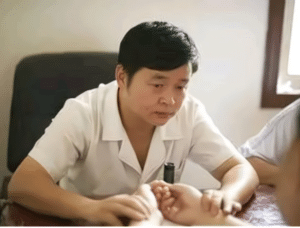
In Traditional Chinese Medicine, “deficiency syndrome” refers to a category of symptoms characterized by an insufficiency of the body’s vital energy and a decline in the functions of the internal organs. It is primarily divided into four basic types: qi deficiency, blood deficiency, yin deficiency, and yang deficiency.
The Four Types of Deficiency Syndromes and Their Typical Manifestations
Qi Deficiency: Deficiency of original qi, leading to diminished organ function.
Typical manifestations: Mental and physical fatigue, shortness of breath and reluctance to speak, a soft, weak voice, increased sweating after physical activity, and a pale complexion.
Simple identification: Like a “machine running on low power”—it stalls after a few revolutions, is prone to colds, and recovers more slowly than others.
Blood Deficiency: Insufficient blood, unable to nourish the organs and meridians.
Typical Symptoms: Pale or sallow complexion, pale lips and nails, dizziness and blurred vision, palpitations and insomnia, numbness in the hands and feet, and scanty menstrual flow in women.
Simple Identification: Like a “warehouse running low on grain”; a poor complexion is the core characteristic, and standing up from a squatting position causes temporary blackouts.
Yin Deficiency: Deficiency of yin fluids in the body, leading to the generation of internal heat.
Typical symptoms: Heat in the palms, soles, and chest; night sweats (night sweats); dry mouth and throat; redness on the cheekbones; soreness and weakness in the lower back and knees; red tongue with little coating.
Simple identification: Like a “potted plant lacking water”—wilted yet dry, feeling thirsty no matter how much water is consumed.
Yang Deficiency: Deficiency of yang qi, leading to a decline in its warming function and the generation of internal cold.
Typical symptoms: Sensitivity to cold, cold hands and feet, listlessness, pale complexion, clear and copious urine, loose stools, and a pale, swollen tongue with tooth marks.
Simple way to tell: Like a “room with broken heating”—you feel cold all over, and eating cold foods gives you diarrhea.
The Story of the Ox Cart
One summer, I returned to my hometown. My father was preparing to drive the ox to town to mill the rice. Seeing his graying hair, I was worried about him driving the cart up and down the hills alone, so I accompanied him on the trip. In the afternoon, after the rice was milled, we leisurely drove the ox cart back home. The journey home took us over several steep hills. By the time we reached the last few, the ox refused to move; no matter how much I cracked the whip, it would only take a few steps before stopping to rest.
“Is the ox getting too old to pull the cart anymore?” I wondered aloud.
“It’s still capable of doing this work! It’s just that it didn’t eat any grass this morning, so it’s run out of energy now. There’s no use whipping it anymore. Let’s just take a break. I’ll have a cigarette, and let it graze by the roadside. We can continue on later!” My father stopped the cart.
We chatted while watching the ox eat the grass in big mouthfuls.
My father was right. Half an hour later, when we drove the ox again, it had indeed regained its strength and pulled the cart faster.
“The reason the ox couldn’t pull the cart was because it hadn’t eaten any grass!”
I. Constipation Caused by Deficiency of Qi and Blood in the Intestines
Back home, word spread in the village that I had returned to my hometown, and patients immediately began coming to seek treatment.
This was a patient with chronic constipation. Looking at her medical record, I saw she had taken quite a few medications in the past—including Chinese herbal formulas based on Ma Ren Wan with modifications, Zeng Ye Tang with modifications, and even senna leaves steeped directly in hot water as tea…
She said painfully, “At first, all these methods worked, but gradually they stopped being effective. Now I barely have a bowel movement once a week, and when I do, the stool is very dry. I often have a dry mouth and a sensation of internal heat, and I’m always craving something cold to drink. My feet are ice-cold in winter, and I have lower abdominal pain during my period. Last month, I saw an elderly TCM doctor in town who said I had an excess of cold energy in my body. I took five doses of his prescription; although the menstrual pain went away, my bowel movements are still irregular, and my abdomen is constantly bloated!”
I examined her tongue coating and found the root of her tongue was white! Her pulse was deep, slow, and rough at the right shu position, and stagnant at the left guan position.
Based on the pulse and tongue findings, the patient indeed presented with kidney yang deficiency, liver blood deficiency, and liver qi stagnation transforming into fire—but what was the cause of the constipation?
I pondered this while reviewing her medical records.
In the distance, my father was feeding hay to the ox. Watching the old yellow ox happily munching on the hay, I recalled how it had refused to pull the cart that afternoon no matter how much I whipped it, and suddenly, it all made sense to me.
Her liver qi was stagnant; this stagnation transformed into fire, and the heat disturbed her chest and diaphragm, leading to a sensation of heat and restlessness in the chest. Consequently, she craved cool and cold drinks. Over time, this naturally resulted in accumulated cold in the intestines, which simultaneously damaged her kidney yang. Since cold has a contracting nature, the circulation of blood in the intestines was disrupted, depriving them of nourishment. Naturally, peristalsis became weak—just like the old yellow ox at home: unable to eat grass, it naturally lacked the strength to pull the cart. Using laxatives like rhubarb and senna to relieve constipation is like whipping a starving ox—no matter how hard you whip it, the starving ox simply won’t have the strength to pull the cart!
Once I understood this, I took another look at the prescription from the town’s veteran TCM doctor, which focused on warming and tonifying the spleen and kidneys while moistening the intestines to relieve constipation. It was a sound approach, so I modified the original formula by adding Gardenia, light fermented soybeans, Cyperus, Notoginseng, Red Peony Root, Red Vine, and Peach Kernel.
A month later, someone from my hometown called to tell me that the patient’s constipation had been completely cured—the results were excellent! That single experience of driving an ox-drawn cart taught me a very important lesson!
II. Cleansing, Tonifying, Moistening, and Promoting: Four Strategies for Relieving Constipation
After this experience with the ox-drawn cart, whenever I encounter patients with intractable constipation, I like to combine herbs that promote blood circulation and dispel blood stasis. Only when the blood vessels lining the intestinal walls are unobstructed—and the intestines are well-nourished—do they have the strength to peristalt, allowing stool to move through the intestines in a timely manner and preventing constipation.
Let’s look at a typical case. The patient, Mr. Luo, a 70-year-old man, had suffered from dry, hard stools for over five years.
For the past five years, he had suffered from chronic dry, hard stools, often defecating only once a week. He had lost weight and experienced headaches, red eyes, insomnia with vivid dreams, though his appetite remained normal. His pulse and tongue findings were abnormal: a fissured tongue, a peeling coating, and a stagnant, sluggish pulse in all six positions. Although his blood lipid levels and blood viscosity were normal, his blood pressure was elevated, reaching 170/95 mmHg. He regularly took four or five types of antihypertensive medications, yet his blood pressure remained difficult to control, and the hospital had repeatedly recommended hospitalization.
Judging from his pulse, there is significant stagnation of qi and blood. This type of pulse is commonly seen in patients with high blood viscosity; however, he had previously undergone multiple lipid and blood viscosity tests due to his hypertension, all of which were normal. Combined with his constipation, this indicates obstruction of the viscera’s qi and stagnation of the body’s qi mechanism. Stagnant qi leads to blood stasis, which impedes blood circulation and further exacerbates intestinal constipation. His elevated blood pressure, headaches, and insomnia were all caused by stagnation of qi and blood, which transformed into internal heat.
I therefore adopted a treatment approach focused on nourishing yin and moistening dryness, regulating qi and invigorating blood, and softening hard masses to promote bowel movements. The prescription was as follows: Scrophularia root, Ophiopogon tuber, fire hemp seed, Salvia root, red vine, Wood fragrant, raw rhubarb, mirabilite, and raw licorice root.
After taking three doses, the patient had two bowel movements daily, with soft, voluminous stools; he reported never having had such comfortable bowel movements before. His headaches and insomnia also improved significantly, and his blood pressure had dropped to 150/85 mmHg.
At the follow-up visit, Natrii Sulfas was removed and Codonopsis Radix was added to the prescription. The patient continued taking the medication, with subsequent prescriptions undergoing slight adjustments. After taking more than 20 doses, the constipation was completely resolved, and blood pressure returned to normal.
Anyone who has ever cleaned a pig’s large intestine knows that it has many folds. In patients with chronic constipation, fecal matter accumulates in these folds; in some cases, the buildup is so significant that it forms pockets, which can be mistaken for tumors during an ultrasound examination. When this fecal matter accumulates in the body over a long period, it severely impairs intestinal transit function. Furthermore, toxins are absorbed by the body, causing turbid qi to stagnate and clear qi to fail to rise. In addition to dry, hard stools, patients may experience mental fogginess, facial spots, a sallow complexion, and dark purple lips, among other symptoms.
For the treatment of chronic constipation, restoring intestinal peristalsis is key—in other words, ensuring the intestines are “well-fed” and have the strength to function properly. The prerequisite for restoring intestinal peristalsis is thoroughly clearing out the old, stagnant feces that have accumulated in the intestines—much like giving your home a thorough cleaning—to make the intestinal walls smooth. At the same time, taking laxatives will allow fecal residue to move smoothly through the intestines. By also taking herbs that tonify qi and promote blood circulation, the strength of intestinal peristalsis will gradually recover.
In the previous case, the purpose of using Natrii Sulfas was to soften hardened masses and disperse stagnation, thereby promoting the elimination of accumulated fecal matter in the intestines. After three to five days of supports, once this accumulated stool has been expelled, there is no longer a need to use this herb.
Danshen and Hongteng can invigorate blood circulation and unblock the meridians, improving blood flow in the intestines and providing energy to the gut—in layman’s terms, they ensure the intestines are “well-fed” and have the strength to function properly.
Mu Xiang regulates qi and invigorates the spleen; when qi flows, blood flows. Once the intestines are unblocked, blood circulation follows suit.
Xuan Shen and Mai Dong nourish yin and moisten dryness, replenishing moisture in the intestines. This prevents stools from becoming too dry and facilitates their passage.
The primary benefit of Huoma Ren is to lubricate the intestines. Rich in oils, it keeps the intestinal walls smooth, which also aids in the passage of stools.
Raw rhubarb stimulates the intestines and promotes peristalsis. It’s just like the story told at the beginning of this chapter: raw rhubarb is like the whip used to drive an ox. When the ox is full, a few well-placed cracks of the whip will make it run faster.
Cleanse the intestines and keep them unobstructed;
Replenish qi and blood to provide energy;
Increase fluid intake to maintain moisture;
Give a few cracks of the whip to stimulate peristalsis.
By addressing these four aspects, most cases of chronic constipation can be cured. However, one point warrants consideration: why do patients experience blockages in the blood vessels of the intestines and intestinal dryness? What are the underlying causes?
Understanding this question deepens one’s comprehension of constipation.
In patients with kidney yang deficiency, the intestines are cold, and the blood vessels in the intestinal walls are often constricted; sometimes even the intestines themselves are contracted, and in severe cases, intestinal spasms may occur. When intestinal blood vessels are chronically constricted due to cold, the intestines naturally become deficient in qi and blood, resulting in weak peristalsis. The ancient formula Banliu Pills is effective in treating cold-induced constipation precisely because of this principle. Therefore, for patients with spleen and kidney yang deficiency accompanied by constipation, after comprehensively considering the four factors discussed earlier, combining the use of warming and tonifying herbs for the spleen and kidney (such as taking Fuzili Zhong Pills before meals) to dispel cold pathogens from the intestines often yields excellent results.
In patients with severe lung fire, lung heat transfers to the large intestine, resulting in a predominance of fire pathogens in the gut. These fire pathogens scorch and deplete the intestinal fluids, causing stools to become dry and hard like sheep droppings, which naturally cannot be passed through the body. When treating such cases, in addition to considering the four aspects mentioned earlier, it is necessary to combine the use of herbs that clear lung fire—such as mulberry leaf and Scutellaria baicalensis—to achieve better therapeutic results.
III. Deficiency of Qi and Blood in the Head: Treated with Tongmai Oral Solution
Insufficient qi and blood in the intestines can lead to constipation; the same principle applies to other internal organs in the body. By applying this logic to other situations, we can understand many other principles.
If the brain lacks qi and blood, it can cause dizziness, drowsiness, and frequent yawning during the day.
If the ears lack qi and blood, it can cause tinnitus.
If the heart lacks qi and blood, it leads to chest tightness, palpitations, and chest pain.
If the limbs lack qi and blood, it results in weakness in the limbs.
These all follow the same principle. As long as we reflect a little more deeply on the “story of pulling a ox-cart,” the treatment methods for the aforementioned conditions will become very clear.
A lack of qi and blood in the brain may sound a bit strange; Western medicine typically refers to ischemia and hypoxia, without mentioning a lack of blood and qi. In fact, this encompasses two aspects: on the one hand, cerebral ischemia—which naturally leads to hypoxia; on the other hand, a lack of qi—specifically, a deficiency of meridian qi and yang qi!
In patients with cerebral ischemia, abnormalities in intracranial blood vessels—such as stenosis or vasospasm—often occur; In patients with qi deficiency, intracranial vascular examinations often reveal no abnormalities, but they typically present with symptoms of neck muscle stiffness. This is because all the body’s yang meridians pass through the neck on their way up to the head. Stiff neck muscles obstruct the flow of meridians, preventing yang qi from gathering in the head. When clear yang fails to rise, the person feels drowsy and lethargic.
For dizziness and headaches caused by cerebral ischemia, Tongmai Oral Solution can be used for treatment. This medication, composed of Salvia miltiorrhiza, Ligusticum chuanxiong, and Pueraria root, promotes blood circulation and unblocks meridians. It has shown remarkable efficacy in treating ischemic cardiovascular and cerebrovascular diseases, such as atherosclerosis, cerebral thrombosis, cerebral ischemia, coronary heart disease, and angina pectoris.
The kudzu root in this formula, with its long vines, penetrates the body’s twelve meridians and helps relieve stiffness in the neck muscles; Salvia miltiorrhiza, with its red color that enters the Heart meridian, nourishes and invigorates the blood, clears the heart, relieves restlessness, and calms the mind, making it particularly effective for spasms or obstructions in the cardiovascular and cerebrovascular systems; Chuanxiong (Ligusticum) regulates qi and promotes blood circulation, moving the qi within the blood; it is highly effective for headaches and dizziness caused by qi stagnation and blood stasis. Although the formula consists of only three herbs, it is specifically designed to address deficiencies of qi and blood in the brain, making it highly targeted and remarkably effective.
IV. Deficiency of Qi and Blood in the Ears Leading to Tinnitus
A deficiency of qi and blood in the ears can result in tinnitus or hearing loss. Many enthusiasts of Traditional Chinese Medicine, upon reading in medical texts that “the kidneys open their orifices to the ears,” tend to first attribute tinnitus to kidney deficiency and upward surging of deficient fire. In reality, not all cases of tinnitus are caused by kidney deficiency.
Every disease is categorized as either “deficiency” or “excess,” and tinnitus is no exception. Tinnitus can result from fire surging upward; it can also arise when insufficient yang qi fails to nourish the ear orifices.
In *Yilin Gaicuo* (Corrections to Medical Classics), there is a formula called Tongqi San, which is a renowned prescription for treating this type of tinnitus. Composed of Bupleurum, Cyperus, and Ligusticum, Tongqi San works by regulating the liver and harmonizing qi to improve the circulation of qi and blood in the ear orifices, thereby promoting their nourishment with blood. It is remarkably effective in treating deafness characterized by an inability to hear thunder.
The patient, Mr. Liu, a 40-year-old man, had been experiencing recurrent tinnitus in his right ear for three months, with symptoms worsening over the past week.
The patient reported that one morning three months ago, after staying up late, he woke up to sudden tinnitus—a sound resembling the chirping of summer cicadas that persisted day and night. He immediately sought treatment at a local hospital, where the doctor prescribed vasodilators and nerve-nourishing medications. After a month of hospitalization, his condition improved but was not completely cured. He later took Chinese herbal medicine for a month, during which his condition fluctuated; it would flare up and worsen whenever he became emotionally agitated. A week ago, after drinking alcohol once, his condition worsened again, and upon a friend’s recommendation, he came to see me for treatment.
Upon arrival, he was irritable and restless, accompanied by dizziness, insomnia, and vivid dreams. His tongue showed tooth marks and reddened edges. Pulse diagnosis revealed: the left cun pulse was deep, fine, and rapid, extending upward to the fish-inter; the left guan pulse was stagnant and blocked; the left chi pulse was fine and soft; the right cun pulse was floating and slippery. Overall, the pulse pattern indicated a tendency for qi to rise excessively on the right side and stagnation in the middle jiao on the left.
Based on this analysis, the patient works in sales and typically experiences high stress and work-related setbacks. This has led to stagnation of liver and gallbladder qi, preventing the body’s yang qi from ascending from the left side via the liver to reach the head. Since the head is the gathering place of clear yang, the failure of clear yang to rise causes his dizziness; stagnant liver qi transforms into fire, depriving the heart of its blood nourishment, resulting in restlessness and insomnia; With the clear yang failing to rise on the left and the turbid yin failing to descend on the right, deficient fire rises from the right side and attacks the brain, resulting in tinnitus on the right side. In treating these issues, the primary therapeutic approach should be to lift the clear and lower the turbid.
I prescribed one dose of herbal medicine. After the patient took three doses, the tinnitus disappeared; he continued taking three more doses to consolidate the therapeutic effect. After this patient was cured, he referred his younger sister to me for treatment—she also suffered from tinnitus. Following the same therapeutic approach, her symptoms improved after just one dose, and she was completely cured after three doses. Since then, I have treated nearly ten cases of tinnitus using this approach, with excellent results.
Since tinnitus is caused by damp-heat in the Liver Meridian, patients often experience tinnitus in the left ear, frequently accompanied by a bitter taste in the mouth and left-sided migraines; Longdan Xiegan Decoction can cure this condition. For tinnitus that fluctuates in severity and is accompanied by soreness and weakness in the lower back and knees, formulas such as Erlong Zuoci Pills, Liuwei Dihuang Pills, or Zhibai Dihuang Pills may be used; For tinnitus that sounds like the roar of the tide, accompanied by heaviness in the lower limbs and dizziness, Yiwei Zexie Decoction is effective; sudden-onset tinnitus accompanied by headache, red eyes, and a swollen, sore throat is often due to wind-heat ascending, and can be treated by dispelling wind and clearing heat; there are various other scenarios, too numerous to list in detail, In short, treatment should be tailored to the specific symptoms encountered in clinical practice. However, one principle remains consistent: based on pattern differentiation, incorporate the “Tongqi San” formula into the prescription, as this yields faster results.
The application of Tongqi San follows the same principle as the story of pulling an ox cart: when the body’s clear yang fails to rise and the ear orifices lack sufficient qi and blood, tinnitus and deafness naturally occur. Only by replenishing the qi and blood in the ear orifices can tinnitus and deafness be rapidly cured.
There are many other diseases that share this principle with the ox-cart story. Generally speaking, any condition characterized by “dysfunction” can be treated using this line of reasoning. This also illustrates, from another perspective, the practical clinical value of the principle “tonify what is deficient.”
Experiencing Traditional Chinese Medicine (TCM) theories through everyday life and deepening one’s understanding of them is the surest way to learn TCM. Below, let’s learn about and gain insight into TCM through another story—the story of eating dumplings!