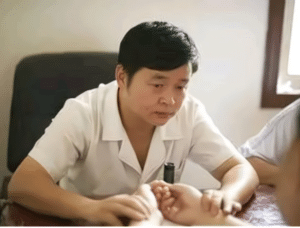
In Traditional Chinese Medicine, “deficiency syndrome” refers to a category of symptoms characterized by an insufficiency of the body’s vital energy and a decline in the functions of the internal organs. It is primarily divided into four basic types: qi deficiency, blood deficiency, yin deficiency, and yang deficiency.
The Four Types of Deficiency Syndromes and Their Typical Manifestations
Qi Deficiency: Deficiency of original qi, leading to diminished organ function.
Typical manifestations: Mental and physical fatigue, shortness of breath and reluctance to speak, a soft, weak voice, increased sweating after physical activity, and a pale complexion.
Simple identification: Like a “machine running on low power”—it stalls after a few revolutions, is prone to colds, and recovers more slowly than others.
Blood Deficiency: Insufficient blood, unable to nourish the organs and meridians.
Typical Symptoms: Pale or sallow complexion, pale lips and nails, dizziness and blurred vision, palpitations and insomnia, numbness in the hands and feet, and scanty menstrual flow in women.
Simple Identification: Like a “warehouse running low on grain”; a poor complexion is the core characteristic, and standing up from a squatting position causes temporary blackouts.
Yin Deficiency: Deficiency of yin fluids in the body, leading to the generation of internal heat.
Typical symptoms: Heat in the palms, soles, and chest; night sweats (night sweats); dry mouth and throat; redness on the cheekbones; soreness and weakness in the lower back and knees; red tongue with little coating.
Simple identification: Like a “potted plant lacking water”—wilted yet dry, feeling thirsty no matter how much water is consumed.
Yang Deficiency: Deficiency of yang qi, leading to a decline in its warming function and the generation of internal cold.
Typical symptoms: Sensitivity to cold, cold hands and feet, listlessness, pale complexion, clear and copious urine, loose stools, and a pale, swollen tongue with tooth marks.
Simple way to tell: Like a “room with broken heating”—you feel cold all over, and eating cold foods gives you diarrhea.
The Story of the Oil Lamp
There is a saying in Traditional Chinese Medicine theory: “The body is yin, but its functions are yang.” It is not easy to fully grasp the meaning of this phrase. When I first encountered it, I was reminded of my experience using an oil lamp in middle school.
In my third year of middle school, I had to live in the dormitory and attend evening study sessions every day. Back then, the school didn’t have electricity, so we relied on oil lamps for lighting. Students from wealthier families would buy candles and light them every night while studying. Students from less affluent families used kerosene lamps—though these weren’t store-bought; we made them ourselves.
Making a kerosene lamp was simple: find an empty ink bottle, wash it thoroughly, and let it air dry. Use a pencil sharpener to cut a hole in the cap—about the thickness of a pencil—then find an empty toothpaste tube (back then, toothpaste tubes were made of aluminum foil). Unfold the tube, roll it into a cylinder, and insert it into the hole in the ink bottle cap. Thread two old sneaker laces through the cylinder to serve as the wick, and your makeshift kerosene lamp is ready. To use it, pour kerosene into the bottle and light it. Although kerosene releases a lot of black smoke when it burns, the flame is still very bright. Dozens of these simple kerosene lamps illuminated the entire classroom. A group of young, inexperienced teenagers would read aloud in this classroom filled with black smoke—the conditions were very rudimentary, but it felt very warm and cozy.
I. Treatment for Insufficient Heart Blood
Many years later, when I was in college studying the fundamentals of Traditional Chinese Medicine, whenever the lectures touched on the heart governing the blood vessels—that the heart belongs to the Fire element, is Yin in nature but Yang in function—the first thing that came to mind was a model of the heart. It was just like the kerosene lamp from my junior high school days: the lamp was filled with kerosene, and the light was produced by the burning of that kerosene; The heart governs blood; yin blood flows within it, yet this yin blood enables the heart to generate heart fire and transform it into yang energy.
If a kerosene lamp runs out of oil, it cannot be lit; similarly, if heart blood is deficient, heart fire will weaken, leading to symptoms such as palpitations, dizziness, a lackluster complexion, pale lips and nails, a pale tongue, and a thin, weak pulse. An electrocardiogram (ECG) in such individuals would reveal arrhythmia.
Just as we know to refill an oil lamp when it runs out of oil so that it can continue to burn, similarly, when heart blood is deficient and the aforementioned symptoms arise, we should tonify the heart blood.
When cardiac blood deficiency leads to arrhythmia, it is necessary to nourish the blood and the heart, as well as tonify qi and calm the spirit. Clinically, Gui Pi Tang is commonly used; its formula consists of Codonopsis, Astragalus, Atractylodes, Poria, Ziziphus Seed, Longan Flesh, Angelica, Fried Polygala, Wood Fragrance, Fried Licorice, Ginger, and Jujube.
In this formula, Ginseng, Astragalus, Atractylodes, and Fried Licorice root tonify qi and strengthen the spleen, thereby nourishing the source of generation and transformation. This replenishes deficient heart qi, allowing qi to generate blood—thus treating blood disorders through qi regulation. Angelica sinensis and Longan flesh nourish heart blood; Ziziphus jujuba seeds, Poria, and Fried Polygala root nourish the heart and calm the spirit; and Wood Fragrance regulates qi and invigorates the spleen, ensuring that the tonifying action does not lead to stagnation. Together, the entire formula works to strengthen the spleen, replenish blood, nourish the heart, and calm the spirit.
Patients with deficiency of heart qi and blood may take the Gui-Pi Decoction or purchase the proprietary Chinese medicine Gui-Pi Pills, which are equally effective. For concentrated pills, take 8 pills three times daily. This medicine has the effects of strengthening the spleen, nourishing the heart, tonifying qi, and replenishing blood. It is most suitable for symptoms such as poor appetite, fatigue, a sallow complexion, forgetfulness, insomnia, and palpitations. Because this medicine nourishes the heart and spleen and enhances the spleen’s ability to regulate blood, it is effective for bleeding caused by various deficiency syndromes. Clinically, it has been shown to be effective for idiopathic thrombocytopenic purpura, neurasthenia, sinus bradycardia, and paroxysmal tachycardia.
If heart qi deficiency is more severe than blood deficiency, or yang deficiency is more severe than yin deficiency, Bai Zi Yang Xin Wan should be taken. This formula consists of white pine nut kernels, Codonopsis, fried Astragalus, Ligusticum, Angelica, Poria, processed Polygala, sour jujube seeds, cinnamon bark, steamed Schisandra, Pinellia malt, fried licorice, and cinnabar. It tonifies qi, nourishes blood, and calms the spirit. It is primarily indicated for patients with deficient heart qi and cold-deficient heart yang, presenting with symptoms such as frequent dreaming at night, palpitations and startle reactions, mental fatigue and shortness of breath, forgetfulness, night sweats, physical weakness, a pale-red tongue with a thin white coating, and a fine, slightly rapid pulse. However, because this formula contains a relatively high proportion of warming and heating herbs, it is not suitable for individuals with symptoms of dryness and heat, such as restlessness, or those with signs of heat, such as liver yang hyperactivity.
If blood deficiency in the heart is more severe than qi deficiency, or yin deficiency is more severe than yang deficiency—resulting in symptoms such as heart yin deficiency, palpitations, forgetfulness, insomnia with vivid dreams, and dry stools, Tianwang Buxin Pills may be taken. This formula consists of Salvia miltiorrhiza, Angelica sinensis, Acorus tatarinowii, Codonopsis pilosula, Poria cocos, Schisandra chinensis, Ophiopogon japonicus, Asparagus cochinchinensis, Rehmannia glutinosa, Scrophularia ningpoensis, Polygala tenuifolia (processed), Ziziphus jujuba seeds (roasted), Biota orientalis seeds, Platycodon grandiflorus, Glycyrrhiza uralensis, and cinnabar. It has the effects of nourishing yin and blood, tonifying the heart, and calming the spirit.
If there is a significant deficiency of heart yin and blood, leading to excessive “deficient fire” and symptoms such as chest heat and restlessness, Zhu Sha An Shen Pian should be used. This formula consists of cinnabar, Coptis, Rehmannia, Angelica sinensis, and licorice, and is effective in clearing the heart, nourishing the blood, and calming the mind.
Above, I have outlined treatment methods for heart blood deficiency in four different scenarios. However, when the condition has not yet progressed to a severe stage, the problem can be resolved simply by focusing on dietary therapy in daily life.
Below is a dietary therapy method for nourishing heart blood: Cypress Seed and Pork Heart Soup.
Ingredients: 20 grams of bi zi ren (Pinus koraiensis seeds) and 1 pork heart. Wash the pork heart thoroughly, make a small incision with a knife, insert the bi zi ren into the heart, tie it tightly with string, place it in a clay pot, add water, and simmer until the pork heart is tender. Season with salt and chicken bouillon. Consume both the meat and the broth 2–3 times per week.
For those with insufficient heart blood, in addition to paying attention to medicinal and dietary adjustments, it is also important to develop good lifestyle habits and strive to keep the mind clear and desires few. As the *Classic of Purity and Tranquility* states: “The human spirit naturally seeks clarity, yet the mind disturbs it; the human heart naturally seeks stillness, yet desires pull it away. If one can constantly set aside one’s desires, the mind will naturally become still; if one clarifies the mind, the spirit will naturally become clear.”
The *Classic of Purity and Tranquility* consists of only 401 characters. Though brief in length, it is rich in content and serves as one of the most important texts on Daoist cultivation practices. It first expounds on the Great Dao—formless, emotionless, and nameless—which possesses the power to give birth to heaven and earth, govern the movements of the sun and moon, and nurture all things; yet the Dao manifests as clear, turbid, dynamic, and still—“the clear is the source of the turbid, and the dynamic is the foundation of the still.” Therefore, “if a person can remain constantly clear and still, heaven and earth will all return to it.” It goes on to explain that for a person’s spirit to remain constantly clear and still, one must set aside desires and clarify the mind, eliminating all greed, delusions, and afflictions to achieve the state of “looking inward at the mind, the mind is without a mind; look outward at one’s form, and the form is without form; look far out at all things, and the things are without things. Once these three are realized, one sees only emptiness”—a state of eternal stillness and true tranquility. Finally, it points out: “With such clarity and stillness, one gradually enters the True Dao; once entered, it is called ‘attaining the Dao’; though called ‘attaining the Dao,’ in truth, nothing is attained.” Therefore, the *Classic of Purity and Stillness* teaches the essential principles of cultivation for dispelling desires and entering stillness.
Although not everyone can cultivate themselves to attain the Way, by comprehending the ideas within it, approaching matters with a more open mind, and reducing one’s desires, the human heart will find peace, the mind and spirit will become tranquil, the balance of yin and yang within the body will be restored, and internal ailments will gradually heal—this is healing without treating the disease.
This philosophy aligns with the health preservation principles of the *Huangdi Neijing* (*The Yellow Emperor’s Inner Canon*). The *Treatise on the True Nature of the Ancient Times* states: “Therefore, they find joy in their food, accept their clothing as it is, take pleasure in their customs, and do not envy those above or below them; such people are called ‘simple.’”
Although the methods described differ, the principles of health preservation are the same. In real life, people with broad-mindedness and simple thoughts generally find their illnesses easier to treat, because their minds are tranquil and their spirit is nourished.
II. Treatment for Liver Blood Deficiency
Just as the heart is “yin in substance and yang in function,” so too is the liver “yin in substance and yang in function.” The liver stores blood; yin blood serves as the material foundation for liver function. When the liver’s yin blood is deficient, a person may experience insomnia, frequent dreaming, listlessness, and dizziness.
The liver governs the tendons, and its vitality manifests in the nails. When liver blood is deficient, the tendons lose their nourishment, leading to restricted movement in the joints of the limbs and rough, ridged nails.
The liver opens its orifice to the eyes. People with liver blood deficiency experience dry, sore eyes, declining vision, and blurred vision.
When liver blood is deficient, yin fails to restrain yang, causing deficient yang to rise upward, leading to migraines and facial flushing. While these symptoms may appear to be a “excess” pattern, they are actually a “deficiency” pattern.
A patient from Guangzhou once came to see me. He had long suffered from a flushed face, blurred vision, and a sensation of darkness in the eyes. Despite repeated hospital examinations, no abnormalities were found. I recommended that he take Mingmu Dihuang Pills; he saw improvement within three days, and all symptoms subsided after one week.
The patient’s condition was actually quite straightforward: it resulted from deficiency of liver and kidney yin, insufficiency of liver blood, and the upward surging of deficient fire. The formula for Mingmu Dihuang Pills consists of prepared rehmannia root, processed cornelian cherry, peony bark, Chinese yam, poria, alisma, goji berries, chrysanthemum, angelica root, white peony root, amaranth, and calcined oyster shell. It is based on the Liuwei Dihuang Pill formula, with the addition of Goji berries, Chrysanthemum, Angelica sinensis, White Peony Root, Amaranth, and Calcined Oyster Shell.
Goji berries have a sweet taste and neutral nature, entering the Liver and Kidney meridians. They tonify the Liver and Kidneys, nourish yin and replenish blood, and benefit essence to improve vision.
Chrysanthemum flower has a sweet and slightly bitter taste, a cool nature, and enters the Lung, Liver, and Stomach meridians. It dispels wind and clears heat, clears the Liver to improve vision, and detoxifies and reduces swelling.
Angelica root has a sweet and pungent taste, a warm nature, and enters the Liver, Heart, and Spleen meridians. It tonifies and invigorates blood, regulates menstruation and relieves pain, and moistens the intestines to promote bowel movements.
White peony root has a bitter and sour taste, a slightly cold nature, and enters the Liver and Spleen meridians. It nourishes blood, consolidates yin, subdues liver yang, and soothes the liver to relieve pain.
Amaranth (Li), with a bitter and pungent taste and neutral nature, enters the Lung and Liver meridians. It calms the liver, relieves depression, dispels wind, and improves vision. It is commonly used for conditions such as hyperactive liver yang, stagnation of liver qi, blocked lactation, liver heat, red and watery eyes, and itchy hives.
Calcined Oyster Shell (Shijue Ming) has a salty taste and a cold nature, and enters the Liver meridian. Its functions are to pacify the Liver and subdue Yang, as well as clear Liver heat and improve vision.
Liuwei Dihuang Pills nourish Kidney Yin and nourish Water to support Wood; the three herbs Angelica sinensis, White Peony Root, and Goji Berries nourish Blood and soothe the Liver, replenishing the Liver’s Yin and Blood; Chrysanthemum and Amaranth clear pathogenic heat from the Liver meridian; Oyster Shell can calm and stabilize the liver, preventing deficient fire from rising upward from the liver. Combined, these herbs work to nourish the kidneys, nourish the liver, and improve vision.
If there is extreme deficiency of liver yin and excessive upward surging of liver heat, and the patient has already developed symptoms of distension and pain in the head and eyes, how should this be treated? Building upon the foundation of tonifying the liver and kidneys, the treatment should be enhanced to further subdue and calm the liver—that is, in addition to taking Mingmu Dihuang Pills, the patient should also take Naoliqing Pills.
Naoliqing Pills consist of magnetite, ochre, pearl shell, processed Pinellia, rice malt, roasted rice malt, Achyranthes root, menthol, borneol, and pig bile. It is primarily used for various cerebral disorders caused by excessive upward surging of liver yang, where the agitation of yang transforms into wind that disturbs the clear orifices.
In cases of excessive upward surging of liver yang, treatment should first focus on subduing the liver and concealing yang; therefore, Pearl Shell, Red Ocher, and Magnetite are selected as the primary herbs to heavily subdue and conceal yang, descend rebellious qi, and calm the spirit. Pig bile, which is salty, bitter, and cold in nature and enters the Liver and Gallbladder meridians, cools the Liver, subdues wind, clears heat, and revives the mind, instantly clearing the brain orifices. Borneol and menthol, with their cooling and aromatic properties, clear and invigorate the head and eyes, open the orifices, and revive the spirit. Together with pig bile—which cools the Liver and subdues wind while assisting the principal herbs in calming Liver wind—they also open the orifices and revive the mind, and are therefore used as auxiliary herbs. Pinellia transforms phlegm and descends counterflow, while wine yeast harmonizes the spleen and stomach; these two herbs treat complications arising from excessive Liver Yang rising, and thus serve as auxiliary herbs. The most ingenious aspect of this formula lies in Achyranthes, which directs fire downward, guiding the excessive Yang back to the Kidney; therefore, it serves as the guiding herb.
When combined, these herbs heavily anchor and subdue Yang, while their aromatic and cooling properties clear the mind, open the orifices, resolve phlegm, and descend rebellious Qi. The heat disturbing the clear orifices is immediately cleared, hence the name “Nǎo Lì Qīng” (Immediate Brain Clearing), which reflects its rapid efficacy. When used in conjunction with “Míng Mù Dì Huáng Wán” (Eye-Brightening Rehmannia Pills) to nourish the Yin of the Liver and Kidneys, clear heat from the head and eyes, and subdue excessive Liver Yang, it treats both the root and the symptoms, yielding excellent therapeutic results.
Movement generates yang; stillness generates yin. Individuals with blood deficiency of the heart and liver should, during their free time, sit cross-legged in stillness, calm the mind, regulate the breath, and direct the qi to the dantian to nourish the lower jiao. Practicing this consistently yields far better results than herbal or dietary tonics.
Through the story of the kerosene lamp, I have explained the clinical manifestations and treatment approaches for heart blood deficiency, liver blood deficiency, and their associated complications, while also outlining methods for nurturing the body when yin is deficient. The manifestations of deficiency syndromes in the human body are not always easy to discern clearly. Below, we will use another story to deepen our understanding of deficiency syndromes. The next story: “The Story of Pulling a Ox-Cart.”