Albizia Bark, a name in traditional Chinese medicine. It is the bark of Albizia julibrissin Durazz., a plant of the genus Albizia in the Fabaceae family. It has the effects of relieving depression and calming the mind, as well as promoting blood circulation and reducing swelling. It is primarily used for restlessness, anger, and depression; irritability and insomnia; contusions and bruises; torn tendons and fractures; swelling and pain caused by blood stasis; as well as lung abscesses, boils, and toxic swellings.

Albizia Bark
Albizia Bark, a name in traditional Chinese medicine. It is the bark of Albizia julibrissin Durazz., a plant of the genus Albizia in the Fabaceae family. It has the effects of relieving depression and calming the mind, as well as promoting blood circulation and reducing swelling. It is primarily used for restlessness, anger, and depression; irritability and insomnia; contusions and bruises; torn tendons and fractures; swelling and pain caused by blood stasis; as well as lung abscesses, boils, and toxic swellings.
Chinese Name : 合欢皮
Latin Name : Albiziae Cortex
Aliases : Hehunpi, Yehunpi, Hehuanmu Pi
Authentic Producing Area : Mainly produced in provinces along the Yangtze River basin.
Nature, Flavor & Meridian Tropism : Sweet in taste, neutral in nature; enters the Heart, Liver, and Lung meridians
Benefits & Efficacy
Benefits
Relieves depression and calms the mind; promotes blood circulation and reduces swelling.
Indications
Mainly used for restlessness, anger and depression, irritability and insomnia, trauma from falls and blows, torn tendons and fractures, swelling and pain due to blood stasis, as well as lung abscesses, boils, and toxic swellings.
Usage and Dosage
1. Internal use: Decocted as a soup, 10–15 g; or incorporated into pills or powders. 2. External use: Ground into a powder and applied as a poultice.
Precautions
1. This herb has a sweet taste and neutral nature, and is effective at relieving depression and calming the mind. For mental disturbances such as restlessness and insomnia caused by phlegm-heat or other factors, it must be appropriately combined with other herbs and should not be taken as a single herb. 2. This herb has a marked effect on stimulating uterine smooth muscle; use with caution during pregnancy. 3. The saponin E contained in Albizia bark has a spermicidal effect. Young men should avoid taking large doses over extended periods.
Chemical Constituents
It primarily contains lignan compounds: (-)-eugenol-4-O-β-D-furanosyl- (1→2)-β-D-glucopyranoside,(-)-eugenol-4-O-β-D-furanosyl- (1→2)-β-D-glucopyranosyl-4′-O-β-D-glucopyranoside. It also contains terpenoids, saponins, and tannins.
Pharmacological Actions
1. Effects on the Central Nervous System: Albizia bark acts synergistically with sodium pentobarbital to shorten sleep latency and prolong sleep duration. 2. Effects on the Reproductive System: Albizia bark enhances rhythmic contractions of the pregnant uterus and has abortifacient and anti-early pregnancy effects. 3. Other Effects: It enhances immune function and exhibits antidepressant and antitumor effects.
Relevant Discussions
1. *Ben Cao Hui Yan*: Albizia bark is sweet, warm, and neutral in nature; it has the remarkable ability to open and harmonize the five spirits and dispel the five emotional disturbances. … With a sweet taste and neutral nature, it primarily harmonizes and soothes the heart qi; when the heart qi is harmonious and soothed, the spirit becomes clear and one experiences joy without worry.As the proverb goes, “Daylily dispels sorrow, and Paulownia dispels anger”—does this not refer precisely to these two herbs? Furthermore, in Da Shi’s formulas, which are intended to eliminate abscesses and ulcers and repair tendons and bones, their inclusion is based entirely on their ability to tonify the heart and spleen and generate blood and vital energy. Zhu Danxi stated that Paulownia, when combined with white wax in ointments, is extremely effective.
2. *Ben Cao Qiu Zhen*:The Paulownia tree has a gentle nature and mild potency; a mere coin-sized amount is insufficient to produce results. Therefore, it must be used in large doses and taken over a long period to achieve its tonifying effects and bring joy to the mind. If one were to seek immediate relief from an acute illness and expect instant joy, would it be capable of doing so?
3. *Supplements to the Extensive Commentary on the Materia Medica*: The Paulownia tree has a rapid effect in tonifying yin; it nourishes muscles and mends tendons and bones—all of which are evident. Why, then, have surgeons never recorded its use?
Applications
Clinical Applications
1. For treating cough accompanied by mild fever, restlessness, fullness, and a rough, scaly rash on the chest and heart—indicative of lung abscess: Take one piece of Huanghun (i.e., Paulownia bark) the size of a palm. Finely slice it, boil in three sheng of water until reduced to one sheng, and divide into three doses. (Huanghun Decoction from *Qianjin Fang*)
2. For treating a lung abscess that has not healed for a long time: Paulownia bark and white lonicera. Decoct both ingredients together and take orally.(*Jingyue Quanshu*, Hehuan Decoction)
3. For treating injuries to tendons and bones caused by blows or falls: 4 liang of night-blooming tree bark (roasted until dry, then ground into powder), mixed with 1 qian each of musk and frankincense. Take 3 da qian per dose, mixed with warm wine, between meals. (*Xu Ben Shi Fang*)
4. For treating fractures caused by blows or falls: Four liang of Albizia bark (remove the coarse outer bark, take the white inner bark, chop it into small pieces, and roast until yellowish-black), one liang of mustard seeds (roasted). Grind the ingredients into a fine powder, mix with wine, and take at night; apply the coarse residue to the wound and bind it securely. This remedy specifically realigns the bones. (From *Bai Yi Xuan Fang*)
5. For spider bites: Grind Paulownia bark into a powder, mix with soot from the bottom of a cauldron and raw oil, and apply to the affected area. (*Supplement to the Materia Medica*)
Related Compatibility
1. Albizia Bark Combined with White Peony Root: Albizia bark has the effects of relieving depression, regulating blood, calming the heart, and soothing the mind; white peony root, with its sour taste, enters the Liver meridian and excels at nourishing blood and softening the liver. This ensures the liver tissue is adequately nourished, allowing liver function to return to normal and promoting the smooth flow of liver qi.When combined, these two herbs nourish and harmonize the blood, soothe the liver and nourish the heart, and calm the spirit. This formula is suitable for symptoms such as depression, anxiety, mental confusion, irritability, and insomnia caused by liver qi stagnation and restlessness of the mind.
2. Albizia Bark Combined with Salvia Root: Albizia Bark relieves depression and calms the spirit, while also promoting blood circulation, reducing swelling, and alleviating pain; Salvia Root promotes blood circulation, dispels blood stasis, nourishes blood, and clears the heart. When used together, these two herbs nourish and invigorate the blood, relieve depression and dispel restlessness, regulate the flow of qi and blood, and stabilize the mind. Their properties are mild and reliable, without the drawbacks of being overly aromatic or drying. This combination is suitable for conditions such as angina pectoris and chest pain associated with coronary heart disease.
Medicinal Identification
Albizia Bark and Albizia Flower: Both herbs have a sweet, neutral nature and enter the Heart and Liver meridians; they can relieve depression and calm the mind, and are used for restlessness, depression, and insomnia. However, Albizia Bark also enters the Lung meridian and has a strong ability to promote blood circulation and reduce swelling; it is often used for trauma-related pain, lung abscesses, and boils and swellings caused by toxins. Albizia Flower, on the other hand, specializes in relieving depression and calming the mind, and is commonly used for restlessness, depression, and insomnia.
Related Medicines
Blood-Nourishing and Spirit-Calming Tablets.
Related Prescriptions
Albizia Decoction (from *The Complete Works of Jingyue*).
Medicinal Diet Therapy
Albacore Tuna Rolls with Albizia Bark:
1. Benefits: Calms the mind and soothes the spirit, alleviating symptoms of insomnia or neurasthenia.
2. Ingredients: 120g albacore tuna, 30g minced scallions, 4 eggs, a small amount of butter, 5g floating wheat, 5g Albizia bark, 1/2 tablespoon each of licorice and salt, 3g ground pepper.
3. Preparation: First, add the floating wheat, Paulownia bark, and licorice to 1 bowl of water and boil until reduced to 30 ml. Strain out the solids and set the liquid aside. Mix the herbal liquid with the silver fish, eggs, minced scallions, and seasonings until well combined. Heat a small amount of butter in a skillet and fry the mixture into a thick omelet.
4. Usage: Take twice a week for a one-month course of treatment. Not suitable for long-term use by patients with high blood pressure or high cholesterol.
Notes
Patients requiring treatment with Chinese herbal medicine should first consult a licensed Traditional Chinese Medicine (TCM) hospital to receive a prescription following a professional TCM differential diagnosis.
Processing & Preparation
Harvesting & Processing
Peel the bark from June to September, cut into sections, and sun-dry or dry on a heated bed.
Processing Methods
Remove impurities, wash thoroughly, moisten thoroughly, cut into strips or chunks, and dry.
Storage Methods
Store in a well-ventilated, dry place.
Crude Drug Identification
Properties of Crude Drugs
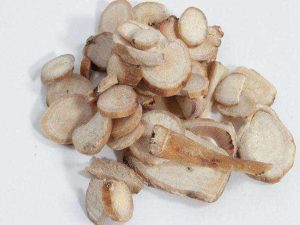
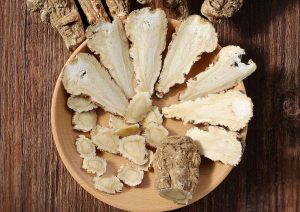
This product is curled into a cylindrical or semi-cylindrical shape, 40–80 cm long and 0.1–0.3 cm thick. The outer surface is grayish-brown to grayish-brown, with slight longitudinal wrinkles; some may have shallow fissures. It is densely covered with distinct elliptical transverse lenticels that are brown or brownish-red. Occasionally, there are raised transverse ridges or larger circular branch scars, often with lichen spots attached;The inner surface is pale yellowish-brown or yellowish-white, smooth, and bears fine, dense longitudinal striations. The texture is hard and brittle; it breaks easily, revealing a fibrous, lamellar fracture that is pale yellowish-brown or yellowish-white. It has a faintly fragrant odor; the taste is mild, slightly astringent, and slightly irritating to the tongue, followed by a sensation of discomfort in the throat.
Properties of Processed Slices
This product appears as curved filaments or fragments. The outer surface is grayish-brown to grayish-brown, with slight longitudinal wrinkles and densely covered with distinct elliptical transverse lenticels that are brown or brownish-red.The inner surface is pale yellowish-brown or yellowish-white, smooth, with fine, dense longitudinal striations. The cross-section is fibrous and flaky, pale yellowish-brown or yellowish-white. It has a faintly fragrant odor; the taste is mild, slightly astringent, and slightly prickly on the tongue, followed by a sensation of discomfort in the throat.
Botanical Information
Botanical Classification
A plant of the genus Albizia in the Fabaceae family.
Morphological Characteristics
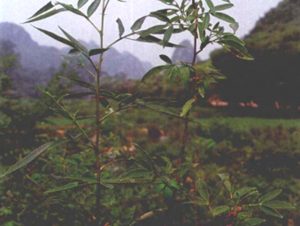
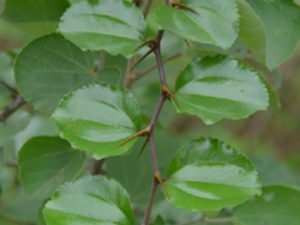
A deciduous tree reaching up to 16 m in height. The trunk is grayish-black; young branches, inflorescences, and leaf rachis are covered with tomentum or short soft hairs. The stipules are linear-lanceolate; the smaller stipules are small and fall early; the leaves are twice-pinnate and alternate; the petiole is 3–5 cm long, with a gland at the base and another at the point where the topmost pair of pinnae attaches;4–12 pairs of pinnae, sometimes up to 20 pairs in cultivated forms; 10–30 pairs of leaflets, linear to oblong, 6–12 mm long, 1–4 mm wide, ascending and oblique, with a small acute apex, ciliate along the margins, sometimes pubescent on the underside or only along the midvein; midvein close to the upper margin.Capitula are arranged in panicles at the branch tips; flowers are pale pink; the calyx is tubular, 3 mm long; the corolla is 8 mm long, with triangular lobes 1.5 mm long; both the calyx and corolla are pubescent externally; stamens are numerous, fused at the base, with slender filaments; the ovary is superior, the style nearly as long as the filaments, and the stigma cylindrical.The pod is strap-shaped, 9–15 cm long and 1.5–2.5 cm wide; young pods are pubescent, while mature pods are glabrous. Flowering period: June–July; fruiting period: August–October.
Distribution Area
It is distributed throughout Northeast, East, Central-South, and Southwest China.
Growth Habits
It prefers warm, sunny environments and is tolerant of cold and drought. It is not particular about soil type but grows rapidly in sandy loam and clay loam soils.
Propagation Methods
Propagated by seed.
Cultivation Techniques
Propagate seedlings in spring; soak the seeds for 8–10 hours before sowing. Sow in rows in furrows spaced 60 cm apart, covering the seeds with 2–3 cm of soil. Keep the soil in the beds moist after sowing; germination occurs in about 10 days. Once the seedlings have emerged uniformly, intensify management practices such as weeding, loosening the soil, and applying fertilizer.Transplant in the spring or fall of the second year, spacing plants 3–5 m apart. For the first 2–3 years after transplanting, weed and loosen the soil around the plants in both spring and fall to promote growth.
Pest and Disease Control
During summer and fall, the feathery leaves may be damaged by bean caterpillars.