Benzoin, a name in traditional Chinese medicine. It is the resin of the benzoin tree (Styrax benzoin Dryand) or Vietnamese benzoin (Styrax tonkinensis (Pierre) Craib ex Hartw. [S. macrothyrsus Perk.; S. hypoglaucus Perk.]) from the genus Styrax in the family Styracaceae. It has the effects of clearing the orifices and reviving the mind, regulating qi and promoting blood circulation, and relieving pain.It is primarily used to treat stroke with phlegm-induced syncope, sudden syncope due to qi stagnation, coma caused by evil influences, pain in the chest and abdomen, postpartum blood fainting, and infantile convulsions.

Benzoin
Benzoin, a name in traditional Chinese medicine. It is the resin of the benzoin tree (Styrax benzoin Dryand) or Vietnamese benzoin (Styrax tonkinensis (Pierre) Craib ex Hartw. [S. macrothyrsus Perk.; S. hypoglaucus Perk.]) from the genus Styrax in the family Styracaceae. It has the effects of clearing the orifices and reviving the mind, regulating qi and promoting blood circulation, and relieving pain.It is primarily used to treat stroke with phlegm-induced syncope, sudden syncope due to qi stagnation, coma caused by evil influences, pain in the chest and abdomen, postpartum blood fainting, and infantile convulsions.
Chinese Name : 安息香
Latin Name : Benzoinum
Aliases : Zhuo Bei Luo Xiang
Nature, Flavor & Meridian Tropism : Taste: pungent and bitter; Nature: slightly warm; Enters the Heart, Liver, and Spleen meridians
Benefits & Efficacy
Benefits
Opens the orifices and revives the spirit; regulates qi and promotes blood circulation; relieves pain.
Indications
Mainly used for stroke with phlegm-induced syncope, sudden syncope due to qi stagnation, coma from sudden illness, pain in the chest and abdomen, postpartum blood fainting, and infantile convulsions.
Usage and Dosage
Oral use: Take 0.3–1.5 g as a powder; or incorporate into pills or powders.
Precautions
Use with caution in patients with yin deficiency with excessive fire.
Chemical Constituents
1. Benzoin: Contains approximately 90% resin, including 3-cinnamoyl sumatracetic acid ester, coniferyl cinnamate, 2%–3% styraxene, 1% vanillin, 1% cinnamyl phenylpropanol ester, as well as free benzoic acid and silicic acid, among other components.Total benzoic acid content is 10%–20%, and total cinnamic acid content is 10%–30%. 2. Vietnamese benzoin: It primarily consists of 70%–80% resin, with components including 3-benzoyl-thai-resinic acid ester, coniferyl benzoate, 20% free benzoic acid, 0.15%–2.3% vanillin, and no cinnamic acid.
Pharmacological Actions
1. Effects on the Respiratory System: Benzoin directly stimulates the respiratory tract mucosa, increasing secretions and promoting the expulsion of phlegm. 2. Other Effects: Benzoin has antiseptic properties and can be used topically as a local antiseptic.
Relevant Discussions
1. *Tang Bencao*: Treats malignant qi in the heart and abdomen.
2. *Haiyao Bencao*: Treats male seminal emission, warms the kidneys, and dispels malignant qi.
3. *Rihua Zi Bencao*: Treats blood-related disorders, cholera, wind-induced pain, menstrual cramps in women, and postpartum blood stasis.
4. *Compendium of Materia Medica*: Treats sudden internal disorders and consumptive diseases.
5. *Dongyi Baojian*: Wards off epidemics.
6. *Bencao Shu*: Treats stroke, wind-induced arthralgia, wind-induced epilepsy, “crane-knee” arthritis, low back pain, and deafness.
7. *Benjing Fengyuan*: Relieves sudden heart pain and vomiting.
8. *Ben Cao Cong Xin*: Promotes the circulation of qi and blood. When ground into powder and ingested, it promotes blood circulation, regulates qi, and calms the mind.
9. *Ben Cao Bian Du*: Treats sudden stroke and syncope, as well as various pains in the chest and abdomen.
10. *Manual of Chinese Medicinal Materials*: Treats convulsions and epilepsy in children.
Applications
Clinical Applications
1. For treating stroke and evil qi in adults and children: 1 qian of benzoin, 2 qian of Podophyllum, 8 fen of rhinoceros horn, 5 fen of ox bile, and 1 qian 2 fen each of cinnabar, frankincense, and realgar. Grind all ingredients into an extremely fine powder. Add 1 qian each of Acorus tatarinowii and fresh ginger, steep in hot water, and take 5 fen of the mixture. (*Authentic Formulas for Pulse Diagnosis*)
2. For sudden chest pain or recurrent episodes over many years: Grind benzoin into a powder; take half a qian with boiling water. (*Effective Formulas of the World’s Physicians*)
3. For cold-dampness and cold qi, or for patients with the yin pattern of cholera: 1 qian of benzoin (ground into a powder), 2 qian each of ginseng and processed aconite. Decoct in water and take as directed. (*Comprehensive Discourse on Materia Medica*)
4. For treating abdominal pain in children who curl their legs and cry: Steam benzoin with wine to form a paste; grind agarwood, frankincense, cloves, patchouli, and star anise (each 3 qian), along with cyperus rhizome, cardamom, and fried licorice root (each 5 qian) into a powder; mix the powder with the paste and refined honey to form pills the size of a water caltrop seed; take 1 qian per dose, washed down with perilla leaf decoction.(*Quanyou Xinjian*, Benzoin Pills)
5. For treating postpartum blood fainting, blood distension, and lockjaw in women on the verge of death: 1 qian of benzoin and 5 qian of Wulingzhi (water-floated, purified powder). Mix thoroughly; take 1 qian per dose, dissolved in decoction of stir-fried ginger. (*Bencao Huiyan*)
6. For treating rheumatic joint pain: Take four liang of lean pork, sliced, and wrap two liang of benzoin in it. Place the pork in a jar filled with ash; set a copper plate over a high flame to act as a barrier, then place the wrapped benzoin on top to burn. Hold the jar’s opening against the painful area to fumigate it, ensuring no air enters. (From *Shenghui Fang*)
Related Compatibility
Benzoin combined with Suhexiang: Both herbs can open the orifices, revive the spirit, and eliminate phlegm. Suhexiang also has antispasmodic properties, while benzoin promotes the circulation of qi and blood.When combined, their efficacy in opening the orifices, reviving the spirit, eliminating phlegm, and relieving spasms is enhanced; they also dispel foul odors and promote the circulation of qi and blood. This combination is suitable for cases of stroke with phlegm-induced syncope, sudden syncope due to qi stagnation, and sudden fainting; it may also be used for conditions such as convulsive epilepsy.
Related Medicines
Yixin Pills, Tongqiao Zhen Tong Powder, Shenxiang Suhé Pills (Qingyu Jiuxin Pills), Suhéxiang Pills.
Related Prescriptions
Zhibao Dan (from *Su Shen Liang Fang*), Suhexiang Pills (from *Guangji Fang*, excerpted from *Wai Tai Mi Yao*).
Processing & Preparation
Harvesting & Processing
It is best to harvest resin from robust, mature trees over 10 years old between April and June.Before tapping, treat the tree with ethylene. At the base of the trunk, 9–12 cm above the ground, make three shallow incisions in the bark at equal intervals along the same horizontal line using a small knife. Then, apply a thin layer of 10% ethylene oil solution to the incised surfaces. This application must be done on a sunny day. Tapping may begin 9–11 days after treatment.Store the collected liquid resin in a cool, shaded place. Once it has naturally dried and turned white, wrap it in paper and store it in a wooden box. Resin melts easily when heated, so avoid exposure to direct sunlight.
Processing Methods
1. Benzoin: Take the raw material, remove impurities, and crush it.
2. Alcohol-processed benzoin: Add benzoin to a mixture of alcohol and water and boil for 4–5 hours until it becomes a powdery paste, or until it sinks to the bottom and solidifies into a block. Remove and sun-dry. Use 0.015 kg of rice wine for every 0.03 kg of benzoin.
Storage Methods
Store in a dry container in a cool, dry place, protected from light and heat, and keep tightly sealed.
Crude Drug Identification
Properties of Crude Drugs
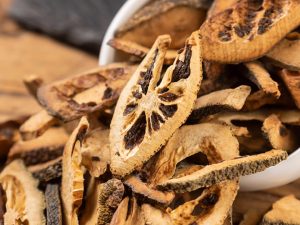
1. Benzoin: Consists of agglomerated spherical granules of varying sizes, ranging in color from reddish-brown to brown, with a rough surface and embedded yellowish-white and grayish-white opaque granules. It is brittle and softens and melts upon heating. It has an aromatic odor and a slightly pungent taste.
2. Vietnamese Benzoin: Irregular small pieces, slightly flattened, often clumped together; the surface is orange-yellow with a waxy luster (natural resin exudation); some appear as irregular spheres or flat pieces with a surface ranging from grayish-white to pale yellowish-white (artificially stripped of resin).It is brittle and easily broken; the fracture surface is flat and white. Upon storage, it gradually changes to a pale yellowish-brown to reddish-brown color and softens and melts upon heating. It has an aromatic odor and a slightly pungent taste; when chewed, it has a gritty texture.
Properties of Processed Slices
See “Characteristics of Medicinal Materials.”
Botanical Information
Botanical Classification
From the plants Benzoin and Vietnamese Benzoin, belonging to the genus Styrax in the family Styracaceae.
Morphological Characteristics
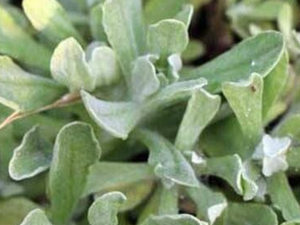
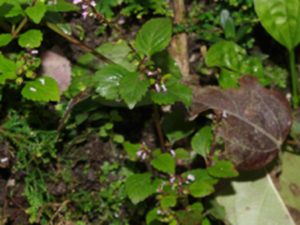
1. Benzoin: A tree reaching 10–20 m in height. The bark is greenish-brown; the inner bark is brownish-black; the wood is brownish-red; young branches are covered with brown stellate hairs. Leaves are alternate; petioles are approximately 1 cm long;leaf blades are long-ovate, up to 11 cm long and 4.5 cm wide, with an acute or acuminate apex, a broadly cuneate or nearly rounded base, a slightly glossy upper surface, a lower surface densely covered with short white stellate hairs, and irregularly serrated margins. Racemes are aggregated into panicles, terminal or axillary; flower pedicels are hairy, and bracts are small and early-deciduous;The calyx is short-campanulate, 5-lobed, with lanceolate lobes; the corolla is white, deeply 5-lobed, with lanceolate lobes approximately 3 times as long as the calyx tube; both the outer surfaces of the calyx and petals are covered with silvery-white filiform hairs, while the inner surfaces are brownish-red;There are 8–10 stamens; the anthers are linear, and the filaments are fused at the base to form a tube; the ovary is superior, ovate, densely covered with white tomentum, with one locule in the upper part and 2–3 locules in the lower part; the style is slender and reddish-brown. The fruit is flattened-globose and grayish-brown. The seeds are nut-like, reddish-brown, with one seed per locule and bearing six longitudinal ridges.
2. Vietnamese Benzoin: A tree reaching 5–20 m in height. The bark is grayish-brown with irregular longitudinal fissures; branches are slightly flattened, covered with brown, long villous hairs, later becoming glabrous. Leaves are alternate; petioles are 8–15 mm long, densely covered with brown stellate hairs;the leaf blade is elliptic, elliptic-ovate to ovate, 5–18 cm long and 4–10 cm wide, with a short acuminate apex and a rounded or cuneate base; the upper surface is glabrous or bears stellate hairs along the veins of young leaves, while the lower surface is densely covered with gray to powdery green stellate villi; the margin is entire, though young leaves are sometimes 2–3-toothed; there are 5–6 pairs of lateral veins.The terminal panicle is relatively large, 5–15 cm long; the lower racemes are shorter; the pedicels and inflorescence stalks are densely covered with yellowish-brown stellate pubescence; the calyx is cup-shaped and 5-lobed; the flowers are white, 5-lobed, with ovate-lanceolate lobes; both the calyx and corolla are densely covered with white stellate hairs;there are 10 stamens with flattened filaments fused into a tube at the base; the style is approximately 1.5 cm long. The fruit is nearly spherical, densely covered with stellate tomentum on the outside. The seeds are ovate, chestnut-brown, and densely covered with small tuberculate projections and stellate hairs. Flowering occurs from April to June, and fruiting from August to October.
Distribution Area
1. Benzoin: Distributed in Sumatra and Java, Indonesia. 2. Vietnamese Benzoin: Distributed in Fujian, Jiangxi, Hunan, Guangdong, Guangxi, Hainan, Guizhou, Yunnan, and other regions.
Growth Habits
It prefers a warm, humid environment with ample sunlight and thrives in the South Subtropical region, characterized by high temperatures, long summers, and mild winters. It is sensitive to waterlogging but can tolerate short periods of frost. Benzoin is a sun-loving, fast-growing tree species. It thrives in deep, loose, fertile, well-drained, slightly acidic sandy loam soil.
Propagation Methods
Propagated by seed.
Cultivation Techniques
Yields vary greatly between individual benzoin trees, so seeds must be collected from high-quality mother trees. In hilly areas, seeds mature in mid- to late September, while in mountainous regions, they mature in early October. It is best to sow the seeds immediately after harvest. Seeds sown in the fall have a high germination rate. From mid- to late September through early October, sow seeds individually in seedbeds at a spacing of 20 cm × 10 cm. Cover with soil, lightly tamp down, and cover with straw to retain moisture; water frequently after sowing.Seedlings emerge in about 15 days. The following spring, when seedlings reach a height of 20–30 cm, they can be transplanted to the mountains for afforestation. The most suitable season for afforestation is March to April, with a row and plant spacing of 3.5 m × 3.5 m.
Pest and Disease Control
Pests and diseases include shoot dieback, the wood moth, and borers.