Chicken Gizzard Lining is a commonly used herbal remedy for aiding digestion. It consists of the inner lining of the gizzard of the domestic chicken (Gallus gallus domesticus Brisson), a member of the Phasianidae family. It has the effects of strengthening the stomach and aiding digestion, astringing semen and stopping enuresis, and promoting urination and dissolving calculi. It is primarily used for undigested food stagnation, vomiting, diarrhea, and dysentery; childhood malnutrition; enuresis; nocturnal emission; painful urination due to calculi; and distension of the gallbladder with pain in the flanks.

Chicken Gizzard Lining
Chicken Gizzard Lining is a commonly used herbal remedy for aiding digestion. It consists of the inner lining of the gizzard of the domestic chicken (Gallus gallus domesticus Brisson), a member of the Phasianidae family. It has the effects of strengthening the stomach and aiding digestion, astringing semen and stopping enuresis, and promoting urination and dissolving calculi. It is primarily used for undigested food stagnation, vomiting, diarrhea, and dysentery; childhood malnutrition; enuresis; nocturnal emission; painful urination due to calculi; and distension of the gallbladder with pain in the flanks.
Chinese Name : 鸡内金
Latin Name : Galli Gigerii Endothelium Corneum
Aliases : Chicken Gizzard Lining, Chicken Gizzard, Yellow Membrane Inside Chicken Gizzard, Chicken Gizzard Membrane, Chicken Yellow Membrane, Chicken Stomach Membrane, Chicken Egg Sac, Chicken Central Gold, Fossilized Gallbladder, Fossilized Bone Gallbladder
Nature, Flavor & Meridian Tropism : Sweet in taste, neutral in nature; enters the Spleen, Stomach, Small Intestine, and Bladder meridians
Benefits & Efficacy
Benefits
Strengthens the stomach and aids digestion; astringes essence and stops seminal emission; promotes urination and dissolves calculi.
Indications
Mainly used to treat undigested food stagnation, vomiting, diarrhea, and dysentery; malnutrition in children; enuresis; nocturnal emission; painful and obstructive urinary calculi; and distension of the gallbladder with pain in the flanks.
Usage and Dosage
Decoct and take 3–10 g.
Precautions
1. The enzymes in chicken gizzard lining can bind with tannic acid and lose their efficacy; therefore, it should not be used in combination with herbs such as rhubarb, sanguisorba, or polygonum. 2. It should not be used in combination with tetracycline, aspirin, niacin, or similar substances. 3. It should not be consumed with foods rich in tannic acid, such as tea, coffee, persimmons, or apples.
Chemical Constituents
Chicken Gizzard Lining contains gastric hormones, keratin, trace amounts of pepsin, amylase, various vitamins and trace elements, amino acids, and other components.
Pharmacological Actions
This product helps regulate gastrointestinal function, combat atherosclerosis, and lower blood lipid and blood glucose levels.
Relevant Discussions
1. *Shennong Bencao Jing*: “Mainly treats diarrhea.”
2. *Rihua Zi Bencao*: “Stops seminal emission, as well as hematuria, metrorrhagia, leukorrhea, and intestinal wind-induced diarrhea and dysentery.”
3. *Diannan Bencao*: “Relieves epigastric distension, strengthens the spleen, aids digestion, and soothes the stomach. Treats milk and food stagnation in children, abdominal distension with blue veins, and masses caused by stagnation and malnutrition.”
Applications
Clinical Applications
1. For severe food stagnation, combine with Hawthorn (Shanzha) and Barley Malt (Maiya) to enhance the effects of aiding digestion and resolving stagnation. For pediatric spleen deficiency with malnutrition, use in combination with White Atractylodes (Baizhu), Chinese Yam (Shanyao), and Evodia (Shijunzi).
2. For enuresis, combine with Dodder Seed (Tusi) and Mulberry Cuttlefish Bone (Sangpiao), as in the Chicken Gizzard Powder (Ji Ke Tu San) from *Shenghui Fang*.
3. To treat sand-and-stone dysuria or gallstones, it is often used in combination with herbs such as Desmodium (Jinqiancao).
Related Compatibility
1. Chicken Gizzard Membrane Combined with Barley Malt: Chicken gizzard membrane is sweet and neutral in nature; it can stimulate gastric qi, nourish stomach yin, and has the function of strengthening the spleen and aiding digestion. Barley malt can soothe the liver and relieve depression, stimulate the spleen and improve appetite, and aid digestion while harmonizing the middle burner. When these two herbs are used together, they complement each other, promoting the generation of gastric qi, strengthening spleen qi, and soothing liver qi, thereby significantly enhancing the ability to aid digestion and relieve food stagnation.Suitable for those with spleen and stomach deficiency, poor appetite, food stagnation, or reduced appetite following a prolonged illness.
2. Chicken Gizzard Lining Combined with Sea Sand: When used raw, chicken gizzard lining promotes urination, dissolves calculi, and resolves blood stasis; when stir-fried, it aids digestion and stimulates the appetite. Sea sand promotes diuresis, facilitates urination, and is effective at purging damp-heat from the blood of the small intestine and bladder. When used together, these two herbs enhance the effects of promoting urination, dissolving calculi, clearing heat, and eliminating food stagnation. Suitable for calculi-related urinary disorders.
3. Chicken Gizzard Lining Combined with White Atractylodes: Chicken gizzard lining is sweet and neutral in nature; it excels at resolving food stagnation from various sources—such as grains, noodles, sweet potatoes, taro, dairy, and meat—while also strengthening and regulating the spleen and stomach. White atractylodes is sweet, bitter, and warm in nature; it excels at strengthening the spleen and drying dampness. When combined, these two herbs produce excellent effects in strengthening the spleen, transforming dampness, stimulating the appetite, and aiding digestion. As stated in *Medicine: Integrating Chinese and Western Principles*: “(Chicken Gizzard Lining) used in equal parts with Atractylodes is a key herb for digesting food stagnation and an excellent remedy for strengthening and tonifying the spleen and stomach; when the spleen and stomach are robust, they are better able to transform and transport the medicinal properties to eliminate food stagnation.” It is indicated for conditions such as poor appetite and loss of appetite, epigastric and abdominal distension, vomiting, and diarrhea caused by spleen deficiency with dampness obstruction or food stagnation.
4. Chicken Gizzard Lining Combined with Shijunzi: Chicken gizzard lining is sweet and neutral in nature; it excels at resolving various types of food stagnation and simultaneously strengthens the spleen, making it an essential herb for treating undigested food stagnation and malnutrition in children. Shijunzi is sweet, warm, and aromatic; it excels at eliminating parasites, resolving food stagnation, supporting the spleen, and treating malnutrition. When these two herbs are combined, they demonstrate remarkable efficacy in strengthening the spleen, resolving food stagnation, eliminating parasites, and treating malnutrition.This formula is indicated for malnutrition syndrome caused by internal stagnation of milk or food, often complicated by parasitic infestation or spleen-stomach deficiency, presenting with symptoms such as decreased appetite, sallow complexion, epigastric and abdominal distension, restlessness and hyperactivity, and disturbed sleep.
5. Chicken Gizzard Lining Combined with Moneywort and Sea Sand: Chicken Gizzard Lining is sweet and neutral; it excels at dissolving hardened masses and removing calculi without harming the spleen and stomach;Moneywort is sweet, salty, and slightly cold; it excels at clearing heat, promoting urination, relieving dysuria, and dissolving stones; Sea Sand is sweet, salty, and cold; among diuretic and dysuria-relieving herbs, it is particularly effective at alleviating urinary tract pain. When these three herbs are combined, their effects of clearing heat, promoting urination, dissolving hard masses and stones, and relieving dysuria and pain are enhanced. This formula is suitable for stone-related dysuria with burning pain caused by the accumulation of damp-heat in the lower jiao.
Medicinal Identification
1. Raw Chicken Gizzard, Roasted Chicken Gizzard, Sand-Roasted Chicken Gizzard, and Vinegar-Treated Chicken Gizzard: Raw Chicken Gizzard has a sweet and neutral nature and is excellent at resolving food stagnation, dissolving hard masses, and breaking down stones. It is commonly used for undigested food stagnation, pediatric malnutrition, as well as stone-induced dysuria and distension and pain in the flanks caused by gallbladder issues.Roasted chicken gizzard lining and sand-roasted chicken gizzard lining have a sweet and astringent nature and a fragrant aroma; they are crisp and brittle, making them easy to pulverize. They excel at strengthening the spleen, aiding digestion, stopping diarrhea, consolidating essence, reducing urination, and stopping seminal emission and enuresis. They are commonly used for food stagnation, spleen deficiency-induced diarrhea, and conditions such as seminal emission and enuresis;Vinegar-treated chicken gizzard has a slightly sour and astringent taste. Not only does it neutralize unpleasant odors and make the substance easier to crumble, but it is also effective at regulating the liver and supporting the spleen. It is commonly used for conditions such as spleen-stomach deficiency or liver-spleen disharmony, digestive disorders, and epigastric and abdominal distension.
2. Chicken Gizzard and Hawthorn: Both herbs have a sweet taste and enter the Spleen and Stomach meridians; they possess strong abilities to aid digestion and strengthen the spleen, and can treat various conditions of food stagnation. However, chicken gizzard is particularly potent at digesting food stagnation: “It not only eliminates stagnation in the spleen and stomach, but can also eliminate stagnation wherever it may be found in the internal organs” (*Medicine: Integrating Chinese and Western Principles*). Furthermore, its energy penetrates the Small Intestine and Bladder meridians, separating clear from turbid fluids; it can both astringe essence and stop seminal emission and enuresis, and is also highly effective at promoting the flow of urine and dissolving calculi, making it a common remedy for painful urinary calculi and pain in the flanks due to gallbladder distension.Hawthorn, on the other hand, is sour, sweet, and slightly warm. Among herbs that aid digestion and resolve food stagnation, it is particularly effective at eliminating stagnation caused by greasy and meaty foods; furthermore, as it enters the Liver Meridian, it excels at regulating qi, dispersing blood stasis, and relieving pain. It is commonly used to treat diarrhea, dysentery, and abdominal pain; amenorrhea due to blood stasis; postpartum blood stasis obstruction; stabbing pain in the chest and abdomen; chest pain due to chest obstruction; and hernia pain;It is also highly effective at clearing turbidity and lowering lipids, making it an excellent remedy for hyperlipidemia.
Related Medicines
Ganji San, Children’s Heat-Clearing and Stagnation-Resolving Pills, Huaji San, Compound Chicken Gizzard Powder for Children, Urinary Tract Flow Tablets, and Gallstone-Clearing Tablets.
Related Prescriptions
Chicken Gizzard Pills (*Shengji Zonglu*), Spleen-Nourishing Cakes (*Yixue Zhongzhong Canxi Lu*), Chicken Gizzard Decoction (*Yixue Zhongzhong Canxi Lu*).
Medicinal Diet Therapy
A medicinal dish featuring chicken gizzard is Chicken Gizzard and Lamb Soup.
1. Benefits: Suitable for patients with chronic enteritis caused by spleen and stomach deficiency-cold; it is notably effective in treating cold pain in the epigastrium and abdomen, intestinal rumbling, and watery diarrhea. However, it is not suitable for those with diarrhea due to damp-heat in the stomach and intestines or fever caused by external pathogens.
2. Ingredients: 250 grams of lamb, 15 grams each of chicken gizzard lining, red dates, and dried ginger, 10 grams of scallions, 8 grams of salt, 6 grams of MSG, and 10 grams of Shaoxing wine.
3. Preparation: Wash and cut the lamb into chunks. Wash and soak the chicken gizzard lining, red dates, and dried ginger; cut the scallions into sections.Stir-fry the lamb in a pan until the moisture evaporates, then remove and rinse. Place the lamb, chicken gizzard lining, red dates, dried ginger, and scallion segments in a clay pot. Add water and Shaoxing wine, then simmer over medium heat for about 2 hours. Season with salt and MSG to taste, and serve.
4. Usage: Eat the meat and drink the soup.
Notes
Patients requiring treatment with Chinese herbal medicine should first consult a licensed Traditional Chinese Medicine (TCM) hospital to receive a prescription following a professional TCM differential diagnosis.
Processing & Preparation
Harvesting & Processing
After slaughtering the chicken, remove the gizzard, cut open the gizzard sac, immediately peel off the inner membrane, wash thoroughly, and dry.
Processing Methods
1. Chicken Gizzard Lining: Take the raw material, remove impurities, wash thoroughly, and dry. Crush into small pieces.
2. Sand-Roasted Chicken Gizzard Lining: Place sand in a pan and roast over medium heat until hot. Add an equal amount of crushed chicken gizzard lining and stir-fry until puffed and crispy. Remove from heat and let cool.
3. Roasted Chicken Gizzard: Take the cleaned chicken gizzards, separate the whole and broken pieces, place them in a pan, and heat over medium heat. Roast until the surface turns yellow or dark yellow, then remove and allow to cool.
4. Vinegar-Roasted Chicken Gizzard: Take the cleaned chicken gizzards, crush them, place them in a pan, and heat over low heat. Roast until they puff up, then sprinkle with vinegar, remove, and dry. Use 15 kg of rice vinegar for every 100 kg of chicken gizzards.
Storage Methods
Store in a dry, airtight container in a well-ventilated, dry place to prevent insect infestation.
Crude Drug Identification
Properties of Crude Drugs
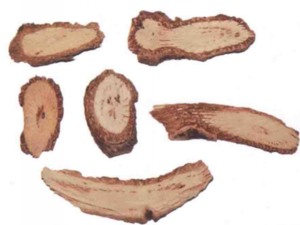
This product consists of irregularly shaped curled pieces, approximately 2 mm thick. The surface is yellow, yellow-green, or yellowish-brown; it is thin and translucent, with distinct striated wrinkles. It is brittle and easily broken; the fracture surface is horn-like and glossy. It has a faint fishy odor and a slightly bitter taste.
Properties of Processed Slices
1. Chicken Gizzard Lining: See the “Characteristics of the Medicinal Material” section.
2. Sand-Roasted Chicken Gizzard Lining: The surface is pale yellow, bulging or slightly bulging, with slight scorch marks; the texture is loose and brittle, and it breaks easily.
3. Roasted Chicken Gizzard Lining: Consists of small pieces or fragments that are slightly bulging.
4. Vinegar-Treated Chicken Gizzard Lining: Resembles roasted chicken gizzard lining slices; the surface is yellow or scorched yellow, slightly bulging; the texture is loose and brittle, and it breaks easily; it has a slight vinegar odor.
Botanical Information
Morphological Characteristics
Poultry. The beak is short and pointed, slightly conical in shape, with the upper mandible slightly curved. The nostrils are slit-like and covered with scaly valves. The eyes have a nictitating membrane. The head bears a fleshy comb, and there are wattles on both sides of the throat, typically brownish-red in color; the comb is taller and larger in males than in females, and the wattles are also larger in males.The wings are short; plumage color differs between males and females, with males having more beautiful plumage and long, vivid tail feathers; females have very short tail feathers. The legs are robust, with the tarsus, metatarsus, and toes all covered with scaly plates; there are four toes—three in front and one behind—with the hind toe being short and small and positioned slightly higher; males have a spur on the rear of the tarsus and metatarsus.
Distribution Area
Found throughout China.