Dangshen is the name of a traditional Chinese medicine. It refers to the dried roots of the plants Codonopsis pilosula (Franch.) Nannf., Codonopsis pilosula Nannf. var. modesta (Nannf.) L.T.Shen, or Codonopsis tangshen Oliv., all belonging to the Campanulaceae family. The first two are primarily produced in Gansu and Sichuan; the latter is primarily produced in Sichuan, Hubei, and Shaanxi.This herb has the effects of strengthening the spleen and nourishing the lungs, as well as nourishing the blood and generating body fluids. It is primarily used to treat spleen and lung qi deficiency, poor appetite and fatigue, coughing and wheezing due to deficiency, deficiency of qi and blood, sallow complexion, palpitations and shortness of breath, thirst due to fluid depletion, and internal heat with excessive thirst.

Dangshen
Dangshen is the name of a traditional Chinese medicine. It refers to the dried roots of the plants Codonopsis pilosula (Franch.) Nannf., Codonopsis pilosula Nannf. var. modesta (Nannf.) L.T.Shen, or Codonopsis tangshen Oliv., all belonging to the Campanulaceae family. The first two are primarily produced in Gansu and Sichuan; the latter is primarily produced in Sichuan, Hubei, and Shaanxi.This herb has the effects of strengthening the spleen and nourishing the lungs, as well as nourishing the blood and generating body fluids. It is primarily used to treat spleen and lung qi deficiency, poor appetite and fatigue, coughing and wheezing due to deficiency, deficiency of qi and blood, sallow complexion, palpitations and shortness of breath, thirst due to fluid depletion, and internal heat with excessive thirst.
Chinese Name : 党参
Latin Name : Codonopsis Radix
Aliases : Shangdang Ginseng, Fangfeng Dangshen, Huang Shen, Fang Dangshen, Shang Dangshen, Lion’s Head Ginseng, Zhonglingcao
Authentic Producing Area : Gansu, Sichuan, Hubei, Shaanxi
Nature, Flavor & Meridian Tropism : Neutral in nature, sweet in taste; enters the Spleen and Lung meridians
Benefits & Efficacy
Benefits
Strengthens the spleen and benefits the lungs; nourishes blood and generates body fluids.
Indications
Mainly used to treat spleen and lung qi deficiency, poor appetite and fatigue, cough and wheezing due to deficiency, deficiency of qi and blood, sallow complexion, palpitations and shortness of breath, thirst due to fluid depletion, and internal heat with excessive thirst.
Usage and Dosage
Internal use: Decocted as a soup, 6–15 g; or prepared as a paste for use in pills or powders. Use raw to generate body fluids and nourish blood; use roasted to tonify the spleen and lung.
Precautions
1. Not suitable for cases of excess or heat syndromes where vital energy is not deficient. 2. Should not be used in combination with Lepidium.
Chemical Constituents
This product contains sterols, Codonopsis glycosides, Codonopsis polysaccharides, Codonopsis lactones, alkaloids, inorganic elements, amino acids, and trace elements.
Pharmacological Actions
This product has the effects of enhancing immune function, improving gastrointestinal function, improving lung function, lowering blood glucose, regulating blood lipids, delaying aging, and improving memory.
Relevant Discussions
1. *Ben Cao Cong Xin*: “Tonifies the middle, boosts qi, harmonizes the spleen and stomach, and relieves restlessness and thirst.”
2. *Yao Xing Ji Yao*: “It can tonify the spleen and lungs, boost qi, and generate body fluids.”
3. *Ben Cao Zheng Yi*: “It is highly effective in tonifying the spleen and nourishing the stomach, moistening the lungs and generating body fluids, and strengthening the middle qi. … It strengthens the spleen’s transport function without causing dryness, nourishes stomach yin without causing stagnation, moistens the lungs without inducing coldness, and nourishes the blood without being overly greasy or heavy.”
Applications
Clinical Applications
1. To treat physical weakness, fatigue, poor appetite, and loose stools caused by deficiency of central qi, it is often used in combination with Atractylodes macrocephala and Poria cocos, which tonify qi, strengthen the spleen, and eliminate dampness.
2. To treat coughing, shortness of breath, and a weak voice caused by lung qi deficiency, it can be combined with Astragalus (Huangqi) and Gekko (Hagui) to tonify lung qi, relieve coughing, and alleviate wheezing. Its ability to tonify the spleen and lungs is similar to that of Ginseng (Ren Shen) but is milder in potency; clinically, it is often used as a substitute for Ginseng in classical formulas to treat mild cases of spleen and lung qi deficiency.
3. To treat deficiency of both qi and blood—where qi deficiency fails to generate blood, or blood deficiency fails to transform into qi—manifesting as a pale or sallow complexion, fatigue, dizziness, and palpitations, it is often combined with Astragalus, Atractylodes macrocephala, Angelica sinensis, and Rehmannia glutinosa to enhance its effects in tonifying qi and nourishing blood.
4. For mild cases of concurrent qi and body fluid deficiency, it is appropriate to use it in combination with herbs that nourish yin and generate body fluids, such as Ophiopogon and Schisandra.
5. This herb is also frequently combined with pathogen-expelling agents—such as exterior-releasing and purgative herbs—to treat conditions characterized by both pathogen excess and constitutional deficiency, such as external pathogen invasion due to qi deficiency or internal heat accumulation resulting in qi and blood deficiency. This combination supports the body’s vital energy while expelling pathogens, ensuring that the vital energy remains unharmed during the process of eliminating the pathogen.
Related Compatibility
1. Codonopsis combined with Atractylodes: Codonopsis is sweet and neutral in nature; it excels at tonifying the spleen and nourishing the stomach, regulating the flow of middle qi, and has a strong qi-tonifying effect. Atractylodes is sweet, warm, bitter, and drying; it excels at tonifying the spleen and harmonizing the stomach, dispelling dampness, and transforming turbidity, and is particularly effective at strengthening the spleen. When combined, these two herbs enhance the effects of tonifying qi, strengthening the spleen, and drying dampness. This combination is suitable for conditions such as poor appetite, loose stools, vomiting, and diarrhea caused by spleen qi deficiency.
2.Dangshen Combined with Huangqi: Dangshen excels at strengthening the spleen and tonifying qi; Huangqi excels at tonifying qi and raising yang. When combined, these two herbs enhance the effects of tonifying the spleen and lung. This combination is suitable for conditions such as spleen-lung qi deficiency, shortness of breath, fatigue, poor appetite, and loose stools.
3. Dangshen Combined with Danggui: Dangshen excels at strengthening the spleen and tonifying qi; Danggui excels at nourishing and harmonizing the blood. When combined, these two herbs enhance the effects of tonifying qi and nourishing the blood.It is indicated for various syndromes of internal injury resulting in deficiency of qi and blood, such as dizziness, fatigue, shortness of breath, and reluctance to speak.
4. Codonopsis combined with Ophiopogon: Codonopsis is sweet and neutral; it tonifies the spleen and lungs, generates body fluids, and nourishes blood. Ophiopogon is sweet and slightly cold; it nourishes yin, moistens the lungs, benefits the stomach, and generates body fluids. When combined, these two herbs enhance the effects of tonifying qi and generating body fluids. This combination is indicated for conditions such as heat-induced injury to qi and yin, severe depletion of body fluids, and heart deficiency with a faint pulse.
5. Codonopsis combined with Prepared Rehmannia: Codonopsis is sweet and neutral, excelling at tonifying the spleen and stomach and generating essence and blood; Prepared Rehmannia is sweet and slightly warm, excelling at nourishing blood, replenishing yin, and enriching essence and marrow. When combined, these two herbs enhance the effects of tonifying qi and generating blood. This combination is suitable for conditions caused by a deficiency of both qi and blood, such as a sallow complexion, dizziness, palpitations, and general weakness and fatigue.
6. Codonopsis combined with Gypsum: Codonopsis excels at tonifying qi and generating body fluids; Gypsum excels at clearing heat and generating body fluids. When combined, these two herbs enhance the effects of tonifying qi, nourishing yin, clearing heat, and generating body fluids. This combination is suitable for external heat-induced illnesses and symptoms such as restlessness and thirst caused by heat damaging qi and body fluids.
Medicinal Identification
1. Ming Dangshen vs. Dangshen: Both have a sweet taste and enter the Spleen and Lung meridians, and both can tonify the Spleen and Lung. However, Ming Dangshen is derived from a plant in the Apiaceae family; it has a slightly bitter taste and a slightly cold nature, primarily enters the Lung meridian, and excels at moistening the lungs and resolving phlegm, nourishing yin, and harmonizing the stomach. It is primarily used to treat lung-heat cough, dry throat, hoarseness, poor appetite, and dry mouth.Dangshen is a plant of the Campanulaceae family. It has a neutral nature and primarily enters the Spleen meridian. Its specific functions are to tonify the middle and boost qi, strengthen the spleen, and generate body fluids. It is primarily used to treat qi deficiency with fatigue, poor appetite, loose stools, lung qi deficiency with a weak voice, as well as conditions involving both qi and body fluid deficiency, and both qi and blood deficiency.
2. Raw Dangshen, Rice-Roasted Dangshen, and Honey-Fried Dangshen: All three have a sweet and neutral nature, enter the Spleen and Lung meridians, and possess the effects of tonifying the middle, boosting qi, strengthening the spleen, and benefiting the lungs. However, raw Dangshen excels at boosting qi and generating body fluids, and is often used for lung qi deficiency, deficiency of both qi and blood, and damage to both qi and body fluids.Rice-fried Codonopsis has a stronger effect in tonifying qi and strengthening the spleen, and is often used for spleen and stomach deficiency characterized by poor appetite and loose stools. Honey-fried Codonopsis excels at tonifying the middle burner, boosting qi, moistening dryness, and nourishing yin; it is frequently used for conditions involving deficiency of both qi and blood, such as shortness of breath, fatigue, organ prolapse, limb weakness, and menstrual irregularities in women.Modern experiments have confirmed that honey-fried Codonopsis is superior to both raw Codonopsis and rice-fried Codonopsis in enhancing immune function and anti-fatigue capacity in mice.
3. Ginseng and Codonopsis: Both have a sweet taste, enter the Spleen meridian, and possess effects such as tonifying qi, generating body fluids, and strengthening qi. They are suitable for conditions involving deficiency of Spleen and Lung qi, damage to both qi and body fluids, deficiency of both qi and blood, and blood deficiency with sallow complexion.However, ginseng (Panax ginseng) belongs to the Araliaceae family; it has a sweet and slightly bitter taste, a slightly warm nature, and enters the Heart and Lung meridians. It has a strong tonifying and fortifying effect on qi, is highly potent in replenishing vital energy, and can restore the pulse and prevent collapse. Therefore, it is frequently used for critical conditions involving qi deficiency with impending collapse and a faint, nearly imperceptible pulse, such as in the formula Dusan Decoction (独参汤);Ginseng is also frequently used for febrile diseases involving both qi and body fluids, as well as diabetes insipidus. Additionally, ginseng has the effects of calming the mind, enhancing cognitive function, arresting bleeding, and strengthening yang; it can also be used for insomnia, forgetfulness, conditions where qi fails to retain blood, and erectile dysfunction.Dangshen (Codonopsis pilosula), belonging to the Campanulaceae family, has a sweet and neutral nature. It enters the Spleen and Stomach meridians but is less potent. It is inexpensive and can tonify the middle burner, benefit the lungs, tonify qi, and generate blood. It is neither drying nor greasy. It is used to treat mild cases and chronic conditions involving qi deficiency, deficiency of both qi and blood, or depletion of both qi and body fluids, and can often be used as a substitute for ginseng, though the dosage should be higher.
Related Medicines
Shensu Pills, Minor Bupleurum Granules, Liver-Strengthening Granules, Spleen-Tonifying and Lipid-Lowering Granules, Phlegm-Resolving and Cough-Relieving Granules.
Related Prescriptions
Shangdang Ginseng Paste (from *De Pei Bencao*).
Notes
Patients requiring treatment with traditional Chinese medicine should first consult a licensed TCM hospital, where a TCM practitioner will conduct a professional diagnosis and prescribe the appropriate herbal formula.
Processing & Preparation
Harvesting & Processing
In September–October of the second or third year after transplanting, dig up the roots, wash them thoroughly, sun-dry them for 4–6 hours, then tie them with string and knead them to firm up the roots. After repeating this process 3–4 times, tie them into small bundles for storage or further processing.
Processing Methods
1. Codonopsis: Take the raw herb, remove the root crown and impurities, wash thoroughly, moisten thoroughly, cut into thick slices, and dry.
2. Rice-coated Codonopsis: Place clean rice in a pot and heat over low heat. Sprinkle a small amount of water until the rice sticks to the pot. When smoke begins to rise, add the Codonopsis slices and gently stir-fry until the rice turns a deep yellow. Remove, let cool, and sift out any burnt rice.Use 20 kg of rice per 100 kg of Dangshen slices.
3. Honey-coated Dangshen: Dilute an appropriate amount of refined honey with boiling water, add the Dangshen slices, mix well, and let stand until thoroughly infused. Place the mixture in a pot and stir-fry over low heat until the surface turns yellowish-brown and no longer sticks to the hands. Remove and let cool. Use 20 kg of refined honey per 100 kg of Dangshen slices.
4. Earth-Roasted Codonopsis: First, place stove-hearth earth powder in a wok and stir-fry until crumbly. Add the Codonopsis slices and stir-fry over medium heat until the surface turns earthy yellow and the aroma of Codonopsis is released. Remove from heat, sift out the earth powder, and let cool. Use 25 kg of stove-hearth earth for every 100 kg of Codonopsis slices.
5. Wheat Bran-Roasted Codonopsis: First, heat the wok over high heat. Sprinkle in the wheat bran; when smoke begins to rise, add the Codonopsis slices. Stir-fry until the surface turns a light yellow, then remove, sift out the wheat bran, and let cool. Use 20 kg of wheat bran per 100 kg of Codonopsis slices.
6. Wine-processed Codonopsis: Mix Codonopsis slices with rice wine, let stand for 1 hour, then place in a pan and stir-fry over low heat until dry or dry in an oven. Use 12 kg of rice wine per 100 kg of Codonopsis slices.
Storage Methods
Store in a dry container. Rice-marinated Codonopsis, honey-coated Codonopsis, earth-roasted Codonopsis, bran-roasted Codonopsis, and wine-marinated Codonopsis should be kept in airtight containers in a cool, dry place to prevent insect infestation and mold.
Crude Drug Identification
Properties of Crude Drugs
1. Codonopsis: Long cylindrical in shape, slightly curved, 10–35 cm long, and 0.4–2 cm in diameter.The surface is grayish-yellow, yellowish-brown to grayish-brown; the root crown bears numerous wart-like stem scars and buds, with each stem scar ending in a depressed, dot-like depression; below the root crown is a dense ring of transverse striations that gradually become sparser toward the base, sometimes extending to half the total length; cultivated varieties have few or no transverse striations;The entire root is covered with longitudinal wrinkles and scattered, elongated, lenticular protrusions; a blackish-brown gelatinous substance is often present where lateral roots have broken off. The texture is slightly soft or slightly hard with some resilience; the cross-section is somewhat flat, with fissures or radial striations; the cortex is pale brownish-yellow to yellowish-brown, and the xylem is pale yellow to yellow. It has a distinctive aroma and a slightly sweet taste.
2. Plain-flowered Codonopsis (Western Codonopsis): 10–35 cm long, 0.5–2.5 cm in diameter. The surface is yellowish-white to grayish-yellow; the dense annular transverse striations below the root crown often extend to more than half the total length. The cross-section has numerous fissures; the cortex is grayish-white to pale brown.
3. Sichuan Codonopsis: 10–45 cm long, 0.5–2 cm in diameter. The surface is grayish-yellow to yellowish-brown, with distinct, irregular longitudinal grooves. The texture is relatively soft yet firm; the cross-section has few fissures, and the cortex is yellowish-white.
Properties of Processed Slices
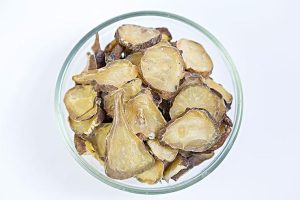
1. Codonopsis: This product consists of thick, nearly circular slices. The outer surface is grayish-yellow, yellowish-brown to grayish-brown; sometimes, numerous wart-like stem scars and buds are visible at the root crown. The cross-section shows a periderm that is pale brownish-yellow to yellowish-brown, and a xylem that is pale yellow to yellow, with fissures or radial striations. It has a distinctive aroma and a slightly sweet taste.
2. Rice-processed Codonopsis: Resembles Codonopsis, with a deep yellow surface.
3. Honey-processed Codonopsis: The surface is yellowish-brown, glossy, and slightly sticky; it has a fragrant aroma and a sweet taste.
4. Earth-roasted Codonopsis: The surface is earthy yellow.
5. Bran-roasted Codonopsis: The surface is pale yellow, with a slight aroma of bran.
6. Wine-processed Codonopsis: Possesses a slight aroma of wine.
Botanical Information
Botanical Classification
Plants of the genus Codonopsis in the Campanulaceae family, including Codonopsis pilosula, Codonopsis reticulata, and Codonopsis sinensis.
Morphological Characteristics
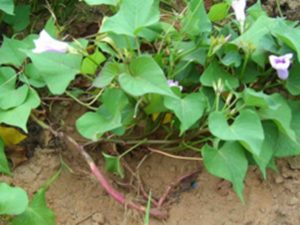
1. Codonopsis: A perennial herb. The root is long and cylindrical, 1–1.7 cm in diameter, with a swollen root crown at the apex and numerous tuberculate stem scars; the outer skin is milky yellow to pale grayish-brown, with longitudinal and transverse wrinkles. The stem is twining, long, and highly branched; the lower part is sparsely covered with white, coarse, stiff hairs; the upper part is smooth or nearly smooth.Leaves are opposite, alternate, or pseudo-whorled; petioles are 0.5–2.5 cm long; leaf blades are ovate or broadly ovate, 1–7 cm long and 0.8–5.5 cm wide, with a blunt or acute apex, a truncate or shallowly cordate base, and entire or slightly wavy margins; the upper surface is green and covered with coarse, appressed hairs, while the lower surface is powdery green and sparsely covered with soft hairs. Flowers are solitary, with slender pedicels;the calyx is green, with 5 lobes that are oblong-lanceolate, 1–2 cm long, blunt at the apex, and smooth or slightly tomentose; the corolla is broadly campanulate, 2–2.5 cm in diameter, pale yellowish-green with pale violet-violet spots, 5-lobed at the apex, with lobes that are triangular to broadly triangular and erect; there are 5 stamens, with filaments expanded below the middle;ovary inferior, 3-chambered, style short, stigma 3-lobed, very broad, funnel-shaped. Capsule conical, with persistent calyx. Seeds small, ovate, glossy brown. Flowering period: August–September; fruiting period: September–October.
2. Plain-flowered Codonopsis: The main distinction between this variety and Codonopsis is that the entire plant is nearly smooth and glabrous;the calyx lobes are smaller, approximately 10 mm long.
3. Sichuan Codonopsis: This species differs from the previous two in that the bases of the lower stem leaves are wedge-shaped or relatively rounded and blunt, and only occasionally heart-shaped; the calyx is attached only to the very base of the ovary, and the ovary is almost entirely superior relative to the calyx. Flowering and fruiting occur from July to October.
Distribution Area
1. Codonopsis: Distributed in North China, Northeast China, and in Henan, Sichuan, Yunnan, Tibet, Shaanxi, Gansu, Qinghai, and Ningxia. 2. Plain-flowered Codonopsis: Distributed in central Shanxi, northwestern Sichuan, southern Shaanxi, Gansu, and Qinghai. 3. Sichuan Codonopsis: Distributed in Hubei, Hunan, Sichuan, Guizhou, Shaanxi, and other areas.
Growth Habits
Dangshen prefers a cool climate and does not tolerate high temperatures. Seedlings prefer shade, while mature plants prefer full sun. It is best cultivated in deep, well-drained, sandy loam rich in humus. It is not suitable for cultivation in clay soil, low-lying areas, saline-alkali soil, or fields where the same crop has been grown consecutively.
Propagation Methods
Propagated by seed.
Cultivation Techniques
Seed Propagation: Seed germination rates exceed 80%; however, germination rates drop significantly for seeds stored for more than one year, so it is recommended to use seeds harvested that year or the previous year. The seedling transplanting method is commonly used, while direct seeding is rarely employed. Sowing can take place from early spring after thawing until early winter before the ground freezes. Seeds may be broadcast or sown in rows; for row sowing, the row spacing is 10–15 cm, and the seeding depth is 0.5–1 cm.The seeding rate is 7.5–15 kg per hectare. After sowing, cover the ginseng beds with corn stalks, rice straw, or pine and fir branches to retain moisture; at an air temperature of approximately 18–20°C, seedlings will emerge in about 10 days. When the seedlings reach a height of about 5 cm, gradually remove the covering material and promptly attend to weeding and watering.Transplanting: Cultivate ginseng seedlings for one year, then transplant them in the fall or in the spring before bud break. Dig furrows with row and plant spacing of 20–30 m. Plant the rootstock diagonally in the furrows at a spacing of 6–10 cm between plants, then cover with soil.
Pest and Disease Control
1. Diseases: Rust—typically occurs more severely in the Northeast and North China regions during the fall. During the disease period, spray a 200-fold dilution of 50% dinitrox or a 1,000-fold dilution of 25% fenarimol once every 7–10 days, for a total of 2–3 consecutive applications. Root rot—prone to occur in low-lying areas and during rainy seasons.Control methods: Avoid continuous cropping; build raised beds and dig deep ditches to facilitate drainage. During the active disease period, irrigate with an 800-fold dilution of 50% Topsin-M. For downy mildew, spray a 300-fold dilution of 40% Downy Mildew Fungicide or a 1,000-fold dilution of 70% Chlorothalonil.
2. Pests: Cutworms, African mole crickets, etc.