Eight-Eyed Eel is a name used in traditional Chinese medicine. It refers to the entire body of the seven-gill eel (Lampetra japonica (Martens)), a member of the Lampetra family. It has the effects of nourishing and strengthening the body, unblocking meridians and activating collaterals, and improving eyesight. It is primarily used to treat facial paralysis, night blindness, and dry cornea.
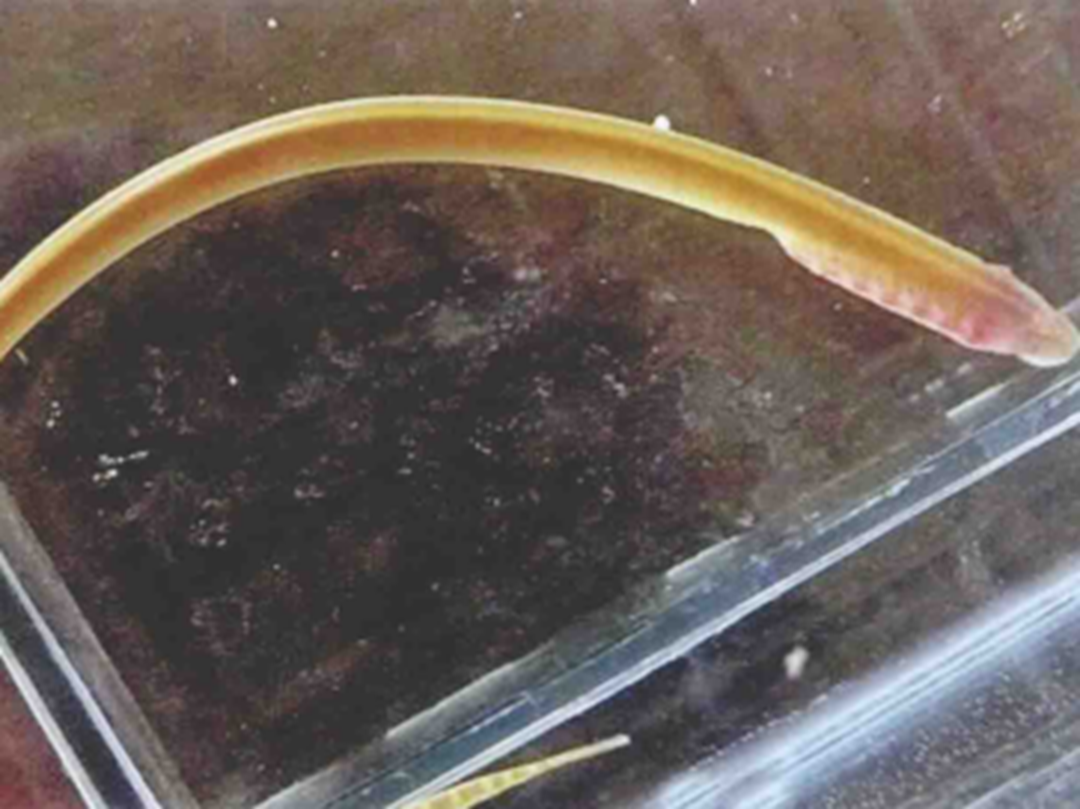
Eight-Eyed Eel
Eight-Eyed Eel is a name used in traditional Chinese medicine. It refers to the entire body of the seven-gill eel (Lampetra japonica (Martens)), a member of the Lampetra family. It has the effects of nourishing and strengthening the body, unblocking meridians and activating collaterals, and improving eyesight. It is primarily used to treat facial paralysis, night blindness, and dry cornea.
Chinese Name : 八目鳗
Aliases : Seven-Star Fish, Seven-Gill Eel, Seven-Star Eel
Nature, Flavor & Meridian Tropism : Sweet in taste, warm in nature
Benefits & Efficacy
Benefits
Nourishes and strengthens the body, unblocks meridians and activates collaterals, and improves eyesight.
Indications
Facial paralysis, night blindness, and dry cornea.
Usage and Dosage
Internal use: Boil and eat 1–2 fish. External use: Apply an appropriate amount of fresh, pounded fish as a poultice.
Chemical Constituents
The vitamin A content in the flesh is higher than that of most fish, containing approximately 99–980 international units per gram (average 300 international units). It is also present in the liver, kidneys, gonads, and large intestine, with particularly high concentrations in the testes and small intestine. The vitamin B1 and B12 content in the fish skin is significantly higher than in other fish species, and the abdominal skin contains higher levels than the dorsal skin.
Relevant Discussions
1. *Jilin Chinese Herbal Medicine*: “Nourishing and fortifying. Treats facial paralysis.”
2. *Medicinal Animals of Northeast China*: “Promotes the flow of qi and blood, improves vision. Treats facial paralysis, dry cornea, and night blindness.”
Applications
Related Compatibility
1. For treating facial paralysis: 3 Seven-Star Fish. Pound them into a paste; apply to the right side of the face if the paralysis is on the left, and to the left side if the paralysis is on the right. (*Jilin Chinese Herbal Medicine*)
2. For treating night blindness and dry cornea: Air-dry the Seven-Star Fish for later use; consume 1 fish twice daily as part of a meal. (*Medicinal Marine Organisms of China*)
Notes
Other species of the same genus with similar effects include: ① The Northeast Seven-gill Lamprey (Lampetra morii Berg), distributed in Northeast China. ② The Reissner’s Seven-gill Lamprey (L. reissneri (Dybowski)), distributed in Northeast China.
Processing & Preparation
Harvesting & Processing
Caught from spring through fall; air-dried or used fresh.
Crude Drug Identification
Botanical Information
Morphological Characteristics
The body is eel-shaped and smooth, without scales. The tail is laterally compressed; the body can reach over 60 cm in length, approximately 5.2 times the length of the head.The head is cylindrical, with a nearly circular, sucker-like mouth densely covered with papillae along the edges. The eyes are well-developed and located at the front of the head. There is a single nostril situated on the dorsal side of the head, between the two eyes. On either side of the head, behind the eyes, there is a row of seven separate gill slits. The anus is located at the rear of the body and features a slender tubular protrusion. There are approximately 75 myomeres from the last gill slit to the anus.There are two dorsal fins. The first dorsal fin is low and short, with its origin approximately equidistant from the tip of the snout and the tip of the tail. The second dorsal fin is larger, with a very high central portion; it tapers gradually toward the front and rear, and its posterior portion is connected to the caudal fin; the fin rays are soft and densely arranged. The anal fin is very low, originating behind the anus and connected to the lower lobe of the caudal fin.The caudal fin is spear-shaped, with the upper and lower lobes approximately equal in length. There are no pectoral or pelvic fins. The body is grayish-blue-green. The abdomen is pale yellow or grayish-white, and the upper part of the dorsal fin is black. The caudal fin is deep black.
Distribution Area
It is found in rivers such as the Heilongjiang, Ussuri, Tumen, and Songhua.