Vitex is a name in traditional Chinese medicine. It refers to the dried, ripe fruits of Vitex trifolia L. var. simplicifolia Cham. or Vitex trifolia L., plants belonging to the genus Vitex in the Verbenaceae family. It has the effects of dispersing wind-heat and clearing heat from the head and eyes.It is primarily used to treat headaches caused by wind-heat colds, swollen and painful gums, red and watery eyes, blurred vision, and dizziness.
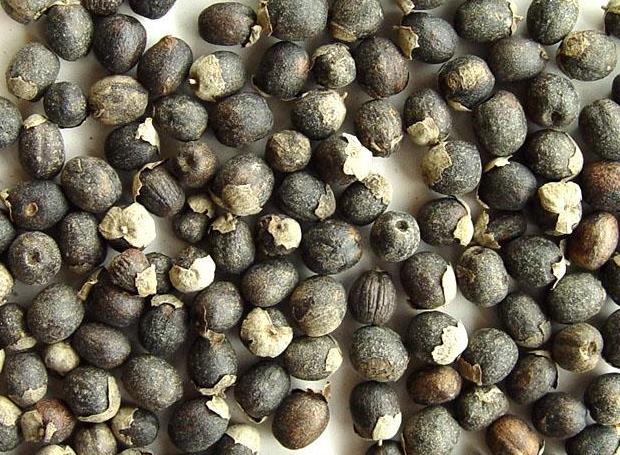
Vitex
Vitex is a name in traditional Chinese medicine. It refers to the dried, ripe fruits of Vitex trifolia L. var. simplicifolia Cham. or Vitex trifolia L., plants belonging to the genus Vitex in the Verbenaceae family. It has the effects of dispersing wind-heat and clearing heat from the head and eyes.It is primarily used to treat headaches caused by wind-heat colds, swollen and painful gums, red and watery eyes, blurred vision, and dizziness.
Chinese Name : 蔓荆子
Latin Name : Viticis Fructus
Aliases : Manjing Shi, Jingzi, Wan Jingzi, Man Qingzi, Huang Jing, Sengfa Shi, Wan Jinzi, Hui Zao, Jingzi, Wan Jingzi, Man Jingzi
Authentic Producing Area : Shandong, Zhejiang, Fujian, Jiangxi
Nature, Flavor & Meridian Tropism : Pungent and bitter in taste; slightly cold in nature; enters the Bladder, Liver, and Stomach meridians
Benefits & Efficacy
Benefits
Dispels wind-heat; clears and relieves symptoms affecting the head and eyes.
Indications
Headaches due to wind-heat common cold; swollen and painful gums; red, watery eyes; blurred vision; dizziness and vertigo.
Usage and Dosage
1. Internal use: Decocted as a soup, 6–12 g; or steeped in wine; or incorporated into pills or powders. 2. External use: Apply an appropriate amount as a poultice or use the decoction for external washing.
Precautions
Use with caution in cases of headache and dizziness due to blood deficiency with internal heat, as well as in patients with spleen-stomach deficiency.
Chemical Constituents
It primarily contains flavonoids (Vitexin, Vitexin-7-glucoside, Vitexin-7-glucuronide, Luteolin, Vitexin, etc.); fatty acids (palmitic acid, stearic acid, oleic acid, linolenic acid); and essential oils.
Pharmacological Actions
This product has antipyretic, analgesic, anti-inflammatory, antihypertensive, bronchodilatory, and expectorant effects.
Relevant Discussions
1. *Shennong’s Classic of Materia Medica*: “Treats cold and heat in the tendons and bones, dampness-induced arthralgia and stiffness; improves eyesight; strengthens teeth; clears the nine orifices; and expels white worms.”
2. *Supplement to the Records of Famous Physicians*: “Expels intestinal worms; treats wind-induced headaches, tinnitus, and tearing eyes.”
Applications
Clinical Applications
1. For treating wind-heat common cold with dizziness and headache, it is often used in combination with herbs such as peppermint and chrysanthemum that disperse wind-heat and clear the head and eyes. For treating migraines caused by wind-pathogen ascending to the head, it is often combined with wind-dispelling and pain-relieving herbs such as Chuanxiong, Bai Zhi, and Xi Xin.
2.To treat wind-heat ascending to the upper burner, manifesting as red, swollen, and painful eyes, blurred vision, and excessive tearing, it is often used in combination with herbs that dispel wind and clarify vision, such as chrysanthemum, cicada slough, and white tribulus. To treat deficiency of middle qi and failure of clear yang to rise, resulting in tinnitus and deafness, it is used in combination with qi-tonifying and yang-elevating herbs such as astragalus, ginseng, cimicifuga, and kudzu root, as in the Qi-Tonifying and Vision-Enhancing Decoction (*Zhengzhi Zhunsheng*).
3. For treating rheumatic arthralgia, it is often used in combination with Qianghuo, Duhuo, Chuanxiong, and Fangfeng, as in the Qianghuo Shengshi Decoction (*Discourse on Distinguishing Confusions in Internal and External Injuries*).
Related Compatibility
1. Schisandra Fruit Combined with Chrysanthemum: Both herbs disperse wind-heat and clear heat from the head and eyes. Chrysanthemum excels at entering the Qi level, where it acts lightly and disperses; Schisandra Fruit excels at entering the meridians, where it unblocks the orifices and relieves pain. When combined, they enhance the effects of dispelling wind, clearing heat, and relieving pain, and are commonly used to treat headaches and dizziness caused by wind-heat rising upward.
2. Schisandra Fruit Combined with Forsythia: Schisandra Fruit is light and floating in nature; it enters the Lung Meridian, ascends, and disperses, thereby relieving exterior syndromes, dispelling wind, unblocking the orifices, and relieving pain. Forsythia is light, clear, and cooling; it excels at clearing heat, detoxifying, and dispersing wind-heat.When used together, their light, clear, and dispersing properties can clear heat, eliminate toxins, dispel wind, and relieve pain. This combination is commonly used to treat wind-fire headaches and sudden onset of conjunctivitis caused by wind-heat rising to the head.
3. Schisandra Berry Combined with Chuanxiong: Schisandra Berry excels at dispelling wind and relieving pain; Chuanxiong excels at promoting blood circulation, removing blood stasis, dispelling wind, and relieving pain. When combined, they promote blood circulation, dispel wind, and relieve pain, and are commonly used to treat headaches, toothaches, and joint pain caused by external invasion of wind-pathogens.
4. Schisandra Fruit Combined with Ginseng: Schisandra Fruit dispels wind, relieves pain, and clears and drains the head and eyes; Ginseng excels at tonifying qi. When used together, they combine dispersion with tonification without harming the body’s vital energy, and tonification with dispersion without allowing pathogenic factors to linger. Their effects complement each other, jointly achieving the function of supporting the body’s vital energy and expelling pathogenic factors. This combination is commonly used to treat dizziness, headaches, eye disorders, and tinnitus caused by wind-pathogen invasion in individuals with a constitutional qi deficiency.
Medicinal Identification
1. Raw Vitex Fruit vs. Roasted Vitex Fruit: Vitex fruit has a bitter and pungent taste with a slightly cold nature; it enters the Bladder, Liver, and Stomach meridians. Its functions include dispersing wind-heat, clearing and relieving the head and eyes, and dispelling wind to relieve pain. It is suitable for headaches caused by wind-heat colds, swollen and painful gums, red and watery eyes, blurred vision, dizziness and vertigo, and rheumatic arthralgia.Raw Schisandra berries are more effective at dispersing wind-heat and clearing and draining the head and eyes; they are commonly used for wind-heat headaches, nasal congestion, and red, swollen, and painful eyes. Roasted Schisandra berries have a milder pungent and dispersing nature and excel at raising clear yang qi, dispelling wind, and relieving pain; they are commonly used for hearing and vision loss, rheumatic arthralgia, and headaches caused by both exogenous and endogenous factors.
2. Schisandra Berry and Ligusticum Root: Both can dispel wind-dampness and relieve arthralgia, and are effective in treating headaches, rheumatic arthralgia, and muscle and tendon spasms.However, Schisandra berries are pungent, bitter, and slightly cold in nature; they primarily disperse wind-heat pathogens from the head and face, possess the ability to disperse wind and relieve pain, and are particularly effective for treating headaches and red eyes caused by exogenous wind-heat. Ligusticum root is pungent and warm in nature, with a potent medicinal action; it effectively reaches the crown of the head and excels at dispersing wind-cold pathogens, primarily treating exogenous wind-cold and headaches localized at the crown.
Related Medicines
Chuanju Shangqing Pills, Boyun Tuiyi Pills, and Xinfang Rhinitis Capsules.
Related Prescriptions
Yiqi Congming Decoction (*Dongyuan Shixiao Fang*), Shunqi Zhonghe Decoction (*Weisheng Baojian*), Qianghuo Shengshi Decoction (*Nei Wai Shang Bianhuo Lun*).
Medicinal Diet Therapy
Compound Vitex Wine
1. Effects: Dispels wind, clears heat, and relieves pain. Primarily treats wind-heat headaches, dizziness, and migraines.
2. Ingredients: 120 g Vitex fruit, 60 g chrysanthemum flowers, 40 g Chuanxiong, 60 g Fangfeng, 60 g mint, 1 sheng rice wine.
3. Preparation: Coarsely grind the above five ingredients together, place them in a white gauze bag, and place the bag in a clean container. Pour in the rice wine to cover the herbs, seal the container, and let it steep for 7 days. After 7 days, open the container, remove the herb bag, and strain the liquid for later use.
4. Dosage: Take 15–20 ml three times daily, warm and on an empty stomach.
Notes
Patients requiring treatment with traditional Chinese medicine should first consult a licensed TCM hospital, where a TCM practitioner will conduct a professional pattern differentiation and issue a prescription.
Processing & Preparation
Harvesting & Processing
Harvest when the fruits ripen in autumn, remove impurities, and sun-dry.
Processing Methods
1. Schisandra Fruit: Take the raw herb, remove impurities, and sift out ash and debris. Crush before use.
2. Roasted Schisandra Fruit: Place the cleaned Schisandra fruit in a pan and heat over medium heat. Roast until the white membrane (remnant calyx) turns a scorched yellow and a fragrant aroma is released. Remove, allow to cool, rub off the white membrane, and sift out ash and debris.Crush before use.
3. Charred Schisandra Berries: Place the cleaned Schisandra berries in a pan and stir-fry over high heat until the exterior turns black. Immediately spray with clean water to extinguish all embers, then remove and spread out to cool.
Storage Methods
Store in a dry container; keep the stir-fried Schisandra berries tightly sealed and place in a cool, dry place. Schisandra Charcoal prevents reignition.
Crude Drug Identification
Identification
1. The powder of this product is grayish-brown. The epidermal cells of the calyx are subcircular, with mostly curved walls; non-glandular trichomes consist of 2–3 cells, with the basal part of the apical cell slightly thickened and bearing wart-like projections.Exocarp cells are polygonal, exhibiting cuticular striations and traces where trichomes have shed, and bearing both glandular and non-glandular trichomes: glandular trichomes are of two types—those with a single-celled head and a 1–2-celled stalk, and those with a 2–6-celled head and a single-celled stalk; non-glandular trichomes consist of 2–4 cells, are 14–68 μm long, mostly curved, and bear wall papillae.Mesocarp cells are oblong or subcircular, with slightly lignified walls and distinct pores. Oil ducts are mostly fragmented and contain secretions; surrounding cells have pale yellow oil droplets. Endocarp stone cells are elliptical or nearly square, 10–35 μm in diameter. Tescara cells are circular or subcircular, 42–73 μm in diameter, with reticulate texture on the walls and lignified.
2. Take 5 g of the powdered sample, add 50 mL of petroleum ether (60–90 °C), and reflux for 2 hours. Filter, discard the petroleum ether solution, and evaporate the residue to dryness. Add 80 mL of acetone, reflux for 1.5 hours, and filter. Evaporate the filtrate to dryness, and dissolve the residue in 2 mL of methanol to prepare the test solution.Separately, prepare a reference solution of vitexin by dissolving the reference standard in methanol to a concentration of 1 mg per mL.Perform the test by thin-layer chromatography: pipette 5 μl of each of the two solutions mentioned above and apply them separately to the same silica gel G plate prepared with a 1% sodium hydroxide solution. Develop the plate using a mobile phase of cyclohexane–ethyl acetate–methanol (3:2:0.2), remove the plate, allow it to air-dry, and spray it with a 10% aluminum trichloride solution in ethanol.In the chromatogram of the test article, spots of the same color appear at positions corresponding to those in the reference standard chromatogram.
Properties of Crude Drugs
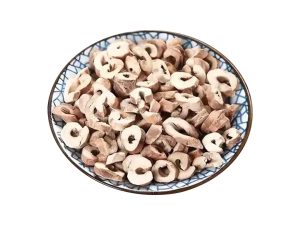
This product is spherical, with a diameter of 4–6 mm. The surface is grayish-black or dark brown, covered with grayish-white, powdery, downy hairs; it has four shallow longitudinal grooves, a slightly concave apex, and a grayish-white persistent calyx and short fruit stalk at the base. The calyx is 1/3 to 2/3 the length of the fruit, 5-lobed, with two of the lobes being deeper and densely covered with downy hairs.It is light in weight, tough and resilient, and not easily broken; a cross-section reveals four chambers, each containing one seed. It has a distinctive, aromatic odor and a bland, slightly pungent taste.
Properties of Processed Slices
1. Schisandra Fruit: See the “Characteristics of the Medicinal Material” section.
2. Roasted Schisandra Fruit: Resembles Schisandra Fruit in shape, with an oily black surface and no white membrane.
3. Charred Schisandra Fruit: Resembles roasted Schisandra Fruit in shape, with a black surface.
Botanical Information
Botanical Classification
Plants of the genus Vitex in the Verbenaceae family, specifically Vitex monophylla and Vitex trifolia.
Morphological Characteristics
1. Monocarpus: A deciduous small shrub, approximately 2 m tall. The entire plant is covered with grayish-white soft hairs. The main stem creeps along the ground, often producing adventitious roots at the nodes; young branches are quadrangular, while older branches are nearly circular.Leaves are simple, opposite, and short-petiolate; leaf blades are obovate to elliptical, with a bluntly rounded apex, a wedge-shaped base, and entire margins, measuring 2.5–5 cm long and 1.5–3 cm wide; the upper surface is green, while the lower surface is powdery white. Panicles are terminal; the calyx is bell-shaped, 5-lobed at the apex;the corolla is pale purple, 5-lobed at the apex, with the lower lobe being the largest, broadly ovate, and hairy on the inner surface in the middle to lower part; there are 4 stamens, extending beyond the corolla tube; the ovary is globose, densely covered with glandular dots, and the stigma is 2-lobed. The drupe is globose, 5–7 mm in diameter, with a persistent calyx. Flowering occurs from July to August, and fruiting from August to October.
2. Schisandra: A deciduous shrub, 1.5–5 m tall. Fragrant. Young branches are quadrangular and densely covered with fine soft hairs. Leaves are trifoliate, opposite, and occasionally simple; petioles are 1–3 cm long;leaflets are ovate, oblong-ovate, or obovate-oblong, 2–9 cm long and 1–3 cm wide, with a blunt or shortly acute apex, a cuneate base, and entire margins; the upper surface is green, glabrous or sparsely pubescent, while the lower surface is densely covered with grayish-white tomentum; leaflets are sessile or, occasionally, the middle leaflet extends downward to form a short petiole.Panicles are terminal, 3–15 cm long; peduncles are densely covered with grayish-white tomentum; the calyx is campanulate, shallowly 5-lobed at the apex, and covered with grayish-white tomentum;corolla pale purple or blue-purple, 6–10 mm long, hairy on the outside, with hairs inside the corolla tube and at the throat, 5-lobed at the apex, bilabiate; 4 stamens, extending beyond the corolla; ovary densely covered with glandular dots. Drupe nearly round, about 5 mm in diameter, black when ripe; calyx persistent. Flowering in July; fruiting from September to November.
Distribution Area
1. Single-leaved Vitex: Distributed in Hebei, Liaoning, Jiangsu, Zhejiang, Anhui, Fujian, Jiangxi, Shandong, Guangdong, and Taiwan. 2. Vitex: Distributed in Fujian, Guangdong, Guangxi, Yunnan, and Taiwan.
Growth Habits
It is highly adaptable and not particularly demanding in terms of environmental conditions. However, it prefers a warm and humid climate, and grows best in loose, fertile sandy loam. It is tolerant of saline-alkali conditions but grows poorly in acidic soils.
Propagation Methods
Propagation can be achieved through seed sowing, cuttings, layering, and division, but propagation by cuttings is the primary method.
Cultivation Techniques
1. Propagation by Cuttings: This can be done in both spring and fall, though spring is preferable. In late March or late September, cut healthy one- or two-year-old branches; take the middle section and trim it into cuttings 20–30 cm long with 2–3 nodes. Plant the cuttings in a seedbed at a spacing of 6 cm × 15 cm. During the seedling stage, water frequently to keep the seedbed moist and apply appropriate fertilizer.Cuttings taken in the fall should be transplanted in early April of the following spring; those taken in the spring should be transplanted in the fall of the same year.
2. Seed Propagation: Harvest ripe fruits in the fall, mix them thoroughly with twice the volume of moist fine sand, and store the mixture in a cool, well-ventilated indoor area. Sow the seeds in early to mid-April of the following year. Rub off the outer shells of the fruits, soak them in warm water (35–40°C) for one day and one night, remove them, let them air-dry slightly, then mix them thoroughly with ash blended with manure.sow in rows in a seedbed. Water carefully during the seedling stage and apply appropriate top-dressing fertilizer. Seedlings raised in the spring of the same year will reach a height of 30–40 cm by the end of the year and should be transplanted after fall.
3. Layering Propagation: Between May and June, select vigorous, long branches from one- or two-year-old plants. Use the wave-layering method, burying the branches in the soil at intervals of 40–50 cm to a depth of about 15 cm, and firm the soil around them.Once adventitious roots have formed, cut the branches into sections and transplant them with their roots attached.
4. Division Propagation: In early April or early July, dig up and replant immediately. Transplant in the fall or spring, between leaf fall and bud break. Dig holes with a spacing of 1 m × 1.3 m; mix organic compost thoroughly with the soil. Plant 2–3 plants per hole, fill with soil, firm it down, and water thoroughly.
5. Field Management: For the first 1–2 years after planting, cultivate the soil and remove weeds once in the spring before bud break, once in June, and once in the winter after leaf fall. Combine winter cultivation with hilling.For the first two years after planting, top dressing should consist primarily of liquid manure from humans and livestock. In the third and fourth years, after flowering and fruiting, increase the application of compost and phosphate fertilizer. Fertilize twice annually: once before flowering and once after pruning. During the flowering period, spray a 1% superphosphate solution 1–2 times. In low-lying areas, ensure that standing water is promptly drained during the rainy season.During the winter dormancy period, prune away dead, old, weak, diseased, insect-infested, and leggy branches. For plants that have been growing for many years and are showing signs of decline, perform renewal pruning by cutting back all old branches to 30 cm above ground level and applying additional fertilizer to promote the growth of numerous, vigorous new shoots. When new shoots reach a height of over 1 m, pinch off the tips promptly; bend branches that grow too tall. Both practices will encourage the production of more new shoots and fruit.
Pest and Disease Control
Pests include cotton aphids and the cotton mealybug, among others.