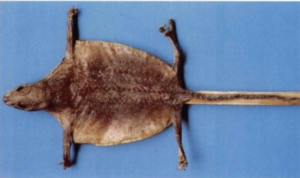
Zongba Ye is the name of a traditional Chinese medicinal herb. It is the rhizome of Aspidistra typical Baill., a plant in the Liliaceae family. It is distributed in Guangxi, Yunnan, and other regions. It has the effects of promoting blood circulation and dispelling blood stasis, mending broken bones, relieving pain, and clearing heat and detoxifying. It is primarily used to treat dysentery, malaria, rheumatic pain, lower back and leg pain due to kidney deficiency, contusions and sprains, fractures, and snake bites.

Zongba Ye
Disclaimer: These statements have not been evaluated by the Food and Drug Administration (FDA). This product is not intended to diagnose, treat, cure, or prevent any disease. All references in this article to TCM syndrome differentiation, herbal medicines, teas, and decoctions are intended to promote TCM culture and are provided solely for educational and reference purposes.
Zongba Ye is the name of a traditional Chinese medicinal herb. It is the rhizome of Aspidistra typical Baill., a plant in the Liliaceae family. It is distributed in Guangxi, Yunnan, and other regions. It has the effects of promoting blood circulation and dispelling blood stasis, mending broken bones, relieving pain, and clearing heat and detoxifying. It is primarily used to treat dysentery, malaria, rheumatic pain, lower back and leg pain due to kidney deficiency, contusions and sprains, fractures, and snake bites.
Chinese Name : 粽巴叶
Aliases : Spider Clinging to an Egg
Authentic Producing Area : Guangxi, Yunnan
Nature, Flavor & Meridian Tropism : Bitter and pungent in taste; warm in nature
Benefits & Efficacy
Benefits
Promotes blood circulation and dispels blood stasis; aids in bone healing; relieves pain; clears heat and detoxifies.
Indications
Dysentery, malaria, rheumatic pain, lower back and leg pain due to kidney deficiency, bruises and sprains, fractures, and snake bites.
Usage and Dosage
Internal use: Decoct 15–30 g. External use: Pound and apply as a poultice.
Precautions
Use with caution during pregnancy.
Applications
Related Compatibility
For fractures: After reduction and immobilization, take appropriate amounts of Zongba leaves and Yupipa leaves, pound them into a paste, and apply externally.
Processing & Preparation
Harvesting & Processing
Can be harvested year-round.
Crude Drug Identification
Properties of Crude Drugs
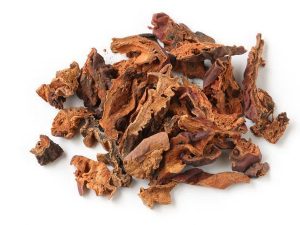
The rhizome is nearly cylindrical, about 7 mm in diameter, with slender, thread-like roots. The exterior is yellowish-brown, with nodes and scales.
Botanical Information
Botanical Classification
A plant of the Liliaceae family, Ovo-leaved Spider Egg.
Morphological Characteristics
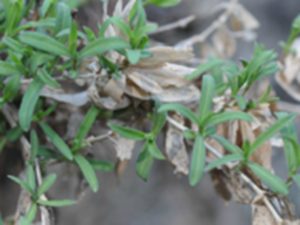
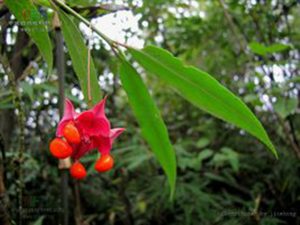
A perennial herb. The rhizome is stout, creeping along the ground, with numerous fibrous roots.Leaves are basal, curled when young, and have long petioles; leaf blades are oblong-elliptic, with a gradually tapering apex, a wedge-shaped base, entire or wavy margins, parallel veins arising from the base, and mottled patches. Flowers are brown or pale red, solitary, with short flower stalks; the perianth is bell-shaped; there are 6 stamens; the ovary is superior, with a broad, shield-shaped stigma. The fruit is a spherical berry. Flowering period: August–September.
Distribution Area
Distributed in Guangxi, Yunnan, and other regions.
Copyright: Excerpt from Internet, Copyright belongs to the Original Author and all original sources, This article was shared by DeDe on July 31, 2026, Please credit the source and include a link to the original article when reposting.
Terminology Proofreading: [Cheng Bo] | July 31, 2026 Reviewed by: [Wang Zhongxiang, Associate Chief TCM Physician (China)] | July 31, 2026
Correct Content Errors: Errors may occur during the writing, editing, translation, and publication of website content. If you find any errors or inaccurate information in this article, please feel free to Contact Us to report them, and we will correct them promptly.
FDA Disclaimer: The descriptions of the efficacy of Chinese herbal medicines, herbal teas, decoctions, and formulas, as well as the content on Traditional Chinese Medicine (TCM) diagnostic theory and traditional TCM therapies contained on this site, are intended solely for the purpose of popularizing TCM culture and serving as an educational reference; they do not constitute medical diagnosis or treatment advice. Please do not attempt to use these products on your own without proper guidance. These statements have not been evaluated by the Food and Drug Administration. This product is not intended to diagnose, treat, cure, or prevent any disease. If you are experiencing any physical discomfort, please consult a licensed healthcare professional and seek treatment at a reputable medical institution. This platform assumes no responsibility for any consequences resulting from the use of herbs or formulas by any individual based on the information provided on this site. Please read Medical Disclaimer.