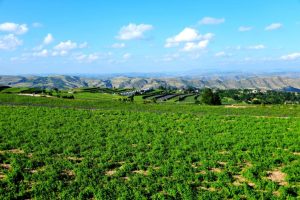
Astragalus is the name of a traditional Chinese medicine. It is the dried root of Astragalus membranaceus (Fisch.) Bge. var. mongholicus (Bge.) Hsiao or Astragalus membranaceus (Fisch.) Bge., plants belonging to the genus Astragalus in the Fabaceae family.It has the effects of tonifying qi and raising yang, consolidating the exterior and stopping sweating, promoting diuresis and reducing edema, generating body fluids and nourishing blood, resolving stagnation and relieving arthralgia, expelling toxins and draining pus, and promoting wound healing and tissue regeneration.It is primarily used to treat qi deficiency with fatigue, poor appetite and loose stools, sinking of central qi, chronic diarrhea with rectal prolapse, bloody stools and metrorrhagia, spontaneous sweating due to exterior deficiency, edema caused by qi deficiency, internal heat with excessive thirst, pallor and weakness due to blood deficiency, hemiplegia, arthralgia and numbness, abscesses and boils that are slow to ulcerate, and chronic ulcers that fail to heal.

Astragalus
Astragalus is the name of a traditional Chinese medicine. It is the dried root of Astragalus membranaceus (Fisch.) Bge. var. mongholicus (Bge.) Hsiao or Astragalus membranaceus (Fisch.) Bge., plants belonging to the genus Astragalus in the Fabaceae family.It has the effects of tonifying qi and raising yang, consolidating the exterior and stopping sweating, promoting diuresis and reducing edema, generating body fluids and nourishing blood, resolving stagnation and relieving arthralgia, expelling toxins and draining pus, and promoting wound healing and tissue regeneration.It is primarily used to treat qi deficiency with fatigue, poor appetite and loose stools, sinking of central qi, chronic diarrhea with rectal prolapse, bloody stools and metrorrhagia, spontaneous sweating due to exterior deficiency, edema caused by qi deficiency, internal heat with excessive thirst, pallor and weakness due to blood deficiency, hemiplegia, arthralgia and numbness, abscesses and boils that are slow to ulcerate, and chronic ulcers that fail to heal.
Chinese Name : 黄芪
Latin Name : Astragali Radix
Aliases : Astragalus, Dai San, Dai Sheng, Du Sheng, Eupatorium, Shu Zhi, Bai Ben, Wang Sun, Baiyao Mian, mutton, Mian Huangqi, Mian Qi, Mian Qi, Jian Qi, Tu Shan Bao Zhang Gen, Du Gen, Er Ren Tai, Mian Huangqi
Authentic Producing Area : Shanxi, Gansu, Heilongjiang, Inner Mongolia
Nature, Flavor & Meridian Tropism : Sweet in taste, slightly warm in nature; enters the Spleen and Lung meridians
Benefits & Efficacy
Benefits
Tonifies qi and raises yang; consolidates the exterior and stops sweating; promotes diuresis and reduces swelling; generates body fluids and nourishes blood; dispels stagnation and relieves arthralgia; expels toxins and drains pus; astringes sores and promotes tissue regeneration.
Indications
Qi deficiency with fatigue, poor appetite and loose stools, sinking of central qi, chronic diarrhea with rectal prolapse, bloody stools, metrorrhagia and menorrhagia, spontaneous sweating due to exterior deficiency, edema due to qi deficiency, internal heat with excessive thirst, pallor and emaciation due to blood deficiency, hemiplegia, arthralgia and numbness, abscesses and boils that are slow to ulcerate, and chronic ulcers that fail to heal.
Usage and Dosage
Internal Use: Decocted as a soup, 10–15 g; higher doses of up to 30–60 g may be used; or incorporated into pills, powders, or ointments.
Precautions
1. This herb should not be used in cases of exterior excess with severe pathogenic factors, in the early stages of skin ulcers, or when heat toxins remain severe after ulceration.2. Contraindications for combination with other Chinese herbs: incompatible with turtle shell (Gui Jia) and white fresh bark (Bai Xian Pi).3. Contraindications for combination with Western medications:(1) Should not be used in combination with antihypertensive drugs to prevent orthostatic hypotension and other complications.(2) Should not be used in combination with cardiac glycosides, as the combined effects may increase toxicity.(3) Concomitant use with heparin, warfarin, aspirin, and similar drugs may increase the risk of bleeding. It may reduce the blood-pressure-raising effect of epinephrine; therefore, concurrent use is not recommended.4. Dietary Contraindications: Avoid radishes, mung beans, and strongly alkaline foods such as grapes, tea leaves, wine, kelp sprouts, and kelp.
Chemical Constituents
It primarily contains triterpene saponins, such as astragaloside I, II, III, and IV(astragaloside A), soybean saponin I, and astragaloside I and II; flavonoids, such as morin and morin glucoside; and polysaccharides and amino acids.
Pharmacological Actions
This product has the following effects: regulating immune function, combating fatigue, reducing stress, regulating gastrointestinal motility, protecting against lung damage, promoting diuresis and protecting against kidney damage, promoting hematopoiesis, delaying aging, protecting against liver damage, regulating blood lipids, and lowering blood glucose.
Relevant Discussions
1. *Ben Cao Hui Yan*: “A herb that tonifies the lungs and strengthens the spleen, fortifies the defensive qi and curbs sweating, and expels wind and eliminates toxins.”
2. *Yi Xue Zhong Zhong Can Xi Lu*: “It can tonify qi and also lift qi; it is particularly effective for treating the sinking of the great qi of the chest (i.e., zong qi).”
Applications
Clinical Applications
1. To treat spleen qi deficiency manifested as fatigue, weakness, poor appetite, and loose stools, it may be used alone by boiling it into a decoction, or combined with herbs such as Codonopsis pilosula and Atractylodes macrocephala.
2. To treat chronic diarrhea, rectal prolapse, and visceral prolapse caused by spleen deficiency with sinking of central qi, it is often used in combination with Ginseng, Cimicifuga, and Bupleurum, as in the Bu Zhong Yi Qi Decoction (*Treatise on the Spleen and Stomach*).
3. To treat lung qi deficiency, chronic cough and wheezing, shortness of breath, and mental fatigue, it is often combined with Ziwan, Kuandong, and Apricot Kernel, as in the Lung-Tonifying Decoction (from *Yonglei Qianfang*).
4. This herb can tonify the qi of the spleen and lungs to strengthen the defensive qi and consolidate the exterior; it is often used in combination with Oyster Shell and Ephedra Root, as in the Oyster Shell Powder (from *Heji Jufang*).
5. To treat unstable defensive qi, superficial deficiency with spontaneous sweating, and susceptibility to wind pathogens, it is often combined with Atractylodes macrocephala and Saposhnikovia divaricata, as in the Jade Screen Powder (Danxi’s Heart Methods).
6. To treat edema due to qi deficiency, it is often combined with Atractylodes macrocephala, Poria cocos, and Stephania tetrandra, as in the Stephania and Astragalus Decoction (Essentials of the Golden Cabinet).
7.To treat deficiency of qi and blood, it is often used in combination with Danggui, as in the Danggui Bu Xue Decoction (*Lanshi Micang*).
8. To treat the middle stage of skin ulcers, where deficiency of the body’s vital energy and an excess of pathogenic toxins prevent the expulsion of toxins outward, resulting in a flat, sunken ulcer with a diffuse base that is difficult to rupture or decompose, it is often used in combination with herbs such as Ren Shen and Danggui, as in the Tuoli Toupang Powder (*Yizong Jinjian*); in the late stage of an ulcer, where weakness of qi and blood results in thin, watery pus and difficulty in closing the ulcerated area, this herb promotes tissue regeneration and wound healing. It is often combined with Ren Shen, Dang Gui, and Rou Gui, as in the Shi Quan Da Bu Tang (from *He Ji Ju Fang*).
9. For treating bi syndrome caused by wind, cold, and dampness, it is appropriate to combine it with herbs such as Sichuan Aconite, Duhuo, and Achyranthes. For post-stroke sequelae, it is often used in combination with Angelica sinensis, Ligusticum chuanxiong, and Earthworm, as in the Bu Yang Huan Wu Decoction (*Yilin Gai Cuo*).
Related Compatibility
1. Astragalus combined with Ginseng: Astragalus excels at tonifying qi and raising yang, strengthening the defensive qi and consolidating the exterior; it tends toward warming and protective tonification. Ginseng excels at greatly tonifying original qi, generating body fluids, and quenching thirst; it tends toward nourishing and fortifying. When combined, these two herbs complement each other’s effects, forming an important sweet-warm combination for tonifying qi. It is suitable for various symptoms of physical weakness caused by qi deficiency, such as mental fatigue, poor appetite, and spontaneous sweating.
2. Astragalus combined with Angelica sinensis: Astragalus tonifies the qi of the spleen and lungs to nourish the source of blood generation; Angelica sinensis nourishes the blood of the heart and liver to replenish blood and harmonize the nutritive blood. When combined, these two herbs enhance the effects of tonifying qi and generating blood. This combination is suitable for conditions such as internal injury due to overwork, muscle heat and facial flushing, restlessness and thirst, a weak and large pulse accompanied by severe fatigue, as well as skin ulcers, fever due to blood deficiency, and various deficiencies of qi and blood.
3. Astragalus combined with Cimicifuga: Astragalus is sweet and warm, excelling at tonifying qi and raising yang; Cimicifuga is pungent, sweet, and slightly cold, excelling at raising yang. When combined, these two herbs enhance the effect of raising yang and lifting sagging organs, making this combination suitable for conditions such as metrorrhagia and menorrhagia due to qi deficiency with sinking, rectal prolapse, and uterine prolapse.
4. Astragalus combined with Saposhnikovia: Astragalus tonifies qi and consolidates the exterior, while Saposhnikovia dispels wind and relieves exterior syndromes.When combined, Fangfeng helps Astragalus’s qi-tonifying action reach the entire body, while Astragalus, aided by Fangfeng’s dispersing action, does not retain pathogenic factors; conversely, Fangfeng, supported by Astragalus’s ability to consolidate the exterior, does not lose its dispersing effect. This combination embodies “tonification within dispersion” and “dispersion within tonification,” representing a synergistic application. It is suitable for conditions such as aching limbs and spontaneous sweating due to exterior deficiency in deficient patients.
5. Astragalus combined with Cinnamomum twig: Astragalus excels at tonifying qi and promoting blood circulation, while Cinnamomum twig excels at warming the meridians and unblocking the vessels. When combined, these two herbs enhance the effects of tonifying qi, unblocking the vessels, warming the meridians, and harmonizing the blood. This combination is suitable for conditions such as deficiency of qi, blood, nutritive, and defensive qi, muscle pain, and numbness in the shoulders and arms.
Medicinal Identification
Raw Astragalus and Honey-Processed Astragalus: Both processed forms have a sweet and warm nature and enter the Lung and Spleen meridians. They share the functions of tonifying qi and fortifying the exterior, promoting diuresis, drawing out toxins and expelling pus, and promoting wound healing and tissue regeneration.However, raw Astragalus excels at fortifying the exterior and stopping sweating, promoting diuresis and reducing edema, and drawing out pus from sores; it is often used for conditions such as an unstable Wei Qi, spontaneous sweating, common cold due to physical weakness, edema, and sores that have not yet ulcerated or have remained open for a long time without healing. Honey-processed Astragalus, on the other hand, excels at tonifying Qi and strengthening the middle jiao; it is often used for conditions such as Qi deficiency with fatigue, poor appetite, loose stools, and sinking of the middle Qi.
Related Medicines
Qingshu Yqi Pills, Jingshiling Capsules, Sanlianghan Medicinal Wine, Astragalus Stomach-Strengthening Ointment, Zhengxintai Capsules, and Buzhong Yqi Pills.
Related Prescriptions
Bu Zhong Yi Qi Decoction (*Discourse on Distinguishing Confusions in Internal and External Injuries*), Yu Pingfeng Powder (*Compilation of Medical Formulas*), Astragalus and Cinnamon Twig Decoction with Five Ingredients (*Essentials of the Golden Cabinet*), Bao Yuan Decoction (*Mirror of Compassion*), and Angelica Blood-Nourishing Decoction (*Discourse on Distinguishing Confusions in Internal and External Injuries*).
Medicinal Diet Therapy
1. Astragalus and Eel Soup
(1) Effects: Tonifies qi and nourishes blood; promotes health and enhances complexion. Used for symptoms such as a sallow complexion, emaciation, and fatigue caused by deficiency of qi and blood.
(2) Ingredients: 30g Astragalus, 300g eel, 1 slice of ginger (shredded), 5 red dates (pitted), 2 cloves of garlic.
(3) Preparation: Rinse the Astragalus and red dates; wash the garlic and cut into sections. Gut the eel, rinse it thoroughly, and cut into pieces. Heat oil in a wok, add the eel, ginger, and salt, and stir-fry until the eel is half-cooked. Transfer all ingredients to a pot, add an appropriate amount of water, bring to a boil over high heat, then simmer over low heat for 1 hour. Season to taste.
(4) Usage: Serve as a side dish with meals; consume the soup and eel meat.
2. Stephania and Astragalus Porridge
(1) Benefits: Nourishes the blood, strengthens the spleen, promotes diuresis, and reduces swelling. Suitable for obesity.
(2) Ingredients: 10 g Stephania, 12 g Astragalus, 6 g Atractylodes, 3 g licorice, 50 g japonica rice.
(3) Preparation: Place all the herbs in a pot and add enough water to cover them completely. Bring to a boil over high heat, then simmer over low heat for about 30 minutes. Add the japonica rice and cook until it becomes porridge.
(4) Usage: Consume 1–2 times daily while warm.
3. Astragalus and Beef Porridge
(1)Effects: Tonifies the spleen and strengthens the stomach; boosts qi and fortifies the exterior; harmonizes the nutritive and defensive qi. Used for symptoms such as spleen-stomach qi deficiency, reduced appetite, fatigue and weakness in the limbs, shortness of breath and reluctance to speak, pale complexion, loose stools, and a large, weak, and soft pulse.
(2) Ingredients: 30g of roasted Astragalus, 100g of beef, 30g of rice, 10 jujubes, and an appropriate amount of salt.
(3) Preparation: Cut the beef into small cubes and place them in a pot with the fried Astragalus. Simmer for half an hour, then remove the Astragalus. Next, add the rice and simmer over low heat until it becomes a thin porridge. Season with salt to taste.
(4) Usage: Consume warm, 1–2 times daily.
Notes
Patients requiring treatment with traditional Chinese medicine should first consult a licensed TCM hospital, where a TCM practitioner will conduct a professional diagnosis and prescribe the appropriate herbal formula.
Processing & Preparation
Harvesting & Processing
Harvest in spring and autumn; remove fibrous roots and root heads, then sun-dry.
Processing Methods
1. Astragalus: Take the raw herb, remove impurities, wash thoroughly, moisten thoroughly, cut into thick slices, and dry.
2. Roasted Astragalus: Place Astragalus slices in a pan and roast over low heat until they turn a deep yellow color with slight scorch marks; remove and allow to cool.
3. Honey-coated Astragalus: Dilute refined honey with an appropriate amount of boiling water, add the Astragalus slices, mix well, let stand briefly, then place in a wok. Heat over low heat and stir-fry until deep yellow and no longer sticky to the touch; remove and let cool. Use 25 kg of refined honey per 100 kg of Astragalus slices.
4. Wine-Roasted Astragalus: Take Astragalus slices, mix them with rice wine, let stand for 1 hour, then roast. Use 12.4 kg of rice wine per 100 kg of Astragalus slices.
5. Salt-Processed Astragalus: Take Astragalus slices, mix thoroughly with salt water, and let stand until the salt water is completely absorbed. Place in a pan and stir-fry gently over low heat, then remove and let cool. For every 100 kg of Astragalus slices, use 1.8 kg of table salt.
Storage Methods
Store in a dry container; keep stir-fried Astragalus, honey-processed Astragalus, wine-processed Astragalus, and salt-processed Astragalus tightly sealed in a cool, dry place.
Crude Drug Identification
Properties of Crude Drugs
This product is cylindrical, sometimes branched, with a thicker upper end, measuring 30–90 cm in length and 1–3.5 cm in diameter. The surface is pale brownish-yellow or pale brownish-gray, with irregular longitudinal wrinkles or grooves.It is hard and tough, not easily broken; the fracture surface is highly fibrous and powdery. The cortex is yellowish-white, and the wood is pale yellow, with radial patterns and fissures. The center of older roots may occasionally appear decayed, dark brown, or hollow. It has a faint odor and a slightly sweet taste; when chewed, it has a faint bean-like odor.
Properties of Processed Slices
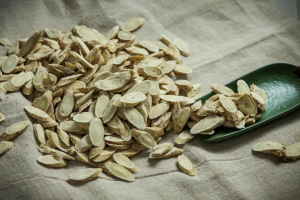
1. Astragalus: Thick, round or oval slices with a yellowish-white surface. The inner layer features brown ring patterns and radial striations, while the outer layer has winding fissures and a yellow center. The periphery is grayish-yellow or light brown with longitudinal striations. It has a faint odor and a slightly sweet taste. When chewed, it has a faint bean-like odor.
2. Roasted Astragalus: Resembles Astragalus slices; the surface is deep yellow with slight scorch marks.
3. Honey-coated Astragalus: Resembles Astragalus slices; the surface is deep yellow with a slight sheen, slightly sticky, has a honey-like aroma, and tastes sweet.
4. Wine-processed Astragalus: Resembles Astragalus slices; the surface is yellow with a faint aroma of wine.
5. Salted Astragalus: Resembles Astragalus slices; the surface is yellow with a faint salty taste.
Botanical Information
Botanical Classification
Plants of the genus Astragalus in the legume family, specifically Mongolian Astragalus and Membranose Astragalus.
Morphological Characteristics
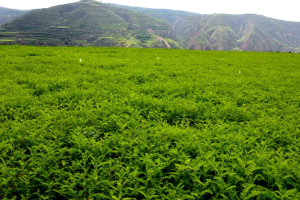
1. Mongolian Astragalus: A perennial herb, 50–150 cm tall. The root is straight and long, cylindrical, slightly woody, with a surface ranging from pale brownish-yellow to dark brown. The stem is erect, branched at the upper part, and covered with long, soft hairs. The leaves are odd-pinnate, arranged alternately; the base of the petiole bears lanceolate stipules;25–37 leaflets, each broadly elliptic, 4–9 mm long, with a slightly obtuse apex and a short tip, a cuneate base, entire margins, and white, long, soft hairs on both surfaces. Racemes are axillary, bearing 10–25 flowers; flower pedicels are short and bear black, stiff hairs; bracts are linear-lanceolate; the calyx is tubular;corolla yellow, papilionaceous; stamens 10, in two groups; ovary stalked, smooth and glabrous, style glabrous. Pod membranous, inflated, ovate-oblong, 1.1–1.5 cm wide, glabrous, beaked at the apex, with prominent reticulate veins. Seeds 5–6, reniform, black. Flowering period: June–July; fruiting period: August–September.
2. Membranous-pod Astragalus: This species is morphologically very similar to the previous one, with the main distinction being that it has 13–31 leaflets, which are ovate-lanceolate or elliptic, 7–30 mm long, and 4–10 mm wide.The corolla is pale yellow; the ovary is sparsely covered with soft hairs. The pod is ovate-oblong, 2–2.5 cm long and 0.9–1.2 cm wide, covered with short black hairs.
Distribution Area
1. Mongolian Astragalus: Distributed in Heilongjiang, Jilin, Liaoning, Inner Mongolia, Hebei, Shanxi, Xinjiang, and Tibet. It is cultivated in Northeast China, Inner Mongolia, Hebei, and Shanxi.2. Membranose Astragalus: Distributed in Heilongjiang, Jilin, Liaoning, Inner Mongolia, Beijing, Tianjin, Hebei, Shanxi, Shaanxi, Ningxia, Gansu, Qinghai, Shandong, Sichuan, and Tibet. It is cultivated in Northeast China, Inner Mongolia, Hebei, and Shanxi.
Growth Habits
Prefers dry conditions and full sun. Thrives in deep soil rich in humus; requires well-drained, neutral to slightly alkaline sandy loam. Soil should not be excessively dry during peak flowering to prevent flower and fruit drop. Thousand-seed weight is 5.8 g.
Propagation Methods
Propagation is by seed.
Cultivation Techniques
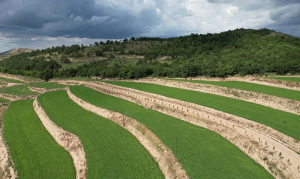
In northern regions, spring sowing takes place from late March to early April; fall sowing occurs from September to October. Since many seeds are hard-coated and have poor water absorption, germination rates may be affected. In commercial production, sand rubbing can be used to improve germination rates.For row sowing, space rows 30 cm apart. Dig shallow furrows approximately 3 cm deep, scatter the seeds evenly into the furrows, and cover with about 2 cm of soil. The seeding rate is 15–22.5 kg per hectare. Water thoroughly after sowing to maintain moisture; seedlings will emerge in about 2–3 weeks. When seedlings reach 10–15 cm in height, thin them to a row and plant spacing of 10–15 cm. For fall sowing, seedlings will emerge in the following spring.
Pest and Disease Control
1. Diseases include Astragalus powdery mildew. During the disease onset period, spray with a 1,000-fold dilution of 50% Topsin-M or the BO-10 biological agent.
2. Pests include Astragalus seed wasps, turnip beetles, and aphids. Spraying with carbaryl powder during the flowering period is most effective.