Alpinia officinarum, a name in traditional Chinese medicine. It is the dried rhizome of Alpinia officinarum Hance, a plant in the genus Alpinia of the Zingiberaceae family. It has the effects of dispelling cold and relieving pain, as well as warming the stomach and stopping vomiting. It is primarily used to treat cold pain in the epigastrium and abdomen, vomiting due to stomach cold, belching, and acid regurgitation.

Alpinia officinarum
Alpinia officinarum, a name in traditional Chinese medicine. It is the dried rhizome of Alpinia officinarum Hance, a plant in the genus Alpinia of the Zingiberaceae family. It has the effects of dispelling cold and relieving pain, as well as warming the stomach and stopping vomiting. It is primarily used to treat cold pain in the epigastrium and abdomen, vomiting due to stomach cold, belching, and acid regurgitation.
Chinese Name : 高良姜
Latin Name : Alpiniae Officinarum Rhizoma
Aliases : Gaoliang Ginger, Liangjiang, Manjiang, Small Liangjiang, Hai Liangjiang
Authentic Producing Area : Mainly produced in Guangdong, Guangxi, Hainan, Taiwan, and other regions.
Nature, Flavor & Meridian Tropism : Pungent in taste, warm in nature; enters the Spleen and Stomach meridians
Benefits & Efficacy
Benefits
Dispels cold and relieves pain; warms the stomach and stops vomiting.
Indications
Used to treat cold pain in the epigastrium and abdomen, vomiting due to stomach cold, belching, and acid regurgitation.
Usage and Dosage
Internal use: Decocted, 3–6 g. Taken as a powder, 3 g per dose; or incorporated into pills or powders.
Precautions
1. Contraindicated in cases of yin deficiency with heat. 2. Alpinia officinarum may weaken the laxative effect of senna leaves; they should not be used together. 3. Should not be used in combination with drugs such as acetylcholine or histamine.
Chemical Constituents
Contains 0.5%–1.5% essential oil; the main components of the oil are 1,8-cineole, methyl cinnamate, eugenol, pinene, myrcen, and the pungent compound galangin, among others.It also contains flavonoids such as galangin, kaempferol, kaempferol-3-O-glucoside, quercetin, and isorhamnetin.
Pharmacological Actions
This product has pharmacological effects such as regulating gastrointestinal motility, preventing gastric ulcers, protecting the liver, relieving pain, combating bacteria, protecting the brain, and fighting cancer.
Relevant Discussions
1. *Mingyi Bielu*: “It is primarily used for sudden chills, cold reversal in the stomach, and abdominal pain caused by cholera.”
2. *Bencao Huiyan*: “Galangal is a herb that dispels cold and dampness and warms the spleen and stomach.For the elderly with spleen and kidney deficiency-cold manifesting as spontaneous diarrhea, or for women with sudden abdominal pain caused by anger or cold phlegm, this herb—being pungent, hot, and purely yang—eliminates all deep-seated cold and chronic chill, with efficacy comparable to that of Cinnamomum cassia and Aconite. However, it should not be used lightly unless the condition involves external cold invading the stomach, resulting in cold stomach and vomiting, or consumption of raw and cold foods leading to cholera with vomiting and diarrhea.”
Applications
Clinical Applications
1. To treat cold-induced pain in the stomach, it is combined with processed ginger to enhance their synergistic effects, as in the Two Ginger Pills (from *Formulas of the Bureau of Harmonious Medicines*).
2. To treat stomach cold with liver stagnation, accompanied by distension and pain in the epigastrium and abdomen, it is often combined with cyperus rhizome to regulate the liver, relieve stagnation, dispel cold, and alleviate pain, as in the Liangfu Pills (from *Collection of Effective Formulas*).
3. To treat sudden, severe cramping pain in the heart and abdomen, fullness and distension in both flanks, and unbearable restlessness and distress, it may be used in combination with Houpo, Danggui, and Guixin, as in the Gaoliangjiang Decoction (*Qianjin Fang*).
4. To treat vomiting due to cold in the stomach, it is often used in combination with Banxia and Shengjiang.
5. To treat vomiting due to deficiency-cold, it is commonly used in combination with Dangshen, Fuling, and Baizhu.
Related Compatibility
1. Galangal Combined with Piper longum: Galangal is pungent, hot, and dispersing; its primary functions are to warm the stomach, dispel cold, and relieve pain, while also warming the stomach to stop vomiting. Piper longum is pungent and hot, targeting the stomach and intestines; it can warm chronic cold in the stomach and intestines, relieve cold stagnation in the large intestine, and is effective at warming the middle burner, dispelling cold, regulating qi, relieving stagnation, and stopping vomiting and pain.When combined, these two herbs enhance the effects of warming the stomach, dispelling cold, relieving pain, and stopping vomiting. This combination is suitable for conditions such as stomach pain due to cold and vomiting.
2. Gaoliangjiang Combined with Jujube: Gaoliangjiang is pungent, hot, and drying; it dispels cold, relieves pain, warms the stomach, and stops vomiting. Jujube is sweet, warm, and mild; it tonifies the middle, boosts qi, and regulates and tonifies the spleen and stomach. When combined, these two herbs enhance the effects of strengthening the spleen, warming the middle, and stopping vomiting.This combination is suitable for severe vomiting associated with cholera.
3. Galangal combined with Dried Ginger: Galangal is pungent, hot, and drying, primarily warming the stomach, dispelling cold, and relieving pain; Dried Ginger is pungent, hot, and intensely drying, primarily entering the Spleen and Stomach meridians, and is a key herb for strengthening the Spleen’s yang, warming the middle, and dispelling cold. When combined, these two herbs enhance the effects of warming the stomach, dispelling cold, and relieving pain. This combination is suitable for conditions such as cold pathogens invading the stomach and cold pain in the epigastrium and abdomen.
4. Gaoliangjiang Combined with Banxia: Gaoliangjiang primarily warms the stomach, dispels cold, and relieves pain, while also being able to descend counterflow and stop vomiting; Banxia excels at descending counterflow, harmonizing the stomach, and stopping vomiting. When combined, these two herbs enhance the effects of warming the middle burner, descending counterflow, and stopping vomiting. This combination is suitable for vomiting caused by stomach cold.
5. Gaoliangjiang Combined with Ren Shen: Gaoliangjiang excels at warming the stomach, dispelling cold, and relieving pain, while also being able to reverse counterflow and stop vomiting; Ren Shen excels at tonifying the spleen, regulating the middle burner, invigorating spleen qi, and supporting the source of transformation and transportation, making it a key herb for tonifying the spleen. When combined, these two herbs enhance the effects of tonifying qi, strengthening the spleen, warming the stomach, and stopping vomiting. This combination is suitable for vomiting and belching caused by deficiency-cold of the spleen and stomach.
Medicinal Identification
1. Different Processed Forms of Galangal: In ancient times, galangal was processed through methods such as roasting (either alone or with other herbs), stir-frying, stewing, and boiling. These methods all involved heat and temperature and were related to the herb’s volatile oil content. Today’s galangal slices are not processed in any of these ways but are simply cut into thin slices, representing an advancement and development in the history of its processing.Modern research suggests that the primary active components of Galangal (such as essential oils and flavonoids) are prone to decomposition at high temperatures; therefore, slicing the raw product may better preserve its medicinal efficacy.
2. Galangal and Dried Ginger: Both originate from the rhizomes of plants in the Zingiberaceae family; both are pungent and warm in nature and enter the Spleen and Stomach meridians; both are effective at dispelling cold and relieving pain, as well as warming the middle burner to stop vomiting, and are used to treat cold pain in the epigastrium and abdomen, as well as vomiting and diarrhea caused by yang deficiency and internal cold.The difference lies in the fact that Dried Ginger excels at warming the spleen yang, while Gaoliangjiang excels at dispelling stomach cold; Dried Ginger can also restore yang, unblock the meridians, warm the lungs, and transform phlegm, treating conditions of impending yang collapse and cold phlegm-induced coughing and wheezing.
3. Gaoliangjiang and Wu Zhu Yu: Both have a pungent taste and warm nature, enter the Spleen and Stomach meridians, are effective at dispelling cold and relieving pain, warming the middle burner to stop vomiting, and treat cold pain in the stomach and vomiting caused by stomach cold.Galangal excels at dispelling cold in the stomach and is particularly effective for treating cold pain in the epigastrium and abdomen, as well as vomiting and diarrhea caused by stomach cold; Evodia, which also enters the Liver and Kidney meridians, dispels cold pathogens from the Liver meridian, resolves stagnation of Liver qi, and can dry dampness to assist Yang, regulate the Liver, and descend qi. It is a key herb for treating various pains caused by Liver cold and qi stagnation, used to treat headaches at the crown of the head associated with the Jueyin Liver meridian, various pains caused by cold stagnation in the Liver meridian,abdominal pain due to cold hernia, swelling and pain from cold-damp beriberi, chronic diarrhea due to yang deficiency, dysmenorrhea caused by cold, and irregular menstruation.
Related Medicines
Medicinal moxa sticks, Anzhong Tablets, Jiqi Niantong Pills, Deficiency-Cold Stomach Pain Granules, and Zhongjing Weiling Pills.
Related Prescriptions
Liangfu Pills (*Collection of Effective Formulas*), Changshan Decoction (*Remarkably Effective Formulas*), Gaoliangjiang Decoction (*Essential Prescriptions Worth a Thousand Gold*).
Medicinal Diet Therapy
Galangal Porridge:
1. Effects: Warms the middle burner and dispels cold. Used to treat stomach pain caused by cold, cold-induced cholera, alternating vomiting and diarrhea, and abdominal pain.
2. Ingredients: 15 grams of Galangal, 50 grams of japonica rice.
3. Preparation: Wash the galangal thoroughly. Place it in a pot, add an appropriate amount of water, and simmer over high heat for about 30 minutes. Strain out the solids and set the liquid aside. Rinse the japonica rice thoroughly, place it in a pot, pour in the prepared herbal decoction, and simmer until it becomes porridge.
4. Usage: Consume on an empty stomach.
Notes
Patients requiring treatment with Chinese herbal medicine should first consult a licensed Traditional Chinese Medicine (TCM) hospital to receive a prescription following a professional TCM differential diagnosis.
Processing & Preparation
Harvesting & Processing
Harvest the rhizomes that have grown for 4–6 years in late summer or early fall. Remove the aboveground stems, fibrous roots, and residual scales; wash thoroughly, cut into sections, and sun-dry. Use raw.
Processing Methods
Take the raw herbal material, remove impurities, wash thoroughly, and moisten thoroughly. Slice thinly, then sun-dry or dry at a low temperature.
Storage Methods
Store in a dry container in a cool, dry place to prevent insect infestation.
Crude Drug Identification
Identification
1. Cross-section of this product: The outer walls of epidermal cells are thickened; some contain reddish-brown substances. The phloem contains numerous vascular bundles with leaf scars, of the exarch type.The endodermis is distinct. The stele contains a large number of exarch vascular bundles; the bundle sheath fibers form a ring and are lignified. Numerous secretory cells are scattered throughout the parenchyma of the cortex and stele, containing yellow or reddish-brown resinous substances; the parenchyma cells are filled with starch grains.
2. Take 5 g of the powdered sample and place it in a round-bottomed flask. Add 200 mL of water, connect an essential oil detector, and add water to the upper end of the detector until the marked volume is filled and the liquid overflows into the flask. Add 3 mL of n-hexane, connect a reflux condenser, heat to a gentle boil, and maintain this temperature for 2 hours. Allow to cool, and use the n-hexane solution as the test solution.Separately, take 5 g of Alpinia officinarum reference material and prepare a reference solution using the same method.Test by thin-layer chromatography (General Rules 0502): Pipette 10 μL of each of the two solutions and apply them separately to the same silica gel G thin-layer plate. Develop with a toluene-ethyl acetate (19:1) mobile phase, remove the plate, allow it to air-dry, and spray with a 5% vanillin-sulfuric acid solution. Heat at 105°C until the spots become clearly visible.In the chromatogram of the test sample, spots of the same color appear at positions corresponding to those in the chromatogram of the reference herbal material.
Properties of Crude Drugs
The rhizome is cylindrical, often curved, branched, 4–9 cm long, and 1–1.5 cm in diameter. The surface is reddish-brown or dark brown, with fine, dense longitudinal wrinkles and grayish-brown, wavy nodes; internodes are 0.5–1 cm long, with circular root scars on the underside.The texture is tough and resilient; it is difficult to break. The fracture surface is grayish-brown or reddish-brown, fibrous, with a distinct endodermis ring and scattered vascular bundle scars. It has a fragrant aroma and a pungent, spicy taste. Specimens with few branches, a reddish-brown color, a strong fragrance, and a pungent taste are considered superior.
Properties of Processed Slices
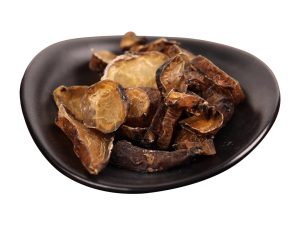
Sliced Galangal is prepared as thin, roughly circular or irregularly shaped slices. The surface is grayish-brown or reddish-brown, fibrous, and marked with dot-like vascular bundles. The edges are dark red or dark brown, with fine, dense longitudinal wrinkles and annular rings. It is tough and resilient, with a fragrant aroma and a pungent, spicy taste.
Botanical Information
Botanical Classification
Alpinia officinarum, a plant of the genus Alpinia in the Zingiberaceae family.
Morphological Characteristics
A perennial herb, 30–110 cm tall. The rhizome is cylindrical, creeping, reddish-brown, 1–1.5 cm in diameter, with nodes bearing annular membranous scales and roots emerging from the nodes. Stems are tufted and erect. Leaves are sessile or nearly sessile;leaf blades are linear-lanceolate, 15–30 cm long, 1.5–2.5 cm wide, with an acuminate or caudate apex, gradually narrowing at the base, entire margins, and glabrous on both surfaces; leaf sheaths are open, clasping the stem, with membranous margins; the ligule is membranous, 2–3 cm long, and entire. The inflorescence is a terminal, erect raceme, 6–15 cm long, with the rachis tomentose;The calyx is tubular, with a tube 8–14 mm long, irregularly 3-lobed at the apex; the corolla tube is funnel-shaped, about 1 cm long, with 3 oblong lobes; the labellum is ovate, white with red stripes, about 2 cm long; the lateral staminodes are conical; the developed stamen is single, about 1.6 cm long, arising above the throat of the corolla tube;The ovary is 3-chambered and densely covered with tomentum; the style is slender and long, with two fused cylindrical nectaries just below the base; the stigma is bilabiate. The capsule is spherical, indehiscent, approximately 1.2 cm in diameter, covered with tomentum, and orange-red when ripe. The seeds have a false seed coat, are bluntly angular, and are brown. Flowering occurs from April to September, and fruiting from August to November.
Distribution Area
It is distributed in Guangdong (Leizhou Peninsula), Guangxi, Hainan, Yunnan, Taiwan, and other areas.
Growth Habits
It prefers a warm and humid climate. It is best cultivated in deep, fertile, loose, well-drained sandy loam.
Propagation Methods
Propagated by division.
Cultivation Techniques
In March–April, dig up rhizomes with young shoots from beside the mother plant; each rhizome should have 4–5 buds. Dig planting holes with a row spacing of 2 m × 1 m, each hole 20–25 cm wide and 15–20 cm deep, and transplant the rhizomes. After planting, backfill the soil, firm it down, and water thoroughly. Cultivate the soil and remove weeds 2–3 times per year, and apply liquid manure (from humans or livestock) 2–3 times per year.