Hovenia dulcis, a name in traditional Chinese medicine. It refers to the fruit or seeds—with their fleshy pedicels—of Hovenia dulcis Thunb., a plant in the genus Hovenia of the Rhamnaceae family. It has the effects of promoting diuresis, reducing edema, and counteracting alcohol toxicity. It is primarily used to treat edema and alcohol intoxication.
Hovenia dulcis
Hovenia dulcis, a name in traditional Chinese medicine. It refers to the fruit or seeds—with their fleshy pedicels—of Hovenia dulcis Thunb., a plant in the genus Hovenia of the Rhamnaceae family. It has the effects of promoting diuresis, reducing edema, and counteracting alcohol toxicity. It is primarily used to treat edema and alcohol intoxication.
Chinese Name : 枳椇子
Latin Name : Semen Hoveniae
Aliases : Mu Mi, Shu Mi, Mu Xian, Bai Shi Mu Zi, Mi Qu Lü, Ji Ju Zi, Lai Han Zhi Tou, Bei Hong Zi, Jian Qiong Gua Zao, Tian Teng, Huan Yang Teng, Mu Shanhua, Ji Zhao Zi, Ji Ju Zi, Jie Liu Zi, Cao Gong Zhao,Spiny Goji, White Stone Jujube, Fruit of Longevity, Chicken Claw Pear, Sweet Midnight, Dragon Claw, Bi Jiu Zi, Golden Hook, Sour Jujube, Chicken Claw Fruit
Nature, Flavor & Meridian Tropism : Sweet and sour in taste; neutral in nature; enters the Spleen meridian
Benefits & Efficacy
Benefits
Promotes diuresis and reduces swelling; alleviates alcohol toxicity.
Indications
1. Edema: This herb promotes urination and bowel movements to reduce swelling. 2. Alcohol intoxication: This herb effectively neutralizes alcohol toxicity and clears heat from the chest and diaphragm.
Usage and Dosage
Oral use: Decoct and take 10–15 g.
Precautions
Use with caution in patients with spleen-stomach deficiency-cold.
Chemical Constituents
Zhizhuzi contains rye grass alkaloids, zhizhuglycosides, glucose, and potassium malate, among other compounds.
Pharmacological Actions
Ziziphus jujuba fruit has a significant diuretic effect; its saponins have an antihypertensive effect; and its homogenate exhibits anti-lipid peroxidation properties and enhances cold and heat tolerance.
Relevant Discussions
1. *Supplement to the Materia Medica*: “It quenches thirst, relieves restlessness, dispels heat from the diaphragm, moistens the five viscera, and promotes urination and bowel movements; its effects are similar to those of honey.”
2. *Herbal Materia Medica of Southern Yunnan*: “Treats all forms of left-sided paralysis and right-sided weakness, as well as rheumatic numbness; it can neutralize alcohol toxicity. When steeped in wine and consumed, it also relaxes the tendons and meridians; long-term use lightens the body and prolongs life. It eliminates intestinal parasites in children, strengthens the stomach, and nourishes the spleen.”
Applications
Clinical Applications
1. To treat edema and difficulty urinating caused by the retention of water and dampness, it may be used in combination with Poria cocos, Alisma orientale, and Toona sinensis bark.
2. To treat consumptive hemoptysis resulting from excessive alcohol consumption, stew it with red sugarcane and pork heart and lungs, as described in *Chongqing Herbal Medicine*.
Processing & Preparation
Harvesting & Processing
In October–November, when the fruits ripen, harvest them along with the fleshy inflorescence axis, extract the seeds, and dry them.
Processing Methods
Take the raw herbal material, remove impurities and fruit stalks, wash thoroughly with clean water, dry, sift out any dust or debris, and crush before use.
Storage Methods
Store in a dry container in a well-ventilated, dry place.
Crude Drug Identification
Properties of Crude Drugs
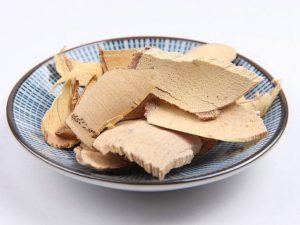
1. Northern Ziziphus: The seeds are flat and round, slightly convex on the back, with a relatively flat flag surface, 5 mm in diameter, and 1–1.5 mm thick.The surface is reddish-brown, brownish-black, or greenish-brown with a luster; when viewed under a magnifying glass, scattered pits are visible. At the base, there is a pale, dot-like seed scar in the depression; at the apex, there is a slightly concave fusion point; and on the ventral surface, there is a raised, longitudinal seed ridge. The seed coat is hard; the endosperm is white; and the cotyledons are pale yellow, thick, and rich in oil. It has a faint odor and a slightly astringent taste.
2. Zhi Du: Seeds are dark brown or blackish-purple, 3.2–4.5 mm in diameter.
3. Hairy-fruited Zhi Du: Seeds are black, black-purple, or brown, nearly round, 4–5.5 mm in diameter, with a ridge in the middle of the ventral surface; the dorsal surface sometimes has papillate projections. In Guangdong, Guangxi, and other regions, the fleshy inflorescence axis is sometimes used medicinally along with the seeds. Full, glossy seeds are considered the best.
Botanical Information
Botanical Classification
Ziziphus species of the Rhamnaceae family.
Morphological Characteristics
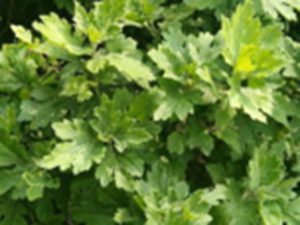
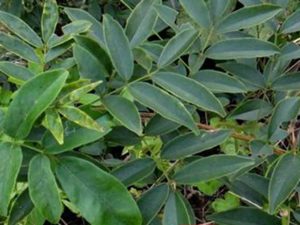
1. Northern Ziziphus: A deciduous shrub reaching a height of about 10 m. Young branches are reddish-brown. Leaves are alternate with long petioles; leaf blades are broadly ovate, 8–15 cm long and 6–10 cm wide, with an acute or long-acute apex, a rounded or cordate base, and irregular, coarse serrations along the margins; both surfaces are glabrous; three basal veins are pale red.Cymes are axillary or terminal, asymmetrical; flowers are mixed, green, with a 6-cm-long pedicel; the calyx has 5 sepals, nearly ovate-triangular; the corolla has 5 petals, obovate, with a flat-truncate apex, slightly concave in the middle, and curled at the sides; male flowers have 5 stamens with slender filaments and a rudimentary ovary;hermaphroditic flowers have 5 stamens, 1 pistil, a 3-chambered ovary with 1 ovule per chamber, and a style shallowly 3-lobed. The fruit is nearly spherical, grayish-brown, and grows on a thick, twisted, fleshy pedicel; when ripe, it is sweet and edible. The seeds are flattened and round, reddish-brown, and glossy. Flowering occurs from May to July; fruiting occurs from August to October.
2. Ziziphus jujuba: A deciduous tree reaching a height of up to 10 m. The bark is grayish-brown, with shallow longitudinal fissures, and does not peel off. Young twigs are reddish-brown and covered with rust-colored fine hairs when young; winter buds are ovate, with two bud scales that are large and fall off early.Leaves are alternate; petioles are 2–5 cm long, reddish-brown, and bear fine glandular dots; leaf blades are ovate or ovate-orbicular, 8–16 cm long and 6–11 cm wide, with an acuminate apex, a rounded or cordate base, and finely serrate margins; the upper surface is glabrous, while the lower surface bears fine hairs along the veins and in the axils of the veins; the veins are ternate, pale red, with 3–5 pairs of lateral veins.Dichotomous cymes are terminal or axillary, symmetrical; the main inflorescence stalk is about 6.5 cm long, and the florets’ pedicels are about 3 mm long; flowers are mixed, about 7 mm in diameter; sepals are 5, ovate-triangular;petals 5, obovate, yellowish-green; male flowers with 5 stamens and a reduced pistil in the center; hermaphroditic flowers with 5 stamens, an ovary superior, embedded in the disk, conical, 3-chambered, each chamber containing 1 ovule, stigma semi-lobed or deeply lobed.Fruit nearly spherical, grayish-brown, glabrous, 6–8 mm in diameter; fruit stalk fleshy and swollen, twisted, 3–5 mm in diameter, reddish-brown, with yellow lenticels; sweet and edible when ripe. Seeds flattened-round, dark brown, glossy. Flowering period: May–June. Fruiting period: September–October.
3. Hairy-fruited Ziziphus: A tall deciduous tree, reaching up to 18 m in height. Young branches are brown or blackish-purple, glabrous, with prominent lenticels. Leaves are papery, oblong-ovate or broadly elliptic, with an acuminate or long-acuminate apex; the base is truncate, nearly rounded, or cordate; the underside of the leaf is densely covered with yellowish-brown or yellowish-gray, non-shedding tomentum.Dichotomous cymes are terminal or occasionally axillary; flowers are yellowish-green. The calyx is densely covered with rust-colored soft hairs, and the calyx lobes have distinct reticulate veins; the petals are ovate-spatulate; the disk is densely covered with rust-colored long soft hairs; the style is deeply three-lobed from the base. The berry-like drupes are spherical, with an enlarged fruit axis covered with rust-colored or brown downy hairs.Seeds are black, blackish-purple, or brown, nearly round, with a seed kernel in the middle of the ventral surface; the dorsal surface sometimes bears papillate projections. Flowering occurs from May to June; fruiting occurs from August to October.
Distribution Area
1. Northern Ziziphus: Distributed in North China, Northwest China, East China, Central and South China, Southwest China, and Taiwan. 2. Ziziphus: Distributed in North China, East China, Central and South China, Southwest China, as well as Shaanxi, Gansu, and other areas. 3. Hairy-fruited Ziziphus: Distributed in Zhejiang, Jiangxi, Hubei, Hunan, Guangdong, and Guizhou.
Growth Habits
It prefers a warm and humid climate. However, it does not tolerate excessively dry air; it thrives in sunny, moist environments. The optimal growth temperature is 20–30°C. It is not particular about soil type and can grow in both acidic and alkaline soils, demonstrating strong adaptability.
Propagation Methods
Propagation by seed.
Cultivation Techniques
Seed Propagation: Seeds must be stratified in sand for 90 days before sowing. Sow in rows in the spring, with a row spacing of 30 cm and a furrow depth of 2–3 cm. Distribute the seeds evenly in the furrows, cover with soil, lightly tamp down, water, and keep the soil moist. When the seedlings reach a height of 35–40 cm, transplant them into holes spaced 400 cm × 300 cm apart, planting one seedling per hole.