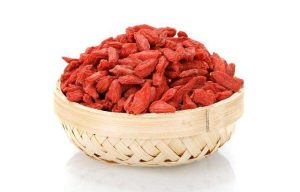
Where do goji berries come from? As a herbal pharmacist, I break down native origin, top growing regions, the two main species, quality differences and global cultivation.
Goji berries (also called wolfberries) originate from temperate Northern and Northwestern China. They grow on woody shrubs from the Lycium genus, part of the nightshade family. For thousands of years, these red berries have been used in traditional herbal medicine and food in Asia. Many shoppers ask: Where are most commercial goji berries grown, and what region produces the highest-quality therapeutic grade berries?
Native & Primary Growing Regions
The premium, well-researched species Lycium barbarum (the goji berry used in most supplements and clinical studies) has its classic authentic growing region in Ningxia Hui Autonomous Region, China, especially Zhongning County along the Yellow River floodplain. This area’s sandy mineral-rich soil, large day-night temperature swings, and ample sunshine create ideal conditions to build high levels of LBP (Lycium barbarum polysaccharides) and zeaxanthin. Ningxia supplies the majority of the world’s export-grade dried goji berries.
Other major Chinese growing areas:
- Xinjiang: produces larger berries, commonly sold as bulk food-grade goji
- Gansu, Qinghai, Inner Mongolia: both wild and plantation cultivated berries
- Lycium chinense, the second common wolfberry species, grows widely across central and eastern China. It contains polysaccharides but typically lower LBP concentration than Ningxia Lycium barbarum.
Globally, goji shrubs have been introduced and farmed on a smaller scale in parts of Europe, California/Oregon USA, Australia, and New Zealand. These international crops are mostly for local fresh market; nearly all dried therapeutic goji sold in Western supplement stores still comes from China.
Brief History
Wild goji shrubs grew across northern China for millennia. Domesticated cultivation in Ningxia stretches back more than 600 years, while written medicinal use records go back over 2,000 years in classical Chinese herbal texts. The name “goji” only became popular in Western wellness markets starting in the 1990s; “wolfberry” is the older formal English common name for this fruit.
How Goji Berries Are Harvested & Processed
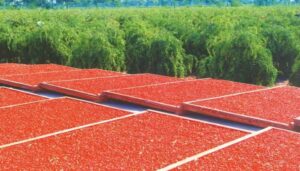
Goji shrubs bear small bright red berries in late summer and early autumn. Farmers hand-pick ripe berries to avoid bruising. The fresh fruit is then carefully dried in the sun or low-temperature dehydrators. Quality producers avoid heavy sulfur fumigation, which is sometimes used on cheaper berries for color preservation.
Real Client Case: Buying Low-Quality Non-Ningxia Goji
A client purchased low-cost bulk goji berries online. The label did not specify Latin species or origin. It was Lycium chinense from Xinjiang. It tasted sweet, but lab testing showed much lower LBP levels. I explained if your goal is eye health and antioxidant support, look for packaging stating Lycium barbarum, Ningxia origin.
Clinical Research & Industry Data
Virtually all human clinical trials examining goji berry benefits for eyes, immunity, stress and metabolic health use Ningxia Lycium barbarum. Region and species matter more than many shoppers realize.
Important reality check: Goji berries grown outside China are edible food, but they rarely match the LBP potency of traditional Ningxia Lycium barbarum. Always check the botanical Latin name on packaging when buying for therapeutic use.
Key Quality Buying Tips
- Prefer Lycium barbarum over Lycium chinense for herbal wellness support.
- Look for Ningxia origin (Zhongning County is the iconic authentic source).
- Choose unsulfured dried berries; sulfur-treated berries are brighter red but may cause throat irritation in sensitive people.
- Avoid products with added sugars, preservatives, or artificial color.
Safety Notes & Herb-Drug Interactions
Safety considerations are the same regardless of growing origin:
- Blood thinners: medical supervision required before daily use
- Diabetes medications / insulin: monitor blood sugar
- Antihypertensive drugs: risk of excess blood pressure lowering
- Nightshade allergy: avoid entirely
Disclaimer: Goji berries are nutritional botanical food/supplement, NOT prescription medicine. This educational content cannot replace advice from your healthcare provider.
Frequently Asked Questions
Q: Are wild goji berries better than farmed?
A: Not necessarily. Wild berries may have variable potency and risk contamination from heavy metals. Certified organic plantation Ningxia goji offers more consistent quality.
Q: Can I grow goji berries at home?
A: Yes, goji shrubs are drought-tolerant and can grow in many temperate climates. Home-grown berries are edible, though LBP levels will depend on soil and sunlight.
Q: Is Ningxia goji the same as Tibetan goji?
A: “Tibetan goji” is often a marketing label. Most so-called Tibetan goji is still Lycium barbarum sourced from Ningxia.
Q: Why is Ningxia famous for goji berries?
A: Unique mineral-rich Yellow River soil, large diurnal temperature shifts, abundant sunlight create ideal conditions for high LBP and zeaxanthin accumulation.