Dong Quai
Gastrodia Elata

Ghost Arrow Feather

Ghost Arrow Feather is the name of a traditional Chinese medicine. It consists of the winged branches or wing-like appendages of Euonymus latus (Thunb.) Sieb., a plant in the Celastraceae family. It is distributed in Northeast China, as well as in Hebei, Shaanxi, Gansu, Shandong, Jiangsu, Anhui, Zhejiang, Hubei, Hunan, Sichuan, Guizhou, and Yunnan.It has the effects of promoting blood circulation, regulating menstruation, detoxifying, reducing swelling, and killing parasites. It is used to treat masses and lumps, pain in the chest and abdomen, amenorrhea, dysmenorrhea, metrorrhagia and menometrorrhagia, postpartum abdominal pain due to blood stasis, retained lochia, hernias, arthralgia, boils and swellings, pain from falls and blows, abdominal pain caused by parasitic infestations, burns and scalds, and venomous snake bites.

Dwarf Willow-leaf

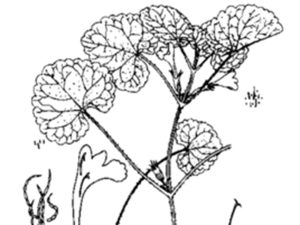
Dwarf Willow-through-fish, a name in traditional Chinese medicine. It belongs to the order Lamiales, family Scrophulariaceae, genus Salix-through-fish. It is distributed in Inner Mongolia (northern part), Heilongjiang (Manzhouli), and other areas. The whole plant is used medicinally; it is cold in nature and bitter in taste, and possesses the effects of clearing heat, draining dampness, detoxifying, and reducing swelling. It is commonly used for damp-heat jaundice, erysipelas, sore throat, and mouth and tongue ulcers.

Dog’s Spine

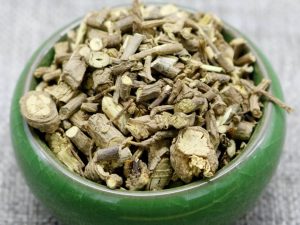
Dog’s Spine, a name in traditional Chinese medicine. It is the dried rhizome of Cibotium barometz (L.) J. Sm., a plant belonging to the genus Cibotium in the family Polypodiaceae. It has the effects of dispelling wind-dampness, tonifying the liver and kidneys, and strengthening the lower back and knees. It is primarily used to treat rheumatic arthralgia, soreness and weakness in the lower back and knees, and weakness in the lower limbs.

Ba Wang Qi

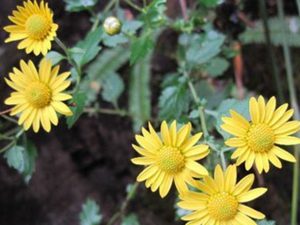
Ba Wang Qi, a name in traditional Chinese medicine. It is the tuber of the plant Wild Impatiens (Impatiens textori Miq.) of the Balsaminaceae family. It is distributed from Northeast China to Jiangxi, Sichuan, and other regions. It has the efficacy of promoting blood circulation and detoxifying. It is primarily used to treat contusions and bruises, bruising and swelling accompanied by pain, abdominal pain, boils, abscesses, and toxic sores, as well as venomous snake bites.

Why Dong Quai Is Called “Female Ginseng”?

1. Where the nickname comes from In Chinese medicine, ginseng (ren shen) is revered as the supreme tonic herb — it boosts vitality, replenishes qi, and rebuilds weakness. Dong quai earned this comparison for two core reasons: That created the common label: ✅ Ginseng = king of general tonics ✅ Dong quai = the “ginseng … Read more

What Is the Dong Quai Herb?

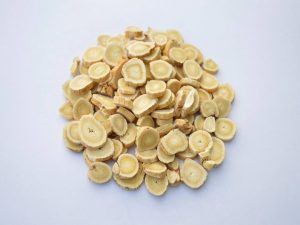
Dong quai (pronounced: DAWNG-kwy) — botanical name Angelica sinensis, also called Chinese angelica, danggui. It is one of the most famous and widely used herbs in Traditional Chinese Medicine (TCM). Basic Facts Key active ingredients The healing effects come mainly from: How it works in TCM terms Dong quai has two core actions: ✅ Nourishes … Read more

What Is Dong Quai Used For?

Dong quai (Angelica sinensis, Chinese angelica) is a foundational blood-nourishing and blood-moving herb in Traditional Chinese Medicine. Its uses focus on patterns known as blood deficiency and blood stagnation. Primary common uses (Women’s health / Perimenopause & Menopause) Energy & circulation support Postpartum recovery Other traditional uses Less well-known: Uses for men As we covered … Read more

Dong Quai vs Angelica Root — Are They the Same?

True dong quai IS Angelica sinensis root. But confusion happens because the word “angelica” refers to many different plants — not every angelica root is dong quai. 1. Proper botanical name breakdown Other plants in the Angelica genus are also sold as “angelica root”: These are different species, different properties. Key Differences to watch when … Read more

Can men take dong quai too?

Yes, men can safely take dong quai when indicated — it is not only a women’s herb. Dong quai’s common nickname “female ginseng” creates the misunderstanding that it is exclusive to women. Traditional & Modern Uses for Men In Traditional Chinese Medicine, dong quai is defined as a blood tonic and blood-moving herb, its benefits … Read more

Dong quai vs red clover for menopause symptoms?

Both used for menopause support but work differently, hormone activity, risks and best-suited people vary significantly. 1. Core Mechanism & Active Ingredients Dong Quai (Angelica sinensis) Red Clover (Trifolium pratense) 2. Primary Benefits – What each excels at Dong Quai best for: ✅ Cold hands & feet, poor circulation ✅ Menstrual cramping, stagnant, dark clotty … Read more

What is the difference between dong quai and black cohosh?

Both are popular for women’s hormone & menopause symptoms, but they work in completely different ways, safety profiles and best uses. 1. Plant Identity & Active Compounds Dong Quai (Angelica sinensis) Black Cohosh (Actaea racemosa / Cimicifuga racemosa) 2. How they act on hormones (The biggest difference) Dong Quai Contains mild phytoestrogens. It weakly binds … Read more

Is dong quai safe for breast cancer survivors?

Caution is required — dong quai is NOT automatically safe for breast cancer survivors, and you should never start it without approval from your oncologist. Safety depends mainly on your tumour hormone receptor status (ER/PR status). Key Background Dong quai contains plant phytoestrogens that bind weakly to estrogen receptors in tissue. Breast cancers fall into … Read more

Should I Stop Dong Quai Before Surgery?

YES — you must stop taking dong quai before surgery. Main Reason Dong quai has blood-moving (activating blood circulation) properties. It can increase bleeding risk during and after surgery: Recommended Timing Cease dong quai at least 7–10 days prior to any planned surgery. This gives your body enough time to clear the active compounds (ligustilide) … Read more

Can dong quai cause diarrhea or bloating?

Yes — diarrhea, loose stools and abdominal bloating are common mild side effects of dong quai, especially when improperly taken. Why this happens Dong quai contains volatile oils (ligustilide) that have two effects on digestion: Risk becomes higher when: Typical symptoms you may experience These usually start within 1–3 days after you begin taking it. … Read more