accurate acupuncture point positioning
Methods for Locating Points
acupuncture points classification
meridian system
meridians and acupoints
moxibustion therapy
types of moxibustion

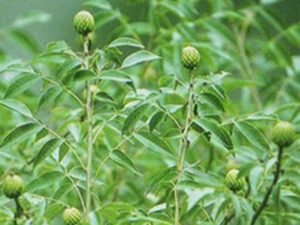
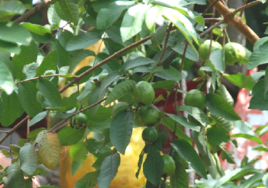
Guava

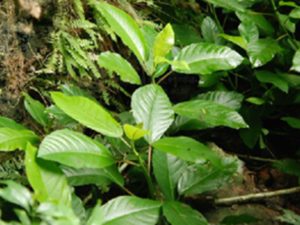
Guava is a name used in traditional Chinese medicine. It refers to the leaves or fruit of Psidium guajava Linn., a plant in the Myrtaceae family. It is distributed or cultivated in Fujian, Taiwan, Guangdong, Guangxi, Sichuan, and Yunnan. Dried young fruit has astringent, antidiarrheal, and hemostatic effects and is commonly used to treat uncontrollable diarrhea and dysentery, as well as metrorrhagia and menorrhagia.Ripe fruits have the effects of strengthening the spleen, eliminating food stagnation, and astringing the intestines to stop diarrhea; they are commonly used to treat food stagnation with bloating, malnutrition, diarrhea, dysentery, rectal prolapse, and menorrhagia.The leaves have the effects of dispelling dampness, strengthening the spleen, clearing heat, and detoxifying; they are commonly used to treat abdominal pain associated with diarrhea and dysentery, abdominal distension due to food stagnation, diabetes insipidus, swollen and painful gums, rheumatic arthralgia, eczema and chronic leg sores, boils and abscesses, swelling and pain from falls and blows, external bleeding, and snake and insect bites.Fresh leaves have hemostatic properties and are commonly used to treat contusions and bruises, bleeding from external injuries, and chronic, non-healing leg sores.

Laohuli

Laohuli is the name of a traditional Chinese medicine. It consists of the stems and leaves of Dendrocnides sinuata (Bl.) Chew, a plant in the Urticaceae family. It is distributed in Hainan, Guangxi, Yunnan, Tibet, and other regions. It has the efficacy of dispersing blood stasis and reducing swelling. It is commonly used to treat swelling caused by trauma and fractures.

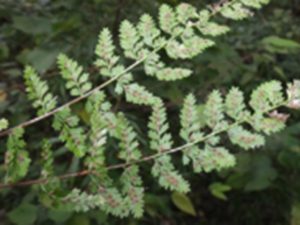
Willow Leaves

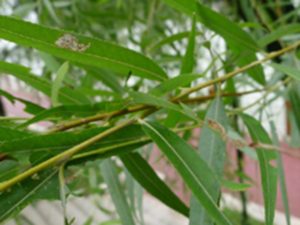
Willow Leaf, a name in traditional Chinese medicine. It refers to the leaves of the weeping willow (Salix babylonica L.), a plant of the genus Salix in the Salicaceae family. It is native to the Yangtze and Yellow River basins and is cultivated throughout other regions. It has the effects of clearing heat, detoxifying, promoting urination, calming the liver, relieving pain, and promoting the eruption of rashes.It is primarily used to treat coughing and wheezing, heat-induced dysuria, calculous dysuria, leukorrhea, hypertension, boils and abscesses, scalds and burns, swollen and painful joints, toothache, prickly heat, and itchy skin.

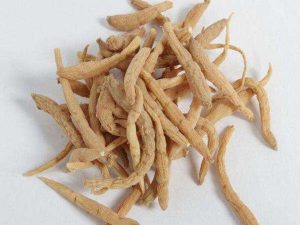
Red-haired Grass

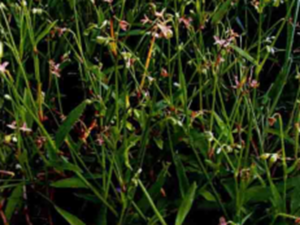
Red-haired Grass is the name of a traditional Chinese medicine. It is the whole plant of Murdannia nudiflora (L.) Brenan, a member of the Commelinaceae family. It is distributed in East China, Central and South China, and Southwest China. It has the effects of clearing lung heat, cooling the blood, and detoxifying. It is commonly used to treat coughs caused by lung heat, coughing up blood, vomiting blood, sore throat, red and swollen eyes, and abscesses and swellings caused by toxins.

The Unique Acupuncture and Moxibustion Therapy of Traditional Chinese Medicine

Acupuncture and moxibustion therapy is a unique therapeutic method created by the ancient working people of China. Its characteristic is that it treats diseases without medication; instead, it involves inserting needles into specific parts of the patient’s body or using the warm stimulation of fire to cauterize local areas, so as to achieve the purpose … Read more

Three Standard Acupoint Location Methods

Accurate acupoint location relies on three complementary methods from traditional Chinese medicine. Anatomical landmark positioning uses visible body features for rapid, tool-free point finding. Proportional bone measurement applies standardized body segments scaled to the individual. Finger cun measurement uses the patient’s own finger dimensions—1 cun from the flexed middle finger crease and 3 cun from … Read more

Methods for Locating Points

Accurate localization of acupuncture points is essential to achieve optimal therapeutic outcomes. Three standard methods are commonly used for precise point location, as described below. 1. Anatomical Landmark Method Visible and palpable surface landmarks including bony prominences and depressions, joints, tendons, muscles, skin creases, hairlines, nail margins, nipples, umbilicus, eyes and mouth serve as reliable … Read more

Classification and Distribution of Meridians and Acupoints

The channel-collateral system is primarily composed of the twelve regular channels, eight extraordinary channels and fifteen major collaterals. The twelve regular channels, combined with the Ren Channel and Du Channel (two of the eight extraordinary channels), are known collectively as the fourteen channels. Each channel is lined with specialized points for acupuncture and moxibustion therapy. … Read more

Moxibustion Therapy

Moxibustion is a traditional therapy that treats and prevents diseases by applying thermal stimulation to acupoints and specific body regions. The primary material used is moxa wool, which is processed into cone-shaped moxa or roll-shaped moxa sticks. Moxa wool is produced from dried mugwort leaves (Artemisia vulgaris). The leaves are finely ground, with thick stems … Read more

Manipulation of the Needle

1. The Needles and How to Use Them (1) The Needles: The needles may be of gold,silver or alloy. The needles in most common use today are made of high quality stainless steel.On the basis of structure, the filiform needle may be divided into four parts the handle,the root,the body and the tip(Fig.1). Fig.1 The … Read more

What Acupuncture and Moxibustion Therapy Is

Acupuncture and moxibustion are two distinct ther-apeutic methods. Acupuncture treats disease by punc-turing certain points of the human body with different types of metal needles, while moxibustion is the appli-cation of heat produced by ignited moxa-wool made from dry moxa leaves over the points of the skin sur-face or certain locations in the human body. … Read more